Conscious Discipline: Breathing Techniques for Kids’ Self-Regulation
“`html
Understanding Conscious Discipline
Conscious Discipline, developed by Dr. Becky Bailey, is a comprehensive, trauma-informed approach to social-emotional learning. This framework revolves around teaching children self-regulation skills through a blend of discipline, emotional intelligence, and connection. At its core, Conscious Discipline emphasizes the importance of creating safe environments where children feel secure and supported, which is crucial for their emotional and social development.
The Importance of Breathing Techniques
Breathing techniques form a vital part of self-regulation strategies taught by Conscious Discipline. Children often face overwhelming emotions, whether it’s anxiety about school, frustration during conflicts, or excitement that can spiral out of control. In these moments, the ability to pause and utilize conscious breathing can significantly aid in emotional regulation. Breathing techniques not only help to calm the nervous system but also empower children to take control of their feelings and actions.
Key Benefits of Breathing Techniques
Implementing Conscious Discipline breathing techniques offers numerous benefits for children, educators, and parents alike:
- Emotional Regulation: Children learn to identify their emotions and manage them effectively.
- Increased Focus: Breathing techniques can improve attention spans and concentration in academic settings.
- Stress Reduction: Regular practice helps reduce anxiety and stress levels.
- Social Skills Development: As children learn to manage their emotions, they can better navigate social interactions.
- Connection Building: Practicing breathing techniques together can enhance the bond between children and caregivers.
Implementing Breathing Techniques in the Classroom
Incorporating Conscious Discipline breathing techniques into classroom routines can create a positive learning environment. Teachers can introduce short breathing exercises at the beginning of the day or during transitions between activities. For instance, a simple activity such as “balloon breathing” encourages children to visualize their breath inflating a balloon, which can be both engaging and calming.
Moreover, teachers can model these techniques during moments of stress or conflict. When children see their educators employing breathing techniques, it normalizes the practice and encourages them to mimic the behavior. This modeling is essential because children often learn best through observation.
Practical Breathing Techniques for Children
There are several effective breathing techniques suitable for children. Here are some specific exercises you can practice:
1. Balloon Breathing
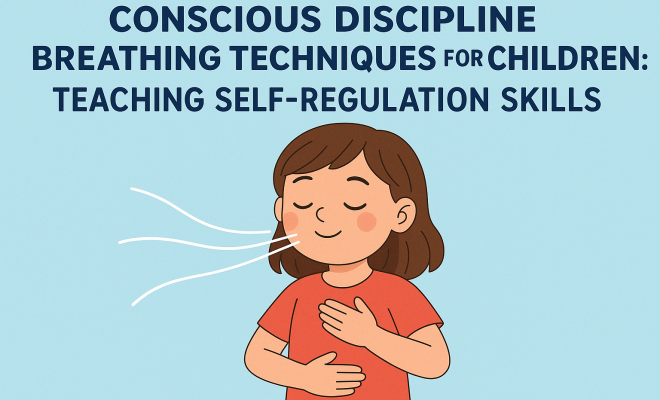
Have children imagine they are inflating a balloon. Instruct them to take a deep breath in through their nose, filling their bellies as if they were filling a balloon, and then slowly exhale through their mouths, deflating the balloon. This exercise helps children visualize the process of breathing while engaging their imagination.
2. Bumblebee Breathing
In this technique, children close their eyes and make a buzzing sound, similar to a bumblebee, while they breathe in and out. Inhale deeply through the nose and then hum or buzz during the exhale. This exercise not only calms the body but also provides a fun auditory element that makes it appealing for younger children.
3. 5- Finger Breathing
Children can use their hands to guide their breathing. With one hand open, they trace up each finger with the other hand. Inhale while tracing up and exhale while tracing down. This technique is not only grounding but also enhances fine motor skills.
4. Ocean Breathing
Children can mimic the sound of ocean waves in this technique. Instruct them to take a deep breath in and then exhale slowly, making the sound of a wave crashing. As they breathe, they can visualize the calming rhythm of the ocean, which helps promote relaxation. (See: CDC resources on children's mental health.)
Creating a Culture of Mindfulness
For breathing techniques to be effective, it’s important to cultivate a culture of mindfulness within classrooms and homes. This involves teaching children the significance of being present and aware of their emotions, thoughts, and physical sensations. Incorporating mindfulness activities like guided meditations or quiet reflection periods can complement breathing practices.
Educators and parents can also participate in mindfulness training themselves, so they are equipped to guide children through their emotional challenges. The more comfortable adults are with these practices, the more effectively they can teach and model them for children.
Integrating Breathing Techniques at Home
Parents play a crucial role in reinforcing the breathing techniques learned at school. By practicing these exercises at home, parents can create a consistent emotional regulation strategy for their children. For example, setting aside a few minutes each day for family breathing activities can help establish a routine and make the practice enjoyable.
In addition to structured sessions, parents can encourage spontaneous breathing practices during stressful moments, such as before a test or after a disagreement with a sibling. By doing so, they teach children to rely on these techniques as tools for self-regulation, which they can use throughout their lives.
Challenges and Solutions
While the benefits of Conscious Discipline breathing techniques are clear, implementing them can come with challenges. For instance, some children may initially resist the practice or struggle to stay focused during exercises. To overcome this, it’s essential to introduce breathing techniques gradually and make them relatable to children’s experiences.
Using storytelling or integrating favorite characters can make the techniques more engaging. For instance, framing a breathing exercise as a superhero needing to calm down can capture children’s imaginations. Moreover, keeping sessions short and fun can help maintain interest and enthusiasm.
Assessing the Impact of Breathing Techniques
Assessing the effectiveness of breathing techniques requires observing changes in children’s behavior and emotional responses over time. Regularly checking in with them about how they feel before and after performing the exercises can provide valuable insights. Additionally, teachers and parents can maintain journals to track progress and identify any patterns in emotional regulation.
Schools and communities can benefit from surveys and feedback sessions with both students and parents to evaluate how well these techniques are working. Continuous assessment will help educators adapt their approaches to meet the needs of children effectively.
Current Relevance and Future Directions
As awareness of mental health and emotional well-being continues to grow, the relevance of Conscious Discipline breathing techniques cannot be overstated. Schools are increasingly recognizing the importance of social-emotional learning, and many are incorporating these practices into their curriculums. In a world filled with distractions and stressors, teaching children to breathe consciously equips them with lifelong skills.
Moreover, with ongoing research highlighting the benefits of mindfulness and breathing techniques, educators are encouraged to innovate and integrate new strategies into their teaching. Future directions may include digital platforms that offer interactive breathing exercises or apps designed for children to practice mindfulness independently.
The Science Behind Breathing Techniques
Understanding the science behind breathing techniques can enhance the appreciation of their benefits. Research has shown that conscious breathing can activate the parasympathetic nervous system, which promotes a state of calmness and relaxation. This physiological response helps counteract the body’s stress response, reducing cortisol levels and promoting overall well-being. (See: NIH on behavior treatment strategies.)
Studies indicate that regular practice of breathing techniques can lead to improved emotional regulation, better focus, and enhanced decision-making skills. For example, a study published in the Journal of Child Psychology and Psychiatry found that children who practiced mindfulness breathing showed significant reductions in anxiety and improvements in attention compared to their peers who did not engage in these practices.
Expert Perspectives on Breathing Techniques
Educators and psychologists emphasize the importance of breathing techniques in supporting children’s mental health. Dr. Daniel Siegel, a leading psychiatrist and author, highlights how mindfulness practices, including focused breathing, can help children develop resilience and emotional intelligence. Siegel suggests that these practices encourage children to connect with their emotions and respond to them thoughtfully rather than react impulsively.
Moreover, experts in childhood development advocate for integrating breathing techniques into everyday routines, asserting that consistent practice helps children internalize these skills. Dr. Rachael O’Meara, a researcher in mindfulness, states that the earlier children learn these techniques, the more adept they become at managing their emotional responses throughout their lives.
Breathing Techniques for Different Age Groups
It’s essential to tailor breathing techniques to suit different age groups, as children’s capabilities and comprehension levels vary significantly. Here are some suggestions for adapting techniques based on age:
Preschool and Early Elementary
For younger children, breathing techniques should be simple and engaging. Activities like “balloon breathing” and “bumblebee breathing” are particularly effective, as they incorporate imaginative play. Visual aids, such as colorful illustrations or toys, can also make the practice more relatable and enjoyable for this age group.
Middle Childhood
As children grow older, they can handle more complex techniques. Exercises like “5-finger breathing” and “ocean breathing” can be introduced alongside discussions about emotions and self-regulation. Encouraging them to reflect on their feelings before and after practicing can deepen their understanding of the techniques’ impact.
Adolescents
Teenagers may benefit from more independence in exploring breathing techniques. Encourage them to find their own favorite practices, perhaps through apps or online resources. Discussions about the science behind these techniques can also resonate better with this age group, promoting a sense of ownership over their emotional well-being.
Real-Life Success Stories
Many educators and parents have witnessed the transformative power of breathing techniques in real-life situations. For instance, a fifth-grade teacher in California shared how she implemented “balloon breathing” during a particularly challenging year. After introducing it as a daily ritual, she noticed a marked decrease in classroom disruptions and conflicts among students. The children reported feeling calmer and more focused during lessons.
Similarly, a parent from New York recounted a story about her son, who struggled with anxiety before school. After practicing “ocean breathing” together each morning, he became more resilient and less anxious about his school day. This simple practice not only strengthened their bond but also equipped him with invaluable tools for emotional regulation.
Frequently Asked Questions (FAQ)
What age is appropriate to start teaching breathing techniques?
Breathing techniques can be introduced as early as preschool. Young children benefit from simple and imaginative exercises, while older children and adolescents can explore more complex techniques and understand the underlying concepts.
How often should breathing techniques be practiced?
Consistency is key. Ideally, breathing techniques should be practiced daily, even if for just a few minutes. This helps reinforce the practice and makes it a natural part of emotional regulation strategies.
Can breathing techniques be used in stressful situations outside of school?
Absolutely! Breathing techniques are effective tools for managing stress in various settings, including home, sports, and social situations. Encouraging children to use these techniques whenever they feel overwhelmed can help them develop independence in emotional regulation.
What if my child resists practicing breathing techniques?
Resistance is common, especially when children are first introduced to these practices. Keeping sessions fun and engaging, using storytelling, and modeling the techniques yourself can help alleviate resistance. It’s essential to be patient and allow them to explore these techniques at their own pace.
How can I reinforce breathing techniques during family activities?
Incorporating breathing techniques during family activities can be both fun and impactful. For example, you can start a family game night by practicing a few minutes of “balloon breathing” to settle everyone down and create a focus on the evening ahead. Additionally, you might include short breathing exercises during family outings or while waiting in line, turning idle moments into opportunities for mindfulness.
What can I do if my child feels embarrassed practicing breathing techniques in front of others?
Feeling embarrassed is common, especially among older children and teens. It might help to remind them that many adults practice mindfulness techniques, too, and can benefit from them. Encourage them to use these techniques privately at first, gradually introducing them to others as they become more comfortable. Sharing personal experiences or testimonials from friends who found these practices helpful can also ease their concerns.
Are there resources available to help teach breathing techniques?
Yes! Many online platforms, videos, and apps are specifically designed for children to explore breathing techniques. Websites like GoNoodle offer engaging videos that incorporate movement and mindfulness. Additionally, many local community centers and organizations run workshops for parents and educators interested in learning how to implement these techniques effectively.
Final Thoughts
Conscious Discipline breathing techniques present a powerful means of teaching self-regulation to children. By integrating these practices into daily routines at home and in schools, we cultivate emotionally aware and resilient individuals. As we empower children to manage their emotions effectively, we set them on a path to becoming not only better students but also well-rounded, emotionally intelligent adults.
“`
Trending Now
- our breakdown of 15 read-alouds that make teachers cry every time
- “Using Bloom’s Taxonomy to Write Better Learning Objectives for Lesson Plans”
- our breakdown of “bloom’s taxonomy for parents: how to ask questions that deepen your child’s learning at home”
- the complete explanation
- “Proprioception Activities for Kids: 25 Sensory Diet Ideas to Improve Body Awareness”
Frequently Asked Questions
What are Conscious Discipline breathing techniques?
Conscious Discipline breathing techniques are strategies designed to help children manage their emotions and enhance self-regulation. Developed by Dr. Becky Bailey, these techniques encourage children to use conscious breathing to calm their nervous systems, enabling them to better handle overwhelming emotions like anxiety, frustration, or excitement.
How can breathing techniques help children with self-regulation?
Breathing techniques assist children in self-regulation by allowing them to pause and focus on their breath during emotional upheaval. This practice helps them identify and manage their feelings, promoting emotional control, reducing anxiety, and improving their overall ability to handle stress in various situations.
What are the benefits of teaching breathing techniques to children?
Teaching breathing techniques to children offers numerous benefits, including improved emotional regulation, increased focus and attention, reduced stress and anxiety, better social skills, and strengthened connections between children and caregivers. These skills are essential for healthy emotional and social development.
How can educators implement breathing techniques in the classroom?
Educators can implement breathing techniques in the classroom by integrating short exercises into daily routines, such as starting each class with a few minutes of focused breathing. This practice not only calms students but also fosters a positive learning environment conducive to engagement and focus.
What is the role of Conscious Discipline in emotional development?
Conscious Discipline plays a crucial role in emotional development by providing a trauma-informed framework that emphasizes emotional intelligence, connection, and safe environments. This approach helps children learn self-regulation skills, which are vital for navigating their emotions and social interactions effectively.
What’s your take on this? Share your thoughts in the comments below — we read every one.