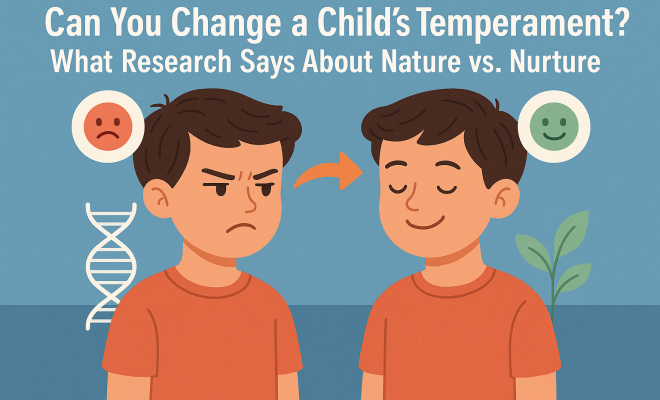
Can You Change a Child’s Temperament? Nature vs. Nurture
“`html
Understanding a child’s temperament is a crucial part of parenting and education, yet the question remains: can you change a child’s temperament? The interplay of genetics and environment—often referred to as nature versus nurture—has long intrigued psychologists, educators, and parents alike. This article explores the depths of this issue, delving into the latest research, practical insights, and real-world applications.
1. Defining Temperament
Temperament refers to the innate traits that influence how children think, behave, and react in various situations. These traits manifest early in life and can be observed in infants as young as a few weeks old. Key components of temperament include activity level, mood, adaptability, and sensitivity. Understanding these traits can help caregivers align their approaches to better nurture a child’s unique disposition.
Researchers often categorize temperament into nine dimensions based on the work of Mary Rothbart and other pioneers in the field. These dimensions include emotionality, sociability, and self-regulation. Notably, these characteristics can significantly impact a child’s behavior and interactions with their environment. For instance, a child with high emotional reactivity may struggle with frustration, while a sociable child might thrive in group settings. Identifying these traits allows parents to tailor their strategies to suit their child’s needs.
2. The Nature vs. Nurture Debate
The ongoing debate surrounding nature versus nurture plays a vital role in understanding if you can change a child’s temperament. Proponents of the nature argument emphasize genetic predispositions, suggesting that temperament is largely inherited. For example, studies involving twins have shown that identical twins often exhibit similar temperamental traits, even when raised apart.
On the other hand, advocates of the nurture perspective argue that environmental factors, including parenting style, social interactions, and cultural context, can shape a child’s temperament over time. This view highlights the significance of caregiving practices and how they can potentially alter a child’s behavior and emotional responses. The consensus among many psychologists today is that both nature and nurture significantly affect temperament, creating a complex interplay between inherited traits and environmental influences.
3. Can Temperament Change Over Time?
One of the most compelling questions in this discussion is whether a child’s temperament can change over time. Research suggests that while some aspects of temperament remain relatively stable, others are malleable and can evolve based on experiences and interactions. For example, a child who is naturally shy might become more outgoing through positive social experiences and encouragement.
Moreover, a child’s temperament can be influenced by significant life events or changes, such as moving to a new environment, experiencing trauma, or receiving targeted support. Studies have shown that children exposed to nurturing environments are more likely to develop resilience and adaptability, suggesting that effective interventions can lead to meaningful changes in temperament. Therefore, while core traits might be stable, the possibility of change exists and can be harnessed through intentional actions.
4. Research Insights on Changing Temperament
Numerous studies have explored how to effectively change a child’s temperament through various interventions. One notable study, published in the journal Child Development, demonstrated that children who received consistent emotional support exhibited improved self-regulation and social competence over time. This highlights the importance of nurturing responses from caregivers in shaping a child’s temperament.
Another study by the University of Oregon found that children exposed to mindfulness practices showed enhanced emotional regulation and reduced anxiety. These findings suggest that targeted strategies, such as emotional coaching and mindfulness training, can significantly influence a child’s temperament, illustrating the capacity for change with the right support.
5. Practical Strategies for Parents
So, what can parents do to effectively change a child’s temperament? Here are several practical strategies based on research findings: (See: Understanding child temperament on Wikipedia.)
- Model Positive Behavior: Children learn by observing their caregivers. By modeling calmness, problem-solving skills, and emotional regulation, parents can instill similar behaviors in their children.
- Encourage Social Interaction: Facilitating opportunities for children to engage with peers can help them develop social skills and confidence, potentially shifting their temperament towards being more outgoing.
- Create a Structured Environment: Consistency and routine provide security for children. A stable environment can support emotional regulation and reduce anxiety, facilitating growth in adaptability.
- Utilize Positive Reinforcement: Recognizing and rewarding desired behaviors encourages children to repeat them. This method can promote changes in temperament by reinforcing positive traits.
By implementing these strategies, parents can foster an environment conducive to positive changes in temperament, tailoring their approaches to meet their child’s unique needs.
6. The Role of Education and Peer Influence
Education plays a significant role in shaping children’s temperaments, particularly in how they learn to interact with others and develop their emotional intelligence. Teachers and educators can serve as critical influencers in a child’s life, providing support and guidance that can help adjust temperamental traits.
Peer interactions also significantly impact temperament. Positive relationships with peers can help children learn vital social skills, such as cooperation and conflict resolution. For instance, a child who is initially withdrawn may become more engaged and confident in social situations when surrounded by supportive friends. Schools that promote collaborative learning and social-emotional learning (SEL) initiatives create environments where children can thrive and adapt emotionally.
7. Addressing Challenging Temperamental Traits
Some temperamental traits can pose challenges for children and their caregivers. For instance, a child with high activity levels may have difficulty settling down, while a highly emotional child may struggle with regulation. To effectively support these children, tailored strategies are essential.
Interventions such as behavior modification techniques, therapeutic play, and structured activities can help children manage their temperament traits. For example, children with high energy levels can benefit from regular physical activity that allows them to expend energy positively. Meanwhile, teaching emotional regulation skills through games and storytelling can help emotionally sensitive children process their feelings more effectively.
8. Understanding the Genetic Component
The genetic component of temperament cannot be overlooked in discussions about changing a child’s temperament. Research indicates that approximately 50-60% of temperament traits are hereditary, meaning that genetics play a significant role in shaping a child’s initial temperament. However, this does not imply that temperament is entirely fixed.
By recognizing the genetic factors involved, parents can better understand their child’s inherent tendencies. This understanding can guide them in developing effective strategies that align with the child’s natural disposition. For instance, a parent may recognize that their child’s tendency towards shyness is partly genetic, but with encouragement and exposure, it can shift positively over time.
9. The Importance of Patience and Consistency
Changing a child’s temperament is not an overnight process. It requires patience, consistency, and a willingness to adapt strategies as a child grows and develops. Caregivers must remain committed to fostering a supportive environment that prioritizes emotional growth and resilience.
Ultimately, the goal is not to completely change a child’s core temperament but to help them navigate their inherent traits more effectively. By providing support, understanding, and tools for development, parents and educators can significantly influence a child’s emotional landscape, promoting healthy growth and positive behavioral changes.
10. Real-Life Examples of Changing Temperament
Real-world examples can be incredibly powerful in illustrating how children’s temperaments can change. Consider the case of a boy named Liam, who was often described as the shyest child in his kindergarten class. He struggled to participate in group activities and would often withdraw when faced with new situations.
His parents, recognizing his natural inclination towards shyness, decided to implement small changes at home and in his social environment. They encouraged him to join a local sports team, where he could engage with peers in a structured setting. Over time, Liam not only built confidence but also discovered a passion for soccer that brought him joy. With each game, he learned to interact with teammates, leading to lasting friendships and a noticeable shift in his temperament from shy to more outgoing.
This transformation highlights the importance of providing children with opportunities and support to explore their capabilities in different settings, ultimately reshaping their temperamental responses. (See: Research on temperament and child development.)
11. Statistics on Temperament and Development
To better understand the potential for changing a child’s temperament, it’s helpful to look at some relevant statistics. According to a study published in the journal Developmental Psychology, about 30% of children show significant variability in their temperamental traits over time due to environmental influences.
Additionally, the Child Mind Institute reported that children who receive consistent emotional support from caregivers are 70% more likely to exhibit positive changes in their social behavior and emotional regulation skills. These statistics underscore the potential for caregivers and educators to influence a child’s temperament positively through intentional strategies and support.
12. Expert Perspectives on Changing Temperament
Experts in child psychology and development emphasize that while some aspects of temperament are more resistant to change, significant shifts are possible through targeted interventions. Dr. Daniel Siegel, a renowned psychiatrist and author, notes that understanding a child’s brain development is key to fostering positive behavioral changes. He emphasizes that parents can help shape their child’s emotional responses by providing a safe space for expression and understanding.
Similarly, Dr. Carol Dweck, known for her work on the growth mindset, argues that encouraging a belief in the ability to change can empower children. When children understand that their temperament can adapt through effort and persistence, they are more likely to embrace challenges and develop resilience.
13. Strategies for Teachers and Educators
While parents play a critical role, educators can also implement strategies to support changes in a child’s temperament. Here are some effective approaches:
- Incorporate Social-Emotional Learning (SEL): Integrating SEL programs into the curriculum can help children develop emotional skills, improve self-regulation, and enhance their ability to interact with others positively.
- Create Inclusive Classrooms: By fostering a sense of belonging, teachers can help shy or anxious students feel more secure and willing to engage with their peers.
- Encourage Expression through Art and Play: Providing creative outlets allows children to express their emotions in a non-verbal way, which can be particularly beneficial for those who struggle with emotional articulation.
- Implement Mindfulness Practices: Mindfulness activities, such as breathing exercises or meditation, can help children manage stress and enhance their emotional regulation skills.
14. Building Resilience and Adaptability
Building resilience is closely tied to changing a child’s temperament. Resilience refers to the ability to bounce back from challenges and adapt well in the face of adversity. Encouraging resilience can help children manage their inherent temperamental traits more effectively.
To foster resilience, caregivers and educators can:
- Encourage Problem-Solving: When faced with difficulties, guiding children to brainstorm solutions can empower them and build confidence in their ability to overcome challenges.
- Reinforce Positive Self-Talk: Teach children to recognize and combat negative thoughts with positive affirmations, which can enhance their emotional resilience.
- Celebrate Effort and Progress: Focusing on effort instead of outcomes promotes a growth mindset and encourages children to view setbacks as learning opportunities.
15. Emotional Regulation Techniques
Teaching children emotional regulation techniques is crucial in helping them manage their temperament effectively. Here are some practical methods:
- Deep Breathing Exercises: Simple deep breathing techniques can help children calm down when feeling overwhelmed. Teach them to take a few deep breaths, inhaling through the nose and exhaling through the mouth.
- Use Visual Aids: Tools like emotion charts can help children identify and articulate their feelings, making it easier for them to express emotions constructively.
- Role-Playing Scenarios: Engaging children in role-playing can provide them with opportunities to practice emotional responses in a safe space, enhancing their coping strategies for real-life situations.
16. FAQ: Can You Change a Child’s Temperament?
Can you completely change a child’s temperament?
While some traits may be more stable due to genetic factors, you can influence a child’s temperament positively through supportive parenting, education, and social interaction.
How long does it take to see changes in temperament?
The timeline for observing changes can vary widely. Some children may show shifts in temperament within weeks to months, while others might take years. Consistency in approaches is crucial.
Are some temperamental traits easier to change than others?
Yes, traits like emotional regulation and social engagement are often more malleable than traits like activity level, which may require more time and specific strategies to influence.
What role do peers play in changing temperament?
Peers can significantly affect a child’s temperament. Positive peer interactions can enhance social skills and confidence, encouraging children to step outside their comfort zones.
What are the signs that a child’s temperament is changing?
Signs of changing temperament can include increased willingness to engage in new activities, improved emotional regulation, and more positive interactions with peers and adults.
Is it normal for a child’s temperament to change as they grow?
Yes, it is entirely normal for a child’s temperament to evolve over time due to a variety of factors, including developmental stages, life experiences, and environmental changes.
How can parents and educators work together to support a child’s temperament development?
Collaboration between parents and educators can create a comprehensive support system for children. Regular communication about a child’s progress, sharing strategies that work at home and school, and jointly setting goals can enhance the effectiveness of temperament-changing efforts.
Can a child’s temperament influence their future relationships?
Yes, a child’s temperament can significantly affect their future relationships. For instance, children with higher emotional intelligence are likely to develop healthier relationships as they learn to navigate emotions and understand social cues effectively.
What are some resources for parents looking to change their child’s temperament?
Parents can explore various resources, such as parenting books focused on temperament and emotional intelligence, workshops on child development, and online courses that offer strategies for fostering emotional growth. Additionally, consulting with child psychologists or counselors can provide tailored guidance for specific concerns.
“`
Trending Now
Frequently Asked Questions
Can a child's temperament be changed?
While a child's temperament is largely influenced by genetics, environmental factors and parenting styles can help shape and modify certain traits. Understanding a child's unique temperament allows caregivers to adopt strategies that nurture and support their development.
What are the dimensions of a child's temperament?
Temperament comprises several dimensions, including emotionality, sociability, activity level, adaptability, and sensitivity. These traits can be observed early in life and significantly impact how children interact with their environment and respond to various situations.
How does genetics influence a child's temperament?
Genetics plays a crucial role in determining a child's temperament. Research, particularly studies involving twins, indicates that many temperamental traits are inherited, leading to similarities in behavior and emotional responses, even among those raised in different environments.
What role does parenting play in a child's temperament?
Parenting style is a key factor in shaping a child's temperament. Supportive and responsive parenting can enhance positive traits, while negative interactions may exacerbate challenging behaviors. Tailoring approaches to a child's temperament can promote healthier emotional development.
Is temperament the same as personality?
Temperament refers to the innate traits that influence behavior and emotional reactions, while personality develops later and is shaped by experiences, environment, and social interactions. Temperament lays the foundation for personality over time.
Have you experienced this yourself? We’d love to hear your story in the comments.