“Reading Fluency vs. Reading Speed: Understanding the Critical Difference for Student Success”
“`html
1. Defining Reading Fluency and Reading Speed
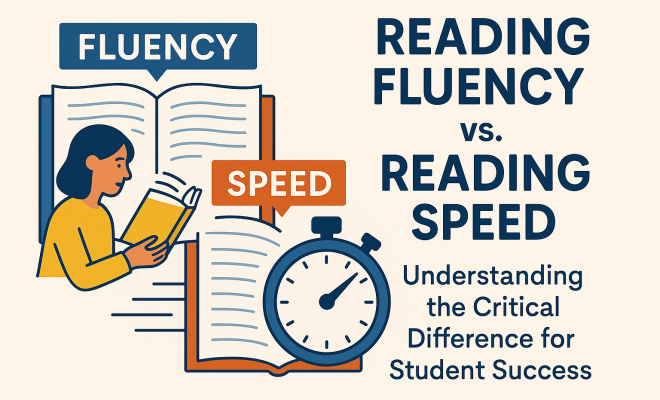
To truly grasp the nuances of reading fluency vs reading speed, it’s important to start with clear definitions. Reading fluency refers to the ability to read a text accurately, quickly, and with proper expression. It encompasses not just speed but also the ability to understand and convey the meaning of the text being read. In essence, fluency is a holistic skill that combines speed, accuracy, and prosody—the rhythm and intonation of spoken language.
In contrast, reading speed is a more straightforward metric, typically measured in words per minute (WPM). It simply gauges how fast a reader can move through a text without necessarily accounting for how well they comprehend the material. This distinction is crucial because a focus on speed alone can lead to a shallow understanding of the text, which can ultimately hinder a student’s overall learning experience.
2. The Importance of Reading Fluency in Education
Reading fluency is often regarded as a foundational element of literacy that impacts a student’s academic success across various subjects. Research indicates that fluent readers are better able to comprehend complex information and engage critically with texts. This is key not only in language arts but also in subjects such as history and science, where comprehension of dense material is vital.
Moreover, studies have shown that fluency directly affects motivation and engagement. When students can read with confidence and expressiveness, they are more likely to participate in discussions and take an interest in the content being presented. This creates a positive feedback loop: as students become more fluent, their comprehension improves, which in turn boosts their confidence and further enhances their reading skills.
3. The Role of Reading Speed in Academic Success
While fluency is more comprehensive, reading speed does play a significant role in students’ academic success. Faster readers tend to cover more material in a shorter period, which can be an advantage during tests and timed assessments. Additionally, strong reading speed can often correlate with higher levels of comprehension, provided that the reader has also developed sufficient background knowledge and context.
However, it’s essential to stress that increased speed should not come at the expense of comprehension. Students who rush through texts may fail to grasp key concepts or details that are vital for deeper understanding. Thus, while it’s beneficial to develop reading speed, it should be pursued with an awareness of the potential pitfalls that come from neglecting the quality of reading.
4. Assessing Reading Fluency and Speed: Tools and Techniques
Educators can employ various tools and techniques to assess both reading fluency and speed in their students. One common method is the timed reading assessment, where students read a passage aloud for one minute while the teacher measures their words per minute and accuracy. This not only provides data on speed but also highlights fluency, particularly with respect to prosody and expression.
Another effective strategy is the use of running records, which involve teachers observing students as they read and noting errors and self-corrections. This method helps educators gain insight into a student’s reading behaviors, allowing them to tailor instruction accordingly. By understanding where students struggle, teachers can provide targeted interventions that support both fluency and speed.
5. Strategies to Improve Reading Fluency
Improving reading fluency is a multifaceted endeavor that benefits from a variety of instructional strategies. One effective approach is repeated reading, where students read the same passage multiple times. This practice helps them become more familiar with the words and sentences, ultimately enhancing their speed and confidence.
Another strategy involves incorporating paired reading, where students read with a partner. This method allows for peer support and can motivate students to practice their reading skills in a more relaxed setting. Additionally, providing engaging materials that match students’ interests can further enhance their motivation to read, thereby improving their fluency over time.
6. Enhancing Reading Speed Through Practice
While the emphasis should often be on fluency, there are numerous strategies that can help students increase their reading speed without sacrificing comprehension. One effective technique is chunking, which involves teaching students to group words together rather than reading each word individually. This approach helps to streamline the reading process and can significantly enhance speed. (See: Reading fluency and comprehension.)
Another valuable practice is skimming, where readers learn to quickly identify key ideas and themes within a text. This skill is particularly useful for academic work, allowing students to efficiently gather information and determine what sections require more focused reading. However, students should be cautioned to ensure they grasp the critical elements of texts rather than merely racing through the material.
7. Balancing Reading Fluency and Speed
The ultimate goal of any reading program should be to balance both fluency and speed. Focusing too heavily on one aspect can lead to deficiencies in the other. Educators need to create lesson plans that integrate both components effectively. For instance, a lesson might involve timed readings to gauge speed, followed by discussions that promote comprehension and expression, thus reinforcing fluency.
Furthermore, ongoing assessments are vital. Regularly measuring both fluency and speed allows educators to adjust instruction based on students’ individual needs. This iterative approach ensures that as students progress, they develop a well-rounded set of reading skills that will serve them in all academic areas.
8. Current Relevance and Future Directions
In today’s digital age, the landscape of reading is changing rapidly. With the rise of digital texts, audiobooks, and interactive reading apps, the dynamics of how students engage with reading materials are evolving. It’s crucial for educators to stay informed about these trends and adapt their teaching strategies accordingly.
Moreover, as research continues to unveil the intricacies of reading fluency and speed, there’s an increasing emphasis on personalized learning. Tailoring reading interventions to meet the unique needs of each student can lead to improved outcomes across the board. By understanding the critical difference between reading fluency and reading speed, educators can foster a more effective learning environment that promotes both skills.
9. The Link Between Reading Fluency and Overall Literacy Development
Reading fluency isn’t just an isolated skill; it plays a pivotal role in overall literacy development. Studies indicate that students who exhibit higher reading fluency levels tend to perform better on standardized literacy assessments. They’re equipped to tackle more complex texts, which is essential as they progress through various educational tiers.
For example, a study by the National Institute for Literacy found that fluent readers are more likely to excel in written expression and critical thinking tasks. This demonstrates how fluency serves as a bridge, connecting basic reading skills to more advanced literacy competencies. When students read fluently, they are better prepared to engage with texts analytically, extracting and synthesizing information effectively.
Additionally, the development of reading fluency supports vocabulary growth. Fluent readers encounter and integrate new words more readily, enriching their language skills. This expansion is crucial because a robust vocabulary is a cornerstone of literacy — it allows readers to engage with a broader range of texts and complex ideas.
10. Challenges in Teaching Reading Fluency and Speed
Teaching reading fluency and speed presents numerous challenges, particularly in diverse classrooms. Students come with varying backgrounds, reading abilities, and experiences, making it crucial for educators to differentiate their instruction effectively. For instance, while some students may struggle with basic decoding skills, others might read quickly but lack comprehension.
Moreover, the increasing prevalence of digital distractions can impact students’ focus and attention spans, further complicating the task of developing reading fluency. Educators must find ways to engage students meaningfully, incorporating multimedia resources or gamified learning experiences that can draw students in and promote sustained attention.
Another significant challenge is the assessment of reading fluency and speed. Standardized assessments may not capture the nuances of a student’s reading abilities. Teachers need to adopt a mix of formal and informal assessments, including observations and student self-assessments, to gain a comprehensive understanding of each learner’s progress.
11. Expert Perspectives on Reading Fluency vs Reading Speed
Experts in literacy education often emphasize the importance of integrating both reading fluency and speed into teaching practices. Dr. Timothy Rasinski, a leading researcher in reading fluency, advocates for the inclusion of fluency-focused strategies in reading curricula. He proposes that fluency can be developed through repeated readings and performance-based activities that make reading enjoyable for students. (See: Importance of reading fluency in education.)
Conversely, renowned educator and author, Patricia Cunningham, stresses that while speed is beneficial, it should never overshadow comprehension. She points out that instructional strategies should prioritize understanding the text’s meaning and context — essential components that contribute to a reader’s overall literacy competence.
These expert opinions highlight an essential consensus: balancing fluency and speed is not just about improving test scores; it’s about cultivating a love for reading and learning that lasts a lifetime.
12. Frequently Asked Questions (FAQ)
What is the difference between reading fluency and reading speed?
Reading fluency is the ability to read a text accurately and expressively, encompassing speed, accuracy, and prosody. Reading speed, on the other hand, is a measure of how quickly a person reads, typically quantified in words per minute without considering comprehension.
Why is reading fluency critical for students?
Reading fluency is critical because it serves as a foundation for comprehension and overall literacy development. Fluent readers can better engage with complex texts, participate in discussions, and express their understanding more effectively.
How can parents help improve their child’s reading fluency at home?
Parents can support reading fluency by encouraging regular reading practice, providing access to varied reading materials, and engaging in shared reading experiences. Additionally, discussing the text read can help reinforce comprehension and fluency.
Can reading speed be improved without sacrificing comprehension?
Yes, reading speed can be improved through techniques such as chunking and skimming, as long as readers maintain a focus on understanding. Practicing these strategies can help students become quicker readers without losing sight of the text’s meaning.
What role does motivation play in developing reading fluency and speed?
Motivation plays a significant role in developing reading fluency and speed. When students are motivated to read, they are more likely to engage with texts, practice their skills, and ultimately become more fluent readers. Engaging materials and a supportive reading environment can boost motivation significantly.
How do technology and digital tools influence reading fluency and speed?
Technology and digital tools can provide interactive and engaging reading experiences, potentially increasing students’ motivation and practice time. However, they can also present distractions, so it’s important to find a balance. Tools like e-readers and apps can offer features like text-to-speech, which can enhance fluency through auditory support.
13. The Correlation Between Reading Fluency, Speed, and Academic Performance
Understanding the relationship between reading fluency, speed, and academic performance is essential for educators and parents alike. Numerous studies illustrate that students who exhibit high levels of fluency tend to score better on standardized tests. For instance, a report from the Institute of Education Sciences highlighted that fourth graders who scored in the top quartile for reading fluency achieved significantly higher scores in reading comprehension assessments compared to their peers in the lower quartile.
Statistics support this connection. According to a study conducted by the National Assessment of Educational Progress (NAEP), students who performed well in reading fluency also demonstrated superior critical thinking skills and overall academic performance. These findings underscore the necessity of prioritizing both fluency and speed in school curricula, as they are not merely isolated skills but interlinked competencies that collectively enhance literacy and academic achievement. (See: Research on reading fluency and motivation.)
14. Innovative Interventions for Improving Reading Fluency and Speed
Schools and educators are continuously exploring innovative interventions to bolster reading fluency and speed among students. One successful approach is the Fluency Oriented Reading Instruction (FORI) model, which integrates reading fluency and comprehension strategies within the same lesson framework. This method encourages students to practice reading aloud in a supportive setting, thereby enhancing both their fluency and comprehension simultaneously.
Another promising intervention is the use of technology-enhanced programs. Apps designed specifically for reading practice often include features that allow students to track their progress, receive instant feedback, and engage in personalized learning experiences. For example, programs like Raz-Kids and Reading A-Z offer resources tailored to different reading levels, fostering both speed and fluency while keeping students engaged through interactive content.
15. Case Studies: Successful Implementation of Fluency and Speed Programs
Examining real-world implementations can provide valuable insights into the effectiveness of various reading fluency and speed programs. One notable case is the use of the Read Naturally program in a diverse urban school. After a year of implementation, the school reported a significant increase in students’ reading fluency rates, with many students exceeding grade-level expectations. Teachers noted that the combination of repeated readings and personal accountability dramatically bolstered students’ confidence and engagement.
Another success story stems from a rural district that integrated the Daily 5 framework, which emphasizes a structured approach to literacy practices. By incorporating dedicated times for reading to self, reading to peers, and listening to reading, teachers observed improvements not only in reading fluency but also in students’ overall attitudes towards reading. Surveys indicated a marked increase in students’ enjoyment of reading, which is a crucial factor in their long-term literacy development.
16. Future Research Directions in Reading Fluency and Speed
As educators and researchers continue to explore the complex relationship between reading fluency and speed, several areas warrant further investigation. For instance, the impact of multilingualism on reading fluency presents a fascinating avenue for study. Understanding how students who speak multiple languages develop reading fluency and speed could yield insights into effective pedagogical strategies for diverse classrooms.
Additionally, exploring the neurological basis of reading fluency could enhance instructional practices. As researchers delve deeper into brain imaging studies, they may uncover more about how fluency and speed are processed in the brain, leading to more effective intervention strategies. Such research could ultimately refine our understanding of reading development across various demographics and learning environments.
17. Conclusion: Embracing a Holistic Approach to Reading Instruction
It’s clear that reading fluency and reading speed are both integral components of a successful reading program. By understanding the differences and interconnections between the two, educators can create a more balanced and effective literacy curriculum. Embracing a holistic approach that incorporates strategies for both fluency and speed, while ensuring comprehension remains a priority, is essential for fostering lifelong readers.
As we adapt to new educational challenges and opportunities, remaining open to innovative techniques and research findings will allow us to continually improve our teaching methods. Ultimately, the goal is for every student to develop into a confident, skilled reader capable of navigating the complexities of various texts, setting them up for success in all academic endeavors.
“`
Trending Now
Frequently Asked Questions
What is the difference between reading fluency and reading speed?
Reading fluency encompasses not only speed but also accuracy and expression, allowing for better comprehension and engagement with the text. In contrast, reading speed is a measure of how fast a reader can read, typically quantified in words per minute, without necessarily considering comprehension.
Why is reading fluency important for students?
Reading fluency is crucial as it affects a student's ability to comprehend complex information across various subjects. Fluent readers are more engaged and motivated, leading to improved participation and a deeper understanding of the material.
How does reading speed affect academic performance?
While reading speed is a straightforward metric, it can impact academic performance by affecting comprehension. A focus on speed alone may lead to shallow understanding, hindering a student's overall learning experience.
Can improving reading fluency enhance motivation?
Yes, improving reading fluency can significantly boost a student's motivation. As they become more confident and expressive readers, they are more likely to engage in discussions and show interest in the content, creating a positive feedback loop in their learning.
What role does prosody play in reading fluency?
Prosody, which includes the rhythm and intonation of spoken language, is a key component of reading fluency. It helps convey meaning and emotion, allowing readers to connect more deeply with the text and enhancing overall comprehension.
Have you experienced this yourself? We’d love to hear your story in the comments.