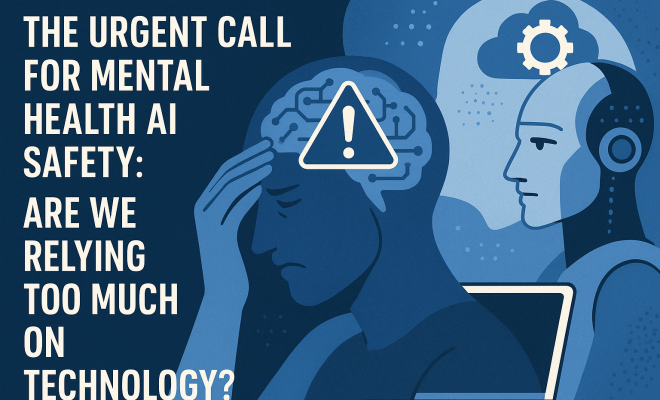
Mental Health AI Safety: Over-Reliance on Chatbots?
“`html
The rise of technology has sparked a revolution in many areas of life, but perhaps no field has felt its impact quite like mental health. The emergence of mental health AI chatbots has captured our collective imagination, offering rapid access to emotional support for those in need. This technological advancement seems promising, especially for individuals seeking quick help or those hesitant to seek traditional therapy. However, the question lingers: how safe is it to rely on artificial intelligence for mental health? As these chatbots become increasingly integrated into our lives, understanding the intricacies of mental health AI safety becomes essential.
The Growing Popularity of AI in Mental Health
In recent years, there’s been a dramatic increase in the popularity of AI-driven mental health tools. Platforms like Woebot and Wysa have become household names, offering users an anonymous, accessible outlet for their emotional struggles. These chatbots employ machine learning algorithms to provide tailored responses, offering advice and sometimes even therapeutic techniques.
The appeal is clear: users can seek help without the stigma often associated with traditional therapy. In a world where mental health concerns are escalating—especially among younger generations—the ability to quickly access support via chatbots is revolutionary. In fact, according to a 2022 survey by the American Psychological Association, around 36% of respondents preferred texting a chatbot over scheduling an in-person appointment with a therapist.
The Double-Edged Sword of Accessibility
While the ability to access mental health support instantaneously is undeniably beneficial, it raises critical concerns about over-dependence on non-human systems. As these AI tools become a primary source of support, there’s a risk that individuals may forgo or delay seeking professional help. After all, these chatbots lack the nuanced understanding that human clinicians possess.
Consider a person who experiences severe anxiety. They might find comfort in chatting with an AI, receiving immediate feedback and coping mechanisms. But what happens when their situation escalates? In such cases, a chatbot may not be equipped to recognize the need for more intensive intervention or to provide the empathetic responses that a human therapist can. The allure of immediate aid can quickly morph into a dangerous reliance on these machines, creating a false sense of security.
The Risks of Over-Dependence
Over-dependence on AI for mental health support poses several risks. The first is the potential for inadequate care. Mental health conditions are complex; they require a multifaceted approach that includes not just intervention but also ongoing support from trained professionals. Chatbots, while they can offer assistance, are limited by their programming and lack the depth of human experience.
Moreover, individuals may not fully realize that chatbots cannot replace professional help. The anonymity and ease of access can lead to complacency, where users choose to engage with an AI rather than reaching out to a qualified therapist. The American Psychological Association warns that reliance on AI for emotional support could lead to worsening conditions if underlying issues go unaddressed.
Building Trust in Mental Health AI
Trust is paramount when it comes to mental health care. For users to feel comfortable relying on AI, they need to believe in the effectiveness and safety of these tools. This trust can be built through transparency about AI capabilities and limitations. Developers should provide clear guidelines on what users can expect from their interactions with chatbots.
Furthermore, involving licensed mental health professionals in the development of these tools can enhance credibility. By integrating clinical expertise during the design phase, developers can ensure that chatbots are aligned with best practices in mental health care. For instance, a chatbot designed for anxiety management could incorporate Cognitive Behavioral Therapy (CBT) principles, under the guidance of mental health experts.
Regulating the AI Landscape
As mental health AI technology continues to proliferate, there’s an urgent need for regulation. Governments and health organizations must step in to create frameworks that ensure the safety and effectiveness of these tools. Currently, there’s a patchwork of regulations governing the use of AI in healthcare, which can lead to inconsistencies in quality and safety standards.
One potential solution is the establishment of certification programs for mental health AI tools. Similar to how medications undergo rigorous testing before approval, AI applications could be subjected to evaluation by regulatory bodies. This would not only help ensure that the tools are safe but also instill confidence in users. (See: National Institute of Mental Health statistics.)
Education and Awareness
Raising awareness about the capabilities and limitations of mental health AI tools is crucial. Users must be educated on when to seek human intervention and how to identify escalating mental health issues that require professional support. Educational campaigns can help bridge the gap between enthusiasm for technology and the need for traditional therapeutic approaches.
Incorporating mental health education into school curriculums can also prepare younger generations to use AI responsibly. As these tools become part of everyday life for many, understanding how to interact with them safely will be essential for future users.
Ethical Considerations in AI Development
The ethical implications of deploying AI in mental health care cannot be ignored. Developers must prioritize user welfare over profit. This means designing tools that genuinely support mental health rather than merely driving engagement or revenue. The ethical principle of ‘do no harm’ must apply to these technologies just as it does in traditional healthcare settings.
Additionally, issues related to privacy and data security demand careful attention. Users often share sensitive personal information with chatbots, and safeguarding this data is critical. Developers need to implement robust security measures to protect user data while also being transparent about how it is used.
The Role of Human Interaction
Despite the rising popularity of AI, the importance of human interaction in mental health care remains undeniable. Therapy provides a level of empathy, understanding, and trust that AI cannot replicate. For many, the relationship with a therapist is a core component of healing. Thus, while AI can serve as an initial point of contact or supplement to therapy, it should not replace the invaluable connection between a patient and a clinician.
AI should also be seen as a tool that complements traditional methods rather than an alternative. For example, therapists might use AI-driven data to inform their understanding of a patient’s progress, integrating insights gained from chatbot interactions into therapy sessions.
The Future of Mental Health AI Safety
The future of mental health AI safety hinges on collaboration among developers, mental health professionals, and regulators. As technology continues to evolve, so must our approach to its integration into mental health care. The goal should be to create a system where AI serves as a valuable ally in providing support while ensuring that users receive the comprehensive care they need.
Ultimately, fostering a balanced relationship between technology and human interaction will be essential for the effective use of mental health AI. By addressing safety concerns and being mindful of the unique challenges posed by these tools, we can harness their potential without compromising mental health care quality.
Real-World Examples of AI in Mental Health
Several organizations and projects have successfully implemented AI in mental health care, each showcasing unique approaches to improve accessibility and support. For instance, the AI-based platform, Ginger, combines chat-based support with video therapy sessions. Users can first interact with a chatbot to assess their needs, and if necessary, they can quickly transition to speaking with a licensed therapist. This blended model provides users with immediate resources while also ensuring they have access to human intervention when required.
Another notable example is Replika, an AI chatbot designed to create a friend-like interaction. Users can talk to Replika about their feelings and experiences, allowing for a safe space to express thoughts without judgment. While Replika is not a replacement for therapy, many users report feeling less isolated after engaging with the AI, suggesting that even simple interactions can have a beneficial impact on mental well-being.
Statistics on Mental Health AI Usage
Statistics regarding the use of AI in mental health provide insight into its growing acceptance. A report by the World Health Organization in 2023 indicated that about 50% of individuals aged 18-34 have used mental health apps, with many stating they feel more comfortable discussing their mental health in a digital format than in person. Furthermore, a survey conducted by the Pew Research Center found that nearly 40% of adults who have experienced anxiety or depression are open to using AI-driven tools for mental health support.
These numbers highlight how people are increasingly willing to incorporate technology into their mental health management strategies, indicating a shift in the landscape of mental health care that embraces both human and AI-driven resources. (See: World Health Organization on mental health.)
Expert Perspectives on AI in Mental Health
Experts in both technology and mental health are recognizing the potential benefits and risks of AI in this space. Dr. John Torous, a psychiatrist at Harvard Medical School, has noted that while AI can improve access and reduce stigma, it’s crucial that we approach these tools with caution. He emphasizes the importance of ongoing research to evaluate the long-term effects of AI on mental health outcomes and the necessity of integrating these tools with existing care models.
Similarly, Dr. Helen O’Connor, a clinical psychologist, has pointed out that AI can serve as a helpful adjunct to therapy but warns against replacing the therapeutic alliance built between a client and a clinician. According to her, “AI can provide immediate coping strategies, but it lacks the depth of understanding and emotional support that comes from human connection.”
Frequently Asked Questions about Mental Health AI Safety
What is mental health AI safety?
Mental health AI safety refers to the measures and considerations necessary to ensure that AI-driven tools used for mental health support do not cause harm to users and effectively meet their needs.
Can AI chatbots replace therapists?
No, AI chatbots should not replace therapists. While they can provide immediate support and coping strategies, they lack the empathy, understanding, and complex intervention capabilities of a trained mental health professional.
How can I ensure the AI tool I’m using is safe?
Look for AI tools that have been developed with input from mental health professionals, that follow ethical guidelines, and that have received some form of certification or regulatory approval regarding their effectiveness and safety.
What should I do if my mental health worsens while using an AI tool?
If your mental health worsens while using an AI tool, it’s crucial to reach out to a mental health professional immediately. AI should be used as a supplementary support, not as a substitute for professional help.
Are there privacy concerns with mental health AI tools?
Yes, privacy should always be a concern when using mental health AI tools. It’s essential to choose platforms that prioritize data security and are transparent about how your information will be used and stored.
Can AI tools help with severe mental health conditions?
AI tools can provide support for mild to moderate mental health issues, offering coping strategies and resources, but they are not equipped to handle severe mental health conditions. Those should be managed by licensed professionals.
Challenges in Integrating AI into Mental Health Services
Integrating AI into existing mental health services does come with its own set of challenges. One major hurdle is the resistance from mental health professionals themselves. Many clinicians express skepticism about the effectiveness of AI tools, particularly when it comes to issues requiring nuanced understanding and empathy. Consequently, building partnerships that encourage collaboration between tech developers and mental health professionals is crucial for creating AI tools that truly serve patients’ needs.
Another challenge is ensuring that AI systems are accessible to everyone, including marginalized communities who may face barriers to technology. This includes providing services in multiple languages and ensuring compatibility with various devices. If AI tools are only available to tech-savvy individuals, it can widen the gap in mental health care accessibility, leaving vulnerable populations without essential support.
The Role of Data in AI Mental Health Tools
Data plays a critical role in the effectiveness of AI mental health tools. These systems rely heavily on data to improve their algorithms and provide better responses. However, the collection and use of data raise ethical questions about consent and privacy. It’s vital that users are informed about how their data will be used and that they have control over it. Anonymity and data protection measures must be prioritized to ensure that users feel safe when sharing sensitive information with AI tools.
Furthermore, the quality of data used for training AI can significantly impact its performance. If the data is biased or incomplete, it can lead to inaccurate or harmful outputs. It’s essential for developers to use diverse datasets that represent different demographics and experiences to build AI tools that are effective and equitable.
The Importance of User Feedback
User feedback is crucial in the ongoing development and refinement of mental health AI tools. Engaging with users can provide valuable insights into what works and what doesn’t. Feedback can guide developers in making necessary adjustments to improve user experience and effectiveness. This is particularly important given the sensitive nature of mental health, where user trust and comfort directly impact the tool’s effectiveness.
For example, many AI platforms encourage users to provide feedback after their interactions. This data can be analyzed to identify patterns in user satisfaction or to discover areas where the chatbot may be falling short. By continuously adapting and evolving based on user feedback, AI tools can remain relevant and useful over time.
Looking Ahead: The Future of Mental Health AI
As mental health AI continues to evolve, the potential for innovation is vast. Future developments may include more personalized and context-aware AI systems that can adapt their responses based on real-time emotional analysis. Imagine a scenario where an AI tool can detect a user’s emotional tone and respond with tailored strategies that fit their state of mind, enhancing the effectiveness of the support provided.
Additionally, we may see an increase in hybrid models that combine AI with human oversight. This could involve clinicians using AI to analyze patient data and provide tailored recommendations, while still offering the warmth and understanding that comes from human interaction. Such models would aim to balance the efficiency of AI with the vital human element of care.
Conclusion
The integration of AI in mental health represents both promise and peril. While these tools can democratize access to support and provide immediate assistance, they raise significant questions about safety, efficacy, and ethical use. Addressing these concerns proactively through regulation, education, and collaborative development will be key in ensuring that mental health AI serves as a safe and effective resource for those in need.
“`
Trending Now
Frequently Asked Questions
What are the risks of using AI for mental health support?
While AI chatbots provide instant access to support, they lack the nuanced understanding of human emotions that trained professionals possess. Over-reliance on these tools may lead individuals to delay or avoid seeking necessary professional help, potentially exacerbating mental health issues.
Are mental health AI chatbots effective?
Mental health AI chatbots like Woebot and Wysa can offer tailored responses and techniques for emotional support, making them effective for users seeking immediate help. However, their effectiveness can vary, and they should not replace professional therapy for serious mental health conditions.
How do AI chatbots help with mental health?
AI chatbots assist with mental health by providing users with immediate access to emotional support, offering tailored advice, and utilizing therapeutic techniques. They serve as a convenient option for those hesitant to seek traditional therapy, particularly among younger generations.
Is it safe to rely on AI for mental health care?
Relying solely on AI for mental health care raises safety concerns, as these systems cannot fully comprehend complex human emotions. It's crucial to use them as a supplementary resource rather than a replacement for professional mental health services.
What is the future of AI in mental health?
The future of AI in mental health looks promising, with continued advancements in technology likely to improve the effectiveness of chatbots. However, ongoing discussions about safety, ethical considerations, and the importance of human oversight will shape how these tools are integrated into mental health care.
Agree or disagree? Drop a comment and tell us what you think.