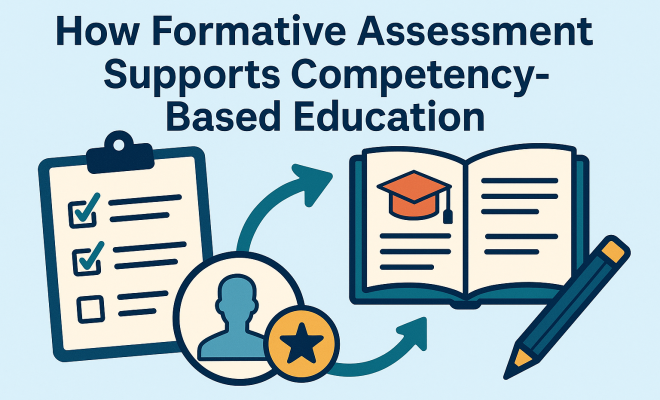
How Formative Assessment Supports Competency-Based Education
“`html
Understanding the Intersection of Formative Assessment and Competency-Based Education
The landscape of education is continually evolving, and one of the most impactful developments in recent years has been the rise of competency-based education (CBE). This approach prioritizes students’ mastery of skills and knowledge over traditional metrics like grades and seat time. But how do educators assess whether students have truly mastered competencies? This is where formative assessment in competency-based education comes into play.
What Is Competency-Based Education?
Competency-based education is an instructional philosophy that focuses on equipping students with specific skills and knowledge that they can directly apply in real-world situations. Unlike traditional education models, where progression through a curriculum is often tied to fixed timelines, CBE allows students to learn at their own pace. They move forward only when they demonstrate a thorough understanding of the subject matter.
In essence, CBE emphasizes learning outcomes and provides flexibility in how students achieve these outcomes. This method can be particularly beneficial for adult learners or non-traditional students who may have varying levels of experience and prior knowledge.
The Role of Formative Assessment
Formative assessment refers to a variety of assessment methods used by educators to monitor student learning progress. This type of assessment is typically conducted during the learning process, rather than at the end of a unit or course. Its primary purpose is to provide immediate feedback that can guide both teaching and learning.
In the context of competency-based education, formative assessments play a crucial role. They help educators identify which competencies students have mastered and which areas need more attention. This feedback loop is vital for adapting instruction to meet individual student needs, ensuring that each learner achieves the desired competencies.
Key Benefits of Formative Assessment in CBE
Integrating formative assessments into competency-based education presents numerous advantages:
- Personalized Learning: Formative assessments allow for tailored instruction based on individual student needs. This personalization increases engagement and motivation.
- Immediate Feedback: Students receive timely feedback on their understanding, enabling them to adjust their learning strategies and focus on areas where they need improvement.
- Encouragement of a Growth Mindset: Continuous assessment fosters a culture of learning and growth, where mistakes are viewed as opportunities for development rather than failures.
- Data-Driven Decision Making: Teachers can use data from formative assessments to make informed instructional choices, ensuring they are meeting their students’ needs effectively.
Types of Formative Assessments Used in CBE
There are various methods for implementing formative assessments in a competency-based framework. Each type serves a specific purpose and can be adapted to various learning environments:
- Quizzes and Tests: Short quizzes can provide quick insights into students’ grasp of the material, allowing for immediate instructional adjustments.
- Peer Assessment: Students evaluate each other’s work, promoting collaborative learning and helping them develop critical thinking skills.
- Self-Assessment: Encouraging students to reflect on their own learning helps them identify their strengths and areas for improvement.
- Portfolios: Compiling a portfolio of work allows students to track their progress over time, showcasing their mastery of competencies.
- Interactive Classroom Activities: Activities such as group discussions, think-pair-share, and problem-solving tasks can provide real-time feedback on students’ understanding.
Implementing Formative Assessment in CBE
Implementing formative assessments effectively requires thoughtful planning and execution. Here are key strategies for educators: (See: Competency-Based Education Overview.)
- Establish Clear Learning Objectives: Clearly defined competencies should guide the development of formative assessments. This clarity helps students understand what is expected of them.
- Integrate Assessments Into Daily Activities: Formative assessments should be woven into the fabric of daily lessons rather than being treated as isolated events. This integration allows for continuous monitoring of student progress.
- Provide Ongoing Feedback: Feedback should not be a one-time event. Continuous, constructive feedback is vital for helping students understand their learning journey.
- Encourage Student Reflection: Allow students to reflect on their learning and the feedback they receive. This reflection can enhance their understanding and commitment to their educational pathway.
Challenges in Formative Assessment Implementation
While the benefits of formative assessment in competency-based education are significant, challenges can arise during implementation:
- Time Constraints: Educators often face tight schedules that can limit the time available for assessments and feedback.
- Standardization Issues: Creating fair and consistent formative assessments across different competencies can be challenging, especially in large or diverse classes.
- Training Needs: Educators may require additional training and resources to effectively design and implement formative assessments aligned with CBE principles.
Current Trends in Formative Assessment
As educational practices evolve, so too do the methods of formative assessment. Here are some current trends gaining traction:
- Technology Integration: Digital tools and platforms are increasingly being used for formative assessments, allowing for real-time data collection and analysis.
- Gamification: Incorporating game-like elements into assessments can increase student engagement and motivation, making learning more enjoyable.
- Competency Mapping: Some educational institutions are beginning to use competency mapping to visualize student progress and tailor instruction more effectively.
Expert Perspectives on Formative Assessment
Experts in the field of education emphasize the critical role that formative assessments play in competency-based education. Dr. Linda Darling-Hammond, an education researcher, emphasizes that “effective formative assessment practices lead to better student outcomes and deeper understanding.”
Furthermore, educational consultant Grant Wiggins states that “the best assessments give students opportunities to demonstrate understanding in varied ways.” This perspective aligns perfectly with the philosophy of competency-based education, where mastery takes precedence over rote memorization.
The Importance of Feedback in Formative Assessment
Feedback is a cornerstone of effective formative assessment. It is not merely about telling students what they did wrong; it’s about guiding them on how they can improve. According to research by Hattie and Timperley, feedback that is specific, timely, and constructive can significantly enhance student learning outcomes.
For example, instead of simply marking a math problem as incorrect, a teacher might explain the steps needed to arrive at the correct answer. This not only addresses the current misunderstanding but also builds a framework for future problem-solving. Implementing structured feedback sessions can help students understand concepts they struggle with while fostering a sense of autonomy and responsibility in their learning.
Case Studies: Successful Implementation of Formative Assessment in CBE
To better illustrate the effectiveness of formative assessment in competency-based education, let’s explore some case studies:
Case Study 1: A Community College in California
A community college in California implemented a CBE model in its nursing program. Faculty integrated formative assessments such as simulations and peer reviews, allowing students to receive feedback while performing clinical tasks. The results showed that students who engaged in regular formative assessment scored significantly higher on their practical exams compared to those who did not. This case emphasizes the importance of real-time feedback in skill-based learning environments.
Case Study 2: A High School in New York
A high school in New York adopted a blended learning approach, using technology to facilitate formative assessments. Through online quizzes and interactive discussions, teachers could track student progress in real time. They found that students were more engaged and demonstrated a stronger grasp of material when they received immediate feedback. This illustrates how technology can enhance formative assessment practices in a CBE framework. (See: Learning and Development Resources.)
Statistics Supporting Formative Assessment
Numerous studies highlight the impact of formative assessment on student performance. According to a report by the Assessment Institute, schools that adopted formative assessment practices saw an average increase of 10-20% in student achievement scores. Additionally, a meta-analysis conducted by Hattie found that formative assessment can increase student learning outcomes by up to 30%. These statistics underscore the vital role that formative assessment plays in supporting student success within competency-based education.
Best Practices for Formative Assessment in CBE
While implementing formative assessment strategies, it’s crucial to adhere to best practices. Here are some recommendations:
- Align Assessments with Competencies: Ensure that formative assessments directly relate to the specific competencies students are expected to master.
- Foster a Safe Learning Environment: Create a classroom culture where students feel safe to make mistakes and learn from them. Encouragement and support are essential.
- Use Diverse Assessment Methods: Varying assessment methods keeps students engaged and allows for a more comprehensive understanding of their learning.
- Involve Students in the Assessment Process: Allow students to contribute to the creation of assessments or evaluation criteria. This involvement can increase their investment in their own learning.
Common Misconceptions about Formative Assessment
Despite the clear advantages of formative assessment, several misconceptions persist, potentially hindering its implementation:
- Formative Assessment is Just Testing: Many educators equate formative assessment only with quizzes or tests. However, it encompasses a wide range of activities aimed at gauging understanding.
- Only Teachers Can Assess: Some believe that only educators can conduct assessments. Peer and self-assessments are equally valuable and empower students.
- Feedback is Optional: There’s a notion that feedback is an add-on rather than an integral part of the learning process. In reality, timely and constructive feedback is essential for effective formative assessment.
Frequently Asked Questions (FAQ)
What is the difference between formative and summative assessment?
Formative assessment is conducted throughout the learning process to monitor student progress and improve learning outcomes, while summative assessment evaluates student learning at the end of an instructional period, usually through final exams or projects.
How can teachers create effective formative assessments?
Teachers can create effective formative assessments by aligning them with clear learning objectives, using diverse methods (like quizzes, peer reviews, and self-assessments), and providing actionable feedback to students.
Can formative assessments be used in online learning environments?
Absolutely! Formative assessments can be effectively used in online learning through digital quizzes, discussion forums, and interactive activities that encourage student engagement and provide real-time feedback.
How often should formative assessments be conducted?
Formative assessments should be conducted regularly, ideally integrated into daily lessons. The frequency can vary depending on the subject matter and the specific competencies being addressed.
What role does technology play in formative assessment?
Technology can enhance formative assessment by providing platforms for real-time data collection, analysis, and feedback. It allows for interactive assessments that can engage students and streamline the assessment process.
Additional Strategies for Enhanced Formative Assessment
To further improve the effectiveness of formative assessment within a competency-based framework, consider these additional strategies:
- Utilize Learning Analytics: Learning analytics can help teachers understand how students are engaging with material over time. By analyzing data patterns, educators can adjust their instruction to better meet student needs.
- Incorporate Collaborative Learning: Encourage students to work together on projects or study groups. Collaborative learning can provide additional insights through peer interactions, as students explain concepts to each other.
- Integrate Real-World Problem Solving: Design assessments that require students to apply their knowledge to real-world scenarios. This not only tests their competencies but also prepares them for future challenges they may face in their careers.
Evaluating the Effectiveness of Formative Assessment
To ensure that formative assessment practices are effective, it is essential to evaluate them regularly. Here are some methods for evaluation:
- Reflective Practice: Encourage educators to engage in reflective practice by assessing their own instructional strategies and the impact of formative assessments on student learning.
- Student Surveys: Collect feedback from students about their learning experiences and perceptions of the assessment methods used. This can provide valuable insights into what works and what needs adjustment.
- Peer Observations: Implement peer observation sessions where educators can observe each other’s formative assessment techniques and share constructive feedback.
Looking Ahead: The Future of Formative Assessment in CBE
The future of formative assessment in competency-based education is promising, particularly as technology evolves and educational paradigms shift. The increasing availability of sophisticated analytics tools and adaptive learning technologies can further enhance formative assessments. For instance, artificial intelligence can assist in personalizing assessments to match each student’s learning pace and style.
Moreover, as educational institutions continue to embrace flexibility and personalized learning paths, the role of formative assessment will be paramount. Educators will need to be agile in their approach, continually refining their methods to ensure they are meeting the diverse needs of all students.
Conclusion: The Future of Formative Assessment in CBE
As competency-based education continues to reshape the educational landscape, the role of formative assessment will only become more significant. By providing continuous feedback and fostering personalized learning experiences, formative assessments empower students to take ownership of their education.
The key for educators is to embrace these assessment techniques thoughtfully, ensuring that they not only measure learning but also enhance the overall educational experience. Ultimately, integrating formative assessment in competency-based education can lead to deeper understanding, increased student engagement, and better preparedness for real-world challenges.
“`
Trending Now
Frequently Asked Questions
What is competency-based education?
Competency-based education (CBE) is an instructional approach that emphasizes students mastering specific skills and knowledge rather than adhering to fixed timelines. It allows learners to progress at their own pace, ensuring they fully understand the material before moving forward. This model is particularly beneficial for adult learners with varying levels of prior knowledge.
How does formative assessment work in education?
Formative assessment involves various methods used by educators to monitor student progress during the learning process. It provides immediate feedback that guides both teaching and learning, helping educators identify areas where students excel or need additional support. This ongoing evaluation is essential for adapting instruction to meet individual student needs.
Why is formative assessment important in competency-based education?
In competency-based education, formative assessments are crucial as they help educators determine which competencies students have mastered and which require further attention. This feedback loop allows for tailored instruction, ensuring that each learner can achieve the desired competencies at their own pace.
What are the benefits of competency-based education?
Competency-based education offers numerous benefits, including personalized learning experiences, flexibility in pacing, and a focus on mastering skills and knowledge. This approach is particularly advantageous for non-traditional students and adult learners, as it accommodates varying levels of prior experience and learning styles.
How can educators implement formative assessments effectively?
Educators can implement formative assessments effectively by using diverse assessment methods such as quizzes, discussions, and projects throughout the learning process. Providing timely and constructive feedback is key, as it helps students understand their progress and areas for improvement, ultimately enhancing their learning experience.
What’s your take on this? Share your thoughts in the comments below — we read every one.