Boost Science Scores: Kinesthetic Learning for High School
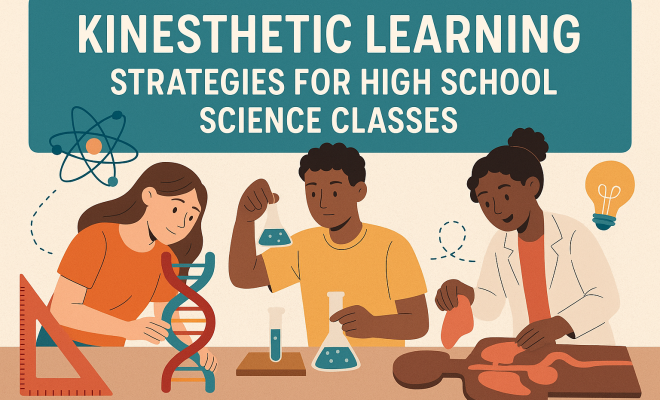
“`html
In the ever-evolving world of education, teachers continuously seek effective approaches to engage their students. One pedagogical method that has gained significant traction, especially in high school science classes, is kinesthetic learning. This style emphasizes hands-on experiences and physical activity as crucial components of the learning process. For educators looking to enhance their teaching strategies, understanding and employing kinesthetic learning strategies can dramatically improve student engagement and comprehension.
Understanding Kinesthetic Learning
Before diving into practical strategies, it’s important to grasp what kinesthetic learning entails. Kinesthetic learners thrive when they can physically engage with the material, whether through experimentation, movement, or tactile activities. This approach stands in contrast to traditional learning styles that primarily focus on auditory and visual methods. According to educational psychologist Howard Gardner, kinesthetic learning is part of his theory of multiple intelligences, highlighting that every student has unique strengths and preferences.
The Importance of Kinesthetic Learning in Science Education
Science is inherently a hands-on subject; it involves observation, experimentation, and practical application of concepts. Kinesthetic learning strategies align perfectly with these core elements. By integrating movement and action into science lessons, educators can foster a deeper understanding of complex theories and principles. Research has shown that students who participate in hands-on activities retain information better, demonstrate improved problem-solving skills, and exhibit higher levels of motivation.
Key Kinesthetic Learning Strategies for High School Science
Implementing effective kinesthetic learning strategies requires creativity and adaptability. Here are ten actionable strategies to help high school science teachers create an engaging learning environment:
1. Hands-On Experiments
Nothing beats the impact of a well-structured hands-on experiment. Instead of merely reading about chemical reactions, for instance, students can conduct experiments that allow them to observe these reactions firsthand. This active participation not only solidifies learning but also encourages collaboration and communication among peers.
2. Interactive Simulations
Utilize technology to create interactive simulations that mimic real-world scientific phenomena. For example, students can explore the principles of physics by manipulating virtual objects. Programs like PhET provide a plethora of simulations that engage students in problem-solving while allowing them to experiment without the constraints of a physical lab.
3. Role-Playing and Drama
Transform complex scientific concepts into drama by having students engage in role-playing activities. For instance, in a biology class, students could act out the process of cellular respiration. This method helps solidify understanding through storytelling and can be particularly effective for visualizing processes that are otherwise abstract.
4. Science Stations
Create different science stations around the classroom, each focusing on a particular concept or experiment. Students can rotate through these stations, engaging in various hands-on activities. This strategy promotes movement and allows students to explore multiple topics in one class period. It also encourages collaboration, as students discuss their findings with their peers.
5. Outdoor Learning Experiences
Taking science lessons outside can enhance kinesthetic learning. Activities such as nature walks to observe ecosystems or outdoor experiments with weather phenomena allow students to experience science in the real world. These experiences can deepen their understanding of scientific concepts and demonstrate the relevance of science in everyday life.
6. Building Models
Constructing models helps students visualize complex structures. Whether it’s building a model of the solar system or creating a DNA double helix with craft materials, hands-on model-building encourages spatial reasoning and creativity. This method is especially beneficial in biology and chemistry, where structures can be intricate and challenging to grasp through images alone.
7. Interactive Games
Incorporate educational games that require movement and interaction, such as scavenger hunts featuring scientific terminology or concepts. Games not only make learning fun but can also reinforce knowledge through repetition and application in a competitive format. Consider using tools like Kahoot! or Quizlet Live to create engaging review sessions.
8. Experiential Learning Projects
Engage students in long-term projects that require them to apply scientific principles to real-world problems. For example, a project could involve designing a sustainable garden, incorporating knowledge from biology, environmental science, and even chemistry. This strategy encourages critical thinking and application of knowledge in practical scenarios.
9. Use of Props and Manipulatives
Incorporating props and manipulatives into lessons can enhance tactile engagement. For example, in a physics lesson on motion, students can use balls and ramps to explore concepts such as gravity and acceleration. These tangible tools help bridge the gap between theory and practice, making abstract concepts more accessible. (See: Learning Strategies and Treatment.)
10. Reflection Through Movement
Lastly, consider integrating movement into reflection sessions. After completing a unit or experiment, have students participate in a movement-based reflection activity, such as forming a human graph to represent their understanding of a concept. This not only makes reflection active but also fosters discussion and peer feedback.
Implementing Kinesthetic Learning Strategies in the Classroom
While the strategies above offer practical ways to integrate kinesthetic learning, successful implementation requires careful planning and adaptability. Here are some steps educators can take to ensure these strategies are effective:
Assess Student Needs
Start by understanding your students’ learning preferences and needs. Conduct surveys or informal assessments to gauge their interest in different kinesthetic activities. This insight will help tailor your approach to maximize engagement.
Align with Curriculum Standards
Ensure that the kinesthetic activities you choose align with educational standards and learning objectives. This alignment will not only validate your methods but also help students see the relevance of the activities to their overall education.
Provide Clear Instructions
When introducing kinesthetic activities, offer clear and concise instructions. Demonstrate expectations and safety protocols, especially when conducting experiments or using equipment. This clarity will help students feel confident and prepared to participate.
Foster a Supportive Environment
Encourage a culture of collaboration and support within the classroom. Kinesthetic learning often involves teamwork, and fostering an environment where students feel comfortable sharing ideas and asking questions can enhance the overall experience.
Challenges and Considerations
While employing kinesthetic learning strategies has numerous benefits, it’s not without challenges. Teachers must consider classroom dynamics, resource availability, and time constraints. Here are a few challenges to keep in mind:
Resource Limitations
Not all schools have access to the necessary resources for extensive hands-on activities. Educators may need to be creative and resourceful, utilizing everyday materials or collaborating with local organizations to obtain supplies.
Time Constraints
Science classes often face time constraints, leaving little room for extensive kinesthetic activities. Educators should plan lessons carefully, ensuring that hands-on activities complement rather than disrupt core curricular objectives.
Diverse Learning Styles
While kinesthetic strategies benefit many students, not all learners are kinesthetic. It’s crucial to incorporate a mix of teaching methods to cater to diverse learning styles. Balancing kinesthetic activities with auditory and visual learning opportunities will create a more inclusive classroom environment.
Current Relevance of Kinesthetic Learning Strategies
As educational paradigms shift towards personalized learning, the relevance of kinesthetic learning strategies has never been more pronounced. In a world where technology and hands-on experiences intersect, students must develop critical thinking skills and adaptability. Kinesthetic learning fosters these skills, preparing students not only for academic success but also for real-world challenges.
Promoting Lifelong Learning
By incorporating kinesthetic learning strategies, educators can instill a love for science that extends beyond the classroom. Engaging students in hands-on activities nurtures curiosity and a desire to explore scientific concepts in their daily lives. This engagement is vital for promoting lifelong learning and a deeper understanding of the world around them.
Kinesthetic Learning in Different Subjects
While the focus here has been on science education, kinesthetic learning strategies can be powerful across all subjects. Here’s a look at how these strategies can be adapted for other disciplines:
Mathematics
In math, kinesthetic learning can be employed through activities like using physical objects to demonstrate geometric concepts or employing movement-based games to teach addition and subtraction. For example, students can use hopscotch to practice multiplication tables, jumping on the correct squares for answers. (See: Kinesthetic Learning in Education.)
Language Arts
In language arts, students can act out scenes from plays or literature, which helps them connect emotionally with the characters and themes. Creating word maps on large sheets of paper allows students to physically engage with vocabulary and grammar concepts while collaborating with classmates.
History
History classes can benefit from simulating historical events or debates. Role-playing as historical figures in a mock trial can deepen understanding of context and perspectives. Additionally, students can create timelines using string and index cards to visualize events and their interconnections.
Statistics Supporting Kinesthetic Learning
Studies consistently show the effectiveness of kinesthetic learning strategies. For instance, research published in the Journal of Educational Psychology indicates that students engaged in hands-on learning retain 75-90% of the information compared to 5-10% through traditional lecture methods. Furthermore, a study by the National Training Laboratories shows that learners who engage in kinesthetic activities are likely to remember concepts longer than those who learn through listening or reading alone.
Additionally, the National Center for Learning Disabilities highlights that kinesthetic learning can lead to improved performance. They report that students who engage in physical activity during learning show increased focus and retention, proving that movement can enhance cognitive function.
Expert Perspectives on Kinesthetic Learning
Experts in education advocate strongly for the inclusion of kinesthetic learning strategies. Dr. Patricia Wolfe, a leading voice in brain-based learning, emphasizes that “movement helps the brain to process and retain information.” She suggests that incorporating physical activity into learning can aid in memory retention and engagement.
Moreover, Dr. Richard Mayer, an educational psychologist, notes that “students learn better when they are actively involved in the learning process.” His research supports the idea that kinesthetic learning fosters greater understanding and skill application, making it a vital component of modern educational practices.
Practical Tips for Teachers
If you’re looking to implement kinesthetic learning strategies in your classroom, consider these practical tips:
- Start Small: Begin by integrating one or two kinesthetic activities into your existing lesson plans. Gradually expand as you see positive results.
- Collaborate with Colleagues: Share ideas and resources with fellow teachers. Team teaching can enrich the learning experience and provide diverse perspectives.
- Seek Student Feedback: After implementing kinesthetic strategies, ask students for their input. Their feedback can help you refine your approach and make adjustments as needed.
- Utilize Community Resources: Partner with local organizations or scientists who can provide support, resources, or expertise on certain topics.
- Integrate Technology: Use educational apps and tools that complement kinesthetic learning. Augmented reality, for instance, can provide engaging, interactive experiences that enhance understanding of complex subjects.
FAQ: Kinesthetic Learning Strategies
What exactly are kinesthetic learning strategies?
Kinesthetic learning strategies are teaching methods that involve physical activities and hands-on experiences to help students understand concepts better. These strategies leverage movement and tactile engagement, making learning more interactive and enjoyable.
How can I determine if my students are kinesthetic learners?
Observe your students during activities. Kinesthetic learners often excel when they can move around, manipulate objects, or participate in hands-on tasks. Surveys or informal assessments can also provide insights into their preferred learning styles.
Are kinesthetic strategies effective for all age groups?
Yes, while kinesthetic strategies are particularly beneficial for younger students, they can be adapted for learners of all ages. The key is to ensure that activities are appropriate for the age and maturity level of your students.
What challenges might I face when implementing kinesthetic learning strategies?
Challenges can include time constraints, resource availability, and managing classroom dynamics. However, careful planning and creativity can help overcome these hurdles. Incorporating kinesthetic activities mindfully alongside traditional methods can also strike a balance.
Can kinesthetic learning strategies be used in remote or online learning environments?
Absolutely! While it may seem challenging, many kinesthetic activities can be adapted for online learning. For instance, students can conduct experiments at home, or teachers can assign movement-based challenges that students can do in their own space.
Expanding Kinesthetic Learning Beyond the Classroom
Kinesthetic learning strategies can extend beyond traditional classroom settings. When educators and parents collaborate to support kinesthetic learning in various environments, students benefit from a more rounded educational experience. Here are some suggestions for fostering kinesthetic learning outside the classroom:
1. Field Trips
Organizing field trips to science centers, nature reserves, or factories can provide real-world applications of classroom concepts. Students can perform experiments or engage in activities that encourage them to think critically while learning about science in a practical context.
2. Community Projects
Involve students in community projects that require them to apply their scientific knowledge in real-life situations. For example, participating in a local clean-up initiative can help students understand environmental science while benefiting the community.
3. Summer Programs
Encourage students to participate in summer programs or camps that focus on science, technology, engineering, and mathematics (STEM). Many organizations offer hands-on learning experiences that allow students to engage in kinesthetic learning during their breaks.
4. At-Home Activities
Parents can encourage kinesthetic learning at home through simple activities. Cooking can be a great way to explore chemistry, while gardening can introduce biological concepts. These activities allow students to see the application of their classroom knowledge in everyday life.
Future Directions for Kinesthetic Learning Strategies
As educational practices continue to evolve, kinesthetic learning strategies are likely to become even more integral to teaching. Here are some potential future directions for this approach:
1. Integration with Technology
The integration of technology with kinesthetic learning is on the rise. Virtual reality (VR) and augmented reality (AR) could provide immersive experiences where students can physically interact with simulations, enhancing their understanding of complex concepts.
2. Personalized Learning
As personalized learning becomes more prevalent, kinesthetic strategies can be tailored to meet the unique needs of each student. By offering a blend of kinesthetic, auditory, and visual activities, educators can create a more inclusive and effective learning environment.
3. Collaborative Learning Environments
Future classrooms may emphasize collaborative learning environments that incorporate kinesthetic strategies. Flexible seating arrangements and movable furniture can encourage movement and collaboration, making learning more dynamic and interactive.
Conclusion
Incorporating kinesthetic learning strategies into high school science classes offers a wealth of benefits, from increased engagement to enhanced understanding of complex concepts. By implementing hands-on activities, interactive simulations, and collaborative projects, educators can create a dynamic and inclusive learning environment. While challenges exist, the advantages of fostering kinesthetic learning far outweigh the obstacles. By embracing this teaching approach, educators can inspire the next generation of scientists and innovators.
“`
Trending Now
Frequently Asked Questions
What are kinesthetic learning strategies?
Kinesthetic learning strategies involve hands-on experiences and physical activities that allow students to engage with the material actively. This approach enhances understanding and retention by encouraging movement and experimentation, making it particularly effective in subjects like science.
Why is kinesthetic learning important in science education?
Kinesthetic learning is crucial in science education because it aligns with the subject's hands-on nature. It promotes deeper comprehension of complex concepts through active participation, leading to better retention, improved problem-solving skills, and increased student motivation.
How can teachers implement kinesthetic learning in the classroom?
Teachers can implement kinesthetic learning by incorporating activities such as experiments, simulations, and physical movement related to the lesson. Creative approaches like role-playing or building models can also effectively engage students and reinforce learning.
What are some examples of kinesthetic activities for high school science?
Examples of kinesthetic activities for high school science include conducting hands-on experiments, creating models of scientific concepts, participating in outdoor explorations, and using interactive simulations that require physical engagement with the material.
How do kinesthetic learners differ from other learning styles?
Kinesthetic learners differ from other learning styles by their preference for active, hands-on involvement in the learning process. While visual and auditory learners may excel with traditional methods, kinesthetic learners retain information better through physical engagement and practical application.
What’s your take on this? Share your thoughts in the comments below — we read every one.