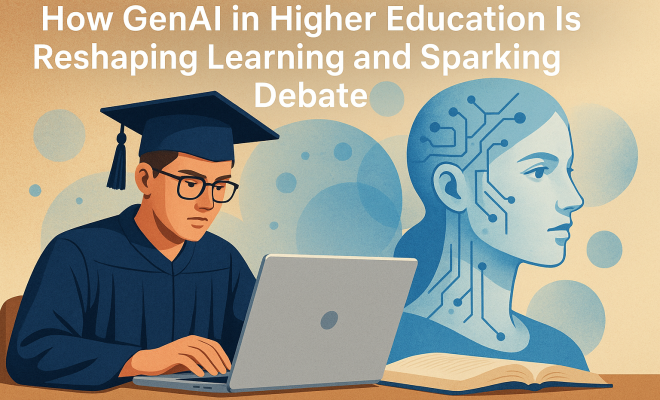
How GenAI in Higher Education Is Reshaping Learning and Sparking Debate
“`html
The rapid rise of generative AI technologies has sparked intense discussions about their role in higher education. As students increasingly harness these advanced tools, questions arise: Are they enhancing academic performance, or are they merely shortcuts that undermine the learning process? The exploration of GenAI in higher education is not only timely but also essential for understanding the evolving dynamics between technology and education.
The Intriguing Rise of GenAI
Generative AI, or GenAI, refers to algorithms capable of creating content, from text and images to music and programming code. In recent years, educational institutions have witnessed an uptick in the use of these tools among students. The allure of GenAI lies in its potential to simplify complex tasks, provide instant answers, and assist in creative endeavors. However, with these benefits come significant concerns regarding academic integrity, learning retention, and the long-term implications for students’ skill sets.
Students and Their Use of GenAI
According to a recent study published in ScienceDirect, students utilize GenAI in various ways, ranging from generating essay drafts to assisting in problem-solving for technical subjects. The convenience of having a virtual assistant to brainstorm ideas or refine written work is hard to resist. This ease of access raises a pressing question: are students using these tools to enhance their learning, or are they merely leaning on them as crutches?
Many students report that GenAI tools help them clarify concepts they struggle with in class. For instance, a student might input a complex mathematical problem into an AI tool and receive a step-by-step solution. This instant feedback can reinforce learning and provide a sense of accomplishment. However, the reliance on these tools can lead to a lack of deeper understanding, where students might only engage with the surface-level output rather than dive into the underlying principles.
Pros and Cons of GenAI in Academia
The advantages of integrating GenAI into higher education are numerous. First, these tools can enhance productivity. Students can quickly create outlines, generate research ideas, and even draft essays, which can significantly cut down the time spent on writing assignments. Additionally, GenAI can cater to diverse learning styles. Visual learners may benefit from AI-generated diagrams, while auditory learners could use text-to-speech features to consume information more effectively.
However, the cons cannot be ignored. One of the most significant concerns is the potential for academic dishonesty. With tools that can produce high-quality content, the risk of plagiarism increases. Institutions are grappling with how to uphold academic integrity in an age where students can easily pass off AI-generated work as their own. Furthermore, there’s the question of skill erosion. If students rely too heavily on GenAI, they may fail to develop critical thinking and problem-solving skills that are crucial for their future careers.
Impact on Learning Outcomes
The impact of GenAI on learning outcomes is a contentious topic. Proponents argue that these tools can facilitate a more personalized learning experience. For example, students can engage with GenAI on their terms, asking questions and receiving tailored explanations that might not be available in a traditional classroom setting. This personalized learning can empower students to take charge of their education.
On the flip side, critics point out that while GenAI can provide answers, it may not foster the same depth of understanding that comes from traditional methods of study. When students rely on AI to solve problems or write essays, they may miss out on the critical process of grappling with complex ideas and developing their own arguments. Ultimately, the long-term impact on their learning habits may inhibit their ability to think independently.
Institutional Responses to GenAI
As the use of GenAI in higher education becomes more prevalent, institutions are taking notice and developing strategies to address associated challenges. Some universities are implementing strict academic integrity policies that emphasize the responsible use of technology. For instance, students may be required to disclose the use of AI tools in their submissions, fostering transparency and accountability.
Additionally, educators are rethinking assessment methods. Traditional exams may no longer be effective in evaluating a student’s knowledge, given the availability of AI assistance. Schools are exploring project-based assessments, oral exams, and collaborative assignments that encourage critical thinking and teamwork. These methods aim to ensure that students engage meaningfully with the material rather than relying solely on AI for answers.
The Role of Educators in Integrating GenAI
Educators play a pivotal role in shaping how GenAI is utilized in the classroom. By integrating these tools into their teaching strategies, educators can guide students on how to use AI ethically and effectively. Training sessions and workshops on GenAI could empower both students and teachers to harness the technology while maintaining academic integrity.
Moreover, educators can encourage students to view GenAI as a supplementary tool rather than a replacement for their efforts. For example, students can use AI to brainstorm ideas for papers but should be encouraged to conduct their research and present their unique perspectives. By fostering a balanced approach, educators can help students develop critical skills while still benefiting from the efficiencies that GenAI offers.
The Ethical Dimensions of GenAI
The rise of GenAI in higher education brings with it a host of ethical considerations. Issues of authorship, originality, and fairness come to the forefront. For instance, if a student submits an essay generated by AI, who holds the copyright? Is it ethical for students to use these tools to complete assignments, or does it violate the principles of learning and intellectual honesty?
Moreover, there’s the question of accessibility. Not all students have equal access to advanced AI tools. This disparity could exacerbate existing inequalities in higher education, where students from affluent backgrounds may benefit more than those from disadvantaged ones. Institutions must consider how to ensure equitable access to technological resources and support all students in their educational journeys.
Future Implications of GenAI in Higher Education
Looking ahead, the implications of GenAI in higher education are vast and complex. As these technologies continue to evolve, educational institutions will need to adapt their approaches to teaching and assessment. The future may see a hybrid model, where educators and AI work in tandem to create enriching learning experiences.
Furthermore, as AI becomes more ingrained in various professions, higher education must prepare students for a workforce increasingly reliant on technology. Integrating AI literacy into curricula can equip students with the skills they need to navigate an AI-enhanced world confidently.
Strategies for Effective Integration of GenAI
To harness the benefits of GenAI while minimizing its downsides, institutions can implement several strategies. One effective method is to incorporate GenAI training into existing curricula. Workshops and courses can teach students how to use AI responsibly, emphasizing the importance of critical analysis and original thought. This proactive approach can ensure that students are not just passive consumers of AI-generated content but active participants in their educational journey.
Another strategy is to encourage faculty to adopt a blended teaching style that combines traditional methods with GenAI tools. For example, instructors can assign projects that require students to first engage in independent research before using GenAI tools to enhance their findings or create presentations. This combination could foster deeper understanding while still leveraging the efficiency of AI.
Case Studies of GenAI in Higher Education
Several universities have begun to experiment with the integration of GenAI into their programs, offering valuable insights into its potential and pitfalls. For instance, Stanford University has introduced courses that pair GenAI with humanitarian studies, allowing students to explore ethical dilemmas in real-time. This hands-on experience with GenAI not only enhances learning but also prepares students for real-world challenges, teaching them to think critically about technology’s role in society.
Similarly, Georgia State University adopted a GenAI tool to support student writing in its composition courses. The program provides personalized feedback on student drafts, helping individuals refine their writing skills while also emphasizing the importance of their unique voices in their work. This initiative demonstrates how GenAI can complement traditional learning by providing tailored support without overshadowing individual effort.
Expert Perspectives on GenAI in Higher Education
Experts in the fields of education and technology have varying viewpoints on the role of GenAI in academia. Dr. Jane Holloway, an educational technologist, argues that “GenAI can be a game-changer if used wisely. It can free up time for students to engage in deeper learning.” She emphasizes the importance of teaching students how to critically engage with AI outputs rather than simply accepting them at face value.
Conversely, Dr. Samuel Green, a professor of philosophy, warns against over-reliance on GenAI, stating, “While these tools can provide assistance, they shouldn’t replace the fundamental skills of critical thinking and argumentation that are vital in both academic and professional settings.” His perspective highlights the need for a balanced approach that values traditional learning while embracing technological advancements.
Statistics on GenAI Utilization in Education
Recent surveys indicate a significant uptick in GenAI adoption among students. A report by EdTech Magazine indicated that approximately 65% of college students have used GenAI tools for academic purposes. Among those, 80% reported feeling that these tools helped enhance their understanding of complex subjects. This suggests a growing acceptance of AI as a valuable educational resource.
In another survey conducted by the Online Learning Consortium, 45% of educators expressed concern about the potential for academic dishonesty associated with GenAI usage. However, 67% acknowledged that these tools could enhance the learning experience if integrated thoughtfully. These statistics highlight the dual-edged nature of GenAI’s role in education.
Frequently Asked Questions (FAQ)
What is GenAI in higher education?
GenAI refers to generative artificial intelligence technologies that can create content, assist in problem-solving, and enhance learning experiences in academic settings.
How can GenAI enhance learning in higher education?
GenAI can personalize learning by providing tailored explanations and instant feedback, helping students clarify concepts and enhancing their understanding of complex subjects.
What are the risks associated with GenAI in academia?
Key risks include potential academic dishonesty, skills erosion, and reliance on AI that may detract from critical thinking and problem-solving abilities.
What measures are institutions taking to address GenAI challenges?
Many institutions are updating academic integrity policies, rethinking assessment methods, and providing training for both students and faculty to ensure responsible use of GenAI.
Can GenAI be integrated into traditional teaching methods?
Yes, educators can adopt blended teaching methods that combine traditional learning with GenAI tools, encouraging students to engage critically with both their own work and AI outputs.
How do experts view the role of GenAI in education?
Experts have varied perspectives, with some advocating for the benefits of AI in enhancing learning experiences and others cautioning against over-reliance that may diminish essential academic skills.
The Global Perspective on GenAI in Higher Education
Examining GenAI in a global context reveals varied approaches and implementations. In countries like Canada and Australia, universities have begun incorporating GenAI into their curricula more systematically. For example, the University of Toronto has launched initiatives that integrate AI into various disciplines, encouraging students to explore the ethical implications of AI in society. Such global initiatives reflect a growing recognition of the necessity to prepare students for a workforce that increasingly relies on technology.
In contrast, some regions are still grappling with basic access to technology. In developing countries, the implementation of GenAI faces hurdles such as limited internet access and a lack of infrastructure. This disparity raises important questions about equality and access to educational resources. Institutions and governments need to work together to bridge this gap, ensuring that all students have the opportunity to benefit from AI technologies.
Challenges in Regulating GenAI
As with any rapidly evolving technology, regulating GenAI poses significant challenges. Policymakers must strike a balance between fostering innovation and ensuring that ethical standards are upheld. The lack of comprehensive regulations around AI use in education can lead to inconsistencies in how institutions manage GenAI tools. Some universities may adopt stringent rules, while others may remain lenient, leading to an uneven playing field for students.
Additionally, the potential for misuse of GenAI technologies raises concerns about data privacy and security. Institutions must ensure that any AI tools implemented in the classroom comply with data protection regulations. Developing clear guidelines on the ethical use of GenAI will be crucial in fostering a responsible academic environment.
Emerging Trends in GenAI for Higher Education
As GenAI continues to evolve, several trends are surfacing that could reshape its role in higher education. One notable trend is the increasing integration of AI-driven tutoring systems. These systems can offer personalized assistance to students, adapting to their learning pace and style. For instance, platforms like Carnegie Learning have begun using AI to create customized learning pathways in mathematics, providing targeted support where students struggle most.
Another trend involves the use of GenAI for creating immersive learning experiences. Virtual reality (VR) and augmented reality (AR) combined with GenAI can provide students with hands-on learning opportunities in fields like medicine, engineering, and the sciences. For example, medical students can practice surgeries in a virtual environment powered by GenAI, which enhances their learning without the risks associated with real-life procedures.
Furthermore, collaborative projects between institutions and tech companies are on the rise. These partnerships aim to harness GenAI for curriculum development, training, and even administrative tasks. For example, universities could work with AI companies to develop tools that streamline grading or enhance classroom engagement through interactive AI chatbots. Such collaborations could lead to innovative solutions that benefit both students and educators.
Conclusion: Striking a Balance
The discourse surrounding GenAI in higher education encompasses a myriad of perspectives and concerns. While there’s no denying the potential benefits these tools offer, it is essential to approach their integration thoughtfully. Balancing the advantages of GenAI with the need for academic integrity, skill development, and ethical considerations will be critical as institutions move forward.
As students, educators, and institutions grapple with these challenges, ongoing dialogue and adaptation will be necessary. In doing so, the academic community can create an environment where GenAI supports learning rather than detracts from it, paving the way for a future where technology enhances education responsibly and effectively.
“`
Trending Now
Frequently Asked Questions
How is GenAI changing higher education?
GenAI is reshaping higher education by providing students with advanced tools that simplify complex tasks, enhance academic performance, and assist in creative endeavors. However, this technology also raises concerns about academic integrity and the potential for students to rely on it as a shortcut rather than engaging deeply with the learning material.
What are the benefits of using GenAI in learning?
The benefits of using GenAI in learning include instant access to information, assistance with problem-solving, and the ability to generate content like essays or creative works. Students find that these tools can clarify complex concepts and provide immediate feedback, which can enhance their understanding and reinforce learning.
Are students relying too much on GenAI tools?
Many educators express concern that students may become overly reliant on GenAI tools, using them as crutches rather than as aids to enhance their learning. This reliance can lead to a lack of deeper understanding and engagement with the subject matter, as students might only focus on surface-level outputs.
What are the challenges of GenAI in education?
Challenges of GenAI in education include concerns over academic integrity, as students may use these tools to bypass learning processes. Additionally, there are worries about the long-term implications for students' skill sets, as reliance on AI could hinder their ability to think critically and solve problems independently.
How can educators address the impact of GenAI?
Educators can address the impact of GenAI by integrating it thoughtfully into the curriculum, promoting critical thinking, and encouraging students to use these tools as supplements rather than replacements for traditional learning. Developing guidelines for ethical use and fostering discussions about the role of technology in education can also help mitigate potential issues.
What did we miss? Let us know in the comments and join the conversation.