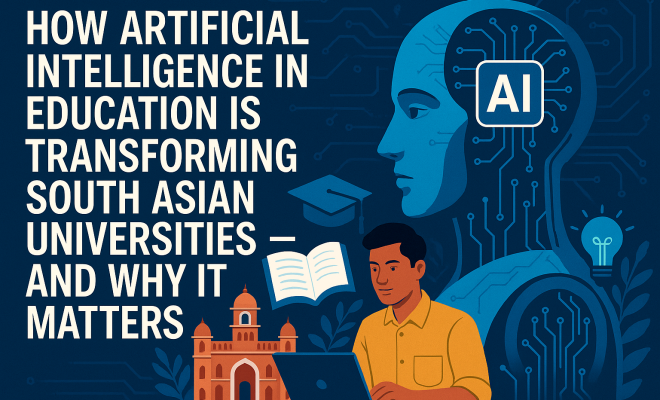
How Artificial Intelligence in Education Is Transforming South Asian Universities — And Why It Matters
“`html
The landscape of education is shifting rapidly, and one of the most significant drivers of this change is artificial intelligence in education. A recent report by UNESCO has brought to light the accelerating adoption of AI technology in higher education institutions across South Asia. Released on June 16, 2026, the report reveals a staggering statistic: 78% of universities in the region have integrated AI-driven grading and personalized learning tools within just the last six months. This revelation has ignited a global conversation about the implications of these technologies, raising urgent questions about academic integrity, student dependency, and the future of critical thinking.
The Rise of AI in Education
The integration of artificial intelligence in education is not merely a trend; it’s a transformation. AI tools are being heralded for their potential to enhance educational outcomes by personalizing learning experiences and streamlining administrative processes. However, this rapid evolution has not come without controversy. Experts and stakeholders alike are debating the ethical implications of such technologies, particularly concerning their impact on student learning and assessment practices.
In South Asia, where educational systems are often under immense pressure to improve and modernize, the adoption of AI appears both enticing and essential. But as universities rush to embrace these innovations, critical voices have begun to emerge, warning of the possible erosion of essential skills and values that underpin traditional education.
Key Figures Weigh In
Two voices in this ongoing debate stand out: Dr. Amira Khan, an education ethicist, and Minister Rajiv Patel, a proponent of technological advancement in education. Dr. Khan argues that while AI can enhance educational practices, it poses significant risks to critical thinking skills. She emphasizes that students might become overly reliant on AI tools, ultimately undermining their ability to think independently and solve problems creatively.
On the other side of the spectrum, Minister Patel champions the use of AI technologies as a necessary step towards modernization. He argues that embracing artificial intelligence in education is crucial for preparing students for the future job market, where technological proficiency will likely become a prerequisite for success.
The Controversy: Academic Integrity
One of the most pressing concerns surrounding the incorporation of AI into educational systems is the question of academic integrity. With AI-driven grading systems, there are fears that the authenticity of student work could be compromised. For instance, automated systems may miss the nuanced understanding of student knowledge and creativity, reducing complex responses to basic algorithms.
This concern is particularly pronounced in a region like South Asia, where educational standards vary significantly, and pressure to perform can drive students to find shortcuts. The temptation to game the system through AI assistance poses a real danger, and institutions must grapple with how to enforce standards in an age where technology is readily available.
Dependency on AI Tools
Another aspect of this debate is the potential for students to develop dependency on AI tools, leading to a decline in essential cognitive skills. As universities implement personalized learning programs powered by AI, the concern arises that students may lean too heavily on these technologies to provide answers and solutions instead of engaging in deep, critical thought.
Education is not just about acquiring knowledge; it’s about developing the ability to analyze, synthesize, and evaluate information. If students rely predominantly on AI for these processes, the foundation of their learning may become shaky. Dr. Khan’s warnings resonate deeply in this context, suggesting that educational institutions need to find a balance between leveraging technology and fostering independent critical thinking.
The Global Conversation
As news of UNESCO’s report spreads, social media platforms are abuzz with discussions about the implications of artificial intelligence in education. Parents, educators, and students are sharing their perspectives on the issue, often with a mix of excitement and apprehension. The fear of missing out on AI literacy is palpable, driving many to advocate for the technology’s integration, even as they question its long-term effects.
Some educators argue that AI can support teachers by providing insights that help tailor instruction to meet individual student needs. Others, however, caution that the rapid implementation of AI tools without adequate training and ethical considerations could lead to unforeseen consequences that might undermine the educational experience. (See: Artificial intelligence in education.)
Ethical Considerations
The ethical implications of deploying AI in education are vast and complex. As institutions adopt these technologies, they must consider how to ensure that they are used responsibly and equitably. One critical issue is data privacy, as AI tools often rely on collecting and analyzing student data to function effectively. Educational institutions have a duty to protect this sensitive information and ensure it is not misused.
Moreover, there’s the risk of algorithmic bias. If AI systems are trained on flawed data, they may perpetuate existing inequities or fail to recognize the diverse needs of all students. This could exacerbate educational disparities rather than alleviate them, a concern that stakeholders must address proactively.
Preparing for the Future
In light of these challenges, preparing students for the future in an AI-driven world requires a multifaceted approach. Educational institutions must prioritize digital literacy alongside traditional academic skills. This means not only teaching students how to use AI tools effectively but also encouraging them to critically evaluate the information provided by such systems.
Additionally, universities should implement frameworks that promote ethical use and develop policies to guide the use of AI technologies in a way that supports educational goals. Faculty training is also essential, as educators need to feel equipped to integrate AI into their teaching practices effectively and ethically.
Case Studies from the Field
Several universities in South Asia are already pioneering initiatives that exemplify how to approach artificial intelligence in education responsibly. For example, the University of Delhi has incorporated AI-driven analytics to assess student progress while combining these insights with personalized mentorship programs. This blended approach seeks to enhance learning without compromising critical thinking.
Similarly, the Indian Institute of Technology (IIT) has developed AI-based platforms that assist in grading while ensuring that students receive constructive feedback. These initiatives show that it is possible to harness AI’s potential while still upholding academic integrity and fostering independent thought.
AI Tools in the Classroom
AI tools are already being implemented in various ways across educational settings. For instance, chatbots and virtual assistants are becoming increasingly common in classrooms. These tools can answer student queries, provide additional resources, and even facilitate administrative tasks, allowing educators to focus more on teaching. A study by Educause found that 40% of institutions are using AI-driven chatbots to enhance student engagement and support.
Additionally, platforms like Coursera and Khan Academy are utilizing AI to tailor course offerings to individual students. By analyzing learning patterns, these platforms can suggest relevant courses and resources, ensuring that students receive a personalized learning experience. This not only aids in student engagement but also helps in retaining learners who might otherwise drop out.
The Future of AI in Education: Predictions
As we look ahead, the role of artificial intelligence in education is expected to expand significantly. Experts predict that within the next decade, we could see the emergence of fully AI-powered educational institutions, where learning is customized to such an extent that every student’s unique learning style is addressed.
According to a report by McKinsey & Company, by 2030, AI could automate up to 50% of tasks currently performed by educators, allowing them to focus more on mentorship and less on administrative duties. This shift could revolutionize the teacher-student dynamic, fostering a more collaborative and engaging learning environment.
Potential Pitfalls of AI in Education
While the prospects of AI in education are exciting, potential pitfalls must be addressed. The risk of over-reliance on technology could lead to diminished interpersonal skills among students. Learning is fundamentally a social process, and too much dependence on AI tools could deprive students of essential collaborative experiences.
Moreover, the potential for job displacement among educators cannot be overlooked. As AI systems become more sophisticated, there may be a temptation to replace traditional teaching roles with automated systems. This raises ethical questions about the value of human interaction in education, which is vital for developing empathy and emotional intelligence in students. (See: CDC data on youth education.)
Frequently Asked Questions about AI in Education
What are the main benefits of using AI in education?
AI can provide personalized learning experiences, automate administrative tasks, enhance student engagement, and offer insights into student performance, helping educators to address individual needs effectively.
How can AI affect student learning?
AI can enhance learning by adapting educational content to fit students’ learning styles, offering real-time feedback, and providing additional resources to support understanding. However, it can also lead to dependency if not used appropriately.
What are the risks associated with AI in education?
The main risks include potential academic dishonesty, ethical concerns over data privacy and algorithmic bias, and the possibility of diminishing critical thinking and problem-solving skills among students.
How can educators balance AI use with traditional teaching methods?
Educators can integrate AI tools as supplemental resources while maintaining traditional methods. By ensuring that technology complements rather than replaces interactive and experiential learning, they can foster a balanced educational environment.
What role do parents play in the integration of AI in education?
Parents can advocate for responsible AI use in schools, engage in discussions about technology’s role in learning, and support their children’s education by encouraging critical thinking and responsible technology use at home.
Exploring AI’s Role Across Different Educational Levels
While the conversation about AI in education often centers around higher education, it’s crucial to examine its impact across various educational levels, including K-12 and adult education. In primary and secondary education, AI-enabled tools can provide personalized learning paths that cater to the diverse needs of students. For example, AI-driven platforms can analyze student performance in real-time, allowing educators to identify areas where students may be struggling and adjust their teaching methods accordingly.
In the realm of adult education, tools like AI-based language learning apps have revolutionized how individuals acquire new skills. With features such as speech recognition and adaptive learning algorithms, these applications can create a more engaging learning experience, tailored to the pace and preferences of the learner.
Statistics Highlighting AI Integration in Education
Data plays a pivotal role in understanding how artificial intelligence in education is evolving. Recent surveys indicate that 65% of educators believe AI will transform their teaching methods within the next five years. Additionally, research from the World Economic Forum shows that institutions incorporating AI tools report a 25% increase in student engagement and a 30% improvement in student retention rates. This data underscores the potential of AI to not only enhance learning experiences but also to provide significant administrative and operational support for educational institutions.
Expert Perspectives on AI and Learning Outcomes
Experts in the field of education technology are increasingly vocal about the potential benefits and challenges of leveraging AI in learning environments. Dr. Samantha Lee, a leading researcher in educational technology, emphasizes the importance of ensuring that AI tools are designed with pedagogical principles in mind. She advocates for a balanced approach to technology integration that prioritizes student agency and critical thinking.
Conversely, Dr. Mark Chen argues that while AI can often streamline processes, it’s vital to maintain human oversight in educational settings. He warns that an over-reliance on AI could lead to a homogenized learning experience, depriving students of diverse perspectives and real-world problem-solving opportunities. Both perspectives highlight the need for a thoughtful approach as we integrate AI technologies into educational frameworks.
Innovative AI Applications Beyond the Classroom
The use of AI in education extends beyond traditional classrooms. Institutions are increasingly adopting AI for administrative tasks like enrollment management and resource allocation. For example, universities are using predictive analytics to forecast student enrollment trends, allowing for more efficient budgeting and resource distribution. This not only streamlines operations but also enhances the overall student experience by preventing resource shortages.
Additionally, AI is being employed in career counseling services to match students with internships and job opportunities based on their skills and interests. Such applications not only aid students in their career paths but also strengthen the connection between education and employability.
Strategies for Effective AI Implementation
For educational institutions looking to integrate AI effectively, several strategies can be employed. First, it’s essential to establish clear goals for what the institution hopes to achieve with AI. This involves understanding the specific needs of students and educators within the context of their unique learning environments.
Secondly, ongoing training for educators is crucial. As AI technologies evolve, so too must the skills of those who teach. Institutions should provide regular professional development opportunities that focus on both the technical aspects of AI tools and the pedagogical strategies necessary for effective integration.
Lastly, stakeholder engagement is vital. Involving students, parents, and educators in the decision-making process fosters a sense of community and ensures that diverse perspectives are considered when implementing new technologies.
Conclusion: The Path Ahead
As we stand on the brink of a new era in education shaped by artificial intelligence, it’s essential to engage in meaningful dialogue about its implications. While AI holds incredible promise for enhancing learning experiences, it is crucial to approach its integration with caution and careful consideration of ethical, pedagogical, and societal factors.
The future of education will inevitably involve AI, but how we choose to implement and regulate these technologies will define the educational landscape for generations to come. It’s up to all of us — educators, policymakers, parents, and students — to ensure that this transformation leads to positive outcomes for everyone involved.
“`
Trending Now
Frequently Asked Questions
How is artificial intelligence changing education in South Asia?
Artificial intelligence is transforming education in South Asia by integrating AI-driven grading and personalized learning tools in 78% of universities within six months, enhancing educational outcomes and streamlining administrative processes, while also raising concerns about academic integrity and critical thinking.
What are the benefits of AI in higher education?
The benefits of AI in higher education include personalized learning experiences, improved educational outcomes, and more efficient administrative processes, allowing universities to better cater to individual student needs and streamline operations.
What are the risks of using AI in education?
The risks of using AI in education include potential over-reliance on technology, which may undermine critical thinking skills and academic integrity. Experts caution that while AI can enhance learning, it might also erode essential skills and values inherent in traditional education.
Who are the key figures discussing AI in education?
Key figures in the discussion of AI in education include Dr. Amira Khan, an education ethicist who warns about the risks to critical thinking, and Minister Rajiv Patel, who advocates for technological advancements in educational practices.
Why is the adoption of AI in South Asian universities important?
The adoption of AI in South Asian universities is important as it addresses the pressing need to modernize educational systems under immense pressure for improvement, potentially enhancing learning experiences while also raising critical ethical questions about its implications.
What’s your take on this? Share your thoughts in the comments below — we read every one.