The Edvocate

Top Menu

Main Menu

  • Start Here
    • Our Brands
    • Governance
      • Lynch Education Consulting, LLC.
      • Dr. Lynch’s Personal Website
      • Careers
    • Write For Us
    • Books
    • The Tech Edvocate Product Guide
    • Contact Us
    • The Edvocate Podcast
    • Edupedia
    • Pedagogue
    • Terms and Conditions
    • Privacy Policy
  • PreK-12
    • Assessment
    • Assistive Technology
    • Best PreK-12 Schools in America
    • Child Development
    • Classroom Management
    • Early Childhood
    • EdTech & Innovation
    • Education Leadership
    • Equity
    • First Year Teachers
    • Gifted and Talented Education
    • Special Education
    • Parental Involvement
    • Policy & Reform
    • Teachers
  • Higher Ed
    • Best Colleges and Universities
    • Best College and University Programs
    • HBCU’s
    • Diversity
    • Higher Education EdTech
    • Higher Education
    • International Education
  • Advertise
  • The Tech Edvocate Awards
    • The Awards Process
    • Finalists and Winners of The 2026 Tech Edvocate Awards
    • Finalists and Winners of The 2025 Tech Edvocate Awards
    • Finalists and Winners of The 2024 Tech Edvocate Awards
    • Finalists and Winners of The 2023 Tech Edvocate Awards
    • Finalists and Winners of The 2021 Tech Edvocate Awards
    • Finalists and Winners of The 2022 Tech Edvocate Awards
    • Finalists and Winners of The 2020 Tech Edvocate Awards
    • Finalists and Winners of The 2019 Tech Edvocate Awards
    • Finalists and Winners of The 2018 Tech Edvocate Awards
    • Finalists and Winners of The 2017 Tech Edvocate Awards
    • Award Seals
  • Apps
    • GPA Calculator for College
    • GPA Calculator for High School
    • Cumulative GPA Calculator
    • Grade Calculator
    • Weighted Grade Calculator
    • Final Grade Calculator
  • The Tech Edvocate
  • Post a Job
  • AI Powered Personal Tutor

logo

The Edvocate

  • Start Here
    • Our Brands
    • Governance
      • Lynch Education Consulting, LLC.
      • Dr. Lynch’s Personal Website
        • My Speaking Page
      • Careers
    • Write For Us
    • Books
    • The Tech Edvocate Product Guide
    • Contact Us
    • The Edvocate Podcast
    • Edupedia
    • Pedagogue
    • Terms and Conditions
    • Privacy Policy
  • PreK-12
    • Assessment
    • Assistive Technology
    • Best PreK-12 Schools in America
    • Child Development
    • Classroom Management
    • Early Childhood
    • EdTech & Innovation
    • Education Leadership
    • Equity
    • First Year Teachers
    • Gifted and Talented Education
    • Special Education
    • Parental Involvement
    • Policy & Reform
    • Teachers
  • Higher Ed
    • Best Colleges and Universities
    • Best College and University Programs
    • HBCU’s
    • Diversity
    • Higher Education EdTech
    • Higher Education
    • International Education
  • Advertise
  • The Tech Edvocate Awards
    • The Awards Process
    • Finalists and Winners of The 2026 Tech Edvocate Awards
    • Finalists and Winners of The 2025 Tech Edvocate Awards
    • Finalists and Winners of The 2024 Tech Edvocate Awards
    • Finalists and Winners of The 2023 Tech Edvocate Awards
    • Finalists and Winners of The 2021 Tech Edvocate Awards
    • Finalists and Winners of The 2022 Tech Edvocate Awards
    • Finalists and Winners of The 2020 Tech Edvocate Awards
    • Finalists and Winners of The 2019 Tech Edvocate Awards
    • Finalists and Winners of The 2018 Tech Edvocate Awards
    • Finalists and Winners of The 2017 Tech Edvocate Awards
    • Award Seals
  • Apps
    • GPA Calculator for College
    • GPA Calculator for High School
    • Cumulative GPA Calculator
    • Grade Calculator
    • Weighted Grade Calculator
    • Final Grade Calculator
  • The Tech Edvocate
  • Post a Job
  • AI Powered Personal Tutor
  • Urgent: New Study Reveals Alarming Truth About Toddler Screen Time — You Won’t Believe What It Does to Their Brains

  • New Research: This Is the Real Reason AI Cheating in Schools Is Exploding

  • This Game-Changing Bill Could Completely Transform Your Kids’ Financial Future

  • Americans of all ages want more federal help with childcare costs. Gen Z most of all.

  • Dramatic Shift: This New School Choice Program Could Redefine Education Funding

  • Outrageous: Biden Admin Quietly Killing Key Student Loan Program — Here’s How

  • Know a Middle Grade Reader Who Needs a Great New Book

  • This One Bill Could Drastically Reshape Custody Battles for Millions of Parents

  • Explosive: Biden Admin Sides With Parents Over Schools — Here’s Why It Matters For Your Kids

  • 880,000+ Student Loan Forgiveness Applications Stuck in Limbo: What You MUST Know

Uncategorized
Home›Uncategorized›Supreme Court to Review Haitian & Syrian Migrant Protections in 2026

Supreme Court to Review Haitian & Syrian Migrant Protections in 2026
By Matthew Lynch
March 17, 2026
0
Spread the love

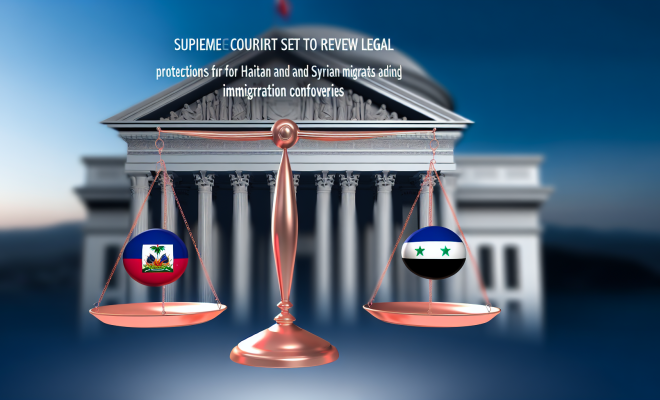
The U.S. Supreme Court is poised to hear critical arguments in April 2026 regarding the future of Temporary Protected Status (TPS) for migrants from Haiti and Syria. This legal battle involves approximately 350,000 Haitians and 6,000 Syrians who have sought refuge in the United States due to ongoing humanitarian crises, including war and natural disasters. The potential termination of TPS has significant implications not only for these individuals but also for the broader landscape of U.S. immigration policy.

Background on Temporary Protected Status

Temporary Protected Status is a humanitarian program established to provide legal protections to individuals from designated countries experiencing severe conditions, such as armed conflict or environmental disasters. Under TPS, eligible migrants are allowed to live and work legally in the U.S. without the fear of deportation. This program has been a lifeline for many, especially in the wake of devastating events that have rendered their home countries unsafe.

The Trump Administration’s Push to End TPS

Under the Trump administration, there was a concerted effort to revoke TPS for various nationalities, including a significant push to terminate protections for Haitians and Syrians. The administration’s stance stems from a broader immigration crackdown aimed at reducing the number of non-citizens residing in the U.S. Critics of the decision argue that it disregards the continuing crises in these countries, where conditions remain dire.

Legal Proceedings and Lower Court Decisions

Lower courts have intervened in this contentious issue, with decisions in New York and Washington, D.C., halting the terminations. One court expressed concern over the potential “hostility to nonwhite immigrants” present in the administration’s policies, indicating a broader societal and legal context in which these decisions are being made. The findings from these lower courts highlight the complexities of immigration law and the intersection of race, policy, and human rights.

Justice Department’s Argument

The Justice Department has maintained that the Department of Homeland Security (DHS) possesses the sole authority to determine the status of TPS designations. They argue that the courts are overstepping their boundaries by intervening in executive policy matters. This claim underscores a fundamental legal debate regarding the balance of power between the judiciary and the executive branches of government.

Impact on Migrants and Communities

The potential termination of TPS for Haitians and Syrians would have profound implications for the affected communities. Many individuals under this status have built lives in the U.S., contributing to their local economies and communities. The loss of legal protections would not only jeopardize their ability to work but also place them at risk of deportation back to countries struggling with instability.

Community Responses

  • Advocacy Groups: Numerous advocacy organizations are rallying support for TPS recipients, emphasizing the need for humanitarian considerations in immigration policy.
  • Legal Assistance: Many legal aid groups are preparing to assist migrants who may face legal challenges should TPS be rescinded.
  • Public Opinion: There is a growing awareness and support among the public for protecting vulnerable migrants, which could influence the Supreme Court’s deliberations.

Looking Ahead: The Supreme Court’s Role

The Supreme Court’s decision, expected weeks or months after the April 2026 arguments, will likely set a precedent that could reshape the landscape of Temporary Protected Status and immigration policy in the U.S. As the justices deliberate, they will have to weigh the legal arguments presented by both the government and the lower courts, considering not only the letter of the law but also the human implications of their ruling.

Conclusion

The case surrounding TPS for Haitians and Syrians is emblematic of the broader challenges facing U.S. immigration policy today. As the Supreme Court prepares to hear this pivotal case, the outcome will resonate far beyond legal circles, impacting countless lives and defining the United States’ commitment to humanitarian protections in an increasingly polarized political climate.


Previous Article

17 States Sue Trump Admin Over College ...

Next Article

Federal Court Halts TPS Termination for Somalia ...

Matthew Lynch

Related articles More from author

  • Uncategorized

    Top 7 Free Windows RSS Feed Readers/News Aggregators

    July 7, 2026
    By Matthew Lynch
  • Uncategorized

    5 Best Classroom Plants for Black Thumbs

    June 30, 2026
    By Matthew Lynch
  • Uncategorized

    Effective 504 Plan Accommodations for ADHD, Anxiety & Dyslexia

    June 24, 2026
    By Matthew Lynch
  • Uncategorized

    Unbelievable: This Hidden Sector Will Explode by 2026

    August 9, 2026
    By Matthew Lynch
  • Uncategorized

    Social Media’s Future: 2026 Will Redefine Digital Engagement

    July 15, 2026
    By Matthew Lynch
  • Uncategorized

    10 Fairy-Tale Lesson Plans That Are Learning Magic

    January 2, 2025
    By Matthew Lynch

Search

Registration and Login

  • Log in
  • Entries feed
  • Comments feed
  • WordPress.org

Newsletter

Signup for The Edvocate Newsletter and have the latest in P-20 education news and opinion delivered to your email address!

RSS feed: Matthew on Education Week Matthew on Education Week

  • Au Revoir from Education Futures November 20, 2018 Matthew Lynch
  • 6 Steps to Data-Driven Literacy Instruction October 17, 2018 Matthew Lynch
  • Four Keys to a Modern IT Approach in K-12 Schools October 2, 2018 Matthew Lynch
  • What's the Difference Between Burnout and Demoralization, and What Can Teachers Do About It? September 27, 2018 Matthew Lynch
  • Revisiting Using Edtech for Bullying and Suicide Prevention September 10, 2018 Matthew Lynch

About Us

The Edvocate was created in 2014 to argue for shifts in education policy and organization in order to enhance the quality of education and the opportunities for learning afforded to P-20 students in America. What we envisage may not be the most straightforward or the most conventional ideas. We call for a relatively radical and certainly quite comprehensive reorganization of America’s P-20 system.

That reorganization, though, and the underlying effort, will have much to do with reviving the American education system, and reviving a national love of learning.  The Edvocate plans to be one of key architects of this revival, as it continues to advocate for education reform, equity, and innovation.

Newsletter

Signup for The Edvocate Newsletter and have the latest in P-20 education news and opinion delivered to your email address!

Contact

The Edvocate
910 Goddin Street
Richmond, VA 23230
(601) 630-5238
[email protected]
  • situs togel online
  • dentoto
  • situs toto 4d
  • situs toto slot
  • toto slot 4d
Copyright (c) 2026 Matthew Lynch. All rights reserved.