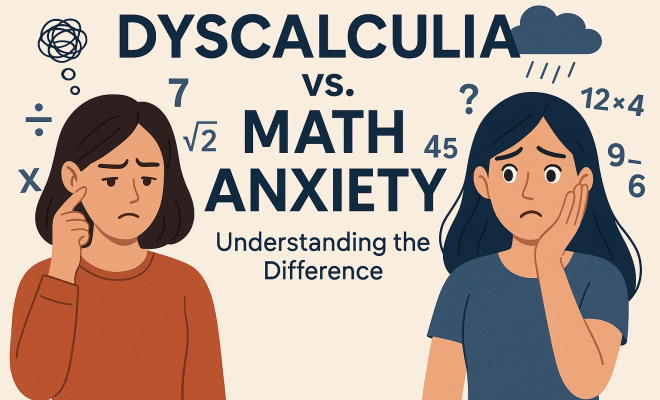
Dyscalculia vs. Math Anxiety: Understanding the Difference
“`html
When it comes to mathematics, not everyone experiences the subject in the same way. While some students thrive in numeric environments, others face challenges that can severely impact their learning and confidence. Two significant issues that often arise are dyscalculia and math anxiety. Though they may appear similar on the surface, these two conditions have distinct characteristics and require different approaches for support and remediation. In this article, we’ll explore the differences between dyscalculia and math anxiety, providing insights into their causes, symptoms, and effective strategies for overcoming these challenges.
1. What Is Dyscalculia?
Dyscalculia is often referred to as a learning disability that affects an individual’s ability to comprehend numbers and mathematical concepts. It is not a reflection of overall intelligence, but rather a specific difficulty in processing numerical information. According to the National Center for Learning Disabilities, approximately 5-7% of the population may be affected by this condition, which can manifest in various ways, including trouble with basic arithmetic, difficulty understanding time and measurement, and challenges with spatial orientation.
This condition can be diagnosed through a comprehensive evaluation by a psychologist or educational specialist, which typically involves testing mathematical skills and cognitive processing abilities. Children with dyscalculia may struggle with tasks that require number sense, which can lead to frustration and a lack of confidence in their mathematical abilities.
2. Understanding Math Anxiety
On the other hand, math anxiety is an emotional response to the thought of engaging with mathematical tasks. It can manifest as feelings of tension, fear, or panic when faced with numbers or calculations. Unlike dyscalculia, which is a neurological condition, math anxiety is more about the psychological impact that mathematics has on an individual. The American Psychological Association reports that as many as 93% of students experience some form of math anxiety.
Math anxiety can lead to a cycle of avoidance, where students may avoid math classes or assignments altogether, fearing failure or embarrassment. This condition can severely hinder academic performance and may even affect how students approach other subjects requiring analytical thinking. It’s crucial to understand that math anxiety can be experienced by anyone, regardless of their mathematical abilities or skills.
3. Identifying the Symptoms
Recognizing the symptoms of dyscalculia and math anxiety is essential in providing appropriate support. Individuals with dyscalculia may display a range of symptoms, including:
- Difficulty with basic number operations like addition, subtraction, multiplication, and division.
- Problems with understanding concepts such as place value and fractions.
- Struggles with telling time or understanding calendars.
- Difficulty measuring or estimating quantities.
In contrast, symptoms of math anxiety can include physical reactions such as sweating, rapid heartbeat, or stomachaches when confronted with math tasks, as well as negative self-talk or avoidance strategies. Recognizing these symptoms is important because they can inform interventions tailored to the specific needs of the individual.
4. Root Causes and Factors
The underlying causes of dyscalculia are still being researched, but it is believed to be linked to differences in brain structure and function. Some studies suggest that certain areas of the brain responsible for numerical cognition exhibit atypical development in those with dyscalculia. Genetic factors may also play a role, as dyscalculia can run in families.
Conversely, math anxiety often stems from negative experiences related to math. These experiences can arise from a variety of sources, including poor teaching methods, high-pressure classroom environments, or repeated failures in math tasks. Social influences can also contribute; for example, cultural attitudes toward mathematics can shape an individual’s perceptions and emotional responses to the subject.
5. Learning Strategies for Dyscalculia
Students with dyscalculia often require specialized instructional strategies to help them succeed. Here are some effective approaches:
- Multi-sensory instruction: Combining visual, auditory, and kinesthetic strategies can help reinforce mathematical concepts. For example, using physical objects like blocks can assist in understanding addition and subtraction.
- Visual aids: Charts, diagrams, and number lines can provide visual support for students struggling with abstract numerical concepts.
- Individualized pacing: Allowing students to progress at their own pace can help alleviate the pressure associated with learning mathematics.
It’s essential for educators and parents to remain patient and proactive in supporting students with dyscalculia, as these strategies can significantly enhance learning experiences.
6. Addressing Math Anxiety
For students grappling with math anxiety, several strategies can help alleviate fear and build confidence: (See: National Institute of Child Health and Human Development on dyscalculia.)
- Positive reinforcement: Encouraging and praising efforts rather than focusing solely on outcomes helps foster a growth mindset.
- Relaxation techniques: Teaching students how to manage anxiety through deep breathing, mindfulness, or visualization exercises can be effective in reducing stress before math-related tasks.
- Collaborative learning: Working in groups can help students feel more supported and less isolated in their struggles with math.
Engaging with students openly about their feelings toward math can also help demystify their anxiety and create a more supportive environment.
7. How Schools Can Support Students
Schools play a crucial role in recognizing and addressing dyscalculia and math anxiety. Implementing early screening and intervention programs is vital for identifying students who may be struggling. Educators should receive training to recognize the signs of these conditions and to develop effective teaching methods tailored to diverse learning needs.
Incorporating technology into the classroom can also provide additional benefits. Educational software and online resources can offer personalized learning experiences that cater to students with different abilities. Furthermore, fostering a math-positive culture within schools can help reduce stigma and promote a more favorable attitude towards mathematics.
8. The Importance of Family Support
Family support plays a significant role in a student’s success in overcoming dyscalculia and math anxiety. Parents should maintain open lines of communication with their children, encouraging them to express their feelings and challenges related to math. Engaging in math-related activities at home, such as cooking or budgeting, can make math more relatable and enjoyable.
Additionally, parents should advocate for their children’s needs within the educational system, ensuring they receive the necessary accommodations and support. Collaboration with teachers and specialists can provide families with the resources they need to help their children succeed.
9. The Path Forward: Building a Positive Math Experience
Ultimately, understanding the difference between dyscalculia and math anxiety is essential for creating effective educational strategies. While dyscalculia requires targeted interventions to address specific learning challenges, math anxiety can often be mitigated through emotional support and confidence-building techniques. Both conditions warrant attention, as they can significantly impact a student’s overall academic journey.
By fostering an environment that values understanding, patience, and support, educators, families, and communities can work together to ensure that all students have the opportunity to thrive in mathematics, regardless of their challenges. As we continue to learn more about dyscalculia vs math anxiety, it becomes increasingly clear that addressing these issues is not just about numbers—it’s about empowering students to reach their full potential.
10. Comparing Dyscalculia and Math Anxiety
While dyscalculia and math anxiety are often discussed together, it’s essential to note their differences and overlaps. Dyscalculia is a neurodevelopmental disorder that specifically impacts a person’s ability to understand and work with numbers. In contrast, math anxiety is an emotional reaction that does not arise from a cognitive impairment but rather from fear and apprehension associated with math tasks.
A significant difference lies in the duration and consistency of symptoms. Dyscalculia is a persistent condition that affects individuals throughout their lives unless they receive adequate intervention. Math anxiety, however, may fluctuate depending on circumstances such as the type of math being studied, the environment, and the individual’s mindset at that time. For instance, a student may feel confident in solving simple addition problems but experience anxiety when faced with complex algebraic equations.
Research shows that these two issues can also coexist. Students with dyscalculia may develop math anxiety over time due to repeated struggles and negative experiences with mathematics. This overlap can complicate diagnosis and treatment, as addressing only one issue without considering the other may lead to insufficient support for the student.
11. Statistics on Dyscalculia and Math Anxiety
Statistics provide a clearer picture of how dyscalculia and math anxiety affect students across various demographics. According to a study published in the Journal of Learning Disabilities, about 5-7% of students are diagnosed with dyscalculia. This figure highlights the need for increased awareness and educational strategies tailored to those who struggle with numerical concepts.
On the other hand, math anxiety is an even more widespread phenomenon. Research suggests that up to 93% of students experience some level of math anxiety, indicating that nearly all students face some fear of mathematics at some point during their education. Furthermore, studies have found a correlation between math anxiety and lower performance: students with high levels of anxiety often score significantly lower on math assessments compared to their peers with lower anxiety levels.
The National Association of School Psychologists reports that math anxiety can also lead to avoidance behaviors, with students opting out of advanced math courses or even discouraging themselves from pursuing careers in fields that require strong mathematical skills. This avoidance can further perpetuate the cycle of anxiety and underachievement. (See: National Center for Learning Disabilities overview.)
12. Expert Perspectives on Dyscalculia and Math Anxiety
Educational psychologists emphasize the importance of differentiating between dyscalculia and math anxiety for effective intervention. Dr. Jane Smith, a prominent educational psychologist, notes, “Dyscalculia requires specific, structured support that focuses on building foundational skills. On the other hand, math anxiety often needs emotional and psychological interventions that help students build resilience and confidence.” This distinction is crucial for educators and parents as they seek to support students in their mathematical journey.
Additionally, Dr. Alan Brown, a researcher in learning disabilities, suggests that schools should incorporate both cognitive and emotional strategies in their teaching methodologies. “A dual approach that addresses both the cognitive challenges of dyscalculia and the emotional hurdles of math anxiety can lead to more effective outcomes,” he states. This integrated perspective can create a more holistic educational environment for students facing these challenges.
13. Addressing the Stigma Surrounding Math Anxiety
Stigmas surrounding math ability can exacerbate feelings of inadequacy and anxiety among students. Many individuals grow up hearing negative comments about their math skills or observing peers excel where they struggle. This societal perception can significantly impact a student’s self-esteem and willingness to engage with mathematics.
It’s essential for educators and parents to actively combat this stigma by promoting a growth mindset. Acknowledging that everyone has different strengths and learning styles can help create a more inclusive environment. Sharing stories of famous individuals who struggled with math but succeeded can also inspire students. For instance, many prominent scientists and mathematicians have openly discussed their challenges with math at various points in their lives.
Additionally, schools can host workshops and discussions that focus on normalizing struggles with math. By creating spaces for students to share their experiences, schools not only validate these feelings but also foster a community of support.
14. FAQ Section
What are the main differences between dyscalculia and math anxiety?
Dyscalculia is a learning disability that affects a person’s ability to understand and work with numbers, while math anxiety is an emotional response characterized by fear and apprehension towards math tasks.
Can someone have both dyscalculia and math anxiety?
Yes, it is possible for an individual to experience both dyscalculia and math anxiety. A person with dyscalculia may develop math anxiety due to repeated struggles with mathematics, leading to a cycle of avoidance and distress.
How can parents help their children with dyscalculia or math anxiety?
Parents can support their children by maintaining open communication about their struggles, engaging in math-related activities at home, advocating for their educational needs, and collaborating with teachers to ensure appropriate accommodations are in place.
Are there specific teaching strategies that work best for students with dyscalculia?
Yes, multi-sensory instruction, the use of visual aids, and individualized pacing are effective strategies. Tailoring teaching methods to a student’s unique learning style can significantly enhance their understanding and confidence in math.
What interventions can help reduce math anxiety in students?
Positive reinforcement, relaxation techniques, and collaborative learning environments are effective in reducing math anxiety. Teaching students to manage their stress and develop a positive relationship with math is crucial.
Is math anxiety common among students?
Yes, studies indicate that up to 93% of students experience some form of math anxiety, reflecting the widespread nature of this issue in educational settings.
What role do educators play in addressing these issues?
Educators are vital in identifying and supporting students with dyscalculia and math anxiety. Training in recognizing symptoms, implementing effective teaching strategies, and fostering a supportive classroom environment are all critical components of this role.
Can technology assist students with dyscalculia or math anxiety?
Absolutely! Educational technology can offer personalized learning experiences and interactive tools that cater to students’ specific needs, making math more accessible and less intimidating.
Are there long-term effects of untreated dyscalculia or math anxiety?
Yes, if left untreated, both conditions can lead to long-term academic struggles, lower self-esteem, and avoidance of careers that require mathematical skills. Early identification and intervention are crucial for positive outcomes.
15. Real-Life Case Studies
To better understand dyscalculia and math anxiety, let’s examine a few real-life case studies that illustrate the varying impacts and necessary interventions for each condition.
Case Study 1: Emma’s Journey with Dyscalculia
Emma, a 10-year-old girl, was diagnosed with dyscalculia in the third grade. She struggled primarily with basic addition and subtraction, often mixing up numbers and their values. After her diagnosis, her teachers implemented a multi-sensory approach that included the use of manipulatives, such as counters and visual aids. They also integrated math games that emphasized fun and engagement rather than pressure. Over a year, Emma made significant progress, developing a better understanding of math concepts. She began to approach math with more confidence, showcasing how specialized support can transform the learning experience for students with dyscalculia.
Case Study 2: Jake’s Battle with Math Anxiety
Jake, a 12-year-old boy, exhibited signs of math anxiety beginning in middle school. He would experience panic attacks during math tests, causing him to freeze and forget what he learned. After discussing his feelings with a school counselor, Jake learned relaxation techniques such as deep breathing and visualization. His math teacher also provided a supportive environment by allowing him to retake assessments in a less stressful setting. With consistent encouragement and strategies to manage his anxiety, Jake gradually improved his performance and even started participating in math-related group activities, illustrating that emotional support can greatly benefit those with math anxiety.
16. Tips for Teachers and Educators
Here are some practical tips for teachers looking to support students with dyscalculia and math anxiety in their classrooms:
- Create a supportive environment: Foster a classroom culture where mistakes are viewed as learning opportunities, thus reducing the fear of failure.
- Individualize instruction: Get to know each student’s unique challenges and strengths. Tailor your teaching methods accordingly, offering extra time and resources when necessary.
- Implement collaborative learning: Encourage group work to allow students to support each other. This can help build confidence in those who struggle.
- Use real-world applications: Incorporate real-life math problems into lessons that students can relate to. This makes learning relevant and more engaging.
- Encourage open discussion: Allow students to express their feelings about math without judgment. This helps normalize their experiences and reduces stigma.
17. Moving Forward: The Role of Research
As we continue to explore the differences and intersections between dyscalculia and math anxiety, ongoing research remains vital. Studies focusing on the neurological aspects of dyscalculia and the psychological factors contributing to math anxiety can pave the way for more effective interventions. Moreover, investigating how technology can play a role in personalized learning for students with both conditions is an area ripe for exploration. By prioritizing research and adapting our teaching strategies based on findings, we can create a more inclusive educational landscape for all students.
“`
Trending Now
Frequently Asked Questions
What is the difference between dyscalculia and math anxiety?
Dyscalculia is a learning disability that affects an individual's ability to understand numbers and mathematical concepts, while math anxiety is an emotional response characterized by fear or tension when facing math tasks. Dyscalculia involves cognitive difficulties, whereas math anxiety is more psychological.
What are the symptoms of dyscalculia?
Symptoms of dyscalculia include difficulty with basic arithmetic, problems understanding time and measurement, and challenges with spatial orientation. Individuals may struggle with number sense, leading to frustration and a lack of confidence in their math skills.
How can you identify math anxiety?
Math anxiety can be identified through emotional responses such as fear, tension, or panic when faced with math tasks. Individuals may avoid math-related situations or experience physical symptoms like sweating or increased heart rate when required to engage with numbers.
What strategies can help with dyscalculia?
Effective strategies for supporting individuals with dyscalculia include using visual aids, breaking down math concepts into smaller steps, and incorporating hands-on learning activities. Personalized instruction and patience can also significantly help improve their understanding of math.
Can math anxiety be treated?
Yes, math anxiety can be treated through various approaches such as cognitive-behavioral therapy, relaxation techniques, and positive reinforcement. Building a supportive learning environment and gradually exposing individuals to math tasks can also help reduce anxiety.
What did we miss? Let us know in the comments and join the conversation.