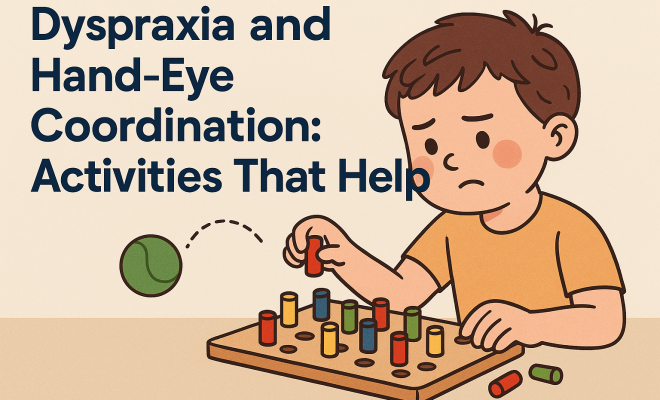
Dyspraxia and Hand-Eye Coordination: Activities That Help
“`html
Dyspraxia, a common developmental disorder, affects coordination and movement skills in individuals, making everyday tasks more challenging. One of the significant areas impacted by dyspraxia is hand-eye coordination, an essential skill for both academic and physical activities. For those navigating dyspraxia, incorporating specific activities into their daily routines can significantly enhance their hand-eye coordination. This article will explore the relationship between dyspraxia and hand-eye coordination, the importance of targeted activities, and practical exercises that can make a difference.
Understanding Dyspraxia: A Brief Overview
Dyspraxia, also known as Developmental Coordination Disorder (DCD), affects approximately 5-6% of children. It manifests as difficulty in planning and executing coordinated movements. This condition doesn’t affect intelligence but impacts how individuals interact with their environment. Symptoms can vary widely, from mild coordination problems to severe difficulties in everyday activities.
Individuals with dyspraxia often struggle with tasks that require precise movements, such as writing, playing sports, or even tying shoelaces. These challenges can lead to frustration and lower self-esteem, especially in social settings or academic environments. Understanding the intricacies of dyspraxia is crucial for parents, educators, and therapists to provide effective support.
The Crucial Role of Hand-Eye Coordination
Hand-eye coordination is the ability to synchronize visual input with motor output. It’s vital for a multitude of activities, including sports, learning, and self-care. For example, when playing catch, a child must track the ball with their eyes while preparing their hands to catch it. This complex process becomes significantly more challenging for those with dyspraxia.
Effective hand-eye coordination is not only about physical ability; it also involves cognitive processes. Children with dyspraxia may find it hard to judge distances or move their hands in time with visual cues. This results in slower processing and reaction times, which can hinder learning and social interactions.
Why Activities Matter for Development
Engaging in activities designed to improve hand-eye coordination can provide numerous benefits for children with dyspraxia. Not only do these activities help develop physical skills, but they also boost confidence and self-esteem. Here’s why incorporating targeted activities is essential:
- Skill Development: Regular practice enhances motor skills and coordination.
- Confidence Boost: Mastering a new activity builds self-esteem.
- Social Interaction: Group activities promote teamwork and communication.
- Cognitive Benefits: Activities often stimulate problem-solving and critical thinking.
By creating a structured yet fun environment, caregivers and educators can foster improvement through engaging activities that address dyspraxia-related challenges.
Practical Dyspraxia Hand-Eye Coordination Activities
Now that we’ve established the significance of hand-eye coordination activities, let’s dive into specific exercises that can make a meaningful difference for those with dyspraxia. These activities can be incorporated at home or in educational settings and can be adapted to suit various age groups and skill levels.
1. Balloon Toss
A simple yet effective way to enhance hand-eye coordination is through balloon toss games. The lightweight nature of balloons allows for more manageable catching and throwing practice, reducing frustration.
- Setup: Inflate a balloon and gather participants. Stand facing each other.
- Activity: Toss the balloon back and forth, gradually increasing the distance. Encourage participants to use both hands.
- Variation: Introduce challenges such as using one hand or trying to catch the balloon after it bounces on the floor.
This activity encourages focus and timing while being enjoyable and low-pressure.
2. Target Practice
Setting up a target practice activity can significantly improve aim and precision. This can be done indoors or outdoors.
- Setup: Create targets using paper plates, hula hoops, or any safe items that can act as targets.
- Activity: Use soft balls or beanbags to throw at the targets. Start close and gradually increase the distance as accuracy improves.
- Variation: Use different throwing techniques, such as overhand or underhand throws.
This exercise helps with hand-eye coordination and allows for tracking and timing practice.
3. Simon Says with a Twist
Traditional games like Simon Says can be adapted to incorporate physical activities that enhance coordination.
- Setup: Gather a group of children and designate a leader.
- Activity: The leader gives commands that involve specific movements, such as clapping hands, hopping on one foot, or mimicking drawing shapes in the air.
- Variation: Add a ball to the game, requiring participants to perform actions while passing the ball around.
This interactive game encourages active listening and coordination while fostering fun and engagement. (See: Understanding Developmental Coordination Disorder.)
4. Obstacle Course
Creating an obstacle course can be an exciting way to promote physical coordination skills. It can be tailored to the individual’s abilities, ensuring that everyone can participate.
- Setup: Use furniture, cones, or other safe items to create an obstacle course.
- Activity: Participants navigate the course, engaging in activities like crawling under tables, jumping over cushions, and balancing on lines of tape.
- Variation: Introduce time challenges or team races to inject competition and motivation.
This promotes physical fitness and enhances hand-eye coordination as participants navigate various challenges.
5. Craft Activities
Incorporating arts and crafts can be an enjoyable way to improve fine motor skills and hand-eye coordination.
- Setup: Gather materials like scissors, glue, crayons, and paper.
- Activity: Encourage participants to create collages, cut out shapes, or build models using their hands.
- Variation: Introduce more complex tasks, such as threading beads or sewing simple patterns.
These activities not only enhance coordination but also unleash creativity and self-expression.
6. Jigsaw Puzzles
Working on jigsaw puzzles is a fantastic way to blend cognitive skills with hand-eye coordination.
- Setup: Choose puzzles that are age-appropriate and match the skill level of the participants.
- Activity: Encourage participants to work together to complete the puzzle, focusing on fitting pieces together.
- Variation: Use larger puzzles or those with fewer pieces for younger children or beginners.
This activity fosters teamwork, patience, and problem-solving skills while improving fine motor coordination.
7. Sports and Physical Activities
Engaging in sports is one of the most natural ways to enhance hand-eye coordination. Activities like basketball, soccer, or even table tennis provide excellent opportunities for practice.
- Setup: Choose a sport that interests the individual or group.
- Activity: Incorporate drills that focus on catching, throwing, or hitting a ball.
- Variation: Modify the rules to ensure everyone can participate, such as using larger balls or allowing more time to react.
Sports not only promote physical health but also teach important life skills such as teamwork and perseverance.
8. Video Games with Coordination Focus
While screen time often raises concerns, certain video games can be beneficial in developing hand-eye coordination skills.
- Setup: Select games that require quick reflexes and precise movements, such as rhythm games or action games.
- Activity: Encourage short sessions where participants play games that involve catching or aiming.
- Variation: Use motion-controlled games that require physical movement as players interact with the game.
Video games can provide a fun and engaging way to practice coordination without the pressure of traditional sports.
9. Dance and Movement Activities
Dance not only provides great exercise but also improves coordination through rhythm and body awareness.
- Setup: Choose music that participants enjoy.
- Activity: Encourage free dance or follow-along dance routines.
- Variation: Incorporate movement challenges, such as mirroring the leader’s movements.
This activity enhances body coordination while promoting self-expression and creativity.
Incorporating Activities into Daily Routines
To maximize the benefits of dyspraxia hand-eye coordination activities, integrating them into daily routines is essential. Here’s how you can make this happen:
- Consistency: Set aside time each day for practice. Regular engagement cements skills and builds confidence.
- Involve Peers: Encourage group activities to foster social connections and collaborative learning.
- Positive Reinforcement: Celebrate small successes to motivate continued effort and participation.
By weaving these activities into everyday life, individuals with dyspraxia can gradually improve their hand-eye coordination while having fun.
Seeking Professional Guidance
While engaging in dyspraxia hand-eye coordination activities is beneficial, seeking assistance from professionals can provide added structure and support. Occupational therapists, physical therapists, and special education teachers are valuable resources for tailored strategies and interventions.
These professionals can conduct assessments to identify specific challenges and develop personalized activity plans that align with individual needs. They can also teach adaptive techniques and modifications to ensure activities are accessible and effective. (See: CDC on Dyspraxia and its effects.)
Staying Positive: The Journey Ahead
Improving hand-eye coordination for individuals with dyspraxia is a journey that requires patience and persistence. Progress may be slow, but with consistent practice and encouragement, noticeable improvements can be achieved. Remember, every small victory is a step towards developing valuable skills.
As caregivers, educators, and friends, fostering a positive environment can make all the difference. By focusing on abilities rather than limitations, individuals with dyspraxia can thrive and enjoy the activities that once seemed challenging.
Additional Strategies for Supporting Hand-Eye Coordination Development
While specific activities are essential, there are broader strategies that caregivers and educators can implement to support the development of hand-eye coordination for those with dyspraxia.
- Encourage Natural Movement: Encourage playtime that involves climbing, jumping, and running. Outdoor play can enhance overall physical development and coordination.
- Use Technology Wisely: Incorporate apps and tools designed to improve motor skills. Many educational apps focus on coordination as part of their gameplay, offering a fun way to learn.
- Adapt Physical Education: Work with schools to ensure physical education classes provide appropriate modifications and support, allowing individuals with dyspraxia to participate fully.
- Model Activities: Demonstrating activities can help children understand movements better. By visually seeing how to perform a task, they may replicate it more effectively.
Expert Perspectives on Dyspraxia and Hand-Eye Coordination
Understanding dyspraxia from an expert’s perspective can provide deeper insights into the condition and the importance of targeted activities. According to Dr. Sarah Johnson, a pediatric occupational therapist, “Engagement in targeted hand-eye coordination activities can lead to significant improvements in both physical skills and self-confidence in children with dyspraxia. The key is consistency and ensuring that activities are enjoyable.” This highlights the need for not just practice, but making the practice engaging.
Additionally, educational psychologist Dr. Michael Smith emphasizes the cognitive dimension: “Children with dyspraxia often face challenges that extend beyond coordination; their cognitive processing can also be affected. Activities that blend cognitive skills with physical movement can be particularly beneficial.” This suggests that the right activities don’t just help with coordination but also encourage cognitive development.
Statistics on Dyspraxia and Its Impact
Understanding the statistical landscape surrounding dyspraxia can underscore the necessity for targeted activities. Research indicates that:
- Approximately 1 in 20 children are diagnosed with dyspraxia, highlighting the prevalence of this condition.
- Studies show that children with dyspraxia are more likely to experience difficulties in academic settings, leading to increased rates of anxiety and low self-esteem.
- A survey of parents indicated that over 70% reported challenges in motor skill development and coordination, emphasizing the need for intervention.
These statistics illustrate the importance of early identification and intervention through targeted activities aimed at improving hand-eye coordination.
Frequently Asked Questions (FAQ)
What is dyspraxia?
Dyspraxia is a developmental disorder that affects motor skill development, impacting coordination and the ability to perform tasks that require physical movement.
How does dyspraxia affect hand-eye coordination?
Dyspraxia can lead to difficulties in coordinating visual input with motor actions, making activities that require precision, such as writing or playing sports, particularly challenging.
What age can dyspraxia be diagnosed?
Dyspraxia can be identified in early childhood, often when children begin school and their motor skill challenges become evident in comparison to their peers.
Can children with dyspraxia improve their hand-eye coordination?
Yes! With targeted activities and consistent practice, children with dyspraxia can improve their hand-eye coordination and overall motor skills.
Are there specific sports that are better for children with dyspraxia?
Activities that involve less competitive pressure and focus on skill development, such as swimming, gymnastics, or martial arts, can be particularly beneficial.
How important is social interaction in these activities?
Social interaction is crucial as it promotes teamwork, reduces feelings of isolation, and enhances overall enjoyment of activities, which can lead to better engagement and progress.
Should I consult a therapist for my child’s dyspraxia?
Yes, consulting with an occupational therapist or physical therapist can provide tailored strategies to address your child’s specific needs and challenges. (See: WHO Fact Sheet on Child Development.)
Additional Hand-Eye Coordination Activities
In addition to the activities already mentioned, consider these further exercises to broaden the range of experiences available:
10. Water Balloon Games
Water balloon games can be a fun and engaging way to work on coordination, especially during warm weather.
- Setup: Fill several balloons with water and make sure you have a safe area to play.
- Activity: Participants toss water balloons back and forth, trying to catch them without breaking. This introduces a soft challenge with a fun reward.
- Variation: Incorporate a target by attempting to hit a designated spot or container with the balloon.
This activity emphasizes timing, distance judgment, and hand-eye coordination in a playful context.
11. Catching and Throwing Drills
Simple catching and throwing drills can be adapted to suit all skill levels and can be done with a variety of objects.
- Setup: Use soft balls, frisbees, or even rolled-up socks.
- Activity: Practice throwing and catching, gradually increasing distance and speed.
- Variation: For added challenge, incorporate other movements, such as hopping or spinning before catching.
These drills focus on the fundamental skills needed for effective hand-eye coordination.
12. Balance and Movement Games
Activities that incorporate balance can also enhance hand-eye coordination.
- Setup: Use a balance beam or a line of tape on the ground.
- Activity: Walk across the beam or tape while performing tasks like tossing a ball back and forth with a partner.
- Variation: Introduce a blindfold or close the eyes for added difficulty in maintaining balance.
This type of activity promotes core strength and stability alongside coordination.
13. Gardening Activities
Gardening can be an unexpected yet effective way to enhance hand-eye coordination. Digging, planting, and watering require movement precision.
- Setup: Prepare a small gardening area or use pots for planting.
- Activity: Tasks such as digging holes, planting seeds, and watering can all improve coordination.
- Variation: Use tools like trowels or watering cans to help emphasize the control of hand movements.
This activity connects nature with skill development, making it beneficial and enriching.
Conclusion
Implementing a variety of dyspraxia hand-eye coordination activities can have a long-lasting impact on the lives of those affected. By fostering an environment that encourages movement, practice, and fun, we can contribute to the growth and confidence of children with dyspraxia.
“`
Trending Now
Frequently Asked Questions
What activities can help improve hand-eye coordination in children with dyspraxia?
Activities such as playing catch, using building blocks, and engaging in arts and crafts can significantly enhance hand-eye coordination in children with dyspraxia. These activities promote practice in synchronizing visual input with motor skills, making them both fun and beneficial.
How does dyspraxia affect hand-eye coordination?
Dyspraxia impacts hand-eye coordination by making it difficult for individuals to plan and execute coordinated movements. This can lead to challenges in tasks that require precise motor skills, such as sports and writing, affecting their overall daily functioning.
What is the relationship between dyspraxia and developmental coordination disorder?
Dyspraxia is often referred to as Developmental Coordination Disorder (DCD). Both terms describe a condition that affects coordination and movement skills, resulting in difficulties with tasks requiring precise motor control, but do not affect cognitive abilities.
What are the symptoms of dyspraxia in children?
Symptoms of dyspraxia in children can vary widely and may include difficulties with fine motor skills, poor coordination, trouble with balance, and challenges in planning movements. These symptoms can lead to frustration and affect self-esteem in social and academic settings.
Can dyspraxia be treated or managed effectively?
While there is no cure for dyspraxia, effective management strategies include occupational therapy, targeted exercises, and engaging activities that enhance motor skills. Support from parents and educators is also crucial for helping individuals navigate their challenges.
Agree or disagree? Drop a comment and tell us what you think.