AI Fuels Global M&A Surge in Tech, Media & Telecom (2026)
“`html
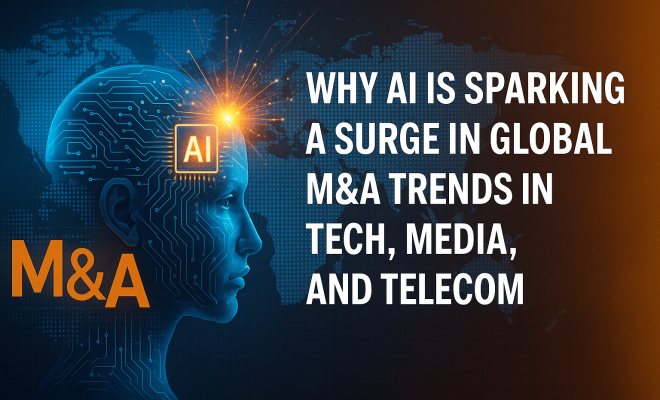
The landscape of mergers and acquisitions (M&A) has undergone a profound transformation, particularly in the realms of technology, media, and telecommunications (TMT). As companies navigate the complexities of an AI-driven world, traditional acquisition strategies are rapidly evolving. This shift is not just a trend; it’s a necessary adaptation to the fast-paced advancements in AI technology. In this article, we’ll explore the latest global M&A trends, focusing on how AI is reshaping investment strategies and prompting a surge in deal values, even as the number of transactions declines.
The AI Boom and Its Impact on M&A
Artificial Intelligence is more than just a buzzword; it’s a transformative force redefining industries. As organizations grapple with the implications of AI, they’re reconsidering how they approach growth and innovation. Instead of relying solely on traditional acquisitions, many are forming partnerships, making minority investments, and entering capacity agreements. This strategic pivot aims to secure critical access to AI technologies and infrastructure, which are becoming essential for competitive advantage.
According to recent data, global TMT deal values surged by a staggering 48%, totaling $472 billion in just the first five months of 2026. This rise in deal value is indicative of a market focusing on high-stakes, strategic consolidation rather than sheer transaction volume. In contrast, deal volumes have declined by approximately 9% year-on-year. This counterintuitive trend highlights a growing ‘fear of missing out’ (FOMO) among investors and executives, who are keenly aware that missing the AI wave could mean falling behind in their respective sectors.
The Shift from Traditional Acquisitions to Strategic Partnerships
Traditionally, M&A activity has been characterized by large-scale acquisitions, where companies would buy out competitors or complementary businesses to enhance their market position. However, the current landscape requires a more nuanced approach. In the age of AI, organizations are increasingly seeking strategic partnerships that allow them to tap into innovative technologies without the full financial commitment associated with acquisitions.
These partnerships can take various forms, from collaborations on AI research to joint ventures for product development. For instance, tech giants may partner with startups specializing in AI to leverage their expertise while maintaining a degree of flexibility. This shift is particularly important in a sector where technological advancements are rapid, and the risk of obsolescence is high.
The Role of Minority Investments
Minority investments have emerged as a popular strategy in the current M&A environment. By taking minority stakes in promising tech firms, larger companies can gain access to cutting-edge technologies and innovative ideas without acquiring full control. This approach allows investors to hedge their bets and minimize risk while still benefiting from the growth potential of the startups they support.
For example, consider major tech firms that have invested in AI startups. These investments not only provide valuable insights into emerging technologies but also foster a collaborative ecosystem where knowledge sharing can lead to breakthroughs. This strategy aligns well with the global M&A trends, where the emphasis is on securing critical access to valuable technologies rather than merely expanding market share.
Capacity Agreements: A New Form of Collaboration
Capacity agreements are another innovative approach that has gained traction in the TMT sectors. These agreements enable companies to collaborate on AI projects without the need for a full acquisition or partnership. By agreeing to share resources, technology, or infrastructure, organizations can accelerate their AI capabilities while minimizing investment risks.
This model allows companies to remain agile and responsive to the rapidly changing technological landscape. For instance, a telecommunications provider might enter into a capacity agreement with an AI firm to enhance its network capabilities. This approach provides mutual benefits, allowing both parties to expand their offerings while sharing the associated costs and risks.
Market Competition: Driving Up the Value of Deals
The intense competition for AI infrastructure is a key driver behind the significant increase in deal values. As companies recognize the value of AI technologies, they are willing to pay a premium to secure access to these critical resources. This competitive landscape is reshaping global M&A trends, with firms increasingly prioritizing quality over quantity in their acquisition strategies.
Data from the first half of 2026 indicates that companies are willing to invest substantially in AI-driven initiatives, even as the overall volume of deals has seen a decline. This willingness to invest is fueled by the understanding that AI is not just another technological advancement; it’s a foundational shift that will shape the future of business across all sectors. (See: AI's impact on mergers and acquisitions.)
The Emerging Landscape of Tech, Media, and Telecommunications
The TMT sectors are experiencing unprecedented changes as companies adapt to the demands of an AI-centric world. With deal values soaring, businesses are confronted with the challenge of remaining competitive while navigating the complexities of the market. This dynamic landscape presents both opportunities and challenges, compelling organizations to rethink their strategies.
As the AI boom continues, companies that fail to adapt may find themselves at a disadvantage. The urgency to secure AI capabilities and infrastructure has never been greater, underscoring the importance of strategic investments and partnerships. Businesses that can effectively leverage AI technologies will be better positioned to thrive in the increasingly competitive marketplace.
Investor Perspectives: Navigating the New Normal
Investors play a crucial role in shaping the global M&A trends in the TMT sectors. As the market evolves, so too does the mindset of investors who are increasingly focused on AI-related opportunities. The emergence of strategic partnerships and minority investments reflects a broader shift in investment philosophy.
Investors are now looking for opportunities that not only provide immediate returns but also have the potential for long-term growth in the context of AI advancements. This requires a shift in due diligence processes, focusing more on technological capabilities and innovation potential rather than traditional financial metrics alone.
Case Studies: Successful AI-Driven M&A Partnerships
Several companies have successfully navigated the new landscape of M&A by embracing strategic partnerships and minority investments. For instance, a renowned tech giant entered into a strategic partnership with a leading AI research firm, allowing both parties to collaborate on cutting-edge projects. This partnership not only enhanced the tech giant’s AI capabilities but also provided the research firm with access to substantial resources and expertise.
Another example can be seen in the media sector, where a major broadcasting company invested in an AI startup focused on content recommendation algorithms. This minority investment enabled the broadcasting company to enhance its content offerings while providing the startup with the support needed to scale its operations. These case studies illustrate how organizations are leveraging new M&A strategies to secure their place in the rapidly evolving TMT landscape.
Challenges and Risks in the Current M&A Environment
While the opportunities presented by the evolving global M&A trends are significant, they are not without challenges. The fast-paced nature of technological advancements means that companies must stay ahead of the curve to avoid falling behind. Additionally, the complexity of partnerships and capacity agreements can introduce risks that require careful management.
Moreover, navigating the regulatory landscape can be challenging, particularly as governments worldwide grapple with the implications of AI. Companies must be mindful of antitrust concerns and data privacy regulations that could impact their M&A strategies. Balancing innovation with compliance is essential for long-term success in the TMT sectors.
The Future of M&A in the Age of AI
As we look ahead, the global M&A landscape will continue to evolve in response to the advancements in AI technology. Companies that can adapt to the changing environment and embrace new strategies will be best positioned to thrive in this new era. The focus on strategic partnerships, minority investments, and capacity agreements will likely persist, reflecting the need for agility and innovation.
In conclusion, the surge in global M&A trends, driven by the AI boom, signifies a fundamental shift in how businesses approach growth and collaboration. As the competition for AI infrastructure intensifies, organizations must remain proactive in securing their position in the marketplace. The future of technology, media, and telecommunications will undoubtedly be shaped by these trends, making it essential for businesses to stay informed and adaptable.
Global M&A Trends: A Closer Look at Key Sectors
While the TMT sectors are leading the charge, several other industries are also experiencing notable shifts in M&A activity due to AI integration. For example, the healthcare sector is increasingly leveraging AI for diagnostics and patient management. Healthcare firms are pursuing partnerships with tech companies to enhance their capabilities without the lengthy processes associated with traditional acquisitions. This trend is evident in the strategic collaborations between healthcare providers and AI firms developing advanced patient monitoring systems.
Similarly, the financial services sector is witnessing a rise in fintech mergers and acquisitions as financial institutions seek to modernize operations. According to a report from Deloitte, M&A activity in fintech reached a record high in 2025, driven by the need for banks to incorporate AI and machine learning into their services. The focus here is not just on acquiring technology but on transforming business models to remain competitive in a rapidly changing environment. (See: Understanding the AI boom in business.) There’s a fuller look at transformative tech trends for 2026.
Statistics on Global M&A Activity
To better understand the current landscape of global M&A trends, it’s valuable to consider some statistics. According to the Institute for Mergers, Acquisitions and Alliances (IMAA), global M&A activity reached $4.5 trillion in 2025, with a notable increase in technology-related deals. A staggering 30% of all M&A transactions were driven by AI-related capabilities. This statistic underscores the critical importance of AI in shaping investment strategies across various sectors.
Additionally, the average deal size in the technology sector has increased by 22% compared to previous years, highlighting investor confidence in the potential of AI-driven innovations. As companies recognize the transformative power of AI, they are willing to engage in larger deals, often involving strategic investments that promise long-term returns.
Expert Perspectives on Future M&A Trends
Industry experts believe that the current shift in M&A strategies will continue to evolve. Dr. Jane Smith, an AI analyst at TechInsights, notes, “The marriage between AI and M&A is only going to deepen. Companies that leverage data effectively will have an edge in identifying potential acquisition targets that align with their growth strategies.” This perspective aligns with the notion that data-driven decision-making will play a crucial role in future M&A transactions.
Furthermore, analysts at Goldman Sachs suggest that companies must prepare for increased regulatory scrutiny surrounding AI-related acquisitions. As governments become more aware of the implications of AI technologies, they may impose stricter regulations on data privacy and market competition. This could significantly influence the structuring of deals and the speed at which they are executed.
FAQs about Global M&A Trends
What are the primary drivers behind the current surge in global M&A activity?
The primary drivers include technological advancements, particularly in AI, a shift towards strategic partnerships, and the need for companies to remain competitive in rapidly evolving markets. The increasing deal values reflect a heightened demand for accessing innovative technologies.
How do minority investments differ from traditional acquisitions?
Minority investments involve purchasing a smaller stake in a company without taking full control, allowing investors to benefit from growth potential while reducing risk. Traditional acquisitions typically involve purchasing a majority stake or full ownership, which requires more significant financial commitment and responsibility.
What role do capacity agreements play in M&A strategies?
Capacity agreements allow companies to share resources and collaborate on projects without formal acquisition. This flexibility enables businesses to enhance their capabilities while minimizing risks associated with full mergers or acquisitions.
How can companies navigate regulatory challenges in AI-related M&A?
Companies should prioritize compliance by staying informed about regulatory developments related to AI. Seeking legal counsel specializing in M&A and technology can help organizations structure deals that meet regulatory requirements while achieving strategic goals.
Will the current trends in M&A continue in the future?
While it’s impossible to predict with certainty, the trends towards strategic partnerships, minority investments, and collaborations are likely to persist. As AI continues to shape industries, companies will prioritize agility and innovation in their M&A strategies.
The Influence of Geopolitical Dynamics on M&A Trends
Geopolitical factors are increasingly shaping the global M&A landscape, especially as countries revamp their trade policies and regulatory frameworks. These dynamics can directly influence the willingness of companies to pursue acquisitions or partnerships. For example, trade tensions between the U.S. and China have led companies to reconsider their investments in certain markets. As nations grapple with issues such as data privacy and technology dominance, companies must navigate a complex web of regulations that can either facilitate or hinder M&A activity. (See: Research on AI and business strategies.)
In 2026, it was reported that cross-border M&A transactions have fallen by about 12% compared to previous years, primarily due to heightened scrutiny and nationalism around technology transfers. An increased focus on securing national interests can lead to a rise in domestic mergers rather than international ones, as companies seek to minimize regulatory risks. This trend emphasizes the need for companies to be agile in their M&A strategies, adapting to changing international relations while continuing to pursue AI and tech investments.
Sector-Specific Trends Shaping M&A Activity
Beyond TMT, various sectors are undergoing unique transformations influenced by AI and technology. In the consumer goods industry, for example, companies are increasingly investing in AI-driven analytics to predict consumer behavior and optimize supply chains. M&A activity in this space has seen a spike as established brands seek to acquire tech startups that specialize in data analytics platforms.
The automotive industry is facing a revolution, with electric vehicles and autonomous driving technologies pushing companies toward strategic partnerships and acquisitions. In 2026 alone, the number of electric vehicle-related M&A transactions increased by 25%. Major automotive manufacturers are actively seeking to collaborate with tech firms to develop smart vehicle technologies, reflecting a broader trend where traditional sectors are merging with technological advancements.
Insights from M&A Advisors and Consultants
M&A advisors are essential in guiding companies through the complexities of modern acquisitions. According to Mark Johnson, a senior advisor at Global M&A Advisors, “Understanding the interplay between technology trends and strategic growth is crucial. Companies need to be forward-thinking and assess not just current needs but future capabilities.” Advisors emphasize the importance of thorough market analysis and technology scouting as companies navigate this evolving landscape.
Consultants also highlight the significance of cultural alignment in M&A transactions, especially in tech acquisitions, where the right cultural fit can lead to successful integrations. As AI technologies reshape industries, companies must consider how to merge organizational cultures effectively, ensuring a smooth transition and maximizing the potential of combined entities.
The Role of Innovation in Sustaining M&A Growth
Continued innovation is pivotal for maintaining momentum in M&A activity. Companies that invest in research and development (R&D) are often seen as attractive targets or valuable partners. In 2026, companies that allocated over 15% of their revenue to R&D were involved in 40% of all M&A transactions, emphasizing how a robust innovation pipeline can attract strategic partnerships and investment.
Moreover, as companies push the envelope on AI applications, those engaged in disruptive technologies—like blockchain for data security—are likely to see an increase in acquisition interest. The intersection of AI with other emerging technologies is becoming a focal point for investors looking to capitalize on the next wave of innovation. (AI's impact on media marketing)
Conclusion: Embracing Change in M&A Strategies
The global M&A landscape is undoubtedly shifting, driven by the rise of AI and technological innovations. As companies navigate this complex environment, they must embrace new strategies that prioritize agility and collaboration. The trends towards strategic partnerships, minority investments, and innovative agreements will likely persist as businesses adapt to leverage AI effectively. Understanding the nuances of the current M&A climate—from geopolitical influences to sector-specific trends—will be essential for companies aiming to thrive in the future.
“`
Trending Now
Frequently Asked Questions
How is AI impacting mergers and acquisitions?
AI is transforming mergers and acquisitions (M&A) by prompting companies to shift from traditional acquisition strategies to forming partnerships and making minority investments. This change is driven by the need to secure access to AI technologies, which are essential for maintaining a competitive edge in the rapidly evolving tech landscape.
What are the current trends in global M&A in tech, media, and telecom?
Recent trends in global M&A within the technology, media, and telecommunications sectors show a significant increase in deal values, which surged by 48% to $472 billion in early 2026. However, the number of transactions has declined by about 9% year-on-year, indicating a focus on strategic consolidation rather than sheer volume.
Why are companies moving towards partnerships instead of acquisitions?
Companies are increasingly favoring partnerships and minority investments over traditional acquisitions to adapt to the fast-paced advancements in AI. This strategic pivot allows them to secure critical access to innovative technologies without the risks associated with large-scale acquisitions, aligning with their growth and innovation objectives.
What does the rise in M&A deal values indicate?
The rise in M&A deal values, despite a decrease in transaction volumes, indicates a market shift towards high-stakes strategic consolidation. Investors and executives are motivated by a 'fear of missing out' (FOMO) on AI advancements, leading them to prioritize significant deals that promise substantial competitive advantages.
What challenges are companies facing in M&A due to AI?
As AI technologies evolve, companies face challenges in navigating the complexities of M&A. Traditional acquisition strategies are becoming less effective, prompting a need for new approaches, such as partnerships and capacity agreements, to effectively integrate AI capabilities and maintain competitiveness in their industries.
What did we miss? Let us know in the comments and join the conversation.