“How Parents Can Use Social Learning Theory to Shape Children’s Behavior at Home”
“`html
Introduction
Understanding child behavior is one of parenting’s most intricate challenges. As parents, you might often find yourselves wondering why your child acts a certain way or how to encourage better behaviors. Social learning theory offers a fascinating framework that can help. This psychological model emphasizes that behavior is learned through observation and imitation. So, how can you, as a parent, effectively use social learning theory to shape your child’s behavior at home? Let’s explore this powerful approach in detail.
What is Social Learning Theory?
Social learning theory, developed by psychologist Albert Bandura in the 1960s, posits that people learn not just by direct reinforcement, but also by observing others. Bandura’s research showed that children are particularly adept at imitation. They watch and learn from the behavior of role models, which can include parents, siblings, peers, and even characters in media. This theory is a valuable tool for parents who want to foster positive behavior and discourage negative actions in their children.
The core components of social learning theory include:
- Attention: The child must pay attention to the behavior being modeled.
- Retention: The child must be able to remember the behavior.
- Reproduction: The child must be capable of reproducing the behavior.
- Motivation: The child must have a reason to emulate the behavior.
The Role of Modeling in Parenting
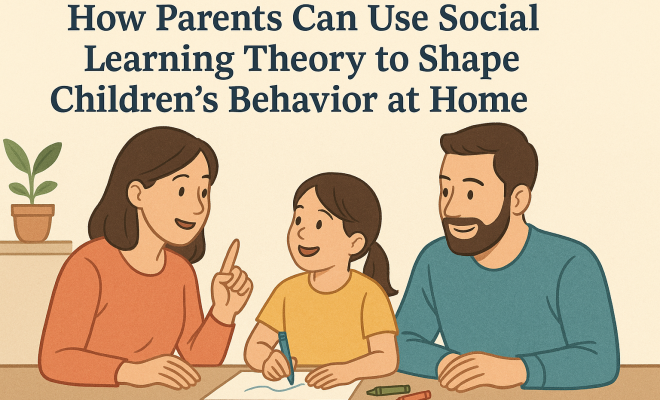
Modeling is a cornerstone of social learning theory. As parents, you are your child’s primary role models. They observe your actions, words, and attitudes daily; thus, your behavior significantly influences their development. For instance, if you handle conflict calmly and respectfully, your child is more likely to adopt similar conflict-resolution strategies. Conversely, if you exhibit aggressive behavior during disagreements, your child may imitate this approach, believing it’s an acceptable way to resolve issues.
Consider your daily interactions not just as moments of communication but as opportunities for modeling desirable behaviors. This means being aware of your actions and the messages they send. Recognizing that children are constantly observing can help you approach parenting with intention.
Encouraging Positive Behavior
One of the most significant advantages of using social learning theory as a framework for parenting is its ability to nurture positive behavior. Here are several strategies to consider:
1. Be the Behavior You Want to See
Your child learns by watching you. If you want them to exhibit kindness, generosity, or responsibility, you need to model these behaviors yourself. Demonstrate kindness in your interactions with others, show generosity in sharing, and take responsibility for your actions. By living these values, you’re providing a clear example for your child to emulate.
2. Praise Desired Behaviors
When your child displays behaviors you wish to encourage, acknowledge and praise them. This reinforcement not only affirms the behavior but also motivates your child to continue acting in that way. For example, if your child shares their toys with a sibling, provide positive feedback like, “I’m so proud of you for sharing!” This encouragement makes it more likely your child will repeat the behavior.
3. Use Role-Playing
Role-playing scenarios can be a fun and effective way to teach your child how to navigate various social situations. You can create situations where your child might need to practice problem-solving, sharing, or expressing their feelings. For example, pretend to be a friend who is upset and guide them through how to respond. This not only reinforces appropriate behavior but also helps your child build empathy.
Discouraging Negative Behavior
While encouraging positive behavior is crucial, it’s equally important to address negative behaviors. Here are methods to consider: (See: Wikipedia on Social Learning Theory.)
1. Identify Negative Role Models
Children are influenced by various role models, including those they see in media. If your child is drawn to characters that display negative behavior—like dishonesty or aggression—consider discussing these examples with them. Ask questions like, “How do you think that character feels?” This can help them critically evaluate behaviors and understand the consequences of negative actions.
2. Set Clear Expectations
Establishing clear behavioral expectations can mitigate the imitation of negative behaviors. If you expect your child to say please and thank you or to respect personal space, communicate these expectations explicitly. Consistency is key; if children know what is expected of them, they’re better equipped to meet those standards.
3. Provide Consequences
When negative behavior occurs, it’s essential to address it with appropriate consequences. This might involve losing privileges or having a discussion about why the behavior is unacceptable. Importantly, this isn’t about punishment but rather about helping your child understand the impact of their actions. For instance, if they refuse to share, you might explain how their behavior affects others and encourage them to try again.
Leveraging Peer Influence
Your child’s peers play a significant role in their behavior and attitudes. As they grow, children may be influenced by their friends, making peer dynamics crucial to understand. Here’s how to navigate this:
1. Encourage Positive Friendships
Help your child build relationships with friends who display positive behaviors. Monitor their friendships and discuss the qualities of good friends. This can include kindness, honesty, and supportiveness. If you notice your child spending time with friends who engage in negative behaviors, gently guide them to understand the potential consequences of those associations.
2. Facilitate Group Activities
Organizing group activities, such as sports or community service, can provide your child with opportunities to learn from peers. In these settings, children can observe and adopt positive behaviors from one another while also practicing teamwork and cooperation. Encourage your child to take active roles in these activities, further solidifying their understanding of how good behavior is reciprocated in social settings.
The Impact of Technology on Social Learning
In today’s digital age, the influence of technology on social learning cannot be overlooked. Children are exposed to various content that shapes their behavior and attitudes. Here’s how you can manage this:
1. Choose Quality Programming
Be conscious of the television shows, videos, and online content your child consumes. Educational programs that model good behavior can serve as effective tools for reinforcement. For example, shows that promote empathy, teamwork, and respect can provide excellent examples for children. Watch together and discuss the lessons presented in the episodes.
2. Discuss Online Interactions
As children engage with peers online, it’s crucial to discuss ethical interactions. Teach them about respect and kindness in digital communication. Use examples from real-life scenarios or online interactions to help them understand how their behavior affects others, fostering a thoughtful approach to their digital presence.
Applying Social Learning Theory in Everyday Life
Integrating social learning theory into your daily routine can create a nurturing environment for your child. Here are some practical tips:
1. Create a Learning Environment
Establish an environment that promotes observation and interaction. Simple actions like reading books together, engaging in conversations about feelings, and showing affection can enhance your child’s social learning experience. Your home can become a space where positive behaviors are modeled and practiced.
2. Encourage Reflection
After various experiences, invite your child to reflect on their actions and those of others. Ask open-ended questions such as, “What did you learn from that situation?” or “How do you think your actions made others feel?” This can promote awareness and encourage them to think critically about behavior.
3. Be Patient
Behavior change takes time. As you implement these strategies, remember to be patient. Children may not immediately adopt the behaviors you wish to promote, but consistency and support can lead to gradual improvement. (See: CDC on Social Learning Theory.)
Current Relevance of Social Learning Theory
The principles of social learning theory remain relevant in today’s society. As children face new challenges—such as social media pressure and shifting cultural norms—understanding how they learn from their environment is crucial. Parents can use this knowledge to foster resilience and adaptability in their children.
Moreover, educational systems increasingly incorporate these principles, recognizing the impact of social learning in classrooms. Schools are fostering collaborative learning environments, acknowledging that children learn effectively through interactions with their peers.
Empowering Parents: Strategies for Application
It’s essential for parents to be equipped with practical strategies to implement social learning theory effectively. Here are some suggestions tailored to enhance your parenting skills:
1. Engage in Family Activities
Participating in family activities not only strengthens bonds but also provides a platform for modeling social behaviors. Family game nights, cooking together, or outdoor adventures can instill cooperation, patience, and communication skills. When children see their parents working together and respecting each other’s opinions, they learn these vital social skills themselves.
2. Create Teach Moments
Everyday situations can turn into powerful teaching moments. For example, during grocery shopping, you can model decision-making by discussing choices regarding healthy foods. This not only teaches about nutrition but also showcases the process of evaluating options and making informed decisions. Engaging your child in these discussions helps them apply learned concepts to real-life scenarios.
3. Model Emotional Intelligence
Emotional intelligence plays a crucial role in social learning. As parents, acknowledging your emotions and discussing them openly can teach your child how to identify and express their feelings. Sharing how you feel about a specific situation, and how you cope with different emotions—like frustration or joy—provides them with a blueprint for handling their emotions effectively.
Case Studies: Social Learning in Action
To better understand the practical application of social learning theory, let’s take a look at a couple of hypothetical case studies:
Case Study 1: The Power of Positive Reinforcement
In a household where the parents consistently model good manners and respect towards each other, their ten-year-old son, Jake, begins to emulate these behaviors. When his parents hold regular family meetings to discuss feelings and resolve conflicts, Jake learns that communication is an effective tool. Over time, he starts using polite language with his friends and even stands up for classmates being bullied, showcasing his learned behavior in a broader context.
Case Study 2: Media Influence and Its Consequences
Conversely, consider a family where the children frequently watch a popular television show that glorifies disrespectful behavior. The parents notice that their eight-year-old daughter, Lily, starts using rude language and dismissive gestures toward her siblings. By discussing the content of the show and its implications, the parents help Lily analyze the difference between entertainment and real-life behavior. This conversation leads to an agreement to watch more educational programming together, reinforcing positive behavior and empathy.
Frequently Asked Questions (FAQ)
1. How can I tell if my child is influenced by negative role models?
Watch for changes in behavior, language, or attitudes towards others. If your child begins to mimic aggressive behaviors or uses inappropriate language, it may signal influence from negative role models. Have open conversations about their friends and the media they consume to identify potential influences.
2. What if my child is resistant to positive modeling?
Resistance can occur for various reasons, including peer pressure or personal challenges. It’s important to remain patient and continue modeling desired behaviors without forcing them. Engage in discussions about their feelings and experiences to foster an environment where they feel secure enough to express themselves.
3. How can I effectively teach my child about empathy?
Teach empathy through storytelling, discussing characters’ feelings in books or movies, and encouraging your child to consider how others might feel in different situations. Role-play different scenarios where empathy is required to help them practice responding compassionately.
4. Is technology harmful to my child’s social learning?
Technology can have both positive and negative effects. While inappropriate content can model adverse behaviors, educational programs can support social learning. It’s crucial to be actively involved in your child’s technology use and ensure they engage with quality content. Discussing their online interactions also helps cultivate positive digital behavior.
5. How do I address negative behaviors without discouraging my child?
Focus on constructive feedback rather than punishment. Use discussions to highlight the impact of their actions on others and guide them toward understanding consequences. Praise efforts to improve and reassure them that mistakes are part of learning.
Conclusion: Empowering Children Through Social Learning Theory
As parents, you have a unique opportunity to influence your child’s behavior positively through understanding and applying social learning theory. By modeling desirable behaviors, encouraging positive peer interactions, and leveraging technology wisely, you can create an environment that nurtures your child’s development. Remember, the aim isn’t just to correct behavior but to cultivate a mindset that values empathy, respect, and kindness.
By incorporating these strategies into your parenting, you empower your children with the tools they need to understand themselves and the world around them. Social learning isn’t just a theory; it’s a parenting practice that can shape the future generation.
Further Reading and Resources
For parents looking to delve deeper into social learning theory and its implications on child development, here are some recommended resources:
- Psychology Today – Social Learning Theory
- American Psychological Association – Learning Theories
- YouTube – Social Learning Theory Explained
- Goodreads – Books on Social Learning Theory
Final Thoughts
Incorporating social learning theory into your everyday parenting approach can create a nurturing, supportive environment for your child. By being conscious of your behaviors and the lessons they convey, you can guide your child toward becoming a compassionate, respectful individual, ready to engage positively with the world around them. Remember, every moment is a teaching moment, and your influence as a parent is both powerful and lasting.
“`
Trending Now
- this guide on what they forgot to include in my education degree
- “Why Neuroscientists Say Learning Styles Theory…
- “How to Teach to Different Learning Preferences Without Limiting Student Growth”
- “How Childhood Attachment Patterns Affect Adult Relationships and Mental Health”
Frequently Asked Questions
What is social learning theory in parenting?
Social learning theory, developed by Albert Bandura, suggests that children learn behaviors through observation and imitation of role models, including parents. This theory emphasizes the importance of modeling positive behaviors to encourage similar actions in children.
How can parents model positive behavior for their children?
Parents can model positive behavior by demonstrating calm conflict resolution, respectful communication, and empathy in everyday situations. Children are likely to imitate these behaviors, which can help shape their own responses to challenges.
What are the key components of social learning theory?
The key components of social learning theory include attention, retention, reproduction, and motivation. Children must pay attention to behaviors, remember them, be able to reproduce them, and have a reason to emulate them.
Why is modeling important in child development?
Modeling is crucial in child development because children learn by observing their parents and caregivers. Positive modeling can lead to the adoption of healthy behaviors, while negative modeling can encourage undesirable actions.
How can I encourage my child to imitate good behavior?
To encourage your child to imitate good behavior, consistently demonstrate positive actions yourself. Provide reinforcement and motivation for desired behaviors, and create an environment where those behaviors are visible and valued.
What did we miss? Let us know in the comments and join the conversation.