Weighted vs. Unweighted GPA: What’s the Difference?
“`html
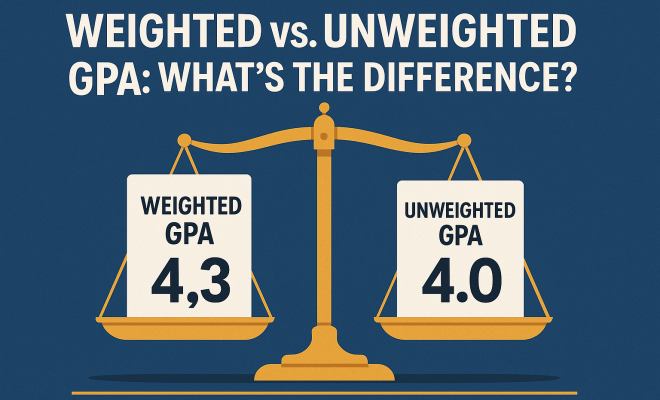
When it comes to evaluating academic performance, the terms weighted and unweighted GPA frequently pop up. Understanding the difference between these two grading scales is crucial for students, parents, and educators alike, particularly in a competitive academic landscape. This guide will break down the distinctions, implications, and practical insights regarding weighted vs unweighted GPA, so you can make informed decisions about your educational journey.
1. What is Unweighted GPA?
Unweighted GPA is a straightforward calculation that assigns point values to letter grades. Typically, the scale ranges from 0.0 to 4.0, where an “A” equals 4.0, a “B” equals 3.0, a “C” equals 2.0, a “D” equals 1.0, and an “F” equals 0. This simple system does not account for course difficulty, meaning that an A in a standard class carries the same weight as an A in an advanced class.
For example, consider a student who takes five classes and earns the following grades: A, B, B, C, and A. Using the unweighted system, the GPA calculation would be straightforward:
- A = 4.0
- B = 3.0
- B = 3.0
- C = 2.0
- A = 4.0
Adding these together gives a total of 16.0 points. Dividing by the number of classes, which is 5, results in an unweighted GPA of 3.2. This GPA reflects performance without considering the intensity or rigor of the coursework.
2. What is Weighted GPA?
In contrast to the unweighted GPA system, a weighted GPA takes into account the difficulty of the courses a student takes. Advanced Placement (AP), International Baccalaureate (IB), and honors courses often receive additional points. A typical weighted scale might assign 5.0 for an A in an AP class, 4.5 for a B, and so on. This incentivizes students to challenge themselves with harder classes.
For instance, if a student takes an AP class and earns an A, their GPA reflects this higher achievement. Using the same example of grades as before, let’s calculate the weighted GPA:
- A in an AP class = 5.0
- B in a standard class = 3.0
- B in a standard class = 3.0
- C in a standard class = 2.0
- A in a standard class = 4.0
If the A is in an AP course, the total points would now be 5.0 + 3.0 + 3.0 + 2.0 + 4.0 = 17.0. Dividing this by the five classes gives a weighted GPA of 3.4. This GPA provides a more nuanced view of the student’s academic performance, factoring in course rigor.
3. How Are Weighted and Unweighted GPAs Calculated?
Both weighted and unweighted GPAs start with the same foundation of grade point values, but the addition of weight makes a significant difference in how they are computed. Unweighted GPA is simply the average of the grades, while weighted GPA adds extra points for advanced coursework.
The calculation process for unweighted GPA is straightforward:
- Assign point values to letter grades.
- Sum the points.
- Divide by the total number of classes.
Conversely, calculating a weighted GPA involves:
- Assigning point values, but with higher values for advanced courses.
- Summing the weighted points.
- Dividing by the total number of classes, which may include unweighted and weighted courses.
This difference in calculations can significantly affect a student’s overall GPA, especially if they are enrolled in a mix of standard and advanced courses.
4. The Pros and Cons of Each System
Understanding the benefits and drawbacks of weighted vs unweighted GPA can help students make informed academic decisions. One major advantage of an unweighted GPA is its simplicity. It provides a clear, direct assessment of performance across all courses, making it easier to interpret for college admissions committees.
However, a major downside is that it doesn’t reward students for taking more challenging classes. Students may shy away from advanced coursework, fearing that the unweighted GPA will not reflect their capabilities accurately. On the other hand, a weighted GPA encourages students to pursue more rigorous subjects, potentially leading to a deeper understanding of the material and better preparation for college. (See: Understanding academic grades and GPAs.)
Yet, the weighted system has its cons. It can create a competitive atmosphere where students might take on too much, leading to burnout. Additionally, not all schools use the same weighted GPA scale, making it challenging to compare students from different schools fairly.
5. How Colleges Evaluate Weighted vs Unweighted GPAs
Colleges often have their own methods for evaluating GPAs, and they might look at both weighted and unweighted versions when reviewing applications. Admissions committees are generally aware of the differences between the two systems and may use a holistic approach to understand a student’s qualifications.
Some colleges prefer weighted GPAs as they showcase a student’s willingness to engage with challenging coursework. However, they also consider unweighted GPAs to gauge the actual academic performance level. For example, a student with a high weighted GPA may have taken numerous AP classes but received C’s in them, while another student could have a lower weighted GPA but excelled in honors or regular classes.
Thus, colleges often look at the rigor of a student’s course load in conjunction with their GPA to determine the best fit for their programs. It’s wise for students to include detailed information about the courses they’ve taken in their applications to give context to their GPA.
6. Impact on Class Rank
Class rank is a significant factor in academic assessment and is often calculated based on GPA. Weighted GPAs can lead to skewed class rankings, especially in schools where many students take advanced courses. A student who excels in regular classes may find themselves ranked lower than peers who’ve taken AP or honors classes but performed at similar levels.
This situation can create pressure on students to opt for advanced classes purely for the advantage in rank, rather than for their passion or academic interest. Conversely, unweighted GPAs tend to provide a more straightforward ranking system based on actual performance without the added complexity of course difficulty.
7. Strategies for Managing GPA
Students should be proactive in managing their GPAs, whether weighted or unweighted. Here are some strategies to consider:
- Know Your Goals: If you’re aiming for highly competitive colleges, consider taking advanced courses to boost your weighted GPA.
- Balance Your Course Load: Take a mix of standard and advanced classes that align with your strengths and interests. This ensures you’re engaged without overwhelming yourself.
- Seek Help When Needed: If you find certain subjects challenging, consider tutoring or study groups to help improve your grades.
- Monitor Your Progress: Keep track of your grades and GPA regularly, so you can adjust your study habits as needed.
These strategies can help you maintain a healthy GPA and academic well-being while also preparing you for future challenges.
8. Current Trends in GPA Calculation
In recent years, some educational institutions have begun emphasizing a more holistic approach to evaluating student performance. This shift includes considering extracurricular activities, personal essays, and recommendation letters alongside GPA. However, the debate over weighted vs unweighted GPA continues.
Many educators and experts advocate for clearer communication regarding GPA calculations to avoid misunderstandings among students and parents. Some schools have introduced standardized methods for GPA calculations to ensure fairness and consistency. These innovations are crucial as they help students understand their academic standing and make informed decisions about their education.
9. Weight of Different Courses in GPA Calculation
Another important aspect of understanding weighted vs unweighted GPA is recognizing how different courses contribute to these calculations. Schools often categorize courses into three main types: standard, honors, and AP/IB classes. Each of these categories plays a pivotal role in shaping a student’s overall GPA.
Standard courses typically receive the lowest weighting in GPA calculations. While they help build foundational knowledge, they don’t challenge students as much as honors or AP classes. For instance, a student who excels in a standard math class may receive an A and earn 4.0 points in an unweighted system and 4.0 in a weighted calculation if the school does not weight standard classes.
In contrast, honors courses offer a slightly more rigorous curriculum. Students who succeed in these classes typically earn 0.5 additional points. For example, an A in an honors class might be calculated as 4.5 in a weighted GPA, reflecting the increased challenge of the course.
AP and IB classes, designed to provide college-level curricula in high school, usually carry the most weight. Receiving an A in an AP course could earn a student up to 5.0 points, significantly boosting their weighted GPA. This distinction encourages students to take on more challenging courses, ultimately preparing them for college-level work.
10. Case Studies: College Admissions and GPA
To illustrate the impact of weighted vs unweighted GPA in real-life scenarios, let’s look at a couple of case studies involving college admissions. These examples highlight how students navigated their academic paths with varying GPA calculations influencing their college choices. (See: Teaching and learning strategies.)
Consider Student A, who opted for a mix of honors and standard classes throughout high school. Their unweighted GPA stood at 3.5, but their weighted GPA was 4.0 due to the additional weight from honors courses. When applying to competitive universities, their ability to balance rigorous coursework while maintaining a solid GPA impressed admissions committees. They were accepted into several top-tier universities, receiving scholarships based on their academic performance.
In contrast, Student B chose to take primarily standard courses, achieving an unweighted GPA of 3.8. However, their weighted GPA dropped to 3.8 as well, given that they did not take any honors or AP classes. Their application was competitive, but they faced challenges gaining acceptance into the most selective schools. Admissions officers noted their high GPA but expressed concerns about the lack of advanced coursework, which could hinder their preparedness for college.
These case studies underscore the importance of understanding how weighted vs unweighted GPA can shape a student’s academic profile and influence college admissions decisions.
11. Statistics on GPA Trends
Recent studies have provided fascinating insights into GPA trends among high school students. According to data from the National Center for Education Statistics, the average high school GPA has seen a steady increase over the past decade. In 2020, the average GPA for high school graduates was approximately 3.0, compared to 2.7 in the early 2000s.
Furthermore, a survey conducted by the College Board revealed that 84% of students applying to college reported having taken at least one AP or honors course during high school. This statistic highlights the growing trend of students seeking to enhance their GPAs through rigorous coursework.
Interestingly, research suggests that students who engage in AP courses tend to perform better in college than those who don’t. A study from the University of Texas found that students who obtained a score of 3 or higher on AP exams had a higher college GPA compared to their peers who did not take AP classes. This correlation further emphasizes the value of pursuing advanced coursework, regardless of GPA calculations.
12. Common Misconceptions About Weighted and Unweighted GPA
As discussions about weighted and unweighted GPA continue, several misconceptions persist among students and parents. One common myth is that a weighted GPA is always better than an unweighted GPA. While a higher weighted GPA can reflect a student’s willingness to take challenging courses, it does not necessarily equate to better academic performance. A student with a lower weighted GPA may excel in a rigorous course load without relying on advanced classes to boost their GPA.
Another misconception is that all colleges calculate GPAs in the same way. Each institution may have its own method for evaluating GPAs, which can lead to confusion during the college application process. It’s essential for students to research specific colleges’ policies to understand how they assess applicants’ GPAs.
Some students also believe they must take every available AP or honors class to boost their GPA. However, this approach can lead to burnout and decreased overall performance. Focusing on a balanced course load that aligns with individual strengths and interests is often more beneficial than trying to achieve a perfect GPA at all costs.
13. Frequently Asked Questions (FAQ)
What is the primary difference between weighted and unweighted GPA?
The primary difference lies in how they account for course difficulty. Unweighted GPA does not consider the rigor of courses, while weighted GPA assigns additional points for advanced courses like AP or honors.
Why do colleges care about weighted GPA?
Colleges value weighted GPAs as they reflect a student’s willingness to challenge themselves academically. A weighted GPA can provide a more comprehensive view of a student’s abilities and preparedness for college-level work.
Can I convert weighted GPA to unweighted GPA?
Yes, you can convert a weighted GPA to an unweighted GPA by removing the additional points assigned for advanced coursework. This is typically done by subtracting the extra points from the weighted GPA based on the courses taken.
Does taking AP classes guarantee a higher GPA?
Not necessarily. While AP classes can increase a weighted GPA, success in these classes depends on performance. If a student struggles in an AP class, it could lower their overall GPA. (See: Impact of grading systems on students.)
How can I improve my GPA, weighted or unweighted?
Improving your GPA involves focusing on study habits, seeking help when needed, balancing course loads, and consistently monitoring academic performance. Setting specific goals and maintaining motivation will also contribute to GPA improvement.
14. Understanding the Long-Term Impact of GPA
The implications of weighted vs unweighted GPA extend beyond high school graduation. Your GPA can significantly affect college admissions, scholarship opportunities, and even future job prospects. For instance, many colleges and universities offer merit-based scholarships that rely heavily on both the GPA and the rigor of coursework. A high weighted GPA, indicative of challenging courses, may make a candidate more attractive to scholarship committees.
Research indicates that students with higher GPAs tend to have better retention rates in college. The National Student Clearinghouse Research Center found that students with GPAs above 3.0 were significantly more likely to persist to their second year than those with lower GPAs. This trend highlights the importance of maintaining a high GPA throughout high school, as it not only opens doors for college acceptance but also helps prepare students for the challenges of higher education.
15. Impact on Career Opportunities
While GPA is often seen as a high school metric, its effect can linger into a student’s career. Some employers still look at GPA when assessing recent graduates, particularly in competitive fields like finance, engineering, and technology. A higher GPA can suggest a strong work ethic and dedication, which are qualities that employers value highly.
However, as professionals gain work experience, the weight of GPA typically diminishes. Employers tend to focus more on skills, internships, and relevant work experience. Still, keeping a solid GPA can help during the initial job search after college, as it may distinguish candidates in a crowded field.
16. The Future of GPA Evaluation
As education evolves, so too does the evaluation of student performance. Some schools are exploring alternative methods for assessing student achievement, including narrative evaluations or competency-based assessments. These approaches focus more on individual learning than on numerical GPA calculations. This shift may lead to a greater emphasis on skills and personal development over traditional GPA metrics.
While GPA will likely remain a critical factor in college admissions and employment for the foreseeable future, staying informed about emerging trends is crucial. As students, parents, and educators, being aware of these changes can help adapt strategies to navigate the evolving educational landscape effectively.
17. Final Thoughts on Weighted vs Unweighted GPA
Understanding the differences between weighted and unweighted GPA is essential for students navigating their academic pathways. While both systems have their pros and cons, being aware of how each works can help you make educated choices about your course selections and manage your academic performance effectively. Whether you choose to take advanced courses to boost your weighted GPA or focus on excelling in standard classes, the key is to find a balance that works for you.
Regardless of the GPA system your school employs, remember that your education is not solely measured by numbers. Your growth, understanding, and interests are equally important as you prepare for the next steps in your academic and professional journey.
“`
Trending Now
Frequently Asked Questions
What is the difference between weighted and unweighted GPA?
The main difference between weighted and unweighted GPA lies in how they calculate grades. Unweighted GPA uses a scale from 0.0 to 4.0, treating all classes equally, while weighted GPA assigns additional points for advanced courses like AP or honors classes, potentially increasing the GPA above 4.0.
How is unweighted GPA calculated?
Unweighted GPA is calculated by assigning point values to letter grades on a scale of 0.0 to 4.0. For instance, an 'A' is worth 4.0, 'B' is 3.0, and so on. The total points earned are divided by the number of classes to determine the GPA.
What does a weighted GPA mean?
A weighted GPA accounts for the difficulty of courses, giving extra points for advanced classes. For example, an 'A' in an AP class might be worth 5.0 instead of 4.0. This system encourages students to take more challenging coursework.
Which GPA is better for college applications?
Colleges often look at both weighted and unweighted GPAs. Weighted GPAs can reflect a student's willingness to challenge themselves with difficult courses, while unweighted GPAs provide a straightforward assessment of academic performance. Both are important in the admissions process.
Can you convert weighted GPA to unweighted?
Yes, you can convert a weighted GPA to an unweighted GPA by removing the extra points assigned for advanced courses. This involves recalculating the GPA based on standard point values, ensuring that all grades are treated equally regardless of course difficulty.
Have you experienced this yourself? We’d love to hear your story in the comments.