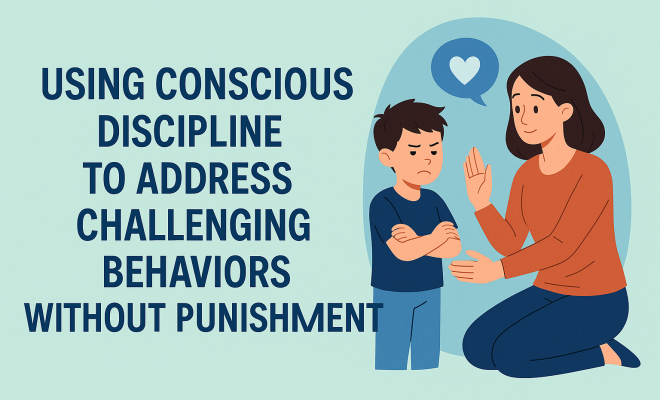
“Using Conscious Discipline to Address Challenging Behaviors Without Punishment”
“`html
Addressing challenging behaviors in children has long been a significant concern for educators, parents, and caregivers alike. Traditional methods often rely on punishment, but what if there was a better way? Enter conscious discipline, a transformative approach designed not only to tackle behavioral issues but also to foster emotional intelligence and resilience in children. This article delves into the principles and practices of conscious discipline, illustrating how it can effectively address challenging behaviors without resorting to punitive measures.
Understanding Conscious Discipline
Developed by Dr. Becky Bailey, conscious discipline is more than just a set of strategies for managing behavior; it’s a comprehensive social-emotional learning program that integrates neuroscience, psychology, and education. The foundation of this approach is the recognition that all behavior is a form of communication. When children exhibit challenging behaviors, they are often expressing unmet needs or emotions that they are unable to articulate.
At its core, conscious discipline is anchored in the belief that effective discipline stems from a connection between adults and children. By fostering safety, connection, and problem-solving skills, adults can nurture children’s emotional well-being and promote a positive, collaborative learning environment.
Key Principles of Conscious Discipline
Conscious discipline is built upon several key principles that guide its implementation:
- Safety: The first step in addressing any behavior is creating an environment where children feel safe. This involves both physical safety and emotional safety — children should feel secure enough to express their feelings and needs.
- Connection: Building strong, trusting relationships between adults and children is essential. When children feel connected to their caregivers, they are more likely to engage and cooperate.
- Problem-solving: Rather than focusing on punishment, conscious discipline encourages children to identify problems and brainstorm solutions. This empowers them to take responsibility for their actions and learn from their mistakes.
- Emotional regulation: Teaching children to recognize and manage their emotions is a fundamental aspect of conscious discipline. By helping children develop emotional awareness, they can learn to respond to challenges in healthier ways.
- Social-emotional learning: The importance of teaching social skills alongside academic skills cannot be overstated. Conscious discipline incorporates social-emotional learning into everyday interactions, equipping children with the tools they need to navigate their relationships.
How Conscious Discipline Addresses Challenging Behaviors
By shifting the focus from punishment to understanding and communication, conscious discipline offers practical strategies for addressing challenging behaviors.
1. Recognizing Triggers
Every child has individual triggers that may lead to challenging behaviors. These can include environmental factors, interpersonal dynamics, or specific situations. By observing and understanding these triggers, caregivers can proactively address potential issues before they escalate. For instance, if a child consistently struggles during group activities, it may indicate a need for more individualized support or a different approach to participation.
2. Using the Safety Signal
One of the first steps in conscious discipline is establishing a ‘safety signal.’ This signal helps children understand when they or their peers feel safe or unsafe. By creating a visual or auditory cue, caregivers can foster a shared language that promotes emotional awareness and responsiveness. For example, using colored cards to signify feelings of safety can allow children to express their emotional state without having to articulate it verbally.
3. Implementing the ‘Time-In’ Approach
Rather than a traditional time-out, conscious discipline advocates for a ‘time-in’ approach. This means that when a child exhibits challenging behavior, they are guided to a calm space where they can regroup and process their feelings. This allows children to reflect on their actions while still feeling supported and connected to their caregivers.
Emotional Regulation: The Heart of Conscious Discipline
Emotional regulation is a cornerstone of the conscious discipline framework. Children often struggle to articulate their feelings, which can lead to outbursts or withdrawal. By teaching emotional regulation skills, caregivers equip children with the tools to manage their emotions in constructive ways.
Teaching Emotional Vocabulary
A vital part of emotional regulation is helping children expand their emotional vocabulary. Instead of simply labeling feelings as ‘happy’ or ‘sad,’ children should be encouraged to explore a broader range of emotions — including ‘frustrated,’ ‘overwhelmed,’ or ‘excited.’ This nuanced understanding helps children express their feelings more accurately, paving the way for effective communication and problem-solving. (See: CDC on Social and Emotional Learning.)
Mindfulness Practices
Incorporating mindfulness practices into daily routines can significantly enhance emotional regulation skills. Simple breathing exercises, meditation, or guided imagery can help children calm their minds and bodies, allowing them to respond to challenges thoughtfully rather than reactively. For instance, teaching children to take a few deep breaths before responding to frustration can foster a sense of control over their reactions.
Building Connection Through Relationship-Building Strategies
Connection is at the heart of conscious discipline, and building strong relationships with children lays the groundwork for effective behavior management. Here are some strategies to foster connection:
1. One-on-One Time
Spending quality one-on-one time with each child can help strengthen bonds. This time can be used to engage in activities the child enjoys, fostering a sense of importance and connection. It’s a simple but effective way to show children that they are valued and heard.
2. Active Listening
Practicing active listening can dramatically improve relationships. When children feel heard, they are more likely to express their feelings constructively. Active listening involves giving full attention, acknowledging feelings, and responding thoughtfully. For instance, saying, “I see you’re upset about losing your toy; let’s talk about it,” validates the child’s feelings and promotes open communication.
Practical Insights for Implementing Conscious Discipline
While the principles of conscious discipline are transformative, effective implementation requires thoughtful strategies and consistent practice. Here are some practical insights for educators and parents:
1. Start Small
Implementing conscious discipline doesn’t have to be an all-or-nothing approach. Begin with one or two strategies that resonate with you and your situation. As you gain confidence and see positive changes, gradually incorporate more practices into your daily routine.
2. Create a Supportive Environment
Design your physical space to promote safety and connection. This can include creating cozy corners for reflection, using calming colors, or having designated areas for group collaboration. A supportive environment reinforces the principles of conscious discipline, making it easier for children to engage positively.
3. Encourage Family Involvement
For conscious discipline to be effective, it’s essential to engage families in the process. Share the principles and practices with parents and caregivers, encouraging them to adopt similar strategies at home. This consistency across environments enhances children’s understanding and application of emotional regulation and problem-solving skills.
Current Relevance of Conscious Discipline
As we navigate an increasingly complex world, the relevance of conscious discipline becomes ever more pronounced. The rising rates of anxiety and behavioral challenges among children underscore the need for approaches that prioritize emotional well-being and resilience. Conscious discipline aligns perfectly with contemporary educational philosophies that emphasize social-emotional learning and restorative practices.
Supporting Educators and Caregivers
Schools and childcare programs adopting conscious discipline not only create safer environments but also prepare children for lifelong success. By equipping educators with the tools needed to practice conscious discipline, we empower them to help children thrive academically and emotionally. Professional development sessions centered around conscious discipline can provide educators with the skills and confidence needed to implement these strategies effectively.
The Role of Policy in Promoting Conscious Discipline
Policy changes can further support the integration of conscious discipline in schools. Advocating for comprehensive training programs for teachers and funding for resources can help shift the educational landscape toward more holistic approaches. As more institutions recognize the benefits of conscious discipline, we may see a broader transformation in how we address challenging behaviors in schools.
Challenges and Considerations
While conscious discipline presents a revolutionary approach to behavior management, it is not without its challenges. Implementing these practices requires a shift in mindset for many educators and caregivers. (See: OAH on Social-Emotional Learning.)
1. Time and Commitment
Transitioning to conscious discipline can be time-consuming. Educators may feel overwhelmed by the need for consistent implementation and reinforcement of the principles. It’s vital to remember that change takes time, and starting small can lead to gradual progress.
2. Resistance from Traditional Mindsets
Some educators or parents may operate from traditional disciplinary frameworks, viewing punishment as the primary method of behavior management. Overcoming this resistance may require ongoing education and advocacy for the benefits of conscious discipline. Sharing success stories and research findings can help sway skeptics.
The Science Behind Conscious Discipline
The principles of conscious discipline are supported by a wealth of research in the fields of neuroscience and psychology. Understanding how the brain works can provide educators and parents valuable insights into why this approach is effective.
Neuroscience Insights
Recent studies show that when children feel safe, their brains are better equipped to learn and develop. The amygdala, responsible for processing emotions, can become overwhelmed during stressful situations, hindering a child’s ability to think and learn. By implementing practices that foster safety and emotional regulation, conscious discipline helps calm the amygdala and allows the prefrontal cortex — responsible for decision-making and critical thinking — to function optimally.
Impact on Long-term Development
Research indicates that children who participate in social-emotional learning programs, like those based on conscious discipline, show improved academic performance, better classroom behavior, and enhanced emotional skills well into adolescence and adulthood. In fact, studies have shown that such programs can reduce instances of aggression and increase prosocial behaviors among youth, ultimately leading to higher graduation rates and improved mental health outcomes.
Examples of Conscious Discipline in Action
Seeing conscious discipline in practice can provide a clearer understanding of its application. Below are some scenarios that illustrate how this approach can be effectively utilized.
Scenario 1: The Overwhelmed Child
In a classroom, a child named Alex often feels overwhelmed during group activities, leading to disruptive behavior. Instead of reprimanding him, the teacher recognizes his need for emotional support. They implement a ‘calm corner’ where Alex can go to regulate his emotions with calming tools like stress balls and visual aids. Over time, Alex learns to recognize his feelings and chooses to utilize the calm corner proactively.
Scenario 2: Conflict Resolution Among Peers
During recess, two children, Mia and Sam, have a disagreement over a game. Instead of intervening with punishment, the supervising teacher encourages them to articulate their feelings and thoughts about the situation. Using active listening, the teacher guides them towards a solution that works for both, promoting a deeper understanding of empathy and teamwork. This not only resolves the conflict but builds their relationship.
Frequently Asked Questions about Conscious Discipline
1. What age group is conscious discipline suitable for?
Conscious discipline can be implemented with children of all ages, from toddlers to teenagers. The principles of emotional regulation and connection are universal and can be adapted to meet the developmental needs of different age groups.
2. How can parents practice conscious discipline at home?
Parents can integrate conscious discipline by creating a safe home environment, modeling emotional regulation, and engaging in open communication. Simple practices, such as using emotional check-ins during family dinners or incorporating mindfulness activities, can make a significant impact.
3. What if a child refuses to engage with conscious discipline practices?
It’s common for children to resist new practices initially. Consistency and patience are keys. Continue to model the behaviors and provide gentle reminders. Over time, as they observe the benefits, their willingness to engage is likely to grow.
4. Are there specific resources available for educators wanting to implement conscious discipline?
Yes! There are numerous resources available, including training workshops, online courses, and books authored by Dr. Becky Bailey. Many schools also have access to workshops through educational organizations that specialize in social-emotional learning.
5. How can conscious discipline improve classroom dynamics?
By fostering emotional intelligence and connection among students, conscious discipline helps create a more harmonious classroom environment. As students develop their emotional regulation skills, they are better equipped to manage conflicts, leading to improved collaboration and a stronger sense of community within the classroom.
6. How can conscious discipline be adapted for virtual learning environments?
In virtual settings, conscious discipline remains relevant. Educators can create online spaces that foster connection, such as virtual check-ins and engaging activities that promote emotional sharing. Tools like breakout rooms can allow for small group discussions, where students practice emotional vocabulary and problem-solving together.
7. What role does cultural awareness play in implementing conscious discipline?
Understanding and respecting cultural differences is crucial in conscious discipline. Educators should be sensitive to the diverse backgrounds of their students and adapt their approaches accordingly. Incorporating culturally relevant materials can help children relate better to the practices and foster a deeper connection.
8. How can community support enhance the practice of conscious discipline?
Community involvement can play a significant role in supporting conscious discipline initiatives. Parents, local organizations, and mental health professionals can collaborate with schools to provide resources, workshops, and community events that promote emotional well-being and the principles of conscious discipline.
Conclusion: A Lasting Impact
Conscious discipline represents a profound shift in how we understand and respond to challenging behaviors in children. By prioritizing emotional intelligence, connection, and problem-solving, we equip children with invaluable skills that will serve them throughout their lives. The journey toward implementing conscious discipline may be challenging, but the rewards — for both children and adults — are immeasurable. As you explore this method, remember that every small step toward understanding and connection is a step in the right direction.
“`
Trending Now
Frequently Asked Questions
What is conscious discipline?
Conscious discipline is a comprehensive social-emotional learning program developed by Dr. Becky Bailey. It integrates neuroscience, psychology, and education to address challenging behaviors in children without punishment, focusing on emotional intelligence and resilience.
How can conscious discipline help with challenging behaviors?
Conscious discipline helps by recognizing that behavior is a form of communication. It addresses unmet needs and emotions through safety, connection, and problem-solving, fostering a positive and collaborative learning environment.
What are the key principles of conscious discipline?
The key principles of conscious discipline include safety, connection, and problem-solving. These principles emphasize creating a safe environment, building trusting relationships, and encouraging children to engage in collaborative solutions to challenges.
Can conscious discipline be used in schools?
Yes, conscious discipline can be effectively implemented in schools. It promotes a positive classroom environment by fostering emotional well-being and teaching problem-solving skills, which can help reduce behavioral issues among students.
How does conscious discipline differ from traditional discipline methods?
Unlike traditional discipline methods that often rely on punishment, conscious discipline focuses on understanding the root causes of behaviors, promoting emotional intelligence, and building strong connections between adults and children to facilitate positive behavior changes.
Have you experienced this yourself? We’d love to hear your story in the comments.