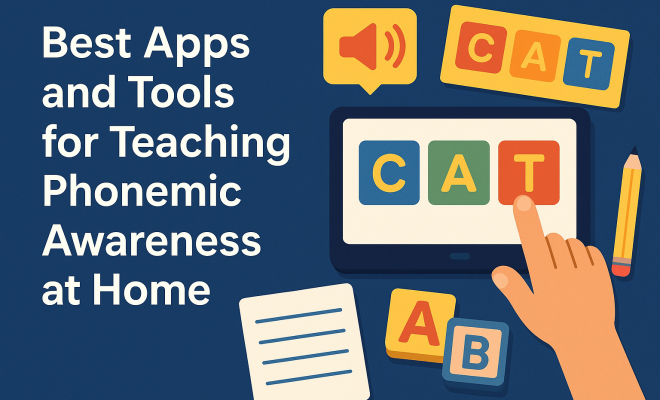
Best Apps and Tools for Teaching Phonemic Awareness at Home
“`html
Teaching phonemic awareness at home has become increasingly vital as parents strive to support their children’s literacy skills. Phonemic awareness is the ability to hear, identify, and manipulate individual sounds—phonemes—in spoken words. This foundational skill is crucial for reading success, especially in early education. Fortunately, a plethora of phonemic awareness apps are available today, designed to make learning fun and engaging for kids. Here’s a detailed look at the top seven phonemic awareness apps that can help children develop these critical skills from the comfort of home.
1. ABCmouse: An All-in-One Learning Platform
ABCmouse is a comprehensive learning app tailored for children aged 2 to 8. It offers a rich curriculum that spans various subjects, with a strong emphasis on early literacy skills, including phonemic awareness. The app’s interactive games and activities are crafted to engage young learners in a playful yet educational manner.
Within its phonemic awareness section, ABCmouse provides a variety of activities such as sound sorting, rhyming games, and phoneme blending exercises. These activities are designed to be both educational and entertaining, using colorful graphics and engaging animations to capture a child’s attention. Additionally, parents can track their child’s progress, ensuring they are developing the necessary skills at an appropriate pace.
2. Starfall: An Engaging Learning Experience
Starfall has established itself as a beloved resource for early literacy development. This app features a user-friendly interface and offers a plethora of phonemic awareness activities. The program is designed for children in preschool through second grade and emphasizes phonics with a focus on sound recognition.
Starfall’s phonemic awareness module includes fun songs and interactive storytelling that teaches children to recognize sounds and syllables within words. One of its standout features is the ability to cater to different learning styles, allowing children to hear and see the sounds, thus enhancing retention. This makes it an excellent choice for parents looking to enrich their child’s reading capabilities.
3. Phonics Genius: Focused Phonemic Training
Phonics Genius is specifically designed to help children master phonics and phonemic awareness through repetition and practice. The app includes a vast library of flashcards that cover over 6,000 words to help children recognize sounds in various contexts. This allows for a deep dive into phonemic training, which can be particularly beneficial for struggling readers.
Each flashcard presents a word along with its corresponding sound, providing children with immediate auditory feedback. Parents can customize the flashcard sets to focus on specific phonemes or sounds, tailoring the learning experience to their child’s needs. Phonics Genius’s straightforward approach ensures that children can practice at their own pace while gaining confidence in their reading skills.
4. Endless Alphabet: Enriching Vocabulary through Sounds
Endless Alphabet is a delightful app that combines phonemic awareness with vocabulary building. Aimed at preschoolers and early elementary students, this app introduces children to new words while enhancing their understanding of phonemes. The playful characters and animations keep students engaged as they learn. (See: Teaching reading and phonemic awareness.)
The app features various activities where children can explore the meanings of words through fun visuals and sound effects. By focusing on phonemic awareness in relation to vocabulary, Endless Alphabet helps children make connections between sounds and letters, enriching their comprehension and overall reading skills. It’s a fantastic tool for parents who want to foster a love of language in their children.
5. Reading Raven: Tailored Learning Paths
Reading Raven is an app designed to cultivate phonemic awareness through a structured set of activities that adapt to a child’s learning progress. It’s particularly suitable for children aged 3 to 7, making it a great option for early learners. The app includes a variety of lessons that focus on phonetic sounds, blending, and word recognition.
One of the unique aspects of Reading Raven is its ability to create personalized learning paths. As a child progresses through the levels, the app adjusts the challenges based on their performance. This tailored approach helps ensure that children remain engaged without feeling overwhelmed, making learning phonemic awareness not only effective but also enjoyable.
6. LetterSchool: A Fun Way to Learn Letters and Sounds
LetterSchool is an innovative app that focuses on teaching children the foundations of reading by blending handwriting practice with phonemic awareness. Designed for kids aged 3 to 6, this app introduces letters through engaging animations and fun games that teach the sounds associated with each letter.
What makes LetterSchool stand out is its emphasis on tactile learning. Children can trace letters with their fingers while hearing the corresponding sounds, effectively reinforcing the connection between phonemes and their written forms. This multisensory approach is particularly beneficial for young learners, helping them grasp phonemic awareness in an interactive and dynamic way.
7. Teach Your Monster to Read: A Game-Based Approach to Phonemic Awareness
Teach Your Monster to Read is an award-winning educational game that aims to teach children the essentials of reading, starting from phonemic awareness through advanced reading skills. This app is suitable for children aged 3 to 6 and combines game mechanics with learning, keeping kids motivated and engaged.
As children navigate through various levels, they encounter challenges that require them to identify sounds, blend phonemes, and recognize words. The vibrant graphics and engaging characters help make the learning experience captivating. Moreover, the app is designed to provide immediate feedback, allowing children to learn from their mistakes and grow their skills over time.
Benefits of Phonemic Awareness Apps
Using phonemic awareness apps can provide numerous advantages for children learning to read. Here are some of the key benefits:
- Interactive Learning: Children engage in interactive games that make learning enjoyable, which can lead to a more positive attitude towards reading.
- Personalized Learning: Many apps adapt to a child’s individual skill level, providing customized activities that match their learning pace.
- Parental Tracking: Most apps include features that allow parents to monitor their child’s progress, helping them identify areas needing improvement.
- Fun and Motivation: The gamified elements of apps keep children motivated, making them more likely to practice regularly.
- Accessibility: With the availability of these apps on various devices, learning can happen anywhere and anytime, fitting into busy family schedules.
Expert Perspectives on Phonemic Awareness
Experts in early childhood education emphasize the importance of phonemic awareness as a precursor to reading ability. Dr. Susan Neuman, a professor of childhood education, highlights that “children who develop strong phonemic awareness skills are more likely to be successful readers.” She advocates for integrating technology into learning, as it can provide a unique, engaging method for children to grasp these essential skills. (See: Literacy and health education resources.)
Another educational psychologist, Dr. Timothy Shanahan, emphasizes the role of phonemic awareness in the broader context of literacy. He explains, “Understanding and manipulating phonemes is critical not just for reading, but for spelling and writing as well. Therefore, apps that focus on phonemic awareness can have a broad impact on overall literacy skills.”
Statistics on Literacy and Phonemic Awareness
The relationship between phonemic awareness and literacy success is supported by various studies. According to the National Reading Panel, students who receive systematic phonemic awareness instruction perform better in reading than those who do not. In fact, a study by the University of Oregon found that phonemic awareness training improved reading skills in struggling readers by up to 30%.
Additionally, a 2021 report by the National Assessment of Educational Progress (NAEP) revealed that only 34% of fourth graders are reading at or above a proficient level. This underlines the need for effective phonemic awareness instruction, highlighting the importance of resources like phonemic awareness apps to support early literacy development. This builds on apps you will love.
Comparing Phonemic Awareness Apps
When choosing a phonemic awareness app, it can be helpful to compare their features, target age groups, and learning methodologies. Here’s a quick comparison of the mentioned apps:
| App | Target Age | Main Features | Unique Selling Point |
|---|---|---|---|
| ABCmouse | 2-8 | Wide range of subjects, tracking progress | Comprehensive learning platform |
| Starfall | Preschool to 2nd grade | Interactive storytelling, sound recognition | Strong focus on different learning styles |
| Phonics Genius | All ages | Extensive flashcard library, customizable | Focused on phonemic mastery through repetition |
| Endless Alphabet | Preschool to early elementary | Fun visuals, sound effects | Vocabulary enrichment through phonemic awareness |
| Reading Raven | 3-7 | Structured activities, personalized paths | Adapts to learning progress |
| LetterSchool | 3-6 | Tactile learning, handwriting practice | Blends writing with phonemic awareness |
| Teach Your Monster to Read | 3-6 | Game mechanics, immediate feedback | Engaging game-based learning |
Frequently Asked Questions (FAQ)
What is phonemic awareness?
Phonemic awareness is the ability to hear, identify, and manipulate individual sounds (phonemes) in spoken words. It’s a crucial skill for learning to read and write, as it helps children understand the sounds that make up words.
How do phonemic awareness apps work?
Phonemic awareness apps typically provide interactive games and activities that help children practice identifying and manipulating sounds in words. These activities may include rhyming games, sound sorting, and phoneme blending exercises, all designed to make learning engaging and fun.
At what age should children start using phonemic awareness apps?
Children can start using phonemic awareness apps as early as age 2, but they are most effective for preschool and early elementary students. Each app often targets a specific age range, so it’s essential to choose one that aligns with your child’s developmental stage.
Can phonemic awareness apps replace traditional reading instruction?
While phonemic awareness apps are excellent tools for supplementing reading instruction, they should not replace traditional methods. A balanced approach that includes both digital and traditional learning strategies is often the most effective for developing reading skills.
Are phonemic awareness apps suitable for children with learning disabilities?
Yes, many phonemic awareness apps are designed to be adaptable, making them suitable for children with learning disabilities. The interactive and engaging nature of these apps can help maintain motivation and promote skill development in a supportive environment.
How can I incorporate phonemic awareness apps into my child’s daily routine?
Incorporating phonemic awareness apps into your child’s daily routine can be as simple as setting aside a specific time for learning. For example, you might designate 15-20 minutes each day right after school for app-based learning. Alternatively, consider using the apps during downtime, such as waiting in line or during car rides. Keeping the sessions short and fun will help maintain your child’s interest without overwhelming them.
What are some additional activities to support phonemic awareness at home?
In addition to using phonemic awareness apps, you can engage your child in various activities to support their learning. Try playing rhyming games, where you take turns saying words that rhyme. You can also create sound sorting activities with common household items, asking your child to group objects by their starting sounds. Singing songs and reading books with repetitive phrases can further reinforce phonemic skills. Incorporating these activities into daily life makes learning feel natural and integrated.
Conclusion: Finding the Right Phonemic Awareness App
With so many phonemic awareness apps available, parents have a wealth of resources at their fingertips to help improve their child’s reading skills. Each app offers unique features that cater to different learning styles and preferences. By incorporating these tools into daily routines, parents can create a supportive learning environment that fosters phonemic awareness and sets the stage for future reading success.
Ultimately, the best app for your child will depend on their individual needs and interests. Take the time to explore these options, and you may discover that learning phonemic awareness can be both fun and effective.
“`
Trending Now
Frequently Asked Questions
What are the best apps for teaching phonemic awareness at home?
Some of the best apps for teaching phonemic awareness at home include ABCmouse, which offers interactive games for early literacy, and Starfall, known for its engaging phonics activities. Both apps cater to young learners and provide a variety of exercises to enhance phonemic skills.
How can I help my child with phonemic awareness?
To help your child with phonemic awareness, consider using educational apps like ABCmouse and Starfall. These platforms provide fun, interactive activities that focus on sound recognition and manipulation, making learning enjoyable while reinforcing essential literacy skills.
What is phonemic awareness and why is it important?
Phonemic awareness is the ability to hear, identify, and manipulate individual sounds in spoken words. It is crucial for reading success, especially in early education, as it forms the foundation for understanding phonics and developing strong literacy skills.
Are there free resources for teaching phonemic awareness?
Yes, there are free resources for teaching phonemic awareness, including websites that offer printable activities and online games. Additionally, many apps like Starfall offer free versions or trials that can help parents introduce phonemic skills without any cost.
At what age should I start teaching phonemic awareness?
Phonemic awareness can be introduced as early as age 2, but it is most critical between ages 4 to 7. Engaging your child with phonemic activities during preschool years can significantly boost their literacy development as they prepare for reading.
What’s your take on this? Share your thoughts in the comments below — we read every one.