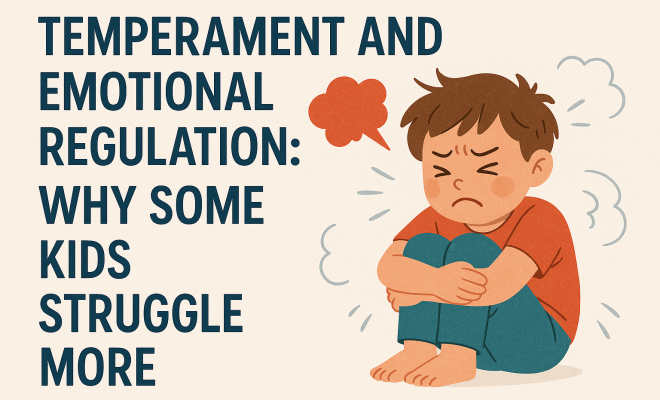
Temperament and Emotional Regulation: Why Some Kids Struggle More
“`html
Understanding why some children struggle more than others with emotional regulation involves delving into the complex interplay of child temperament and emotional regulation. Temperament refers to the innate characteristics that influence how children respond to their environment, their emotional responses, and their ability to manage those emotions. In this article, we will explore the nuances of temperament, how it affects emotional regulation, and what parents and educators can do to support children who may have a harder time managing their feelings.
What Is Temperament?
Temperament is a psychological construct that captures the individual differences in emotional, motor, and attentional reactivity and self-regulation. Research suggests that temperament is largely hereditary, rooted deeply in biology, and is observable even in infancy. The renowned psychologist Alexander Thomas and his colleague Stella Chess identified nine distinct temperament traits, including:
- Activity level: The overall energy level of a child.
- Rhythmicity: The regularity of biological functions like sleeping and eating.
- Approach/withdrawal: A child’s initial response to new stimuli.
- Adaptability: How easily a child adjusts to changes in routine.
- Sensory threshold: The level of stimulus required to elicit a response.
- Intensity: The energy level of emotional responses.
- Quality of mood: The general tendency toward a positive or negative emotional state.
- Distractibility: The degree to which a child can focus in the presence of distractions.
- Persistence: The ability to maintain focus on a task despite challenges.
These traits combine to create a unique temperament for each child. For instance, a child with high activity levels may find it challenging to engage in quiet activities, while a child with low adaptability may struggle with changes in routine.
The Link Between Temperament and Emotional Regulation
Child temperament and emotional regulation are intimately connected. Emotional regulation refers to the processes by which children manage their emotional experiences and expressions. This can range from suppressing anger to calming oneself down after becoming upset. Children with certain temperamental traits may find emotional regulation more challenging. For instance:
- High-intensity children: Those who display intense emotions may find it hard to calm down once triggered.
- Highly sensitive children: Children who are very perceptive to their surroundings often experience emotions more strongly.
- Slow-to-adapt children: They may need more time to transition between activities or adjust to new situations.
Research indicates that these temperamental traits can contribute to difficulties in emotional regulation, leading to behavioral issues in some instances. For example, a child who is easily frustrated may have outbursts, while another who is naturally more easygoing may handle disappointment with grace.
Identifying Emotional Regulation Challenges
Recognizing when a child struggles with emotional regulation is crucial for parents and caregivers. Signs may include:
- Frequent tantrums or emotional outbursts
- Difficulty calming down after becoming upset
- Challenges in transitioning from one activity to another
- Inability to articulate feelings or needs
- Engaging in risky or impulsive behavior
If you notice these behaviors in your child, it might not just be a phase; it can be indicative of a deeper challenge related to temperament and emotional regulation. Understanding the root of these behaviors is essential for crafting effective strategies to support the child.
The Role of Parenting in Emotional Regulation
Parents play a pivotal role in helping their children develop effective emotional regulation skills. Various parenting styles can significantly influence a child’s ability to manage emotions. Here are a few notable styles:
- Authoritative: This style balances responsiveness and demandingness. Children raised by authoritative parents tend to have better emotional regulation skills.
- Authoritarian: While these parents maintain strict control, they may not offer emotional support, which can hinder a child’s ability to manage emotions effectively.
- Permissive: Although these parents are warm and nurturing, they often fail to set boundaries, leading to a lack of self-regulation in children.
Research has shown that children of authoritative parents generally fare better in emotional regulation, partly due to the supportive environment that encourages open communication about feelings. Parents can foster emotional regulation by modeling appropriate emotional responses, validating their children’s feelings, and teaching problem-solving strategies.
Strategies to Support Emotional Regulation
Parents and caregivers can employ various strategies to help children manage their emotions more effectively. Here are some practical approaches: (See: Understanding child temperament.)
- Model emotional expression: Demonstrate healthy ways to express emotions. Discuss your feelings openly and show how you cope with negative emotions.
- Teach emotional vocabulary: Help your child articulate their feelings. Providing them with the right words allows them to express their emotions more effectively.
- Encourage deep breathing: Teach techniques such as deep breathing or counting to ten to help children manage acute emotional responses.
- Create a calm environment: A peaceful space can help children regulate their emotions better. Consider incorporating calming activities like reading or quiet play.
- Establish routines: Predictable schedules can provide children with a sense of security, helping them adapt more easily to changes.
These strategies are not only effective in promoting child temperament and emotional regulation but also create a nurturing environment where children feel safe and understood.
Current Relevance: The Impact of Modern Society
Today’s fast-paced world presents unique challenges that can exacerbate issues related to child temperament and emotional regulation. With the rise of technology and social media, children are exposed to a barrage of stimuli that can overwhelm their emotional systems. Studies suggest that children today are experiencing increased levels of anxiety and depression, partly due to these external pressures. Addressing emotional regulation in this context is more important than ever.
Parents may need to be particularly vigilant in monitoring their children’s technology use, ensuring that it does not interfere with their emotional development. Setting screen time limits and encouraging offline interactions can help mitigate some of these challenges. Additionally, schools can play a crucial role by integrating social-emotional learning (SEL) into their curricula, which equips children with the tools needed for emotional regulation.
Expert Perspectives on Temperament and Emotional Regulation
Experts in child psychology emphasize the importance of understanding each child’s unique temperament. Dr. John Gottman, a renowned psychologist, highlights that children learn emotional regulation primarily through their experiences with parents. His research suggests that emotional coaching significantly enhances a child’s ability to manage emotions. By recognizing a child’s emotional state and responding appropriately, parents can foster resilience and emotional intelligence.
Another authority in the field, Dr. Daniel Siegel, advocates for a mindful approach to parenting. He emphasizes the significance of attunement — the ability to sense and respond to a child’s emotional needs. This approach helps children feel validated and understood, which, in turn, supports their emotional regulation.
How to Advocate for Your Child’s Needs
If your child struggles with emotional regulation, advocating for their needs is crucial. This can involve:
- Communicating with educators: Discuss your child’s temperament with teachers and school counselors. They can provide additional support and resources.
- Seeking professional help: If emotional regulation issues interfere significantly with your child’s daily life, consider consulting a child psychologist or counselor.
- Joining support groups: Connecting with other parents facing similar challenges can provide insights, strategies, and emotional support.
By proactively addressing these needs, you can help ensure that your child receives the appropriate support to thrive emotionally.
The Path Forward: Building Emotional Resilience
As children navigate the complexities of modern life, their ability to regulate emotions is crucial for their overall well-being. By understanding the links between child temperament and emotional regulation and implementing supportive strategies, parents and caregivers can play an invaluable role in fostering emotional resilience.
Ultimately, it’s about recognizing each child’s unique temperament and responding with empathy and guidance. Building a foundation of emotional strength will not only help children manage immediate challenges but also prepare them for the ups and downs of life ahead.
Comparing Temperament Profiles
Understanding the different profiles of child temperament can offer deeper insights into how emotional regulation may vary among children. A study conducted by the American Psychological Association highlights distinct temperament profiles that can be classified into three primary categories:
- Easy temperament: These children typically display positive moods, adapt well to new experiences, and have regular sleeping and eating patterns. They tend to handle stress better and exhibit higher emotional regulation skills.
- Difficult temperament: Children in this category often react negatively to new situations, have irregular routines, and exhibit high intensity in their emotional responses. They may display a lack of emotional regulation, leading to frequent outbursts.
- Slow-to-warm-up temperament: These children may be shy or hesitant in new situations but can gradually adjust with time and support. While they might struggle initially, they often develop effective emotional regulation as they learn to navigate their feelings.
Knowing the specific profile of your child can guide you in tailoring your approach to emotional regulation strategies. For example, children with a difficult temperament may require more consistent routines and a structured environment to help them feel secure and develop necessary coping mechanisms. (See: Children's emotional regulation.)
Statistics on Emotional Regulation in Children
Statistics can provide a clearer picture of how child temperament relates to emotional regulation challenges. According to data from the National Institute of Mental Health:
- Approximately 7.1% of children ages 3-17 have diagnosed anxiety disorders.
- Emotional and behavioral disorders affect about 1 in 6 children in the United States.
- Research indicates that children with higher emotional reactivity and sensitivity are more likely to face challenges with emotional regulation, which can lead to difficulty in social interactions and academic performance.
These statistics emphasize the importance of early intervention and the need for parents to be aware of their child’s temperament traits as potential indicators of emotional regulation difficulties.
Common Misconceptions About Child Temperament
When discussing child temperament and emotional regulation, several misconceptions can arise. Addressing these can help parents better support their children:
- Misconception 1: Temperament is fixed and unchangeable. In reality, while temperament is innate, it can evolve based on experiences, environment, and parenting approaches.
- Misconception 2: Emotional regulation is a skill that all children learn naturally. While some children may develop these skills without intervention, many benefit from explicit teaching and support.
- Misconception 3: Only children with severe emotional outbursts struggle with regulation. Many children might exhibit subtler signs, such as withdrawal or avoidance, which can also indicate challenges.
Understanding these misconceptions can pave the way for more effective parenting strategies and a deeper capacity for empathy towards children’s emotional experiences.
FAQ: Child Temperament and Emotional Regulation
What are the signs that my child has a difficult temperament?
Signs of a difficult temperament may include intense emotional reactions, difficulty adapting to change, a tendency to be negative or moody, and issues with self-regulation during challenging situations.
How can I help my child with a sensitive temperament?
Children with a sensitive temperament benefit from a calm environment and consistent routines. Encourage open communication about feelings and provide them with tools to manage overwhelming emotions, such as deep breathing exercises or quiet time.
Can temperament change over time?
Yes, while temperament is largely innate, it can be influenced by experiences, environment, and supportive parenting. Children can learn and adapt, particularly if they receive guidance and strategies to manage their emotions.
What role does social-emotional learning play in emotional regulation?
Social-emotional learning (SEL) programs in schools teach children key skills such as self-awareness, self-management, social awareness, relationship skills, and responsible decision-making, all of which are critical for effective emotional regulation.
Is it normal for children to have emotional outbursts?
Emotional outbursts can be a normal part of child development, especially as they learn to navigate their feelings. However, if these outbursts are frequent or severe, it may be beneficial to explore emotional regulation strategies or seek professional help.
How can I tell if my child’s emotional challenges are linked to temperament?
If your child consistently exhibits emotional responses that align with their temperament traits, such as high intensity or low adaptability, it may indicate a connection. Observing patterns in their behavior across different settings can provide further insight. (See: Child behavior and treatment.)
Exploring Temperament Across Cultures
Child temperament can manifest differently across various cultural contexts. Different cultures may place varying levels of importance on certain temperamental traits, affecting how children are raised and how emotional regulation is approached. For instance, in collectivist cultures, where community and family bonds are prioritized, children may be encouraged to suppress strong individual emotional expressions for group harmony. In contrast, individualistic cultures may promote the expression of feelings as a way of asserting one’s identity.
Research has shown that these cultural differences can influence emotional regulation strategies. For example, children raised in cultures that emphasize emotional restraint may develop different coping mechanisms than those in cultures that encourage open expression of emotions. Understanding the cultural context of a child’s upbringing can help parents and educators customize their support strategies to better align with the child’s needs.
Impact of Temperament on Academic Performance
Child temperament can also significantly influence academic performance. Studies reveal that children who exhibit high levels of attentional control and persistence tend to perform better academically. Conversely, those with high distractibility and low persistence may struggle more in structured learning environments.
A 2019 study published in the Journal of Educational Psychology found that children with a ‘difficult’ temperament often face challenges in school settings. They may be more likely to exhibit disruptive behaviors, which can lead to negative teacher perceptions and lower academic outcomes. This reinforces the importance of recognizing a child’s temperament in educational settings and adjusting teaching methods accordingly. For instance, teachers can provide more structure and individualized attention to help these children thrive.
Emotional Regulation and Mental Health
The connection between emotional regulation and mental health is profound. Children who struggle with regulating their emotions are at a higher risk for developing a range of mental health issues, including anxiety, depression, and behavioral disorders. A longitudinal study published in the American Journal of Psychiatry found that children with poor emotional regulation skills were more likely to experience mental health disorders in adolescence and adulthood.
It’s essential for parents and educators to recognize early signs of emotional dysregulation and intervene appropriately. Providing support, whether through therapy, school programs, or community resources, can help children develop healthier coping strategies and mitigate the risk of future mental health challenges. Schools that integrate SEL into their curricula not only help students with emotional regulation but also contribute to overall mental wellness in the student body.
Final Thoughts on Child Temperament and Emotional Regulation
Understanding child temperament and emotional regulation is not just about addressing challenges as they arise. It’s about fostering an environment that supports emotional growth and resilience from an early age. By recognizing the unique temperament of each child, parents and educators can create tailored strategies that promote healthy emotional development. This proactive approach can lead to happier, more well-adjusted children who are equipped to face life’s challenges with confidence.
“`
Trending Now
Frequently Asked Questions
What is child temperament?
Child temperament refers to the innate characteristics that influence how children respond emotionally, behave, and manage their feelings. It encompasses traits like activity level, adaptability, and emotional intensity, which are observable from infancy and largely hereditary.
How does temperament affect emotional regulation in children?
Temperament plays a crucial role in emotional regulation as it determines how children respond to their environment and manage their emotions. For example, children with high activity levels may struggle with quiet tasks, while those with low adaptability may find it hard to cope with changes.
What are the different temperament traits in children?
The nine distinct temperament traits identified by researchers include activity level, rhythmicity, approach/withdrawal, adaptability, sensory threshold, intensity, quality of mood, distractibility, and persistence. Each trait contributes to a child's unique way of interacting with the world.
Why do some children struggle with emotional regulation?
Some children struggle with emotional regulation due to their specific temperament traits, which can make it difficult for them to manage emotions effectively. Factors such as high distractibility or low adaptability can exacerbate these challenges.
How can parents support children with emotional regulation difficulties?
Parents can support children struggling with emotional regulation by understanding their unique temperament traits, providing a consistent routine, and teaching coping strategies. Additionally, creating a supportive environment fosters emotional growth and self-regulation skills.
What did we miss? Let us know in the comments and join the conversation.