Teaching Conflict Resolution Through Conscious Discipline in Elementary School
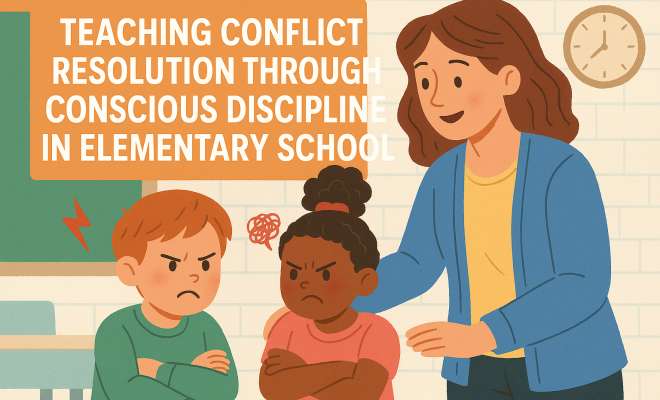
“`html
Conflict resolution in elementary school is a critical skill that significantly impacts both the educational environment and students’ social development. As educators and parents, we often focus on academic success, but the ability to resolve disputes and manage emotions is equally essential. One effective framework for teaching these vital skills is Conscious Discipline, a comprehensive, trauma-informed approach developed by Dr. Becky Bailey. This article explores the fundamentals of Conscious Discipline, its application in elementary settings, and how it fosters conflict resolution skills that students will carry into adulthood.
Understanding Conscious Discipline
Conscious Discipline is not just a behavior management strategy; it is a comprehensive social-emotional learning approach that integrates discipline, emotional intelligence, and self-regulation. Developed in the 1990s, Bailey’s method focuses on building safety, connection, and problem-solving skills. At its core, Conscious Discipline promotes a shift from traditional, punitive disciplinary methods to a more empathetic, skills-based approach.
In her work, Dr. Bailey emphasizes that children learn best in an environment where they feel safe and connected. This framework encourages educators to model emotional regulation, fostering a classroom atmosphere where students can express their feelings and resolve conflicts peacefully.
The Importance of Conflict Resolution in Elementary School
Conflict resolution in elementary school is vital for several reasons. First, young children are still developing their social skills, and learning how to manage disagreements prepares them for future interactions. Research indicates that unresolved conflicts can lead to increased aggression, bullying, and overall negative school experiences. In contrast, students equipped with conflict resolution skills demonstrate improved empathy, cooperation, and academic performance.
Moreover, as classrooms become increasingly diverse, students are likely to encounter varied perspectives and backgrounds. Teaching conflict resolution fosters an understanding of differing viewpoints, enhancing social harmony among classmates. This is particularly crucial in an age where emotional intelligence is just as important as cognitive abilities.
Key Components of Conscious Discipline
Conscious Discipline comprises several key components that align with conflict resolution principles. These include:
- Safety: Establishing a physically and emotionally safe environment is essential for effective conflict resolution. Children must feel secure to express their feelings and engage in problem-solving.
- Connection: Building strong relationships fosters trust, making children more likely to engage positively with peers during conflicts.
- Problem-Solving: Teaching students how to approach conflicts systematically is a core element of Conscious Discipline. This includes discussing feelings, identifying solutions, and agreeing on actions.
- Emotional Regulation: Helping children recognize their emotions and learn how to manage them is crucial for resolving disputes. This involves tools like breathing exercises and mindfulness techniques.
- Empathy: Encouraging students to consider others’ feelings promotes understanding and compassion, essential traits for effective conflict resolution.
Implementing Conscious Discipline in Elementary Classrooms
Integrating Conscious Discipline into the classroom involves multiple steps, beginning with training teachers and staff. Professional development workshops can equip educators with the skills necessary to implement this approach effectively. Once trained, teachers can create a Conscious Discipline framework within their classrooms.
Teachers should start by establishing routines that promote safety and connection. Morning meetings, for example, can set a positive tone for the day and give students a chance to share their feelings. In these meetings, educators can introduce students to the Feelings Wheel, helping them articulate their emotions and understand others’ feelings.
Furthermore, conflict resolution strategies can be embedded into daily activities. Role-playing scenarios can be particularly effective, allowing students to practice resolving conflicts in a safe environment. For instance, educators can present a situation where two students want to play with the same toy and guide them through the steps of conflict resolution.
Practical Strategies for Conflict Resolution
When implementing conflict resolution in elementary school through Conscious Discipline, educators can use various practical strategies to facilitate learning. Here are some effective methods: (See: Youth Violence Prevention Essentials.)
- Modeling Behavior: Teachers should model conflict resolution in their interactions. Demonstrating how to calmly address disagreements sets a powerful example for students.
- Conflict Resolution Script: Provide students with a simple script to follow during conflicts. For example: “I feel [emotion] when you [action]. I would like you to [desired action].” This structured approach simplifies the process for younger students.
- Peer Mediation: Establish a peer mediation program where trained students help their classmates work through disputes. This not only empowers students but also builds a sense of community.
- Reflection Time: After a conflict, allow students time to reflect on what happened and how it could have been handled differently. Reflection encourages deeper understanding and personal growth.
Involving Parents and the Community
For conflict resolution education to be effective, it must extend beyond the classroom. Involving parents and the community is essential for reinforcing the principles of Conscious Discipline at home and in various social settings. Schools can provide parent workshops that introduce Conscious Discipline concepts, enabling parents to support their children in developing conflict resolution skills.
Additionally, fostering partnerships with community organizations can enhance resources available to schools. These organizations can offer workshops, materials, and support for teachers and parents, creating a cohesive system for conflict resolution education.
Current Relevance and Trends in Conflict Resolution Education
Today’s society is marked by increasing challenges related to mental health and social awareness. The importance of conflict resolution in elementary schools has never been more pressing. As educators implement Conscious Discipline, they are not only teaching students to resolve conflicts but also promoting emotional intelligence—a skill that aligns with the demands of the modern world.
Furthermore, trends like restorative justice are gaining traction in schools, emphasizing repairing harm rather than administering punishment. This approach resonates with the principles of Conscious Discipline and reflects a broader societal shift toward empathy and understanding. Schools adopting these progressive practices are likely to see a reduction in behavioral issues and an improvement in school climate.
Challenges in Implementation
While the benefits of Conscious Discipline are clear, implementing it in elementary schools can be challenging. Some educators might feel overwhelmed by the transition from traditional disciplinary methods to this more empathetic approach. Additionally, systemic issues like large class sizes or insufficient training can hinder effective implementation.
To overcome these challenges, schools must commit to ongoing training and support for their staff. Creating a culture of collective responsibility, where all educators collaborate to reinforce the principles of Conscious Discipline, can enhance its effectiveness significantly. Moreover, providing adequate resources and addressing logistical issues will play a crucial role in the successful adoption of this conflict resolution framework.
Measuring Success in Conflict Resolution Education
To gauge the effectiveness of conflict resolution education through Conscious Discipline, schools must develop assessment methods that reflect emotional and social growth. Standardized tests are not equipped to measure students’ interpersonal skills, so schools should consider alternative assessments. These may include student self-assessments, peer feedback, and teacher observations.
Some schools have successfully implemented surveys to measure students’ comfort levels with conflict resolution, emotional awareness, and peer relationships. These tools can provide valuable insights into the program’s effectiveness and highlight areas for improvement.
The Future of Conflict Resolution in Education
As education evolves, the need for effective conflict resolution skills will remain a priority. With the rise of social media and online communication, children face new challenges in managing conflicts in both virtual and physical spaces. Incorporating conflict resolution education into the curriculum is not just beneficial; it’s essential.
In the coming years, we can expect to see a greater emphasis on social-emotional learning frameworks like Conscious Discipline across elementary schools. As educators recognize the importance of emotional intelligence, conflict resolution will play a pivotal role in shaping well-rounded, resilient children who can navigate the complexities of life outside the classroom.
Ultimately, teaching conflict resolution in elementary school through Conscious Discipline is about more than just resolving disputes; it’s about creating a culture of empathy, understanding, and resilience. By equipping our youngest learners with these essential skills, we prepare them for a future filled with collaboration and respect.
Expanding the Understanding of Conflict Resolution
Conflict resolution goes beyond simply addressing disagreements. It involves a deep understanding of interpersonal dynamics and the ability to navigate complex social interactions. In elementary school, conflicts can arise from misunderstandings, competition for resources, or even cultural differences. Educators need to teach children to not only resolve their conflicts but to understand their origins, which can often lead to more significant learning outcomes. (See: Child Development and Learning.)
For example, when a conflict arises over sharing toys, educators can guide students to explore why they want the toy and how sharing can benefit everyone involved. This not only resolves the immediate conflict but also teaches valuable lessons about cooperation and the joys of shared experiences.
Statistics on Conflict Resolution in Schools
The significance of conflict resolution education is underscored by research and statistics. Studies reveal that schools implementing social-emotional learning programs, including conflict resolution frameworks, have witnessed a 10-20% reduction in behavioral issues. Additionally, students exposed to conflict resolution education show a 15% improvement in academic performance, as they are better able to focus on learning when they feel secure and valued in their environment.
Moreover, a survey conducted by the Collaborative for Academic, Social, and Emotional Learning (CASEL) found that schools implementing comprehensive social-emotional programs reported a 23% increase in students’ ability to manage their emotions effectively and a 25% increase in their ability to work collaboratively with peers, highlighting the long-term benefits of these programs.
Expert Perspectives on Conflict Resolution
Experts in childhood development emphasize the importance of conflict resolution skills in shaping children’s futures. Dr. Daniel Goleman, a renowned psychologist and author of “Emotional Intelligence,” argues that emotional intelligence is a critical component of success in both personal and professional realms. He states, “The ability to manage emotions and resolve conflicts can significantly enhance children’s relationships and future opportunities.”
Moreover, educators and psychologists advocate for evidence-based programs that focus on social-emotional learning, indicating that these frameworks should be integrated into early education. Dr. Linda Lantieri, co-founder of the Collaborative for Academic, Social, and Emotional Learning, suggests that “teaching children how to effectively resolve conflicts fosters their ability to engage with the world in a positive way, creating a ripple effect toward healthier communities.”
Comparative Analysis: Traditional Discipline vs. Conscious Discipline
Understanding the differences between traditional discipline and Conscious Discipline can help clarify why the latter is more effective for conflict resolution. Traditional discipline often focuses on punishment and compliance, which can lead to fear-based learning environments. In contrast, Conscious Discipline embraces a proactive and empathetic approach, facilitating emotional growth.
For instance, under traditional discipline, a student who misbehaves might receive a detention as punishment. This response does not equip the student with the necessary skills to understand the underlying reasons for their behavior or how to resolve conflicts in the future. Conversely, Conscious Discipline encourages the student to reflect on their emotions, understand the impact of their actions, and learn how to express themselves constructively.
Statistically, schools that adopt Conscious Discipline report not only fewer disciplinary incidents but also a more positive school climate. Surveys indicate that students feel more connected to their peers and teachers, which translates into an overall increase in school satisfaction and a stronger sense of community.
Frequently Asked Questions About Conflict Resolution in Elementary Schools
What age should conflict resolution skills begin to be taught?
Conflict resolution skills can begin to be taught in preschool and kindergarten, as young children start to engage in social interactions. The earlier these skills are introduced, the more opportunities students have to practice and internalize effective strategies for managing disagreements.
How can parents reinforce conflict resolution skills at home?
Parents can reinforce conflict resolution skills by modeling appropriate behavior, encouraging open communication, and providing opportunities for children to express their feelings. Discussing hypothetical situations and role-playing can also help children practice their skills in a low-pressure environment.
Are there specific programs for teaching conflict resolution in schools?
Yes, many programs are designed to teach conflict resolution in schools, including peer mediation programs, social-emotional learning curricula, and character education initiatives. These programs often include resources for both educators and parents to ensure a comprehensive approach to conflict resolution.
What if a conflict escalates beyond resolution in the classroom?
In cases where conflicts escalate, it’s crucial for educators to intervene appropriately. This may involve temporarily separating students, providing a safe space for cooling down, and revisiting the conflict once emotions have settled. It’s essential to maintain open communication and encourage students to work together towards a resolution.
How can schools measure the success of their conflict resolution programs?
Schools can measure the success of conflict resolution programs through various methods, including surveys, observational assessments, and tracking behavioral incidents. Regular feedback from students, parents, and teachers can provide insights into the effectiveness of conflict resolution education and identify areas for improvement.
Enhancing Conflict Resolution Skills Through Activities
Engaging students in activities that promote conflict resolution can make learning these essential skills more enjoyable and effective. Here are a few activity ideas that educators can implement in their classrooms:
- Role-Playing Games: Create scenarios that students can act out, such as deciding who gets to use a shared resource. This allows them to practice their negotiation and communication skills in a fun, interactive way.
- Group Discussions: Facilitate conversations about common conflicts children may face, such as friendship disputes or competition. Encourage students to share their experiences and brainstorm solutions together.
- Emotion Charades: In this game, students act out different emotions without words while their classmates guess the emotion. This helps children become more attuned to their feelings and those of others, fostering empathy.
- Storytelling: Use stories that highlight conflicts and resolutions. After reading, discuss the characters’ choices and how different actions could lead to different outcomes. This can help students analyze conflict resolution strategies in a real-world context.
Building a Culture of Peace in Schools
Creating a culture of peace within the school environment can significantly enhance conflict resolution efforts. This involves not only teaching students how to resolve conflicts but also promoting values such as kindness, respect, and inclusivity throughout the school community. Here are some strategies to cultivate such a culture:
- School-Wide Initiatives: Organize events such as “Kindness Weeks” or “Peace Days,” where students participate in activities that promote positive interactions and conflict resolution.
- Visual Reminders: Display posters and messages about conflict resolution and empathy around the school. These reminders can foster a more supportive atmosphere.
- Peer Support Programs: Establish programs where older students mentor younger ones, providing guidance and support in resolving conflicts and building friendships.
- Community Engagement: Partner with local organizations to host workshops or events focused on conflict resolution, involving parents and community members in the process.
Addressing Cultural Sensitivity in Conflict Resolution
As classrooms become more diverse, it’s crucial to address cultural sensitivity in conflict resolution practices. Different cultural backgrounds can influence how students perceive and handle conflicts. Educators should be aware of these differences and create an inclusive environment where all students feel respected and understood. Here are some approaches to consider:
- Encourage Open Dialogue: Create safe spaces for students to discuss their cultural backgrounds and how these influence their interactions. This fosters understanding and appreciation of diversity.
- Teach Cultural Competence: Incorporate lessons that focus on cultural awareness and empathy. Understanding how different cultures approach conflict can enhance students’ ability to resolve issues peacefully.
- Incorporate Diverse Perspectives: Use literature and case studies from various cultures in conflict resolution discussions. This enriches students’ understanding and helps them appreciate different viewpoints.
Conclusion
As we move forward in education, the emphasis on conflict resolution skills will continue to grow. By embracing comprehensive frameworks like Conscious Discipline, educators can empower students with the tools they need to navigate conflicts thoughtfully and empathetically. This approach not only benefits individual students but also contributes to a more harmonious school environment and, ultimately, a more peaceful society.
“`
Trending Now
Frequently Asked Questions
What is Conscious Discipline in education?
Conscious Discipline is a comprehensive, trauma-informed approach to social-emotional learning developed by Dr. Becky Bailey. It focuses on building safety, connection, and problem-solving skills, shifting away from punitive methods to foster empathy and emotional regulation in students.
Why is conflict resolution important in elementary school?
Conflict resolution is crucial in elementary school as it helps children develop essential social skills. Learning to manage disagreements prepares them for future interactions, reducing aggression and bullying while promoting empathy, cooperation, and improved academic performance.
How can teachers implement Conscious Discipline?
Teachers can implement Conscious Discipline by creating a safe and connected classroom environment, modeling emotional regulation, and encouraging students to express their feelings. This approach allows students to learn conflict resolution skills through practice and guidance.
What are the benefits of teaching conflict resolution skills?
Teaching conflict resolution skills benefits students by enhancing their ability to empathize, cooperate, and communicate effectively. It leads to better social interactions, reduces instances of bullying, and contributes to a more positive and productive classroom atmosphere.
How does Conscious Discipline differ from traditional discipline?
Conscious Discipline differs from traditional discipline by emphasizing emotional intelligence and self-regulation rather than punishment. It focuses on teaching students skills to manage their emotions and resolve conflicts, fostering a supportive learning environment.
Agree or disagree? Drop a comment and tell us what you think.