This Starship Launch Failure Just Blew a Hole in SpaceX’s Lunar Dreams
“`html
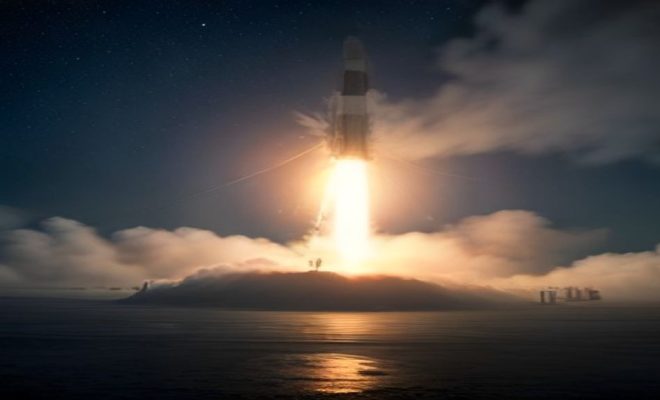
When SpaceX’s Starship, the colossal rocket envisioned to take humanity to the Moon and Mars, experienced yet another aborted launch attempt on July 23rd, it wasn’t just a minor technical hiccup. While the public often focuses on the spectacular explosions or successful ascents, this particular incident, following multiple delays since its original July 16th schedule, has quietly exposed what some industry veterans are calling a “fatal Achilles Heel” in the very design of this ambitious vehicle. You might think, ‘another scrub, so what?’ But the implications of this specific Starship launch failure are far more profound than a simple delay; they strike at the heart of Starship’s viability for its most critical missions, especially those involving NASA’s Artemis program.
At the core of the problem isn’t a lack of thrust or structural integrity, but something far more insidious and, frankly, boring-sounding: propellant boil-off. Yet, this seemingly mundane physical phenomenon has the potential to render multi-billion-dollar missions useless before they even truly begin. Imagine planning a cross-country trip, only to discover your car’s fuel tank is slowly leaking, and by the time you’re ready to leave, you don’t have enough gas to make it to the first station. That’s essentially the predicament Starship faces. This controversy, as you can imagine, isn’t just a technical debate; it fuels broader discussions around the financial stability of private space ventures, the immense risks associated with ambitious space investments, and the delicate dance between innovation and practical engineering limits. Investors, keen on capitalizing on the burgeoning space economy, are now forced to consider these technical hurdles and the very real potential for further delays and significant cost overruns.
The Unseen Enemy: Propellant Boil-Off and Its Devastating Impact
For a rocket as enormous as Starship, which stands taller than the Statue of Liberty, every ounce of propellant counts. The vehicle uses liquid methane and liquid oxygen (LOX), both stored at cryogenic temperatures—meaning they are incredibly cold, far below freezing. Liquid oxygen, for instance, needs to be kept at a frigid -183 degrees Celsius (-297 degrees Fahrenheit), while liquid methane is slightly warmer but still extremely cold at -161 degrees Celsius (-258 degrees Fahrenheit). Maintaining these temperatures in a massive tank, exposed to the ambient heat of the launchpad and the South Texas sun, is a monumental challenge.
The problem arises during launch delays. When a launch is scrubbed or held for hours, perhaps due to weather, a technical glitch, or even a stray boat in the exclusion zone, that super-chilled propellant begins to warm up. As it warms, it transitions from a liquid to a gas—it boils off. This isn’t just a tiny puff; it’s a measurable loss of fuel. For a quick launch, a few minutes of boil-off might be negligible. But for a delay stretching hours, or even a full day as we saw with the July 23rd attempt after days of previous holds, the cumulative loss can become critical. This Starship launch failure highlighted precisely this vulnerability, demonstrating that even a few hours of waiting can deplete precious fuel reserves needed for subsequent, complex maneuvers.
Orbital Refueling: Starship’s Critical, Yet Vulnerable, Lifeline
Here’s where the boil-off issue becomes truly problematic: Starship isn’t designed to reach the Moon or Mars in a single, fully-fueled shot from Earth. That would require an impossibly large rocket. Instead, the plan, particularly for NASA’s Artemis lunar missions, involves a multi-stage approach centered on orbital refueling. The idea is that a Starship will launch, reach Earth orbit, and then wait. Multiple tanker Starships will subsequently launch, rendezvous with the first Starship, and transfer their propellant, effectively filling its tanks in space. Only then, fully loaded, will the ‘depot’ Starship embark on its journey to the Moon or Mars.
This ingenious solution dramatically reduces the initial launch mass required, making deep-space travel feasible. However, it hinges on a critical assumption: that the Starship waiting in orbit can retain its propellant for extended periods. If propellant boil-off becomes significant during these orbital waits, or even during the initial launch and ascent phases that precede refueling, the entire mission profile collapses. A Starship that arrives in orbit with, say, 5% less fuel than planned due to boil-off might not be able to accept its full complement from tanker flights, or might not have enough remaining for the trans-lunar injection burn, let alone the complex landing maneuvers on the Moon. This specific Starship launch failure didn’t even get off the ground, but it served as a stark, terrestrial preview of the kind of fuel margin challenges that could plague its orbital operations.
Former Space Shuttle Engineers Ring the Alarm Bells
It’s not just armchair critics pointing this out. Seasoned industry insiders, including engineers with decades of experience on programs like the Space Shuttle, are openly questioning the long-term viability of Starship’s operational promises. These individuals understand the brutal realities of cryogenics in space. They’ve dealt with the intricate plumbing, insulation, and operational complexities that come with handling super-cold liquids in an unforgiving environment. Their concerns aren’t about Starship’s raw power, which is undeniable, but about its ability to maintain the necessary propellant margins for its truly ambitious missions.
When engineers who designed and operated arguably the most complex machine ever built – the Space Shuttle – raise an eyebrow, you should probably pay attention. They’re not just speculating; they’re speaking from a deep well of practical knowledge about the physical limitations and engineering challenges inherent in such systems. Their skepticism isn’t about wishing SpaceX ill-will, but rather a professional assessment of the technical hurdles that remain. This Starship launch failure, specifically the engine ignition issues following delays, underscored their point: even before reaching orbit, the system is proving sensitive to extended hold times and the resulting propellant conditioning issues.
NASA’s Artemis Program: A Starship-Dependent Future?
The stakes here are incredibly high, especially for NASA. The agency has selected Starship as the Human Landing System (HLS) for its Artemis program, which aims to return astronauts to the lunar surface. This isn’t a backup plan; Starship is the plan for the initial crewed lunar landing. NASA has invested billions of dollars into this partnership, seeing Starship as the most capable vehicle to transport humans and significant cargo to the Moon. (See: NASA's Artemis program overview.)
If Starship’s orbital refueling architecture proves unreliable due to pervasive propellant boil-off, it could throw the entire Artemis timeline into disarray. Imagine a scenario where a Starship reaches orbit, but after a 12-hour wait for a tanker, it’s lost so much fuel that it can’t accept the full load required for a lunar transit. Or worse, it launches, experiences an engine-out, and has to hold for a recovery attempt, only for the remaining fuel to boil off, making a safe return or even a subsequent refueling impossible. This isn’t just about delaying a single launch; it’s about potentially derailing a multi-generational space exploration program. The July 23rd Starship launch failure, while minor in its immediate outcome, shines a spotlight on the fragility of a system that NASA is betting its lunar future on.
The Financial Gravity of Starship Delays and Cost Overruns
For investors, the implications of these technical challenges extend far beyond the launchpad. SpaceX is a privately held company, but its success and failures ripple through the entire aerospace investment landscape. Public interest in SpaceX, driven by Elon Musk’s ambitious vision and the dramatic nature of rocket launches (and their failures), is enormous. This translates into high commercial intent around terms like “SpaceX stock analysis” or “space investment opportunities.”
When a core component of SpaceX’s future, like Starship, faces fundamental design challenges that manifest as repeated delays and aborted launches, it casts a shadow on the company’s financial projections. Every delay costs money: personnel time, facility usage, and the opportunity cost of not launching other payloads. If the boil-off issue requires significant redesigns, enhanced insulation, or even entirely new orbital propellant transfer technologies, the costs could balloon. This isn’t just about building a rocket; it’s about building a sustainable and reliable transportation system, and reliability directly impacts profitability and investor confidence. The July 23rd Starship launch failure might seem small, but it’s a data point that financial analysts are undoubtedly factoring into their risk assessments.
SpaceX’s Track Record: Innovation vs. Iteration
SpaceX has, without question, revolutionized the space industry. Their Falcon 9 rocket and Dragon capsules have redefined launch costs and reusability. Their approach of rapid iteration, building and testing, and often failing spectacularly in public, has yielded incredible results. This “move fast and break things” mentality has worked wonders for Falcon 9, allowing them to learn quickly and optimize. And indeed, the Starship program has followed a similar, highly visible, iterative development path.
However, there’s a point where iteration runs into fundamental physics. You can iterate on a landing leg design, or an engine’s internal plumbing, but combating the laws of thermodynamics, especially on such a massive scale, is a different beast. The boil-off issue isn’t a software bug; it’s a hardware-level, physics-driven challenge. While SpaceX has demonstrated an unparalleled ability to solve complex engineering problems, the question remains whether this particular Achilles Heel can be truly overcome without significantly altering Starship’s mass budget, complexity, or operational procedures. The latest Starship launch failure serves as a stark reminder that even the most innovative companies aren’t immune to fundamental engineering constraints.
The Broader Implications for Private Space Ventures
The Starship saga isn’t just about SpaceX; it’s a bellwether for the entire private space sector. Companies like Blue Origin, Rocket Lab, and myriad smaller startups are attracting enormous investment based on the promise of a more accessible, commercially driven space economy. Their valuations often hinge on ambitious future capabilities, much like Starship’s promise of lunar and Martian colonization.
If a company as well-funded and technically proficient as SpaceX struggles with such a fundamental issue that impacts its core mission profile, it sends a chilling message to investors across the board. It highlights the inherent risks and the often-underestimated technical hurdles involved in pushing the boundaries of space exploration. The “easy” problems have mostly been solved. What remains are the truly hard ones, often involving materials science, extreme environments, and fundamental physics. This Starship launch failure isn’t just a SpaceX problem; it’s a cautionary tale for the entire industry, prompting a more sober assessment of the timelines and capital required to achieve truly revolutionary space capabilities.
What’s Next for Starship? Potential Solutions and The Road Ahead
So, what can SpaceX do about this? There are several potential avenues, none of them simple. They could try to improve insulation, but adding mass to a rocket is always a trade-off. They could develop active refrigeration systems, but those add complexity, power requirements, and more points of failure. They could also try to accelerate launch windows to minimize hold times, but that clashes with the realities of weather, range clearances, and pre-flight checks. Another approach might be to develop more robust, faster orbital refueling methods that minimize the time a Starship spends waiting and boiling off propellant.
Ultimately, the path forward will likely involve a combination of these strategies, along with a deep dive into the telemetry from the July 23rd Starship launch failure and subsequent test articles. It’s a testament to the brutal unforgiveness of spaceflight that even after years of development and billions of dollars, a seemingly minor issue like propellant boil-off can become an existential threat to an entire program. SpaceX has a reputation for overcoming seemingly insurmountable challenges, but this particular Achilles Heel feels different. It’s a fundamental physics problem that won’t be solved with software patches or quick fixes. The world, and certainly NASA, will be watching very closely to see how they address this critical vulnerability in their lunar and Martian ambitions.
The Physics of Cryogenic Storage: Why It’s So Hard
To truly appreciate the challenge, let’s dig a bit deeper into the physics of cryogenic storage. These propellants, liquid methane and liquid oxygen, aren’t just cold; they’re at temperatures where even the slightest heat input can cause phase changes. Imagine a boiling pot of water – it takes a lot of energy to heat it to boiling, but once it’s there, it constantly takes energy to keep it boiling and turning into steam. Now flip that, and imagine trying to keep something at -297°F in a relatively warm environment. The ambient heat from the launchpad, the sun’s radiation, and even the internal heat generated by pumps and avionics systems are constantly trying to warm up the propellants. (See: SpaceX and NASA collaboration details.)
The Starship tanks are huge, giving them a large surface area for heat transfer. While they have insulation, perfect insulation is a theoretical ideal, not a practical reality. Any tiny imperfection, any thermal bridge in the structure, any connection point, can become a pathway for heat. In a vacuum, the problem changes. Convection (heat transfer through fluid movement) is eliminated, but radiation and conduction become paramount. In Earth orbit, the vehicle is exposed to direct sunlight on one side and the cold vacuum of space on the other, creating extreme temperature gradients that challenge even the best insulation technologies. This isn’t just a matter of “making the tank colder” – it’s about managing minuscule amounts of heat transfer over vast surfaces and long durations, a problem that scales dramatically with the size of the vehicle.
Historical Precedent: Cryogenic Challenges in Space History
This isn’t a new problem in spaceflight. Engineers have wrestled with propellant boil-off since the early days of cryogenic rockets. The Saturn V’s upper stages, using liquid hydrogen and liquid oxygen, had to deal with boil-off during their relatively short coast phases to the Moon. Skylab, the first American space station, famously suffered from a lost micrometeoroid shield which also served as a thermal blanket, leading to dangerously high internal temperatures and boil-off of its cryo-propellants, impacting its operational lifetime. Even modern satellites using cryogenic coolers for sensitive instruments face similar battles against heat leaks.
What makes Starship’s challenge unique is the scale and the mission duration. Previous cryogenic upper stages operated for hours, maybe a day or two at most. Starship, in its orbital refueling depot role, might need to hold propellants for weeks, or even months, for complex lunar or Martian missions. This extended duration multiplies the effect of even tiny boil-off rates, making the problem exponentially harder. It’s not just about getting to orbit with enough fuel; it’s about staying there with enough fuel to complete the subsequent, critical mission phases.
The Role of Propellant Densification and Subcooling
SpaceX has employed a technique called propellant densification, or subcooling, to mitigate boil-off. By chilling the propellants to temperatures even lower than their normal boiling points, they become denser. This means more mass of propellant can be loaded into the same volume, effectively giving the rocket more fuel. It also provides a larger thermal margin before the propellant starts actively boiling. Think of it like putting ice-cold water in a glass on a hot day versus lukewarm water; the ice-cold water will stay liquid longer before warming up enough to evaporate. For the Super Heavy booster, which launches quickly, this is a very effective strategy.
However, the effectiveness of subcooling diminishes over longer hold times. Once the initial thermal margin is consumed, the propellant will still eventually reach its boiling point and begin to boil off. While subcooling can buy crucial minutes or even an hour or two on the launchpad, it’s not a permanent solution for the extended orbital durations required for refueling missions. The July 23rd Starship launch failure, specifically the extended delays, demonstrated that even with subcooling, the system’s sensitivity to hold times remains a critical factor for successful engine start and overall mission readiness.
Beyond Starship: The Future of In-Space Propellant Management
The challenges faced by Starship aren’t just about this one vehicle; they represent a frontier in space technology that needs to be conquered for humanity to truly expand beyond Earth. Efficient in-space propellant management, including long-term cryogenic storage and transfer, is a foundational technology for future deep-space missions. Whether it’s refueling depots for lunar outposts, propellant production on Mars, or even interstellar probes, the ability to store and move cryogenics with minimal losses is paramount.
Other concepts, like “zero-boil-off” (ZBO) propellant tanks, are being researched. These often involve sophisticated active refrigeration systems that re-liquefy any boiled-off gas, returning it to the tank. While highly effective, ZBO systems are heavy, complex, and require significant power, making them challenging to integrate into a launch vehicle that prioritizes mass efficiency. Starship’s development might accelerate breakthroughs in these areas, or it might force a reconsideration of the fundamental approach to deep-space propellant logistics if a purely passive solution isn’t viable.
FAQ: Understanding Starship Launch Failures and Propellant Boil-Off
Q: What exactly is propellant boil-off?
A: Propellant boil-off is the natural process where cryogenic (extremely cold) liquid propellants, like liquid oxygen or liquid methane, warm up and convert from a liquid state into a gaseous state. Imagine a pot of water boiling on a stove – the water turns into steam. For a rocket, this means losing precious fuel as it turns into a gas and escapes the tank.
Q: Why is boil-off such a big problem for Starship?
A: Starship needs a massive amount of propellant for its ambitious missions, especially for lunar and Martian journeys. Its plan relies on orbital refueling, where it waits in Earth orbit for tanker Starships to top it off. If significant boil-off occurs during this waiting period, or even during launch delays on the ground, the Starship won’t have enough fuel to complete its mission, potentially stranding it or preventing it from even starting its deep-space journey. (See: Wikipedia article on SpaceX Starship.)
Q: How much propellant can be lost due to boil-off?
A: The exact rate varies depending on tank design, insulation, ambient temperature, and mission duration. For large cryogenic tanks, even a seemingly small percentage loss per day can amount to tons of propellant over extended periods (hours on the pad, or days/weeks in orbit). A 1% loss per day over a week is 7% of your fuel gone, which is a huge amount for a rocket.
Q: Didn’t previous rockets use cryogenic propellants? Did they have this problem?
A: Yes, many rockets, including the Space Shuttle and the Saturn V, used cryogenic propellants and experienced boil-off. However, their mission profiles typically involved much shorter durations for cryogenic storage compared to what Starship envisions for orbital refueling. For example, a Saturn V upper stage might only need to hold propellants for a few hours. Starship needs to hold them for days or weeks in orbit, which makes the boil-off problem far more challenging. moon collision details offers useful background here.
Q: What is “propellant densification” or “subcooling” and how does it help?
A: Propellant densification (or subcooling) involves chilling the liquid propellants to temperatures even colder than their normal boiling point. This makes them denser, so more fuel can be loaded into the same tank volume. It also provides a thermal buffer, meaning it takes longer for the propellant to warm up enough to start boiling off. It’s effective for minimizing boil-off during short delays, but its effectiveness diminishes over longer hold times.
Q: What are SpaceX’s potential solutions for boil-off?
A: SpaceX is likely exploring several avenues. These include improving tank insulation to reduce heat transfer, developing active refrigeration systems to re-liquefy boiled-off gas, optimizing launch procedures to minimize hold times, and potentially developing faster and more efficient orbital refueling techniques to reduce the waiting period in orbit. Each solution has its own trade-offs in terms of mass, complexity, and power requirements.
Q: How does a Starship launch failure due to boil-off impact NASA’s Artemis program?
A: NASA has selected Starship as the Human Landing System for its initial crewed lunar landing with Artemis. If Starship cannot reliably store and transfer propellant in orbit due to boil-off, it directly threatens the viability and timeline of the Artemis program. It could cause significant delays, cost overruns, or even force NASA to rethink its approach to lunar landings, as Starship is currently the cornerstone of their plan.
Q: Is this problem unique to SpaceX, or does it affect other space companies?
A: The fundamental physics of cryogenic boil-off affect any company using such propellants for long-duration missions. However, Starship’s ambitious mission profile, particularly its reliance on extensive orbital refueling, makes it uniquely vulnerable to this issue on a large scale. Other companies developing deep-space capabilities will also need to address these challenges, but Starship is currently at the forefront of tackling them for crewed missions.
“`
Trending Now
Frequently Asked Questions
What caused SpaceX's recent Starship launch failure?
The recent Starship launch failure was primarily due to an issue known as propellant boil-off, which can lead to fuel loss before the rocket's launch. This problem poses significant challenges for the viability of critical missions, particularly those involving NASA's Artemis program.
How does propellant boil-off affect rocket launches?
Propellant boil-off occurs when fuel vaporizes and escapes from the rocket, leading to a decrease in available fuel for launch. This issue can jeopardize multi-billion-dollar missions, as it may result in insufficient fuel at launch time, preventing successful missions.
What are the implications of the SpaceX Starship failure for future missions?
The implications of the Starship failure extend beyond a simple delay; it raises concerns about the rocket's design and reliability for critical missions like NASA's Artemis program. Investors are now more cautious about the risks and potential cost overruns associated with ambitious space projects.
Why is propellant boil-off considered a critical issue for SpaceX?
Propellant boil-off is critical for SpaceX because it can render planned missions unfeasible before they even begin. This phenomenon highlights design vulnerabilities in the Starship, which could hinder the rocket's ability to perform effectively for lunar and Martian missions.
What are the financial implications of the Starship launch failure?
The financial implications include increased scrutiny from investors regarding the viability of private space ventures. The technical hurdles presented by issues like propellant boil-off could lead to further delays and significant cost overruns, impacting the overall stability of SpaceX's ambitious plans.
Agree or disagree? Drop a comment and tell us what you think.