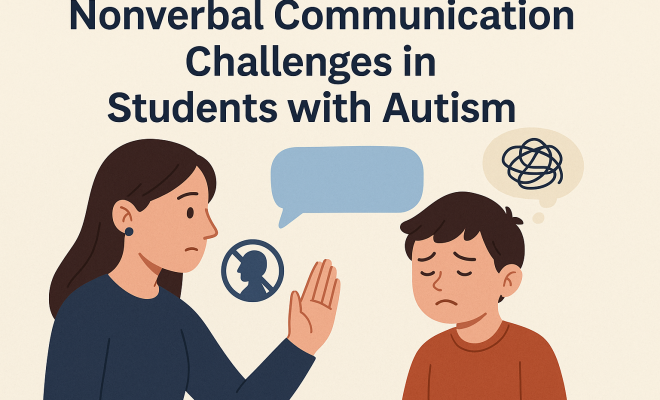
Nonverbal Communication Challenges in Students with Autism
“`html
When we talk about communication, we often think of spoken or written words. However, much of human interaction relies on nonverbal cues. This is particularly significant in understanding nonverbal communication autism, as students on the autism spectrum may face unique challenges in this area.
Understanding Nonverbal Communication
Nonverbal communication encompasses a wide range of behaviors. These include facial expressions, gestures, posture, eye contact, and even the tone of voice. In fact, research suggests that a staggering 93% of communication is conveyed nonverbally. For students with autism, interpreting these cues and responding appropriately can be complex.
Students on the autism spectrum may struggle with understanding the social nuances that accompany nonverbal communication. For instance, a simple smile can convey friendliness, while a frown may indicate displeasure. Unfortunately, many children with autism might miss these signals entirely or misinterpret them, leading to misunderstandings in social situations. This discrepancy places them at a disadvantage, affecting their ability to form relationships and navigate social environments effectively.
The Importance of Nonverbal Communication in Social Interactions
Nonverbal communication plays a crucial role in social interactions. Gestures, facial expressions, and eye contact can provide context and depth to verbal communication. For instance, someone might say they are fine, but their crossed arms and downturned mouth might suggest otherwise. Recognizing these subtleties allows individuals to respond appropriately to the needs and emotions of others.
For students with autism, the lack of understanding surrounding nonverbal cues often leads to social anxiety and isolation. They may find themselves in conversations where they misread the emotional tone or fail to pick up on the subtleties of body language. This can contribute to feelings of frustration and confusion, making social interactions a daunting task. Nonverbal communication autism challenges can hinder the development of meaningful friendships and peer relationships.
Common Nonverbal Communication Challenges for Students with Autism
There are several specific challenges that students with autism may face when it comes to nonverbal communication:
- Difficulty with Eye Contact: Many individuals with autism may avoid eye contact, viewing it as uncomfortable or overstimulating. This can be misinterpreted by peers as disinterest or rudeness.
- Limited Use of Gestures: While gestures like waving or pointing are common, students with autism may not employ them effectively. This can hamper their ability to express needs or feelings.
- Misinterpretation of Facial Expressions: A student might struggle to read emotions expressed through facial cues, leading to confusion in social settings.
- Unusual Body Language: Some students may exhibit atypical body language, such as standing too close to others or using repetitive movements, which can be off-putting to peers.
Case Studies and Real-Life Examples
Understanding nonverbal communication autism challenges can be enhanced through real-life examples. Take Alex, a 9-year-old boy on the autism spectrum. During a classroom group activity, Alex hesitated to join in as his classmates were engaged in a lively discussion. He was unable to read their excitement through their facial expressions or gestures, leading him to feel excluded. This situation highlights how a lack of understanding nonverbal communication can deter participation and lead to feelings of isolation.
Another example is Sarah, a middle school student. Sarah often avoids eye contact during conversations, leading her peers to view her as unfriendly. In reality, Sarah’s discomfort with eye contact stems from sensory overload rather than disinterest. This demonstrates how misunderstandings can arise from nonverbal communication challenges.
Strategies to Support Nonverbal Communication Development
Recognizing and addressing the challenges associated with nonverbal communication autism is crucial for supporting students effectively. Here are some strategies that educators and parents can implement:
- Model Appropriate Nonverbal Behaviors: Adults can demonstrate positive nonverbal communication through their own interactions, providing a reference for students to observe and learn from.
- Create a Structured Environment: A consistent routine can help students feel more at ease. Reducing sensory overload in the classroom can also promote better social interactions.
- Use Visual Supports: Visual aids, such as picture cards or social stories, can assist students in understanding nonverbal cues. For example, a card depicting a smile can help contextualize the emotion.
- Encourage Social Skills Training: Programs that focus on building social communication skills can assist students in navigating social situations more comfortably.
The Role of Technology in Enhancing Nonverbal Communication Skills
In the digital age, technology has emerged as a valuable ally in developing nonverbal communication skills in students with autism. Various applications and tools are designed to help children identify and understand nonverbal cues. For instance, interactive games can teach users to recognize facial expressions and body language through engaging scenarios. (See: Understanding nonverbal communication in autism.)
Video modeling is another effective strategy. By watching videos that depict successful social interactions, students can observe and learn how nonverbal communication operates in real-life contexts. This visual approach can supplement traditional teaching methods, making learning more relatable and accessible.
The Impact of Family and Community Support
The role of family and community in tackling nonverbal communication autism challenges cannot be understated. Families can help create a supportive environment by practicing communication skills at home. Encouraging open discussions about emotions and social situations can reinforce learning.
Community programs, such as local support groups and workshops, provide essential resources for families and students. These gatherings foster a sense of belonging and understanding, offering a safe space where individuals can share experiences and learn from one another.
Educator Training and Awareness
Educators play a pivotal role in helping students with autism navigate nonverbal communication challenges. Providing training on autism spectrum disorders and effective communication strategies can empower teachers to create inclusive classrooms. Understanding the unique needs of these students allows educators to adapt their teaching styles and foster a more supportive environment.
Professional development opportunities, such as workshops and seminars, can equip teachers with the tools they need to support students with nonverbal communication autism challenges. These sessions often include practical strategies and real-world examples, fostering a deeper understanding of the topic.
Celebrating Successes and Progress
It’s essential to celebrate the progress of students overcoming nonverbal communication challenges. Acknowledging small victories can boost confidence and motivate students to continue practicing their skills. This recognition can come in various forms, such as verbal praise, certificates, or showcasing progress in a classroom setting.
Parents, teachers, and peers should work collaboratively to create an encouraging environment where successes are recognized and celebrated. This positive reinforcement can foster a growth mindset and inspire students to embrace their communication journey.
The Future of Nonverbal Communication for Students with Autism
As awareness of autism and its communication challenges grows, so does the emphasis on finding effective strategies to support students. Research into nonverbal communication skills among individuals with autism continues to evolve, paving the way for new insights and understanding.
Future initiatives may include the integration of advanced technologies, such as virtual reality, to simulate social interactions and practice nonverbal communication in a controlled environment. These innovations hold the potential to revolutionize how students learn and engage with others, breaking down barriers and enabling meaningful social connections.
Ultimately, fostering effective nonverbal communication skills in students with autism is a shared responsibility. By collaborating across families, educators, and communities, we can create an inclusive environment that empowers students to thrive.
Deepening the Understanding of Nonverbal Communication Autism
The intricacies of nonverbal communication autism go beyond obvious behaviors and challenges. A deeper understanding of how autism affects communication preferences can help caregivers and educators tailor their approaches. For instance, many individuals on the spectrum may prefer more concrete forms of communication, such as written instructions or visual aids, over ambiguous nonverbal signals. This preference can stem from a desire for clarity and predictability in interactions.
Research indicates that students with autism may benefit from explicit teaching of nonverbal cues. This means breaking down each element of communication—like teaching the meaning of a smile versus a frown—and providing opportunities for practice in real-life settings. This targeted approach can bridge the gap between verbal communication and the subtleties of nonverbal interactions. (See: CDC resources on autism spectrum disorder.)
Statistics on Nonverbal Communication and Autism
Understanding the statistics surrounding nonverbal communication in autism can provide valuable insight. According to a study published in the Journal of Autism and Developmental Disorders, approximately 70% of children with autism spectrum disorder (ASD) exhibit difficulties with nonverbal communication. This statistic highlights the need for focused interventions and teaching strategies that cater to these challenges.
Another compelling statistic comes from the National Autism Center, which found that around 50% of children with ASD may not develop functional spoken language. This implies that nonverbal communication can often serve as the primary mode of interaction for many autistic individuals, making it imperative to support the development of these skills.
Expert Perspectives on Nonverbal Communication in Autism
Experts in the field of autism research and therapy emphasize the critical role of nonverbal communication. Dr. Temple Grandin, a well-known advocate and speaker on autism, states, “People with autism are visual thinkers. They think in pictures rather than words.” This perspective underlines the importance of visual aids and explicit teaching to enhance nonverbal communication skills.
Additionally, Dr. Tony Attwood, a clinical psychologist and expert on autism, emphasizes that “Understanding the nuances of nonverbal communication is essential for social success.” He advocates for incorporating social stories and role-playing into therapy sessions, allowing students to practice and observe nonverbal behavior in a safe and guided environment.
Practical Tips for Parents and Educators
Here are some practical tips for parents and educators working with children on the autism spectrum regarding nonverbal communication:
- Be Patient and Observant: Understand that children may need more time to interpret nonverbal cues. Observing their reactions can provide insights into their understanding.
- Practice Together: Engage in activities that promote nonverbal communication, such as playing charades or using emotion cards to identify feelings.
- Encourage Peer Interaction: Promote playdates or group activities that allow children with autism to interact with peers in a relaxed setting, which can help them practice their skills.
Frequently Asked Questions about Nonverbal Communication and Autism
1. What are the key nonverbal communication challenges faced by individuals with autism?
Individuals with autism may struggle with understanding facial expressions, body language, eye contact, and gestures. These challenges can lead to misunderstandings in social interactions.
2. How can educators support students with nonverbal communication difficulties?
Educators can support students by modeling appropriate nonverbal behaviors, creating structured environments, using visual aids, and providing opportunities for social skills training.
3. Are there specific therapies that focus on improving nonverbal communication skills?
Yes, therapies such as speech-language therapy, social skills groups, and occupational therapy can specifically target nonverbal communication skills among children with autism.
4. How important is family involvement in developing nonverbal communication skills?
Family involvement is crucial. Regular practice and reinforcement of nonverbal communication skills at home can significantly enhance a child’s ability to communicate effectively in social settings.
5. What role does technology play in teaching nonverbal communication?
Technology can be beneficial through apps and games designed to teach nonverbal cues. Video modeling and virtual reality simulations can also provide engaging ways for children to learn and practice these skills.
Broader Implications of Nonverbal Communication Autism
Understanding the implications of nonverbal communication challenges for individuals with autism extends into various areas of life, including education, employment, and personal relationships. In educational settings, students who struggle with nonverbal cues may find it difficult to engage in group discussions, collaborate on projects, or even participate in class activities. This can lead to missed opportunities for learning and social engagement.
In the workplace, nonverbal communication is equally essential. Employers often seek candidates who can interpret and respond to nonverbal cues effectively, which poses a challenge for individuals with autism. This can affect employability and job performance, as misunderstandings can lead to conflict or misinterpretation of expectations. As such, enhancing nonverbal communication skills is critical for preparing students for future success in both academic and professional environments.
Innovative Approaches to Teaching Nonverbal Communication
In addition to traditional educational methods, innovative approaches to teaching nonverbal communication are gaining traction. One such approach is the use of art therapy. Engaging in creative expression allows individuals with autism to explore emotions and social scenarios without the pressure of direct interaction. Through painting, music, or drama, students can communicate feelings and experiences in a nonverbal context, providing valuable opportunities for practice.
Another effective method is the use of peer mentoring programs. Pairing students with autism with neurotypical peers can provide a natural setting for practicing nonverbal communication. Through shared activities, mentors can model appropriate behaviors and help their peers navigate social cues, fostering understanding and friendship.
Community Involvement and Awareness
Community involvement is a crucial aspect of addressing nonverbal communication challenges in autism. Raising awareness among community members can lead to more inclusive environments, reducing stigma and fostering understanding. Educational sessions for parents, educators, and the general public can help demystify autism and highlight the importance of nonverbal communication.
Community events, such as social skills workshops or autism awareness days, provide platforms for individuals with autism to showcase their talents and abilities. These events not only empower individuals but also educate others about the nuances of autism and nonverbal communication, promoting a culture of acceptance and support.
Addressing nonverbal communication in autism is not just about teaching skills; it’s about building confidence, understanding, and fostering connections. By creating supportive environments, using innovative strategies, and valuing every small step forward, we can help students thrive in their social interactions.
“`
Trending Now
Frequently Asked Questions
What are the challenges of nonverbal communication in students with autism?
Students with autism often struggle to interpret nonverbal cues such as facial expressions, gestures, and eye contact. This can lead to misunderstandings in social situations, affecting their ability to form relationships and navigate social environments effectively.
How does nonverbal communication impact social interactions for students with autism?
Nonverbal communication is vital for social interactions as it adds context to verbal messages. Students with autism may misread or miss these nonverbal signals, leading to social anxiety and isolation, as they might not fully understand the emotional tone of conversations.
Why is nonverbal communication important for students on the autism spectrum?
Nonverbal communication is crucial for students with autism because it helps convey emotions and social nuances. Understanding these cues can enhance their interactions, reduce frustration, and improve their ability to connect with peers.
What percentage of communication is nonverbal?
Research suggests that approximately 93% of communication is conveyed nonverbally. This highlights the importance of understanding nonverbal cues, particularly for students with autism who may face challenges in this area.
How can parents help their autistic children with nonverbal communication?
Parents can support their autistic children by teaching them to recognize and interpret nonverbal cues through role-playing and social stories. Encouraging practice in safe environments can help build their confidence in understanding body language and expressions.
What did we miss? Let us know in the comments and join the conversation.