How Nonverbal Communication Impacts Conflict Resolution
“`html
Nonverbal communication is an essential part of how we interact with one another. It encompasses everything from facial expressions and gestures to posture and tone of voice. When it comes to conflict resolution, understanding and harnessing nonverbal cues can significantly influence outcomes. In this article, we’ll explore the impact of nonverbal communication on conflict resolution, uncovering key insights, practical applications, and contemporary relevance.
Understanding Nonverbal Communication
Before diving deep into the implications for conflict resolution, it’s crucial to understand what nonverbal communication entails. This form of communication accounts for a significant portion of our interactions—some estimates suggest it can constitute up to 93% of communication effectiveness when you factor in tone and body language. Nonverbal cues can reveal emotions, reinforce spoken words, or even contradict what’s being said.
Nonverbal communication can be classified into several categories:
- Facial Expressions: Our faces convey a wealth of information. Happiness, sadness, anger, and confusion can all be interpreted through facial cues.
- Gestures: Hand movements and other gestures can add emphasis or clarify a point, but they can also lead to misunderstandings if misinterpreted.
- Posture: How we carry ourselves can signal confidence, openness, defensiveness, or aggression.
- Proxemics: The physical distance between individuals can indicate intimacy, aggression, or authority.
- Eye Contact: Maintaining eye contact can indicate attentiveness and honesty, while avoiding it may suggest discomfort or deceit.
- Paralanguage: The tone, pitch, and volume of our voice can convey emotions and intentions beyond the words spoken.
The Role of Nonverbal Communication in Conflict
In any conflict, whether in personal relationships, workplace settings, or international diplomacy, nonverbal communication plays a pivotal role. Conflicts often arise from misunderstandings and misinterpretations, and the subtleties of body language can either exacerbate or alleviate these tensions.
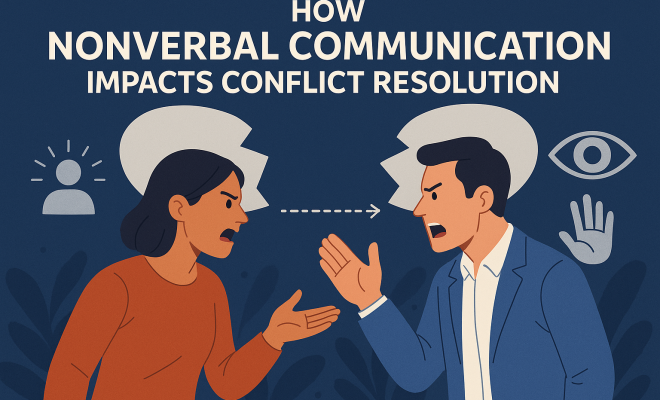
For instance, during a heated argument, an aggressive posture or intense eye contact can escalate the situation. In contrast, a relaxed demeanor and open posture can create a sense of safety and encourage dialogue. Recognizing these signals can help individuals navigate conflicts more skillfully.
How Nonverbal Cues Can De-escalate Tension
One of the most powerful applications of nonverbal communication in conflict resolution is its ability to de-escalate tension. When emotions run high, a calming presence can make a significant difference.
Consider a situation where two colleagues are arguing over a project. If one individual maintains a neutral facial expression, speaks softly, and uses open gestures, they can help diffuse the tension. This is often referred to as creating a “safe space” for conversation. The calmer demeanor may prompt the other individual to mirror those nonverbal cues, leading to a more productive discussion.
Research supports the idea that individuals who exhibit calm nonverbal signals are often perceived as more trustworthy. When both parties feel safe, they are more likely to listen and engage in positive communication, thus moving towards conflict resolution.
The Impact of Cultural Differences on Nonverbal Communication
Understanding nonverbal communication within different cultural contexts is vital for effective conflict resolution. What is considered a calming gesture in one culture may be interpreted as offensive in another. For example, while maintaining eye contact can signify honesty and engagement in Western cultures, it may be viewed as disrespectful in some Asian contexts.
Being aware of these cultural nuances can make a significant difference in conflict situations. For instance, individuals involved in cross-cultural negotiations must approach nonverbal cues with sensitivity. Those who can recognize and adapt to different nonverbal behaviors are likely to foster better relationships and achieve more favorable outcomes.
Practical Strategies for Leveraging Nonverbal Communication
There are several practical strategies that individuals can employ to harness nonverbal communication for effective conflict resolution: (See: nonverbal cues in conflict resolution.)
- Active Listening: Show engagement through nodding, maintaining eye contact, and leaning in slightly. These subtle cues indicate that you are listening and valuing the other person’s perspective.
- Mirror the Other Person: Subtly mirroring the other person’s body language can create a sense of connection and empathy. This should be done naturally to avoid coming off as mocking.
- Maintain Open Posture: Avoid crossing your arms or legs, as this can signal defensiveness. Instead, keep your posture open and inviting.
- Use Calming Gestures: Gestures like open hands or slow movements can help convey a sense of calm and control.
- Regulate Your Tone: Be mindful of your vocal tone. A calm, steady voice can help to ease tensions.
Implementing these strategies requires self-awareness and practice, but the benefits of improved conflict resolution can be substantial.
Real-World Applications: Case Studies
Real-world examples can help illustrate the impact of nonverbal communication in conflict resolution. Consider the case of a manager who used nonverbal cues to mediate a disagreement between team members. Instead of allowing the conversation to escalate verbally, the manager maintained a calm demeanor, used open body language, and encouraged both parties to express their feelings without interruption.
As a result, the team members began to mirror the manager’s calm approach, reducing tension. They were able to communicate their viewpoints effectively and ultimately reached a compromise that satisfied both sides. The power of nonverbal communication in this scenario was evident; it transformed a potential conflict into a collaborative discussion.
Another example can be drawn from international diplomacy, where nonverbal communication plays a critical role in negotiations. Body language, such as maintaining an open stance or employing gestures that convey respect, can significantly influence diplomatic relations. In high-stakes situations, leaders who understand and use nonverbal cues effectively can de-escalate conflicts and foster cooperation.
The Role of Training and Education
Given the powerful influence of nonverbal communication on conflict resolution, training programs can significantly benefit individuals and organizations. Workshops focusing on emotional intelligence and nonverbal communication can enhance skills in recognizing and responding to nonverbal cues.
Organizations can implement role-playing exercises to simulate conflict scenarios, allowing participants to practice their nonverbal communication skills in a safe environment. This training can lead to a more empathetic and understanding workplace culture, ultimately improving conflict resolution outcomes.
Additionally, educational institutions can integrate nonverbal communication studies into their curricula, preparing students to be more effective communicators in their future careers.
Current Relevance in a Digital Age
In an era increasingly dominated by digital communication, understanding nonverbal cues has become even more critical. Many conflicts arise over emails and texts, where tone and body language are absent. Misinterpretations can easily occur, leading to unnecessary conflicts.
To mitigate these issues, some experts recommend using video calls whenever possible. Video communication allows for a clearer display of nonverbal cues, helping to convey tone and emotion more accurately. When face-to-face interaction isn’t possible, incorporating emojis or clear language can help clarify intentions.
Furthermore, as remote work becomes more common, organizations must prioritize training in nonverbal communication to ensure effective collaboration among team members who may never meet in person.
How Nonverbal Communication Impacts Emotional Intelligence
Emotional intelligence (EI) is essential for successful conflict resolution, and nonverbal communication is a key component of EI. Understanding your own nonverbal signals and those of others can enhance your ability to manage emotions effectively during conflicts. Individuals with high emotional intelligence are more adept at interpreting nonverbal cues, which can help them respond appropriately in tense situations.
For example, if you notice someone crossing their arms and avoiding eye contact, these nonverbal signs may indicate they are feeling defensive or uncomfortable. Recognizing this can allow you to adjust your approach and create a more conducive atmosphere for dialogue. Emotional intelligence training often focuses on improving nonverbal communication skills, as they are critical for empathetic interactions. (See: understanding nonverbal communication.)
Statistics on Nonverbal Communication in Conflict Resolution
Understanding the impact of nonverbal communication on conflict resolution is backed by various studies and statistics:
- Research indicates that up to 65% of communication is conveyed through nonverbal channels, highlighting the importance of body language in understanding others.
- A study found that 93% of communication effectiveness is attributed to nonverbal cues (55% body language, 38% tone of voice), leaving only 7% for spoken words.
- In conflict resolution scenarios, those who are attuned to nonverbal cues demonstrate a 50% higher success rate in resolving disputes amicably compared to those who rely solely on verbal communication.
These statistics underscore the necessity of honing nonverbal communication skills to enhance conflict resolution capabilities.
Expert Perspectives on Nonverbal Communication and Conflict Resolution
Experts in psychology and communication often emphasize the role of nonverbal cues in conflict resolution. Dr. Paul Ekman, a renowned psychologist known for his work on emotions and facial expressions, asserts that being able to read nonverbal signals can be the key to understanding underlying feelings during conflicts. He believes that those who can accurately interpret these signals are better equipped to navigate tense situations.
Additionally, communication scholars like Dr. Albert Mehrabian highlight that nonverbal communication carries a significant weight in conveying feelings and attitudes, often outweighing verbal messages. They advocate for training that includes both verbal and nonverbal communication to achieve more effective conflict resolution strategies.
Common Misconceptions About Nonverbal Communication
There are several misconceptions regarding nonverbal communication that can lead to misunderstandings in conflict situations:
- Nonverbal Communication Is Universal: While some nonverbal signals may be universally understood, many are culturally specific. Understanding cultural differences is crucial in avoiding misinterpretations.
- Nonverbal Communication Is Always Intentional: Sometimes, individuals may not be aware of their nonverbal cues. This unintentional behavior can lead to conflicts if others misinterpret it.
- Body Language Can’t Be Controlled: While natural body language may be spontaneous, individuals can learn to control and adjust their nonverbal signals to facilitate better communication.
Frequently Asked Questions
What are some signs of effective nonverbal communication during conflicts?
Effective nonverbal communication during conflicts can include maintaining an open posture, nodding to encourage others, using a calm tone, and sustaining appropriate eye contact. These signals can indicate engagement and willingness to resolve the conflict.
How can I improve my nonverbal communication skills?
Improving nonverbal communication skills can be achieved through practice and self-reflection. Pay attention to your body language in conversations, observe how others respond to your cues, and seek feedback from trusted friends or colleagues.
Can nonverbal communication be taught?
Yes, nonverbal communication can be taught through workshops, role-playing, and training programs focusing on emotional intelligence. Many organizations offer resources to help individuals enhance their nonverbal communication skills as part of broader communication training.
Why is nonverbal communication important for leaders?
Leaders play a crucial role in setting the tone for their teams. Effective nonverbal communication can foster trust, promote open dialogue, and de-escalate conflicts. Leaders who are aware of their nonverbal signals can influence their team’s dynamics positively.
How does nonverbal communication impact remote work?
In remote work settings, nonverbal communication becomes more challenging due to the lack of physical presence. However, utilizing video calls can help bridge this gap by allowing participants to observe nonverbal cues. Employing clear language and being mindful of vocal tone also aids in reducing misunderstandings.
Nonverbal Communication and Conflict Resolution in Specific Contexts
The effectiveness of nonverbal communication in conflict resolution can vary significantly depending on the context. Let’s explore how it plays out in different scenarios:
In Personal Relationships
Nonverbal communication is crucial in personal relationships, where emotions often run high. For instance, during a disagreement between partners, facial expressions can reveal feelings that words may not express. A furrowed brow or a sigh can indicate frustration, while a soft smile may signal willingness to forgive. Couples who are attuned to each other’s nonverbal cues often navigate conflicts more effectively because they can address underlying feelings without the need for lengthy explanations. Studies show that couples who maintain positive nonverbal interactions—like eye contact and gentle touch—during conflicts are more likely to resolve issues amicably.
In the Workplace
Workplace conflicts can also benefit from a strong understanding of nonverbal communication. For example, during team meetings, a leader who uses open body language and maintains eye contact fosters an inclusive atmosphere. Employees are more likely to voice concerns or disagreements when they sense that their contributions are valued and acknowledged. Additionally, understanding the nonverbal signals of subordinates can help managers identify when team members are feeling overwhelmed or disengaged, allowing for timely interventions.
In International Diplomacy
On the global stage, nonverbal communication can make or break diplomatic relations. Leaders often rely on body language to convey respect and sincerity during negotiations. For example, a slight nod or a hand gesture can communicate openness to collaboration. Conversely, negative nonverbal signals (like crossed arms or averted eyes) can lead to misunderstandings and escalate tensions. Diplomatic training programs increasingly emphasize the importance of nonverbal cues, as they often hold more weight than verbal agreements in sensitive discussions.
Developing a Nonverbal Communication Mindset
To truly leverage nonverbal communication for conflict resolution, individuals must cultivate a mindset that prioritizes awareness and adaptability. This involves:
- Self-Awareness: Regularly reflect on your own nonverbal signals and how they may be perceived by others. Consider keeping a journal of interactions to note patterns and areas for improvement.
- Observation: Pay close attention to the nonverbal cues of others during conversations. This practice can enhance your emotional intelligence and make it easier to respond appropriately in various situations.
- Flexibility: Be willing to adjust your nonverbal communication style based on the context. Different situations and cultural backgrounds may require you to modify your approach to ensure effective communication.
Training Nonverbal Communication Skills
Effective training programs focused on nonverbal communication can help individuals master the art of conveying and interpreting nonverbal signals. These programs often include:
- Workshops: Interactive workshops that involve role-playing, discussions, and practical exercises allow participants to practice their nonverbal skills in various scenarios.
- Feedback Sessions: After practicing, participants can receive constructive feedback on their body language, tone of voice, and overall presence during conflict situations.
- Video Analysis: Recording role-play scenarios can help individuals see their body language and facial expressions, offering a valuable opportunity for self-assessment and improvement.
Conclusion: Embracing Nonverbal Communication for Conflict Resolution
The impact of nonverbal communication on conflict resolution cannot be overstated. From enhancing understanding and empathy to de-escalating tensions, nonverbal cues are a crucial component of interpersonal interactions. By honing skills in nonverbal communication, individuals can become more effective in navigating conflicts, whether in personal relationships, workplaces, or global diplomacy.
In essence, the ability to recognize and respond to nonverbal signals creates a pathway to better understanding and resolution. As we continue to advance in a world where communication styles evolve, embracing the nuances of nonverbal communication will be essential for fostering meaningful connections and resolving conflicts successfully.
“`
Trending Now
Frequently Asked Questions
What is nonverbal communication?
Nonverbal communication encompasses all forms of communication that do not involve words, including facial expressions, gestures, posture, eye contact, and tone of voice. It plays a crucial role in conveying emotions and reinforcing or contradicting spoken words, making it essential in everyday interactions.
How does nonverbal communication affect conflict resolution?
Nonverbal communication significantly impacts conflict resolution by influencing perceptions and emotions during disputes. Understanding nonverbal cues can help individuals navigate conflicts more effectively, as these cues often reveal underlying feelings and intentions that may not be articulated verbally.
What are examples of nonverbal communication?
Examples of nonverbal communication include facial expressions that convey emotions, gestures that emphasize points, posture indicating confidence or defensiveness, proxemics denoting intimacy or authority, eye contact suggesting attentiveness or discomfort, and paralanguage reflecting tone and pitch.
Why is nonverbal communication important in conflicts?
Nonverbal communication is vital in conflicts because it can reveal true emotions and intentions, often more accurately than words. Misinterpretations of nonverbal cues can escalate tensions, making it essential to be aware of these signals to foster understanding and resolution.
How can I improve my nonverbal communication skills?
To improve nonverbal communication skills, practice being aware of your body language, maintain appropriate eye contact, observe others' nonverbal cues, and adjust your tone of voice. Engaging in active listening and reflecting on your own nonverbal signals can also enhance your communication effectiveness.
Have you experienced this yourself? We’d love to hear your story in the comments.