June Bootids Meteor Shower: Unexpected Peak Thrills Skywatchers
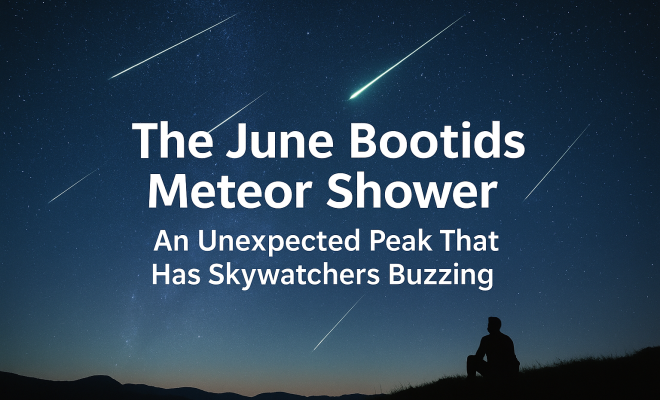
“`html
Every year, skywatchers mark their calendars for meteor showers, each offering a glimpse of the cosmos in its most fleeting form. Among these, the June Bootids meteor shower typically stands out not for its abundance, but rather for its rarity. Known to produce only a handful of meteors, this shower has caught the attention of astronomers and enthusiasts alike with an unexpected peak this week, creating excitement and a flurry of social media activity.
What Are the June Bootids?
The June Bootids meteor shower is an annual celestial event that occurs in the early summer, peaking around June 27 each year. This meteor shower originates from the comet 7P/Pons-Winnecke, discovered by Jean-Louis Pons in 1819. Unlike other, more prolific meteor showers such as the Perseids or the Geminids, the June Bootids are often characterized by their unpredictability, usually yielding between just a few to a dozen visible meteors per hour during peak times.
Historically, the June Bootids have experienced fluctuations in activity. Some years, they produce numerous meteors, while in others, they barely show themselves. The variability is what makes this shower particularly intriguing — and why this year’s unexpected surge is causing such a stir among astronomers and casual observers.
The Current Peak: An Unexpected Surprise
This week, however, the June Bootids are defying expectations. Reports from the Society for Popular Astronomy indicate that this year’s shower is peaking with unusual intensity, presenting an opportunity for skywatchers to witness a rare display of meteoric activity. This unexpected peak has stirred excitement not just among astronomers but also among the general public, as many rush to capture this fleeting cosmic event.
According to reliable sources, the shower is peaking between now and Saturday, allowing for a window of opportunity that people are eager to seize. Enthusiasts and newcomers alike are sharing their experiences on social media, using platforms like Twitter and Instagram to post breathtaking images and videos of the meteors as they streak across the night sky.
Watching the June Bootids: A Guide for Skywatchers
If you’re planning to watch the June Bootids meteor shower, there are several tips and tricks to maximize your experience. Here’s how to best enjoy this rare astronomical phenomenon:
- Find a Dark Sky Location: Light pollution can severely hinder your ability to see meteors. Seek out local parks or rural areas where the night sky is less obstructed by city lights.
- Timing Is Key: The best time to observe the meteors is usually after midnight until dawn. During these hours, the sky is typically darker, and the chance of seeing meteors increases.
- Be Patient: Meteor showers can be unpredictable. Bring a blanket, lie back, and allow your eyes to adjust to the darkness. You might have to wait a while, but it can be worth it.
- Share the Experience: Watching with friends or family can enhance the experience. Sharing your excitement and reactions as you spot meteors can make the event even more memorable.
A Meteor Shower That Defies Expectations
The June Bootids meteor shower is not just a scientific interest; it taps into the emotional core of human curiosity about the universe. Each meteor that streaks across the sky is a reminder of our connection to the cosmos and the transient beauty of life itself.
This year’s unexpected peak is particularly fascinating because it highlights the unpredictable nature of meteor showers. While many observers may have approached this event with mild curiosity, the sudden uptick in activity has created an urgency for individuals to engage with the night sky. Social media platforms are alive with excitement, as people share their experiences and photos, driving a viral community experience around this cosmic event.
The Science Behind Meteor Showers
Understanding meteor showers requires delving into the science behind them. Meteor showers occur when Earth passes through the debris left by comets. As these tiny particles enter our atmosphere at high speeds, they burn up, creating the bright streaks of light we see as meteors. (See: Understanding meteor showers.)
The June Bootids, specifically, are linked to the comet 7P/Pons-Winnecke. This comet orbits the sun approximately every 71 years, leaving a trail of debris in its wake. When Earth intersects this debris field, we experience the meteor shower. The reason the June Bootids have low activity in most years is likely due to the distribution of the debris field, which can be sparse or diffuse.
Historical Context and Variability
Historically, the June Bootids have had unpredictable behavior. Some years have seen bursts of activity, while in others, the shower has been nearly silent. For instance, in 1998, observers reported an exceptional display, with rates exceeding 100 meteors per hour. Conversely, years like 2011 recorded fewer than 10 meteors during the peak.
This variability contributes to the allure of the June Bootids. For many astronomers, tracking their activity provides insight into the behavior of comets and their debris. Understanding these patterns can help predict future meteor showers and their potential intensity, making this week’s peak even more significant for those who study the cosmos.
The Role of Social Media in Skywatching
In an age where social media connects people across the globe, astronomical events like the June Bootids meteor shower become more than just personal experiences. They transform into shared moments of wonder. Platforms such as Twitter, Instagram, and TikTok allow skywatchers to instantly share their thoughts, experiences, and images, creating a dynamic community that thrives on collective enthusiasm.
Skywatchers are often quick to post their findings or even real-time updates about meteor sightings. This digital sharing amplifies the excitement and can even motivate others to step outside and look up at the sky. The sense of urgency generated by the unexpected peak of the June Bootids only enhances this phenomenon.
Why You Shouldn’t Miss This Opportunity
If there’s ever been a time to grab your telescope or simply lie back and gaze at the stars, it’s now. The rare chance of witnessing the June Bootids meteor shower at an unexpected peak shouldn’t be taken lightly. For many, this may be a once-in-a-lifetime opportunity.
Beyond the sheer beauty of the meteors, participating in such events can deepen your appreciation for the universe. It’s a reminder that we are part of something much larger — a constantly moving, ever-evolving cosmos that still holds many mysteries. Watching the June Bootids can inspire awe, provoke questions, and ignite a passion for exploration.
Looking Ahead: Future Meteor Showers
As we marvel at the June Bootids meteor shower, it’s also essential to keep an eye on future celestial events. There are several renowned meteor showers still to come this year, including the Perseids in August and the Geminids in December. Each of these showers brings its own unique characteristics and viewing opportunities.
Preparing for upcoming meteor showers can be as simple as marking your calendar, gathering with friends, and planning your viewing location. The anticipation builds as the dates approach, and skywatchers can share tips and experiences to make the most of these events.
Understanding Meteor Composition
The meteors you see during the June Bootids aren’t just random bits of space rock; they’re composed of various materials that help define their characteristics. Most meteors are made from dust and particles shed by comets. When Earth passes through these trails, we encounter these remnants. The composition can vary significantly, with some meteors being made up of ice and others containing more rocky elements. (See: NASA's overview of June Bootids.)
The properties of the meteors can influence how bright they appear and how long they last in the sky. For example, meteors containing metals like iron produce bright flashes, while those with higher ice content can create longer-lasting trails due to their slower burn-up rate in the atmosphere.
Expert Perspectives on Meteor Showers
To gain a deeper understanding of the June Bootids meteor shower, it’s useful to consider the insights of experts in the field. Dr. Sarah H. Johnson, an astronomer at the National Observatory, emphasizes the importance of monitoring these sporadic meteor showers: “The June Bootids teach us about the complexities of cometary orbits and their debris trails. Each unexpected peak is a reminder that the cosmos is full of surprises, and there’s always more to learn.”
Additionally, a leading meteor enthusiast, Mark T. Ellis, shares his perspective: “The excitement surrounding the June Bootids allows the public to engage with astronomy in a way that is both accessible and thrilling. Events like this spark curiosity and inspire the next generation of astronomers.”
Common Myths About Meteor Showers
While meteor showers are often celebrated, there are several myths that persist around these celestial events. Let’s debunk a few:
- You Have to Go to a Remote Location: While dark skies enhance viewing, you can sometimes see meteors from urban areas if the shower is particularly active.
- Meteors Are Rare: Many assume they will only see a handful of meteors in a lifetime, but with regular meteor showers occurring, you can witness many throughout the year.
- You Should Look Directly at the Radiant: While it’s useful to know where the shower originates, meteors can appear anywhere in the sky, so it’s best to take in the whole view.
FAQ About the June Bootids Meteor Shower
Q: When is the best time to see the June Bootids?
A: The ideal time for viewing is typically from midnight until dawn, as the sky is darker and more conducive to spotting meteors.
Q: How can I improve my chances of seeing meteors?
A: Find a dark location away from city lights, allow your eyes to adjust to the darkness, and be patient. It may take time to spot meteors.
Q: Are there any specific tools I need to observe the June Bootids?
A: No special equipment is necessary. While telescopes can enhance astronomical viewing, the best way to enjoy meteor showers is with the naked eye.
Q: How many meteors can I expect to see during the June Bootids?
A: The number can vary widely. On a good night, you might see anywhere from 5 to 30 meteors per hour, but this can change depending on the shower’s activity level. (See: Scientific studies on meteor showers.)
Q: Can I photograph the meteors?
A: Yes! Long-exposure photography can capture meteors, but make sure to use a stable tripod and set your camera to a longer exposure time.
Tips for Photographing Meteor Showers
If you’re interested in capturing the beauty of the June Bootids on camera, here are some practical tips to enhance your photography experience:
- Use a Wide-Angle Lens: A lens with a wide aperture will help you capture more of the night sky, allowing for better chances of catching meteors.
- Set Up a Tripod: Stability is crucial when taking long-exposure shots. A sturdy tripod will keep your camera steady and allow for clearer images.
- Choose ISO Wisely: A higher ISO setting can help you capture more light in dark conditions, but be cautious of noise. Experiment to find the best balance for your camera.
- Plan for Long Exposures: A shutter speed of 15 seconds or longer can help in capturing the trails of meteors, but be mindful of overexposing the stars.
Comparative Meteor Showers: How June Bootids Stack Up
The June Bootids meteor shower may not be as well-known as others like the Perseids or Geminids, but it’s intriguing to compare their characteristics. The Perseids, peaking in August, can produce up to 100 meteors per hour under ideal conditions, while the Geminids in December often yield around 120 meteors per hour. In contrast, the June Bootids can be unpredictable, with activity levels varying greatly from year to year.
Another notable difference is the time of year. The June Bootids take place during the summer, a time often marked by warm weather and longer nights, making viewing more enjoyable. In contrast, the Geminids occur in winter, when conditions can be chilly and snowy, potentially making outdoor observation less appealing.
Final Thoughts: The Magic of the Night Sky
The unexpected peak of the June Bootids meteor shower is a delightful reminder of the unpredictability and beauty of our universe. As we take the time to pause and gaze at the stars, we are reminded of our connection to the cosmos and the vastness that lies beyond our planet.
Whether you’re a seasoned astronomer or just someone looking to experience the magic of shooting stars, this meteor shower serves as a unique opportunity to engage with the night sky and perhaps spark a lifelong interest in astronomy. So, if you haven’t already, grab a blanket, find a dark spot, and witness the wonders of the June Bootids meteor shower before it fades back into its typically quiet existence.
“`
Trending Now
Frequently Asked Questions
What are the June Bootids meteor shower?
The June Bootids meteor shower is an annual celestial event that occurs around June 27 each year, originating from the comet 7P/Pons-Winnecke. Unlike more prolific meteor showers, it typically produces only a few to a dozen meteors per hour, making its unpredictability a key feature.
When is the best time to view the June Bootids?
The best time to view the June Bootids meteor shower is during its peak, which occurs around June 27 each year. This year, reports indicate an unexpected peak in activity, providing an excellent opportunity for skywatchers to witness more meteors than usual.
Why are the June Bootids considered unpredictable?
The June Bootids are considered unpredictable because their activity levels can vary significantly from year to year. Some years see a high number of meteors, while others may yield very few, making their overall performance inconsistent and intriguing for astronomers.
What causes the June Bootids meteor shower?
The June Bootids meteor shower is caused by Earth passing through the debris left by comet 7P/Pons-Winnecke. As the Earth intersects this debris field, particles enter the atmosphere and burn up, creating the visible meteors that skywatchers observe.
How can I see the June Bootids meteor shower?
To see the June Bootids meteor shower, find a dark location away from city lights, and look up at the night sky around its peak time, particularly between now and Saturday. Be patient and allow your eyes to adjust to the darkness for the best viewing experience.
Have you experienced this yourself? We’d love to hear your story in the comments.