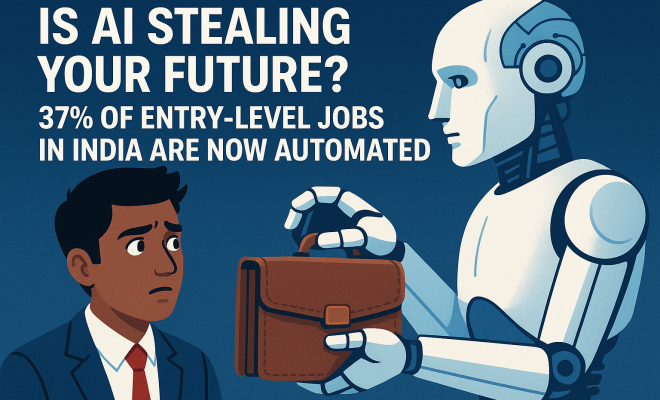
Is AI Stealing Your Future? 37% of Entry-Level Jobs in India Are Now Automated
“`html
The landscape of employment is changing, and it’s changing fast. A recent report has revealed a startling statistic: 37% of entry-level jobs in India are now being performed by Artificial Intelligence (AI). This significant development has ignited discussions across social media platforms, with young professionals and workers voicing their concerns over job security and the implications of this technological shift. But what does this mean for the future of work, particularly for those just starting their careers? Let’s break down the implications of this transformation and explore the role of AI in entry-level jobs.
1. The Rise of AI in the Workforce
The introduction of AI technologies in various sectors is not entirely new. However, the acceleration of AI integration into entry-level roles marks a pivotal moment in the job market. Industries that have traditionally hired large numbers of entry-level staff — such as customer service, data entry, and administrative support — are now leveraging AI to streamline operations. This shift is attributed to AI’s ability to handle repetitive tasks efficiently, offering both cost savings and productivity enhancements for employers.
For instance, chatbots are increasingly replacing human customer service agents, managing inquiries and complaints around the clock. In data processing, AI algorithms can analyze and interpret data at speeds no human could match, making them invaluable tools for companies looking to harness insights quickly. While this presents a clearer picture of efficiency for businesses, it raises pressing questions regarding job availability for new entrants into the workforce.
2. The Emotional Impact on Job Seekers
The emotional backlash from this shift has been palpable, especially among younger professionals. Many recent graduates and job seekers are experiencing a heightened sense of anxiety about their career prospects. The fear of job displacement due to AI is not just a statistic; it resonates with individuals contemplating their future in a rapidly evolving job market. As AI continues to expand its footprint in entry-level roles, young workers are left grappling with the reality that many traditional pathways to employment might no longer exist.
Furthermore, the pressure to acquire AI-related skills has intensified. Young professionals feel a strong ‘fear of missing out’ (FOMO) regarding the need to adapt to new technologies. With AI skill sets becoming essential for job seekers, individuals are now investing in online courses and training programs. The demand for AI literacy is skyrocketing, leading to a race among job seekers to boost their qualifications and stay relevant.
3. Employers: Efficiency vs. Humanity
On the flip side of the coin, employers are celebrating the efficiency gains brought about by AI implementation. For businesses, AI represents a way to cut costs and increase productivity. This is particularly appealing in a competitive job market where margins are tight, and operational efficiency is paramount. Companies can reallocate resources to more strategic areas, allowing for growth and innovation.
However, this raises ethical questions about the human aspect of work. As organizations lean more on AI to handle tasks traditionally performed by humans, how will they maintain a balance between technological efficiency and the need for a human touch? Customer experience, creativity, and empathy are qualities that AI cannot replicate, and companies must consider how to integrate AI without losing the personal connections that foster brand loyalty.
4. The Skills Gap: What Do Employers Want?
As employers increasingly integrate AI into their operations, the skills required for entry-level positions are shifting. Companies now seek candidates who not only possess domain-specific knowledge but also understand how to work alongside AI technologies. This has led to the emergence of a skills gap, as many recent graduates may not have been trained in these new competencies.
Skills like data analysis, digital literacy, and basic programming are becoming prerequisites for many entry-level roles. Job seekers must familiarize themselves with AI tools and platforms that are becoming standard in their respective industries. This shift necessitates a reevaluation of educational curriculums and training programs to better align with the expectations of the modern workforce.
5. Adapting to Change: Lifelong Learning
For individuals entering the job market, adapting to the rise of AI is more crucial than ever. Lifelong learning has become a necessary approach for career development. Job seekers must embrace continuous education, whether through formal degree programs, online courses, or professional development workshops. The tech landscape is evolving so rapidly that skills acquired today may become obsolete tomorrow.
Organizations are also recognizing the need to foster a culture of learning among their employees. By providing training and development opportunities, companies can help their workforce adapt to new technologies while ensuring that their employees remain engaged and motivated. This mutual investment in learning can create a more resilient workforce capable of navigating the challenges posed by AI. (See: AI's impact on job markets.)
6. The Role of Government and Policy Makers
As AI continues to reshape the job landscape, the role of government and policymakers becomes increasingly vital. There is a pressing need for initiatives that support workforce reskilling and upskilling, particularly for those most affected by AI displacement. Policymakers should consider implementing programs that provide financial assistance for training, tax incentives for companies that invest in employee education, and partnerships with educational institutions to create relevant curriculums.
Moreover, discussions surrounding universal basic income (UBI) have gained traction in response to fears of job loss due to automation. While UBI is still a controversial topic, it’s gaining attention as a potential safety net for individuals whose jobs may be automated away. Balancing technological advancement with social responsibility is critical as societies move forward.
7. Exploring New Job Opportunities
While the rise of AI in entry-level jobs poses challenges, it also creates new opportunities. Industries that did not previously exist are emerging, along with new roles directly related to AI development, maintenance, and oversight. For example, the demand for AI ethicists, data scientists, and machine learning engineers has surged as companies look to implement AI responsibly.
Job seekers should actively explore these emerging fields. By positioning themselves in areas that complement AI technologies, individuals can not only secure employment but also contribute to shaping the future of work. Networking within tech communities and attending industry conferences can provide valuable insights into where the job market is headed.
8. Global Implications: The Shift Beyond India
While the report highlighting the 37% of entry-level jobs in India being occupied by AI may seem localized, the conversation is global. Countries around the world are grappling with similar trends as AI technologies become pervasive. In the United States, for instance, many sectors, including retail and manufacturing, have also seen an influx of automation.
This global phenomenon highlights the need for collaborative efforts across countries. International organizations must share best practices for workforce adaptation and support, ensuring that no region is left behind. The challenges posed by AI are not isolated; they require a collective response to navigate the complexities of this transformative era.
9. The Future of Work: Human-AI Collaboration
Looking ahead, the future of work is likely to be defined by collaboration between humans and AI. Instead of viewing AI solely as a replacement for human labor, the focus should shift to how AI can enhance human capabilities. The integration of AI tools can empower workers to be more productive and creative, allowing them to focus on higher-value tasks that require critical thinking and emotional intelligence.
Employers who embrace this collaborative model will not only retain a skilled workforce but also foster innovation. By combining the strengths of AI with human ingenuity, companies can navigate challenges and drive growth in ways that were previously unimaginable.
10. Overcoming Barriers to AI Adoption in Entry-Level Jobs
Despite the clear benefits, barriers to the adoption of AI in entry-level jobs persist. Smaller businesses may struggle to implement AI solutions due to high initial costs, lack of technical know-how, or concerns about data privacy and security. These barriers can widen the gap between larger corporations that can afford to invest in AI and smaller companies that may fall behind.
Addressing these issues requires collaboration between the tech industry and small business advocates. By developing more affordable, user-friendly AI tools and providing support resources, small businesses can leverage AI’s advantages without facing overwhelming challenges. Moreover, community programs that offer training and resources can empower small business owners to utilize AI effectively, ensuring equitable access to technological advancements.
11. Statistics: The Growing Impact of AI on Entry-Level Jobs
To fully grasp the impact of AI on employment, it’s crucial to consider some statistics. According to a McKinsey report, AI could automate up to 30% of the global workforce by 2030, with entry-level roles being among the most affected. Similarly, a survey conducted by PwC indicated that 38% of jobs in the U.S. could be at risk of automation in the next two decades. These numbers highlight the urgency for job seekers and employers to rethink strategies and adapt to the technological landscape.
Moreover, a study by Gartner predicts that by 2025, 75% of customer service interactions will be powered by AI technologies, which further emphasizes the trend towards automation in entry-level jobs. For young job seekers, this data serves as a critical reminder of the need to prepare for a tech-centric job market. Understanding these trends can empower candidates to position themselves favorably amid the shifts brought about by AI. (See: The future of AI and jobs.)
12. The Importance of Soft Skills in the Age of AI
While technical skills are increasingly vital, soft skills remain equally important in the age of AI. As AI takes over repetitive tasks, employers will focus more on hiring individuals who possess characteristics like problem-solving abilities, emotional intelligence, and strong communication skills. These human-centric capabilities are difficult for AI to replicate, making them invaluable in the workforce.
For instance, roles that require negotiation, conflict resolution, and creativity are areas where humans can truly shine, particularly in fields such as marketing, sales, and project management. Educational institutions and training programs should aim to cultivate these soft skills among students, ensuring that future workers are well-rounded and equipped to thrive in a technology-dominated environment.
13. Frequently Asked Questions (FAQ)
Q1: Will AI eliminate all entry-level jobs?
A1: While AI will automate many tasks traditionally performed by humans, it won’t eliminate all entry-level jobs. Instead, the nature of these jobs will evolve, with new roles emerging that require human oversight, creativity, and emotional intelligence.
Q2: What skills should I develop to remain competitive in the job market?
A2: Focus on developing both technical skills (like data analysis and programming) and soft skills (such as communication and critical thinking). Familiarizing yourself with AI tools relevant to your industry can also give you a competitive edge.
Q3: How can I prepare for the AI-driven job market?
A3: Engage in lifelong learning through online courses and workshops, seek internships that incorporate AI technologies, and network with professionals in your field to stay informed about industry trends.
Q4: What industries are most affected by AI in entry-level jobs?
A4: Sectors such as customer service, data entry, retail, and even manufacturing are seeing significant impacts from AI integration. However, new opportunities are also arising in AI-related fields like data science and machine learning.
Q5: How can companies balance AI efficiency with the need for human employees?
A5: Companies can adopt a hybrid approach, where AI assists in repetitive tasks while humans focus on higher-level responsibilities that require creativity, empathy, and strategic thinking. This balance can enhance overall productivity without losing the human touch.
Q6: What role does government play in this transition?
A6: Governments can facilitate workforce reskilling and upskilling initiatives, provide financial support for training programs, and create policies that encourage businesses to invest in employee education to prepare for an AI-centric future.
14. Emerging Trends in AI-Driven Entry-Level Jobs
As AI technology advances, new trends are emerging in the workforce, particularly in entry-level job markets. For instance, many companies are now employing AI-driven recruitment tools to streamline the hiring process. These tools analyze resumes and applications more efficiently than human recruiters, identifying the best candidates based on specific skill sets and qualifications.
Additionally, remote work and AI-powered collaboration tools are reshaping the entry-level landscape. Tools like AI-enhanced project management software assist teams in coordinating tasks and deadlines, allowing for a more flexible work environment. As remote work becomes commonplace, entry-level job seekers may find opportunities that were previously unavailable due to geographic constraints. (See: AI and workforce automation research.)
Furthermore, industries such as healthcare are increasingly utilizing AI to improve patient care and administrative processes. Entry-level positions that involve managing patient data or using AI systems to assist healthcare professionals are on the rise, creating unique pathways for job seekers in this crucial sector.
15. Building a Personal Brand in an AI-Driven Job Market
In an era where AI plays a significant role in hiring, cultivating a strong personal brand is essential. Job seekers should take advantage of online platforms, such as LinkedIn, to showcase their skills, experiences, and projects. Sharing insights about AI integration in their respective fields can position them as knowledgeable candidates in the eyes of potential employers.
Creating a professional online presence can also open doors to networking opportunities, connecting individuals with mentors and industry leaders who can offer guidance. Attending webinars, workshops, or industry-related events can help job seekers stay informed about the latest trends in AI and employment, further enhancing their visibility in the job market.
16. The Path Forward
As we look at the intertwining future of AI and entry-level jobs, it’s clear that both challenges and opportunities lie ahead. For job seekers, the journey involves not only adapting to current demands but also anticipating future trends. Staying informed, continuously learning, and being adaptable are crucial strategies to thrive in this dynamic work environment.
Employers, too, have the responsibility to cultivate a workplace where technology and human talent can coexist harmoniously. By investing in training and fostering a culture that values both technical and soft skills, companies can prepare their workforce for a future that embraces innovation while keeping humanity at its core.
Ultimately, the path forward requires collaboration among individuals, businesses, and policymakers to ensure that the rise of AI serves as a bridge to new opportunities rather than a barrier to employment. Embracing change and preparing for a future where humans and AI work together will undoubtedly shape the next generation of careers.
17. Conclusion: Preparing for a New Era
The statistic that 37% of entry-level jobs in India are now performed by AI serves as a crucial wake-up call for individuals, employers, and policymakers alike. As we navigate this new era, it is imperative to prioritize adaptability, lifelong learning, and responsible AI integration. While the challenges are undeniable, the opportunities for innovation and growth are equally compelling. The key lies in embracing change and preparing for a future where humans and AI work together to create a more dynamic and efficient job market.
“`
Trending Now
- this guide on 15 read-alouds that make teachers cry every time
- “Using Bloom’s Taxonomy to Write Better…
- “Bloom’s Taxonomy for Parents: How to Ask Questions That Deepen Your Child’s Learning at Home”
- this guide on “piaget’s conservation tasks: simple activities to assess your preschooler’s cognitive development”
- the complete explanation
Frequently Asked Questions
Is AI taking over entry-level jobs in India?
Yes, a recent report indicates that 37% of entry-level jobs in India are now being performed by AI. This shift is particularly evident in sectors like customer service and data entry, where AI technologies are being leveraged to improve efficiency and reduce costs.
What types of jobs are most affected by AI?
AI is significantly impacting jobs in customer service, data entry, and administrative support. These roles often involve repetitive tasks that AI can perform more efficiently, leading to a reduction in the number of entry-level positions available for human workers.
How does AI affect job security for new graduates?
The rise of AI in the workforce has heightened concerns among new graduates regarding job security. Many are anxious about the potential for job displacement, as AI increasingly takes over tasks traditionally performed by humans, especially in entry-level roles.
What are the benefits of AI in the workplace?
AI offers several benefits in the workplace, including increased efficiency, cost savings, and the ability to handle repetitive tasks at a speed unmatched by humans. This can lead to enhanced productivity for businesses leveraging AI technologies.
How can job seekers adapt to the rise of AI?
Job seekers can adapt to the rise of AI by developing skills that complement AI technologies, such as critical thinking, creativity, and emotional intelligence. Focusing on roles that require human interaction and complex problem-solving can also provide an advantage in an AI-driven job market.
Have you experienced this yourself? We’d love to hear your story in the comments.