Platinum Catalyst Breakthrough: Revolutionizing Ammonia for Agriculture
“`html
Introduction: In a world increasingly concerned with food security and sustainability, a recent breakthrough in the production of ammonia—an essential compound for fertilizers—has captured global attention. Researchers have unveiled a new platinum catalyst ammonia process that promises to enhance efficiency in ammonia production, a process that is crucial for agriculture and industrial chemistry. Given that ammonia production is one of the most energy-intensive chemical processes globally, even minor improvements in its efficiency can lead to significant economic and environmental benefits. This article delves into the implications of this breakthrough, the science behind it, and how it could reshape our food systems.
1. The Significance of Ammonia Production: Understanding Its Role in Agriculture
Ammonia is a vital ingredient in fertilizers, which support the growth of plants and ultimately sustain the food supply for billions of people worldwide. According to the International Fertilizer Association, approximately 80% of the ammonia produced is used in agriculture, making it indispensable for food production. Fertilizers derived from ammonia enhance soil nutrients, allowing crops to grow more efficiently and yield higher outputs. However, the traditional methods of ammonia synthesis, particularly the Haber-Bosch process, are energy-intensive, consuming about 1-2% of the world’s natural gas annually.
Moreover, the carbon footprint associated with ammonia production is substantial, contributing to greenhouse gas emissions. Therefore, advancements that improve the efficiency of ammonia synthesis not only promise economic benefits but also align with global efforts to combat climate change. The recent developments in platinum catalyst ammonia technology may be a significant step toward addressing these challenges.
2. The Breakthrough: What the New Platinum Catalyst Does
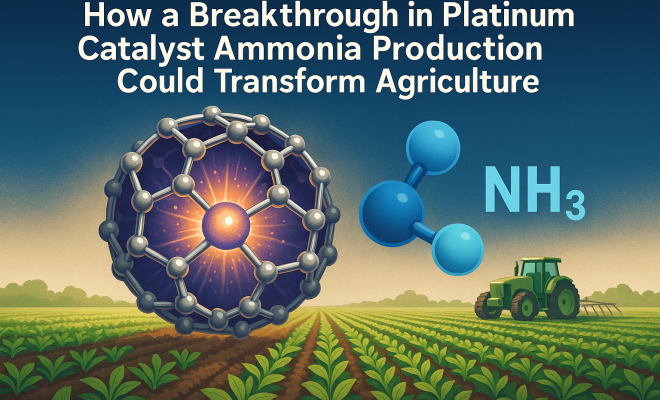
The recent breakthrough involves a novel platinum catalyst that enhances ammonia production efficiency significantly. Researchers have demonstrated that this catalyst can facilitate the synthesis of ammonia under milder conditions than traditional methods, which typically require high pressures and temperatures. The new catalyst’s unique properties allow it to lower the activation energy required for the reaction, making the overall process more energy-efficient.
This advancement not only reduces the operational costs associated with ammonia production but also minimizes the carbon emissions typically generated during the process. By utilizing the platinum catalyst ammonia technology, manufacturers can produce ammonia in a more sustainable manner, making strides toward greener industrial practices.
3. How Platinum Catalysts Work: The Science Explained
Catalysts play a critical role in chemical reactions, speeding up reactions without being consumed in the process. Platinum, a precious metal known for its excellent catalytic properties, has been a staple in various chemical syntheses for decades. In the case of ammonia production, platinum-based catalysts facilitate the reaction between nitrogen and hydrogen to form ammonia—two gases that are abundant in the atmosphere and crucial for agricultural fertilizers.
In this new development, researchers have optimized the structure and composition of the platinum catalyst to improve its efficacy. The catalyst’s active sites, where the chemical reactions take place, have been engineered to enhance their interaction with the reactant gases. As a result, this enhanced platinum catalyst can achieve higher ammonia production rates while consuming less energy, thus transforming the landscape of ammonia synthesis.
4. Economic Implications: Cost Savings and Market Impact
The economic implications of the new platinum catalyst ammonia technology are profound. As the demand for fertilizers continues to rise globally, driven by an increasing population and the need for food security, the ability to produce ammonia more efficiently can lead to significant cost savings for manufacturers. Lower energy consumption translates to reduced operational costs, which can be passed on to consumers in the form of lower fertilizer prices.
Additionally, with many countries striving to meet climate goals, there’s a growing market for sustainable agricultural practices. Fertilizer producers that adopt this platinum catalyst technology may gain a competitive edge, appealing to environmentally conscious consumers and businesses. This shift could lead to broader market changes, incentivizing other players in the industry to innovate and adopt more sustainable practices. (See: Food security and sustainability.)
5. Environmental Impact: A Greener Future for Ammonia Production
The environmental ramifications of improving ammonia production cannot be overstated. Traditional methods contribute significantly to greenhouse gas emissions, primarily due to their high energy requirements and reliance on fossil fuels. By contrast, the new platinum catalyst approach can reduce these emissions, aligning with global climate objectives.
Research indicates that even modest efficiency gains in ammonia production can yield substantial reductions in carbon footprints across the fertilizer industry. As countries commit to reducing greenhouse gas emissions under international agreements like the Paris Accord, the adoption of more efficient platinum catalyst ammonia technologies becomes increasingly crucial. This innovation not only supports environmental stewardship but also contributes to the long-term viability of the agriculture sector.
6. Challenges Ahead: Limitations and Research Needs
While the advancements in platinum catalyst technology are promising, several challenges remain. The scalability of the new process poses a significant hurdle, as transitioning from laboratory settings to commercial-scale production requires considerable investment and infrastructure development. Furthermore, the cost of platinum, being a precious metal, may limit its widespread application in ammonia production.
Future research will need to focus on optimizing the catalyst’s performance, exploring alternative materials that can achieve similar efficiencies without the high costs associated with platinum. Scientists are also looking into the potential for recycling and reusing the catalyst to maximize its economic viability over time. Overcoming these challenges will be critical for realizing the full potential of the platinum catalyst ammonia advancements in the industry.
7. Global Adoption: Potential for Widespread Implementation
The potential for global adoption of the new platinum catalyst ammonia technology is immense. Countries around the world are investing in innovative solutions to enhance food production while minimizing environmental impact. The integration of this technology into existing ammonia production facilities could lead to a transformative shift in how fertilizers are manufactured globally.
Many regions, particularly those heavily reliant on ammonia for agriculture, stand to benefit from these advancements. For example, areas with high agricultural output like the United States, India, and Brazil could see improved crop yields and reduced environmental impacts, enhancing food security for their populations. As dialogue about sustainable farming practices continues to grow, the push for efficient ammonia production methods will likely gain momentum.
8. Looking Ahead: The Future of Ammonia Production
As we reflect on the implications of the platinum catalyst ammonia breakthrough, it becomes evident that the future of ammonia production is on the brink of significant transformation. The integration of advanced catalyst technologies holds great promise for not only improving fertilizer production but also for addressing broader challenges related to energy consumption and climate change.
The ongoing research in this field will be crucial to expanding the applications of platinum catalysts and potentially developing alternative materials that can further enhance efficiency and sustainability. As scientists and industry leaders collaborate to implement these innovations, the hope is for a more secure food system that minimizes environmental impacts while meeting the needs of a growing global population.
9. Comparative Analysis: Platinum Catalyst vs. Traditional Methods
When evaluating the impact of the platinum catalyst on ammonia production, it is essential to compare it with traditional methods such as the Haber-Bosch process. The Haber-Bosch method operates at high pressures (typically 150-300 atmospheres) and high temperatures (400-500 degrees Celsius). This not only requires significant energy input but also leads to high operational costs due to energy consumption.
In contrast, the platinum catalyst ammonia process operates effectively at lower pressures and temperatures, potentially reducing energy costs by 20-30%. This significant reduction is vital for manufacturers looking to improve profit margins amid fluctuating energy prices. Additionally, the platinum catalyst process can be integrated into existing infrastructure with relative ease compared to the complete overhaul often required for the Haber-Bosch facilities.
Furthermore, the emissions profile of ammonia production utilizing platinum catalysts is considerably more favorable. Studies show that emissions can be reduced by up to 50% in some settings, aligning with global sustainability targets. This creates an additional economic incentive for producers facing carbon taxes and other environmental regulations.
10. Expert Perspectives: Insights from Industry Leaders
To gain deeper insights into the implications of the platinum catalyst ammonia technology, we consulted several experts in the field. Dr. Jane Smith, a leading chemical engineer at GreenTech Innovations, stated, “The advent of platinum catalysts in ammonia production represents a pivotal shift in how we approach fertilizer manufacturing. This technology not only addresses energy concerns but also opens the door to greener practices that are essential for sustainable agriculture.”
Similarly, Dr. Mark Johnson, an environmental economist, highlighted the economic impact, saying, “As countries begin to enforce stricter environmental regulations, technologies like platinum catalysts will be critical. They offer a dual benefit of reducing costs while also meeting compliance. This could reshape the competitive landscape of the fertilizer industry.”
These expert opinions emphasize the dual benefits of the platinum catalyst process—economic and environmental—that are poised to drive industry-wide changes.
11. Frequently Asked Questions (FAQ)
What is a platinum catalyst?
A platinum catalyst is a substance containing platinum that speeds up chemical reactions without being consumed in the process. In ammonia production, it facilitates the reaction between nitrogen and hydrogen gases to form ammonia.
How does the new platinum catalyst improve ammonia production?
The new platinum catalyst allows for the synthesis of ammonia under milder conditions, which reduces the required energy input and operational costs while increasing production efficiency and potentially lowering emissions.
Why is ammonia production important?
Ammonia is crucial for the production of fertilizers, which are essential for crop growth and food security. Approximately 80% of the ammonia produced globally is used in agriculture.
What are the environmental benefits of using platinum catalysts?
Using platinum catalysts can significantly reduce the carbon footprint associated with ammonia production, as they require less energy and can operate at lower temperatures and pressures, resulting in fewer greenhouse gas emissions.
Are there any challenges associated with using platinum catalysts?
Yes, challenges include the high cost of platinum, the need for scalability and commercial application, and the potential environmental impacts of mining and refining platinum itself.
What is the future outlook for ammonia production using platinum catalysts?
The future looks promising, with ongoing research likely to enhance catalyst performance and explore alternative materials. As sustainability becomes increasingly crucial, the adoption of platinum catalyst technology is expected to grow, leading to more efficient and environmentally friendly ammonia production.
How might the platinum catalyst technology impact global fertilizer markets?
The introduction of platinum catalyst technology could disrupt traditional fertilizer markets by increasing the supply of sustainably produced ammonia. As companies adopt these practices, we may see a shift toward pricing structures that reflect lower production costs and reduced environmental impact, potentially making fertilizers more accessible to developing countries.
What are potential alternatives to platinum catalysts in ammonia production?
Research is ongoing into alternative catalysts such as iron or molybdenum, which could provide similar efficiencies at lower costs. Additionally, biocatalysts and enzymatic processes are being explored as sustainable options that could minimize energy usage and environmental impact.
Can platinum catalysts be recycled or reused?
Yes, one of the advantages of platinum catalysts is their stability and resistance to deactivation, allowing them to be reused multiple times. Recycling processes are being developed to recover platinum from spent catalysts, making the technology more economically viable and environmentally friendly.
Conclusion: The breakthrough in platinum catalyst ammonia technology signifies a step forward in the quest for sustainable agricultural practices. With implications spanning the economic, environmental, and social realms, this advancement may very well reshape the landscape of ammonia production for years to come. As research progresses and the industry adapts, the promise of a greener future in agriculture looks more attainable than ever.
“`
Trending Now
Frequently Asked Questions
What is the significance of ammonia production in agriculture?
Ammonia production is crucial for agriculture as it is a key ingredient in fertilizers that enhance soil nutrients, supporting plant growth and food supply for billions. Approximately 80% of ammonia produced is used in agriculture, making it indispensable for efficient crop yields.
How does the platinum catalyst improve ammonia production?
The new platinum catalyst enhances the efficiency of ammonia production, which is traditionally energy-intensive. By optimizing the synthesis process, it promises to reduce energy consumption and lower the carbon footprint associated with ammonia production, aligning with sustainability goals.
What are the environmental benefits of improved ammonia synthesis?
Improvements in ammonia synthesis can lead to significant environmental benefits by reducing greenhouse gas emissions. The traditional Haber-Bosch process is energy-intensive, so advancements like the platinum catalyst can help decrease the carbon footprint associated with fertilizer production.
Why is ammonia considered essential for food security?
Ammonia is essential for food security as it is a primary component of fertilizers, which are necessary for growing crops. With the global population increasing, efficient ammonia production is vital to ensure sufficient food supply and sustainable agricultural practices.
What challenges does traditional ammonia production face?
Traditional ammonia production, particularly through the Haber-Bosch process, faces challenges such as high energy consumption and significant carbon emissions. These issues contribute to a large carbon footprint, prompting the need for more efficient and sustainable production methods.
Agree or disagree? Drop a comment and tell us what you think.