Boost Emotional Intelligence in Education Through Conflict Resolution
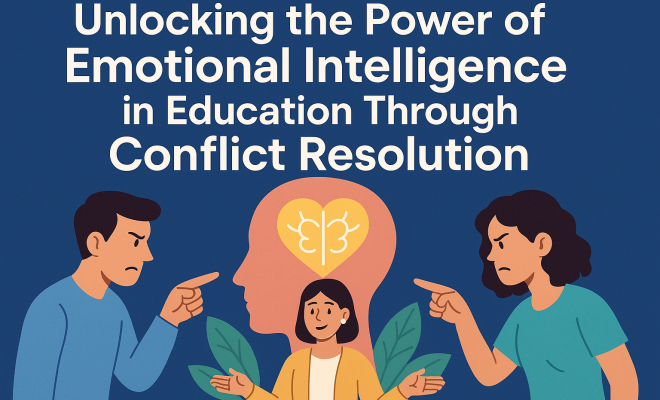
“`html
Introduction
In the modern educational landscape, the role of emotional intelligence has emerged as a vital component in fostering a nurturing learning environment. Teachers play a pivotal role in developing students’ emotional intelligence, particularly through conflict resolution strategies. Emotional intelligence in education not only enhances academic performance but also prepares students for the complexities of interpersonal relationships and real-world challenges. In this article, we will explore how teachers can effectively foster emotional intelligence through conflict resolution, contributing to a healthier school culture and equipping students with essential life skills.
Understanding Emotional Intelligence
Emotional intelligence (EI) refers to the ability to recognize, understand, and manage one’s own emotions while also recognizing and influencing the emotions of others. The concept, popularized by psychologist Daniel Goleman in the 1990s, consists of five key components:
- Self-awareness: Understanding one’s emotions, strengths, and weaknesses.
- Self-regulation: The ability to manage one’s emotional responses and impulses.
- Motivation: A drive to achieve goals for personal reasons rather than external rewards.
- Empathy: The capacity to understand and share the feelings of others.
- Social skills: Proficiency in managing relationships and building networks.
These components are essential in educational settings, where emotional intelligence can impact classroom dynamics, student interactions, and overall learning experiences. Teachers who model and promote EI contribute to the development of a positive school culture conducive to learning.
Conflict Resolution as a Tool for Emotional Intelligence
Conflict is an inevitable part of any social environment, including schools. Whether it is between students, teachers, or within the larger school community, conflicts can serve as crucial learning opportunities. The process of resolving conflicts can significantly enhance emotional intelligence by:
- Encouraging self-reflection and self-awareness.
- Promoting empathy as students learn to understand different perspectives.
- Providing practical skills for managing emotions and communicating effectively.
- Enhancing social skills through collaboration and negotiation.
When students engage in constructive conflict resolution, they practice essential life skills that contribute to their emotional intelligence, benefiting not only themselves but also their peers and the overall school environment. This builds on life skills over academics.
Strategies for Teachers to Foster EI Through Conflict Resolution
Teachers can implement various strategies to foster emotional intelligence through effective conflict resolution. Here are several practical approaches that educators can adapt in their classrooms:
1. Create a Safe Environment
Establishing a safe and supportive classroom environment is essential for effective conflict resolution. Teachers should promote a culture of respect and openness, encouraging students to express their feelings without fear of judgment. Strategies include:
- Setting ground rules for respectful communication.
- Modeling vulnerability by sharing personal experiences of conflict and resolution.
- Encouraging active listening during discussions.
When students feel safe, they are more likely to engage in open dialogue and express their emotions, facilitating conflict resolution.
2. Teach Empathy and Perspective-Taking
Empathy is a cornerstone of emotional intelligence and plays a crucial role in conflict resolution. Teachers can encourage students to consider multiple viewpoints through various activities:
- Role-playing scenarios where students must argue different perspectives.
- Discussion groups focused on understanding others’ feelings and motivations.
- Literature exploration that includes characters facing moral dilemmas.
By actively engaging in empathy-building exercises, students learn to appreciate others’ experiences, which is vital in resolving conflicts amicably. (See: Emotional Intelligence in Education.)
3. Implement Problem-Solving Techniques
Teaching students structured problem-solving techniques is essential for resolving conflicts. Educators can guide students through the following steps:
- Identifying the conflict and the parties involved.
- Encouraging each party to express their feelings and perspectives.
- Brainstorming possible solutions collaboratively.
- Evaluating the pros and cons of each proposed solution.
- Agreeing on a solution and outlining steps for implementation.
This structured approach to conflict resolution not only helps students resolve disputes but also enhances their analytical and decision-making skills, contributing to their overall emotional intelligence.
Real-Life Applications of EI in Conflict Resolution
Emotional intelligence in education extends beyond theoretical discussions. Teachers can incorporate real-life applications of EI through conflict resolution in various ways:
1. Conflict Resolution Circles
Conflict resolution circles are effective tools for addressing conflicts in a collaborative manner. In these circles, students gather in a group to discuss the conflict openly and honestly. The process typically involves:
- Establishing a talking piece to ensure everyone has a chance to speak.
- Encouraging students to express their emotions and perspectives.
- Facilitating a discussion to identify common goals and potential solutions.
This approach not only resolves conflicts but also reinforces the importance of community and cooperation among students.
2. Peer Mediation Programs
Implementing peer mediation programs empowers students to take an active role in resolving conflicts among their peers. Trained student mediators facilitate conversations between conflicting parties, guiding them towards mutual understanding and resolution. Key benefits of peer mediation include:
- Developing leadership and communication skills among mediators.
- Fostering a sense of responsibility and accountability.
- Creating a supportive network within the student body.
Through peer mediation, students can practice emotional intelligence while learning to manage conflicts in a constructive manner.
Current Relevance of Emotional Intelligence in Education
The relevance of emotional intelligence in education is increasingly recognized in today’s society. As students navigate a world filled with social media, diverse cultures, and complex interpersonal relationships, the ability to manage emotions and understand others is more critical than ever. Recent studies have shown that:
- Schools that implement EI programs see improved academic performance and reduced behavioral issues.
- Students with higher emotional intelligence tend to have better mental health outcomes and stronger social relationships.
- Employers increasingly value emotional intelligence as a key competency for success in the workplace.
By integrating emotional intelligence into conflict resolution strategies, educators not only enhance the learning experience but also prepare students for future success outside the classroom.
Challenges in Implementing EI and Conflict Resolution
While the benefits of fostering emotional intelligence through conflict resolution are substantial, several challenges may arise in the implementation process:
- Resistance to Change: Some educators may be accustomed to traditional behavioral management methods and resistant to adopting new practices.
- Time Constraints: The academic schedule may limit the time teachers can dedicate to implementing conflict resolution strategies.
- Need for Training: Educators may require professional development and training to effectively teach emotional intelligence and conflict resolution.
Addressing these challenges involves building a supportive school culture that prioritizes emotional intelligence and providing ongoing training and resources for educators.
Deepening the Understanding of Emotional Intelligence in Schools
To fully appreciate the impact of emotional intelligence on education, it is essential to explore its historical context and its evolution in teaching methodologies. Over the past two decades, educational reformers have recognized that cognitive intelligence, while important, does not encompass the full spectrum of capabilities students need to thrive in a complex world. Emotional intelligence has emerged as a vital counterpart to traditional cognitive skills, allowing teachers to cultivate a more holistic approach to education.
The Historical Context of EI in Education
The incorporation of emotional intelligence into education can be traced back to early psychological theories that emphasized the importance of social and emotional skills. In the late 20th century, Goleman’s work brought emotional intelligence to the forefront, influencing educational policies and practices. Schools began to recognize the value of teaching students not just academic content, but also how to manage their emotions and relationships effectively. This shift marked a significant change in how educators approached teaching and student development.
Statistics on EI and Academic Success
Recent studies underscore the significance of emotional intelligence in relation to academic success. Research from the Collaborative for Academic, Social, and Emotional Learning (CASEL) indicates that programs focusing on social-emotional learning (SEL), which includes emotional intelligence, can lead to a:
- 11 percentile point increase in academic performance.
- Reduction in emotional distress and behavioral problems.
- Improvement in students’ attitudes toward school and increased engagement.
These results highlight that when emotional intelligence is prioritized, students not only perform better academically but also experience enhanced overall well-being.
Expert Perspectives on the Importance of Emotional Intelligence
Educational leaders and psychologists emphasize the importance of emotional intelligence in building a successful learning environment. For instance, Dr. Maurice Elias, a renowned psychologist and director of the Rutgers Social-Emotional Learning Lab, posits that emotional intelligence is crucial for students’ academic and personal success. He encourages educators to integrate EI into their daily practices, arguing that it fosters resilience and better prepares students for future challenges.
The Role of Technology in Enhancing Emotional Intelligence
With the rise of digital education tools, technology can play a significant role in enhancing emotional intelligence among students. Various applications and platforms have been developed to facilitate social-emotional learning (SEL) and foster EI in the classroom.
1. Online SEL Programs
Several online programs focus specifically on teaching emotional intelligence skills. These programs often include interactive lessons, videos, and activities that allow students to explore emotions in a structured manner. For example, tools like ‘ClassDojo’ and ‘Second Step’ provide resources for teachers to integrate EI into their curricula. Such programs not only help in developing emotional awareness but also provide educators with valuable data on students’ emotional development, allowing for tailored support.
2. Virtual Reality and Emotional Learning
Innovative technologies like virtual reality (VR) are being utilized to create immersive experiences that teach empathy and emotional regulation. For instance, VR scenarios can place students in situations where they must navigate social interactions, helping them to practice their emotional responses and decision-making skills in a safe environment. Studies suggest that these immersive experiences significantly enhance students’ ability to understand and manage emotions by providing real-time feedback and reflection.
Global Perspectives on Emotional Intelligence in Education
Emotional intelligence is being recognized worldwide as a crucial educational component. Different countries are implementing unique strategies to embed EI into their educational systems.
1. Finland’s Education System
Finland is renowned for its progressive educational philosophy, which deeply integrates emotional intelligence. Finnish schools emphasize the importance of emotional well-being alongside academic achievement. Teachers are trained to facilitate emotional learning, and students participate in regular discussions about emotions and interpersonal relationships. This holistic approach has resulted in high student satisfaction rates and academic success.
2. Australia’s Approach to SEL
In Australia, social-emotional learning is a significant focus in the national curriculum. The Australian education system promotes EI by encouraging schools to adopt evidence-based programs that enhance children’s emotional development. Initiatives like ‘KidsMatter’ support schools in fostering positive mental health and emotional skills among students, illustrating the global recognition of EI’s importance.
Frequently Asked Questions (FAQ)
What are the key benefits of fostering emotional intelligence in education?
The key benefits of fostering emotional intelligence in education include improved academic performance, better relationships among peers, enhanced problem-solving capabilities, and increased resilience in the face of challenges.
How can parents support the development of emotional intelligence in their children?
Parents can support the development of emotional intelligence by modeling appropriate emotional responses, encouraging open communication about feelings, and providing opportunities for their children to engage in social interactions, teamwork, and discussions about empathy and conflict resolution.
What role does professional development play in promoting emotional intelligence in schools?
Professional development is crucial for equipping teachers with the knowledge and skills necessary to effectively teach emotional intelligence. Ongoing training can help educators to incorporate EI strategies into their curricula, foster a supportive classroom environment, and develop their own emotional awareness.
Can emotional intelligence be measured, and if so, how?
Yes, emotional intelligence can be measured using various assessments, including self-report questionnaires, ability tests, and behavioral assessments. Popular tools include the EQ-i 2.0 and the Mayer-Salovey-Caruso Emotional Intelligence Test (MSCEIT).
How can schools create an emotional intelligence curriculum?
Schools can create an emotional intelligence curriculum by integrating SEL into existing subjects, offering dedicated courses on emotional intelligence, and utilizing interactive teaching methods such as role-playing, group discussions, and reflective journaling.
How does emotional intelligence impact student mental health?
Students with higher emotional intelligence tend to exhibit better mental health outcomes. EI equips students with the tools to manage stress, recognize their emotions, and seek support when needed, which can lead to lower rates of anxiety and depression.
What strategies can be used to teach emotional intelligence in remote learning environments?
In remote learning settings, teachers can utilize virtual breakout rooms for small group discussions, incorporate interactive online activities focusing on emotional regulation, and use video resources that illustrate emotional concepts. Regular check-ins and the use of collaborative online platforms can also foster a sense of community and emotional connection among students.
Conclusion
The integration of emotional intelligence in education, particularly through conflict resolution, is a transformative approach that equips students with critical life skills. Teachers play an instrumental role in developing these competencies, fostering a positive learning environment where students thrive academically and emotionally. By focusing on empathy, problem-solving, and effective communication, educators can help students navigate conflicts successfully and prepare them for a future where emotional intelligence will be an invaluable asset. As schools continue to evolve, prioritizing emotional intelligence will undoubtedly contribute to creating well-rounded individuals ready to face the challenges of the world.
“`
Trending Now
Frequently Asked Questions
What is emotional intelligence in education?
Emotional intelligence in education refers to the ability of students and teachers to recognize, understand, and manage emotions effectively. It plays a crucial role in enhancing academic performance and fostering positive interpersonal relationships, creating a supportive learning environment.
How can teachers promote emotional intelligence?
Teachers can promote emotional intelligence by modeling self-awareness, empathy, and effective communication. Implementing conflict resolution strategies in the classroom allows students to practice these skills, helping them navigate emotional challenges and develop healthier relationships.
What are the benefits of emotional intelligence in schools?
The benefits of emotional intelligence in schools include improved academic performance, enhanced social skills, better conflict resolution abilities, and a positive school culture. It equips students with essential life skills to handle interpersonal relationships effectively.
What are conflict resolution strategies in education?
Conflict resolution strategies in education involve techniques such as active listening, mediation, and collaborative problem-solving. These strategies help students and teachers address disagreements constructively, fostering emotional intelligence and promoting a harmonious learning environment.
Why is emotional intelligence important for students?
Emotional intelligence is important for students as it enhances their ability to manage emotions, understand others, and navigate social interactions. This skill set is vital for personal development, academic success, and preparing students for real-world challenges. (importance of early education)
What’s your take on this? Share your thoughts in the comments below — we read every one.