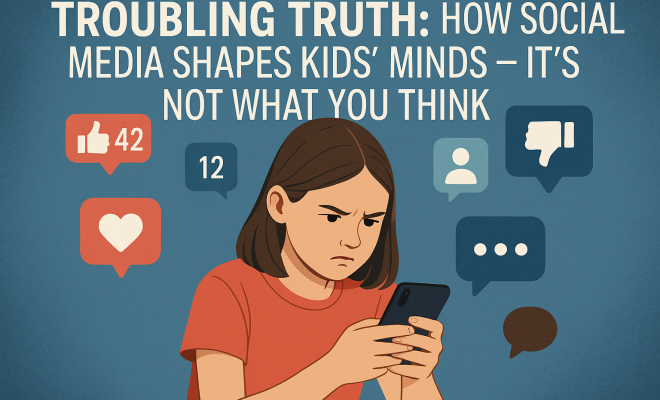
Troubling Truth: How Social Media Shapes Kids’ Minds – It’s Not What You Think
“`html
Alright, let’s talk about something that keeps so many of us up at night: our kids, their screens, and what it’s doing to their brains. For years, we’ve heard the drumbeat of warnings about screen time, the endless scrolling, and the seemingly obvious links to everything from impulse control issues to emotional meltdowns. The 2023 Surgeon General’s advisory wasn’t exactly a surprise, was it? It just solidified what many of us suspected: there’s a real danger lurking in those glowing rectangles when it comes to social media mental health children are experiencing.
But here’s where it gets interesting, and frankly, a little baffling. A brand-new study, one that everyone in the parenting and education world has been eagerly awaiting, just dropped. And guess what? It’s not a simple ‘social media is bad, kids should avoid it’ kind of report. Instead, it presents a much more nuanced, almost counterintuitive picture. It suggests that the impact of social media on our children’s mental well-being isn’t a one-size-fits-all problem. It hinges significantly on the *type* of content they’re consuming and, perhaps most crucially, on *our* involvement as parents. This has sparked a huge debate, leaving many of us scratching our heads and wondering how on earth we’re supposed to balance digital literacy with safeguarding our kids’ delicate developmental stages. It’s a complex, emotionally charged issue, and one that absolutely demands a closer look. So, let’s dive into some of the key takeaways and try to make sense of this.
1. The Nuance in the New Data: It’s Not All Doom and Gloom
For a long time, the narrative surrounding social media and children’s mental health has been overwhelmingly negative. We’ve been told, with good reason, that excessive screen time can contribute to anxiety, depression, poor sleep, and even self-harm ideation. And make no mistake, those risks are still very real and shouldn’t be dismissed. However, this latest research introduces a significant layer of complexity that challenges the simplistic ‘screens are evil’ viewpoint. It suggests that blanket statements about social media’s detrimental effects might be missing a crucial part of the story.
The study indicates that for some children, particularly those who use social media to connect with like-minded peers, explore niche interests, or find communities they might not have in their immediate physical environment, the platforms can actually offer benefits. Think about a teenager with a rare hobby finding a global online group of fellow enthusiasts, or an LGBTQ+ youth finding vital support and affirmation from peers who understand their experiences. These positive connections can foster a sense of belonging and reduce feelings of isolation, which are critical for healthy development. It doesn’t mean we should throw caution to the wind, but it does mean we need to look beyond just screen time metrics and consider the *quality* and *context* of that time.
2. Content is King (or Queen): The Type of Exposure Matters
This is arguably the most significant revelation from the new study: the nature of the content a child engages with on social media platforms plays a far more critical role than previously emphasized. It’s not just about how long they’re online, but *what* they’re doing and *seeing* while they’re there. Think of it like food – not all calories are created equal. Similarly, not all screen time is created equal.
Exposure to cyberbullying, unrealistic beauty standards, harmful challenges, or content promoting self-harm or eating disorders can be incredibly damaging. This is the ‘junk food’ of social media, and it can quickly erode a child’s self-esteem and mental well-being. On the flip side, content that is educational, inspiring, creative, or fosters positive social connections can be genuinely beneficial. This calls for a much more discerning approach from both parents and children themselves, encouraging critical thinking about what they consume and its potential impact on their mood and self-perception. It also puts the onus on platforms to do more to curate safe, age-appropriate content, a battle that’s far from won.
3. The Parental Involvement Imperative: Your Role is Crucial
If there’s one message that comes through loud and clear from this new research, it’s this: parental involvement isn’t just helpful; it’s absolutely essential. The study strongly suggests that children with engaged parents who monitor their online activities, discuss digital citizenship, and help them navigate difficult content tend to fare better mentally. This isn’t about helicopter parenting or spying on every single interaction, but rather about being present, informed, and proactive.
This involvement can take many forms: setting clear boundaries and expectations for social media use, co-viewing content, having open conversations about online experiences (both positive and negative), and teaching critical media literacy skills. When parents are actively involved, they can help children process what they see, challenge problematic narratives, and provide emotional support when online interactions become overwhelming. It’s about building a trusting relationship where children feel comfortable coming to you with their online struggles, rather than hiding them.
4. Understanding the Surgeon General’s Advisory: A Foundation, Not the Final Word
The 2023 Surgeon General’s advisory on social media and youth mental health was a critical turning point. It brought widespread attention to the potential harms, particularly emphasizing risks like impulse control issues, emotional dysregulation, and the addictive nature of some platforms. It served as a powerful call to action for parents, policymakers, and tech companies alike, urging a more cautious approach to children’s digital engagement. However, it’s important to view that advisory as a foundation, not the absolute last word on the subject. (See: CDC on youth media use.)
While the advisory highlighted legitimate concerns, the latest study refines our understanding by showing that the picture is more complex than a simple ‘good or bad’ dichotomy. It doesn’t negate the Surgeon General’s warnings but adds layers of detail, pushing us to consider *how* and *why* social media impacts children differently. This evolution in understanding is crucial because it moves us beyond broad generalizations towards more targeted and effective strategies for protecting our children’s social media mental health.
5. The Double-Edged Sword of Connection: Isolation vs. Community
Social media is inherently about connection, but for children and adolescents, this can be a real double-edged sword. On one hand, these platforms offer unprecedented opportunities to connect with friends, family, and peers, especially for those who might feel isolated in their offline lives. Children with niche interests, chronic illnesses, or those living in rural areas can find vital communities and support networks online that significantly enhance their sense of belonging and reduce loneliness. This is a powerful positive. For more context, see This Crucial Shift in Teen Social Media Use.
On the other hand, the curated, often idealized realities presented on social media can foster profound feelings of inadequacy and social comparison. Seeing endless streams of ‘perfect’ lives, ‘popular’ friendships, or ‘exciting’ adventures can make a child feel like they’re missing out, leading to anxiety, depression, and a sense of isolation even while being constantly ‘connected.’ The pressure to maintain an online persona, to be constantly available, and to measure one’s worth by likes and followers can be incredibly taxing on a developing psyche. Navigating this paradox is central to understanding social media mental health children grapple with daily.
6. Navigating Cyberbullying and Online Harassment: A Persistent Threat
One area where the negative impacts of social media remain unequivocally clear and deeply troubling is cyberbullying and online harassment. Unlike traditional bullying, cyberbullying can be relentless, occurring 24/7, reaching children even within the perceived safety of their own homes. It can involve public shaming, spreading rumors, exclusion, or even direct threats, often amplified by the permanence and wide reach of the internet.
The psychological toll of cyberbullying can be severe, leading to anxiety, depression, low self-esteem, academic problems, and, in tragic cases, self-harm or suicidal ideation. The new research, while highlighting nuances, doesn’t diminish this pervasive threat. It underscores the continued need for robust anti-bullying measures, educational programs for children on how to respond to and report harassment, and parental vigilance. Parents must create an environment where children feel safe reporting cyberbullying incidents without fear of having their devices taken away, which can sometimes deter them from seeking help.
7. The Illusion of Perfection: Social Comparison and Self-Esteem
One of the most insidious ways social media can erode a child’s mental health is through the constant exposure to idealized, often filtered and curated, versions of reality. Children and teens are particularly vulnerable to social comparison, constantly measuring themselves against their peers and the influencers they follow. When all they see are perfectly posed photos, seemingly effortless successes, and endless celebrations, it’s easy for them to conclude that their own lives are somehow lacking.
This ‘illusion of perfection’ can lead to significant drops in self-esteem, body image issues, and heightened anxiety. They might feel pressure to present a flawless online persona themselves, which is exhausting and inauthentic. Teaching children critical thinking skills to deconstruct what they see online – understanding that filters, editing, and strategic presentation are the norm – is crucial. Helping them appreciate their own unique strengths and realities, rather than chasing an unattainable digital ideal, is a vital part of protecting their social media mental health.
8. Sleep Disruption and Brain Development: The Biological Impact
Beyond the psychological effects, social media use, particularly late-night scrolling, has a tangible biological impact on developing brains, most notably through sleep disruption. The blue light emitted from screens can interfere with melatonin production, making it harder for children to fall asleep and achieve restful sleep. Add to that the constant mental stimulation of notifications, engaging content, and the fear of missing out (FOMO), and you have a recipe for chronic sleep deprivation.
Adequate sleep is absolutely fundamental for a child’s cognitive function, emotional regulation, and overall mental health. Chronic lack of sleep can exacerbate anxiety and depression, impair concentration in school, and lead to irritability and mood swings. This isn’t just about feeling tired; it’s about impacting the very architecture of a developing brain. Establishing strict ‘no screens in the bedroom’ rules, especially an hour or two before bedtime, isn’t just a suggestion; it’s a critical health measure for safeguarding our children’s well-being.
9. Digital Literacy and Critical Thinking: Equipping Kids for the Online World
Given the complexities unveiled by the latest research, simply banning social media isn’t a realistic or, in some cases, even beneficial approach. Instead, empowering children with robust digital literacy and critical thinking skills emerges as a powerful strategy. This means teaching them not just *how* to use platforms, but *how to think about* what they encounter online.
Digital literacy involves understanding privacy settings, recognizing phishing attempts, identifying misinformation and disinformation, and understanding the permanence of their digital footprint. Critical thinking, in this context, means questioning the authenticity of content, recognizing manipulative advertising, understanding algorithmic biases, and evaluating the emotional impact of what they consume. These aren’t skills children pick up by osmosis; they need to be explicitly taught and reinforced through ongoing conversations with parents and educators. It’s about giving them the tools to be discerning and resilient digital citizens, protecting their social media mental health from within. (See: New York Times on social media and kids.)
10. The Path Forward: Balanced Engagement and Ongoing Dialogue
So, where does this leave us as parents, educators, and concerned adults? The new study doesn’t offer a simple ‘yes’ or ‘no’ answer to the question of social media’s impact on children. Instead, it pushes us towards a more nuanced, active, and engaged approach. We can’t bury our heads in the sand; social media is an integral part of modern childhood, and ignoring it won’t make the challenges disappear.
The path forward involves a delicate balance: setting clear, age-appropriate boundaries, actively monitoring content, fostering open and honest conversations about online experiences, and consistently teaching digital literacy and critical thinking. It means acknowledging that for some children, social media can be a source of positive connection and learning, while for others, it can be a minefield of comparison and anxiety. It requires us to move beyond fear-based reactions and instead engage with the digital world proactively, armed with information and a commitment to protecting our children’s developing minds. This conversation isn’t over; in fact, it’s just getting more intricate, and our active participation is more vital than ever. For more context, see The Game-Changing WHO Childhood Obesity Guidelines.
11. The Role of Algorithmic Curation: Friend or Foe?
It’s impossible to talk about social media mental health in children without discussing the powerful, often invisible, hand of algorithms. These sophisticated systems are designed to keep users engaged, learning what content grabs attention and feeding more of it. While this can sometimes mean helpful information or connecting with relevant communities, it can also lead to problematic spirals.
For children, especially those already struggling with self-esteem or body image, algorithms can become a foe. If a child interacts with content related to dieting, for example, the algorithm might start showing them more and more similar content, potentially pushing them into echo chambers that reinforce unhealthy behaviors or unrealistic ideals. This isn’t always malicious; it’s simply how these systems are built to maximize engagement. Understanding this algorithmic influence is key for parents. It means teaching kids that their feed isn’t a neutral reflection of the world, but a personalized stream designed to hook them, and that they have agency to change what they see by consciously interacting with different types of content.
12. Policy and Platform Accountability: Beyond Parental Controls
While parental involvement and digital literacy are absolutely crucial, the responsibility for safeguarding children’s mental health on social media can’t fall solely on families. There’s a growing call for greater policy intervention and platform accountability. The current regulatory landscape often struggles to keep pace with rapid technological advancements, leaving gaps where children can be exploited or exposed to harmful content.
This includes advocating for stricter age verification processes, stronger content moderation policies that are actually enforced, and greater transparency from platforms about how their algorithms work and the data they collect. Some proposals even suggest redesigning features that are known to be addictive, like endless scroll or constant notifications, particularly for younger users. Lawmakers and public health advocates are pushing for changes that would shift the burden of protection more onto the tech companies themselves, rather than expecting parents to be constant digital watchdogs against systems designed to be maximally engaging.
13. Long-Term Developmental Impact: What We Still Don’t Know
Here’s the honest truth: despite the wealth of new research, we’re still in the early stages of understanding the full, long-term developmental impact of social media on children’s brains and psyches. Social media, in its current pervasive form, is a relatively new phenomenon. The children who grew up with Instagram, TikTok, and Snapchat from a young age are just now entering adulthood. This means longitudinal studies – research that tracks the same individuals over many years – are only just beginning to yield data.
We don’t fully know how constant digital comparison shapes identity formation over decades, or how altered social dynamics affect relationships in adulthood. There are questions about attention spans, creativity, empathy, and resilience that will only be answered as this generation matures. This uncertainty underscores the need for continued, robust research and a cautious, adaptive approach to social media use for children. It also highlights why ongoing dialogue and flexibility in parenting strategies are so vital – we’re learning as we go.
14. Expert Perspectives: A Multidisciplinary Approach
The conversation around social media and children’s mental health isn’t confined to a single field. It’s a complex issue drawing insights from developmental psychology, neuroscience, sociology, education, and even technology ethics. Psychologists like Dr. Jean Twenge have raised significant alarms about rising rates of anxiety and depression correlating with smartphone adoption, emphasizing the potential for displacement of in-person interactions and sleep.
Neuroscientists, on the other hand, are examining how constant digital stimulation affects developing brain regions responsible for impulse control, reward, and emotional regulation. Educators are grappling with how to integrate digital literacy into curricula, while sociologists analyze the shifts in peer dynamics and identity construction. This multidisciplinary approach is essential because it helps us piece together a comprehensive picture, acknowledging that there isn’t one simple answer but rather a confluence of factors at play when we talk about social media mental health children experience.
Frequently Asked Questions about Social Media & Children’s Mental Health
Q1: Is there a “safe” age for children to start using social media?
The consensus among many experts and professional organizations (like the American Academy of Pediatrics) is that children under 13 generally shouldn’t be on social media platforms. Most platforms themselves have a 13+ age requirement, though enforcement is often weak. The rationale is that younger children’s brains are still developing crucial executive functions, impulse control, and a strong sense of self, making them particularly vulnerable to the negative aspects of social media, such as cyberbullying, unrealistic comparisons, and manipulative algorithms. For teens 13 and older, a gradual introduction with strong parental guidance, clear boundaries, and ongoing dialogue is recommended.
Q2: How can I monitor my child’s social media without invading their privacy?
This is a tricky balance, but it’s important. Transparency is key. Instead of “spying,” have open conversations with your child from the start. Explain that monitoring isn’t about distrust, but about keeping them safe in a complex digital world, just like you’d ensure their safety offline. You can agree on shared access to accounts, follow them on platforms, or use parental control apps that offer insights into their activity without reading every private message. Regularly check their friend lists, the content they post, and who they interact with. The goal is to build trust so they come to you with problems, rather than hiding them.
Q3: My child seems addicted to social media. What should I do?
Signs of addiction can include extreme distress when separated from devices, prioritizing social media over real-life activities, significant mood changes after using platforms, or declining grades. If you suspect addiction, start by setting clear, firm boundaries around screen time and device access (e.g., no phones during meals, no devices in bedrooms overnight). Encourage alternative activities like sports, hobbies, or in-person social interaction. If the problem persists and significantly impacts their well-being, consider seeking professional help from a child psychologist or therapist specializing in digital addiction.
Q4: What are some practical steps to promote positive social media use?
First, model good digital habits yourself. Then, focus on education: teach digital literacy, critical thinking about online content, and empathy in online interactions. Encourage your child to use social media for positive connections – connecting with family, pursuing hobbies, or learning new skills. Emphasize creating content rather than just consuming it. Set time limits, establish screen-free zones and times, and regularly check in with them about their online experiences, both good and bad. Reinforce that their self-worth isn’t tied to likes or followers.
Q5: How do I talk to my child about cyberbullying?
Create an open, non-judgmental environment where your child feels safe to share. Start the conversation early, before they even encounter bullying, by asking general questions about what they’ve seen online. Teach them what cyberbullying looks like and how to respond: don’t retaliate, block the bully, save evidence (screenshots), and report it to you or the platform. Reassure them that you’re there to help and that their devices won’t be taken away if they report an incident. Remind them that cyberbullying is never their fault and they don’t have to face it alone.
“`
Trending Now
Frequently Asked Questions
How does social media affect children's mental health?
Social media can impact children's mental health in various ways. While excessive use is linked to anxiety and depression, recent studies suggest that the type of content consumed and parental involvement play crucial roles in shaping these effects. It's not a straightforward negative influence; the impact can vary significantly based on context.
What does the 2023 Surgeon General's advisory say about screen time?
The 2023 Surgeon General's advisory highlights the potential dangers of excessive screen time, particularly regarding social media's effects on children's mental health. It emphasizes that while risks like emotional distress and impulse control issues exist, the relationship between screen time and mental health is complex.
Is all social media harmful for kids?
Not all social media is harmful for kids. Recent research indicates that the effects of social media on children's mental health depend largely on the content they engage with and the level of parental guidance. A balanced approach can mitigate risks while allowing for positive interactions.
What should parents do about their children's social media use?
Parents should actively engage with their children's social media use by monitoring the content they consume and discussing online experiences. Encouraging digital literacy and open communication can help children navigate social media's complexities while minimizing potential mental health risks.
What are the key findings of the latest study on social media and kids?
The latest study on social media and children reveals that the impact on mental health is nuanced. It challenges the notion that all social media use is harmful, emphasizing that the type of content and parental involvement significantly influence outcomes, suggesting a more balanced approach is necessary.
Have you experienced this yourself? We'd love to hear your story in the comments.