Catlist
Categories
- Assessment
- Behavior Management
- Child Development
- Classroom Management
- Cognitive Development
- Critical Thinking/Creativity
- Curriculum & Instruction
- Digital & Mobile Technology
- Digital Leadership
- Diversity
- Early Childhood
- EdTech & Innovation
- Education Foundations
- Educational/Cognitive Psychology
- Elementary Education
- Equity
- Gamification
- Gifted & Talented Education
- Higher Education
- Instructional Technology
- Language and Communication Disorders
- Language Development
- Language Education
- Learning Disabilities
- Middle School Education
- Mild/Moderate Disabilities
- Multicultural/Multiethnic Education
- Multilingual Education
- New Teachers
- Online Learning & eLearning
- Parental Involvement
- Parenting
- Philosophical Foundations of Education
- Reading & Literacy
- School Finance
- School Law
- Severe Disabilities
- Social Foundations of Education
- Special Education
- Special Education Law
- Teachers
- Teaching & Learning Theories
- Teaching/Learning Methods & Strategies
- Tests and Measurements
- Writing PreK-12

A stage of development characterized by a child’s attempt to repeat an action that was done reflexively or by accident. They are considered primary because they involve the child’s own body and circular due to the fact that they are repeated.
Edupedia
- June 19, 2018

Piaget’s name for a child’s first attempts at forming an idea or notion. These preconcepts often signify that the child’s concept of the world is ruled by their perceptions.
- June 19, 2018

What a child can do with help or guidance until they actually develop those skills through internalization.
- June 19, 2018

The ability to apply sensory information (sight, sound, taste, touch, and smell) to past experiences.
- June 19, 2018

A way to commit objects and events to memory. In order to organize information, you must group stimuli into meaningful clusters which aid in the process of recollection. The specific strategies used to organize information will vary at different ages.
- June 19, 2018

The understanding that objects still exist even when they are not visually available. Object permanence typically develops around twelve months of age in neurotypical children.
- June 19, 2018

The relationship between the self, others, and an object. During infancy, the child will only perceive the object in terms of what they can do to it. As they age, objects begin to have greater importance in relation to other objects. Eventually, objects become a tool to measure spatial relationships
- June 19, 2018
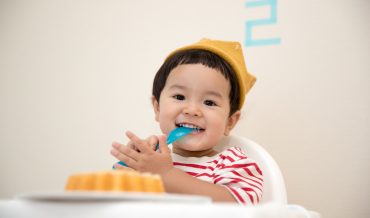
The observation of a child in a number of settings that are relatively familiar instead of in an unfamiliar or contrived setting. This might be done to observe how the child learns from experience, solves problems, and the level of activities that the child participates in on a regular basis.
- June 19, 2018

When a child talks constantly while playing or working. They seem to be practicing the relationship between action, language, and thought.
- June 19, 2018

The area of the brain that has a large capacity to store memories. Long-term memory varies significantly by age with increased capacity over time. This increased capacity to retain new information is thought to be the result of the abundance of material that is already stored and can be easily
- June 19, 2018