Catlist
Categories
- Assessment
- Behavior Management
- Child Development
- Classroom Management
- Cognitive Development
- Critical Thinking/Creativity
- Curriculum & Instruction
- Digital & Mobile Technology
- Digital Leadership
- Diversity
- Early Childhood
- EdTech & Innovation
- Education Foundations
- Educational/Cognitive Psychology
- Elementary Education
- Equity
- Gamification
- Gifted & Talented Education
- Higher Education
- Instructional Technology
- Language and Communication Disorders
- Language Development
- Language Education
- Learning Disabilities
- Middle School Education
- Mild/Moderate Disabilities
- Multicultural/Multiethnic Education
- Multilingual Education
- New Teachers
- Online Learning & eLearning
- Parental Involvement
- Parenting
- Philosophical Foundations of Education
- Reading & Literacy
- School Finance
- School Law
- Severe Disabilities
- Social Foundations of Education
- Special Education
- Special Education Law
- Teachers
- Teaching & Learning Theories
- Teaching/Learning Methods & Strategies
- Tests and Measurements
- Writing PreK-12

Typically involves preschool up to third grade and encompasses ages birth to eight. Day care, nursery schools, and Head Start programs serve the purpose of early intervention and preparation. Early intervention services are provided for pre-kindergarten children who have been discovered to have a disability or to be at risk
Edupedia
- June 10, 2018

Awkward a time as most people remember it, is, educationally, the time when kids start to flourish. The hope is that students leave elementary school with their academic feet firmly underneath them, and that middle school can be a time for them to hit the ground running – or skipping,
- June 10, 2018

Usually refers to grades one to six, but there are variations and configurations. Elementary school classes are typically self-contained classes with one teacher for all subjects. Students may be team-taught by two teachers, and some districts departmentalize their upper elementary grades. Fourth grade may seem more difficult than third grade
- June 10, 2018

Typically covers grades 9 to 12. High school courses carry Carnegie Units (CUs), and students are required to accumulate a prescribed number before they are allowed to graduate. A CU is a measure of the amount of time a student studies within a course. Most courses carry 1 CU. Some
- June 10, 2018
A model where the curriculum is divided into subject areas, and there is little flexibility for cross-curricular activity. Subjects are siloed. Emphasis is placed on acquisition, memorization, and knowledge of each specific content area. Within this curriculum structure, strong emphasis is placed on instruction, teacher-to-student explanation, and direct strategies. Direct
- June 10, 2018
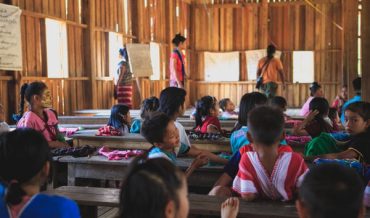
Is a nonauthoritative, participation-focused curriculum model. In this curriculum structure, students have opportunities and increased responsibility to identify their own learning needs: to find, choose, and incorporate resources, and to construct their own knowledge based on their needs and interests. The student-centered curriculum encourages students to find their passions and
- June 10, 2018

This classroom management/discipline approach centers around four types of punishment/reinforcement: Positive reinforcement: Giving extra credit for a question answered with much thought Positive punishment: A meeting with the principal Negative reinforcement: Removal from list of students who have to answer questions Negative punishment: Decrease in free time
- June 10, 2018

This classroom management approach is often used due to its easy implementation. Unlike the self-discipline, where students are responsible, the desist approach makes teachers the responsible party. This approach can be viewed as a power system, because teachers have the power, and they set the specific rules to give students
- June 10, 2018

Classroom management approach based on the fact that teachers have the power to ask and require specific actions from students, but this approach still has students’ best interests in mind. Canter found that teachers who use this discipline are not authoritarian, because they are forceful yet calm in enforcing the
- June 10, 2018

Developed by Barbara Coloroso, inner discipline takes a longer route in correcting student misbehavior. As the name indicates, the goal here is to help students develop inner discipline. When students have self-discipline, they will have control and responsibility for their actions. Whether or not it’s a choice with a positive
- June 10, 2018