Avoidant Attachment in Children: Signs and How to Help
“`html
Attachment theory plays a crucial role in understanding how children relate to their caregivers and, ultimately, the world around them. One of the lesser-known but significant forms of attachment is avoidant attachment in children. This attachment style often manifests in subtle but impactful behaviors that can hinder a child’s emotional growth and social connections. In this article, we’ll explore the signs of avoidant attachment, the underlying causes, and practical strategies to help both children and caregivers.
1. What is Avoidant Attachment?
Avoidant attachment is one of the four primary attachment styles identified by psychologists, which also include secure, anxious, and disorganized attachment. Children with avoidant attachment often appear independent and self-sufficient, yet this veneer hides a deep-seated fear of intimacy and emotional closeness. They may have learned to suppress their emotions as a coping mechanism, often due to inconsistent or unresponsive caregiving in their early years.
The origins of this attachment style can be traced back to the work of John Bowlby and Mary Ainsworth, who conducted extensive research on child attachment in the mid-20th century. They found that when caregivers frequently reject their child’s needs for comfort or emotional support, children learn to avoid seeking help, leading to difficulties in forming healthy relationships later in life.
2. Signs of Avoidant Attachment in Children
Identifying avoidant attachment in children can be challenging since many of their behaviors may appear as normal childhood independence. However, there are key indicators that can help you recognize this attachment style. Common signs include:
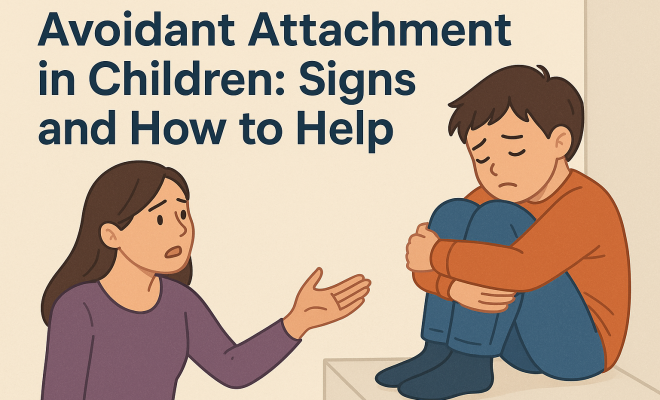
- Emotional Distance: Avoidant children often maintain a significant emotional distance from their caregivers and peers, showing little desire for closeness.
- Difficulty Expressing Feelings: These children may struggle to articulate their feelings or needs, often shutting down emotionally when confronted.
- Self-Reliance: They may pride themselves on being self-sufficient, often refusing help even in situations where it is warranted.
- Avoidance of Physical Affection: Many avoidant children shy away from hugs or other forms of physical comfort, which can be misinterpreted as preference for solitude.
- Withdrawal in Social Settings: In social situations, avoidant children might appear disengaged or aloof, preferring to observe rather than participate.
These behaviors are often rooted in the child’s early experiences and reflect a learned behavior pattern that can carry into adulthood if not addressed.
3. Understanding the Causes of Avoidant Attachment
The development of avoidant attachment in children often stems from the quality of their early relationships with caregivers. Children who repeatedly experience emotional unavailability from their parents or guardians may develop this attachment style. Factors that contribute to avoidant attachment include:
- Inconsistent Caregiving: When a caregiver is frequently emotionally unavailable, children learn to suppress their needs rather than seek support.
- High-Stress Environments: Exposure to high levels of stress or conflict in the home can lead children to feel unsafe and, consequently, withdraw emotionally.
- Parental Rejection: If caregivers often dismiss or belittle a child’s emotional expressions, children may learn to avoid showing their feelings altogether.
Recognizing these underlying causes is essential for parents and caregivers wanting to address the challenges posed by avoidant attachment. Understanding the root of these behaviors can inform the approach to intervention and support.
4. The Long-Term Impact of Avoidant Attachment
Avoidant attachment can have significant implications for a child’s psychological and emotional development. As these children grow into adolescence and adulthood, they may find it challenging to form meaningful relationships, often struggling with intimacy and trust. Research indicates that individuals with avoidant attachment are more likely to experience:
- Loneliness: Despite their self-sufficient facade, many avoidant individuals report feeling lonely and disconnected from others.
- Difficulty in Relationships: They may resist emotional closeness in romantic or platonic relationships, leading to a cycle of short-lived connections.
- High Levels of Anxiety: A fear of being vulnerable can lead to anxiety, especially in situations that require emotional exposure.
Recognizing the potential long-term effects of avoidant attachment can motivate caregivers to take proactive steps for support and intervention.
5. How to Support Children with Avoidant Attachment
Supporting a child with avoidant attachment requires a compassionate and understanding approach. Here are some strategies that caregivers can implement:
- Build Trust Over Time: Create a safe and predictable environment where the child feels secure. Consistency in responding to their needs can help them begin to trust caregivers.
- Encourage Emotional Expression: Provide opportunities for the child to express their feelings. Simple activities like drawing or storytelling can help them articulate their emotions in a safe space.
- Model Vulnerability: As a caregiver, it’s essential to model healthy emotional expression. Show the child that it’s okay to be vulnerable and that seeking help is a strength, not a weakness.
Moreover, patience is crucial. Change won’t happen overnight, but fostering an environment of openness can create a foundation for growth. (See: Attachment theory overview.)
6. Seeking Professional Help
In some cases, the challenges associated with avoidant attachment may be severe enough that professional intervention is warranted. Therapy can be a valuable resource for both the child and their caregivers. Here are some therapeutic approaches that can be effective:
- Play Therapy: This approach can help children express their emotions in a non-threatening manner through play, allowing them to process their feelings.
- Family Therapy: Engaging the entire family in therapy can facilitate better communication and understanding among family members.
- Cognitive Behavioral Therapy (CBT): CBT can help children and caregivers identify and change negative thought patterns associated with attachment issues.
Seeking professional help can empower families to break the cycle of avoidant attachment and create healthier relationships.
7. The Role of Schools and Educators
Schools and educators play a pivotal role in recognizing and addressing avoidant attachment behaviors in children. An understanding of attachment styles can inform how teachers interact with students, helping them create a supportive learning environment. Strategies include:
- Creating Safe Spaces: Establishing a classroom atmosphere that fosters trust and emotional safety can encourage avoidant children to engage more openly.
- Encouraging Group Work: Collaborative activities can help children learn to trust peers and develop social skills in a supportive context.
- Open Communication: Teachers should promote open lines of communication, encouraging children to express their feelings and thoughts without fear of judgment.
By equipping educators with the knowledge and tools to recognize avoidant attachment, schools can play a significant role in supporting children’s emotional development.
8. Fostering Resilience in Avoidant Children
Resilience doesn’t come naturally to children with avoidant attachment, but it can be cultivated through intentional strategies. Here’s how caregivers and educators can foster resilience:
- Encouraging Problem-Solving: Allow children to face challenges and guide them in finding solutions rather than providing immediate answers.
- Celebrating Small Wins: Acknowledging and celebrating even the smallest accomplishments can boost a child’s confidence and sense of self-worth.
- Teaching Coping Skills: Introduce mindfulness techniques, such as deep breathing or visualization, which can help children manage anxiety and build emotional awareness.
With the right support and strategies, children with avoidant attachment can learn to navigate their feelings and relationships more effectively, fostering long-term emotional health.
9. Common Misconceptions about Avoidant Attachment
Despite growing awareness around attachment styles, several misconceptions about avoidant attachment in children persist. Understanding these misconceptions can help caregivers and educators provide better support:
- Myth: Avoidant Children Don’t Need Emotional Support: It’s a common belief that because these children appear self-sufficient, they do not require emotional support. In reality, they often need it more than they can express.
- Myth: Avoidant Attachment is a Permanent Condition: While avoidant attachment can shape a child’s behavior, it is not fixed. With proper support and intervention, children can develop healthier attachment styles.
- Myth: Avoidant Children Prefer to be Alone: Avoidant children may seem to prefer solitude, but this is often a defense mechanism. They may long for connection but feel unworthy or fearful of it.
Correcting these misconceptions can empower adults to approach avoidant children with more empathy and understanding, which is crucial for fostering healthy attachment.
10. Expert Perspectives on Avoidant Attachment
Experts in child psychology and development emphasize the importance of addressing avoidant attachment early on. Dr. Lisa Firestone, a clinical psychologist, explains, “Children with avoidant attachment often carry a deep-seated belief that their needs won’t be met, leading them to suppress their emotions. It’s essential to help them understand that their feelings are valid and worthy of expression.”
Dr. Dan Siegel, a renowned psychiatrist, points out the role of emotional attunement in fostering secure attachments. “When caregivers are emotionally attuned to their children’s needs, they promote healthy emotional regulation. This attunement helps children feel safe to express themselves.”
Insights from these experts highlight the necessity of creating environments that encourage emotional expression and connection, which can be transformative for children with avoidant attachment.
11. Strategies for Parents and Caregivers
Beyond general strategies, parents and caregivers can use specific techniques tailored to address avoidant attachment behaviors. Here’s a deeper dive into effective strategies:
- Active Listening: This involves giving full attention to the child while they speak, validating their feelings, and responding appropriately. This helps children feel heard and understood.
- Routine Establishment: Creating a daily routine can provide a sense of stability and predictability, which is comforting for children with avoidant attachment.
- Gradual Exposure to Emotions: Help children gradually face their feelings. Start with less intense emotions or situations and work up to more challenging emotional experiences.
Implementing these strategies consistently can help cultivate a safer emotional space for children to express themselves and foster a healthier attachment style. (See: Research on attachment styles.)
12. FAQs about Avoidant Attachment in Children
What age does avoidant attachment develop?
Avoidant attachment can develop in early childhood, often evident by the age of one or two. It typically stems from the interactions a child has with their primary caregivers during their formative years.
Can avoidant attachment be changed?
Yes, avoidant attachment can change with the right support. Through therapeutic interventions and positive caregiver relationships, children can learn to express their feelings and develop healthier attachments.
How does avoidant attachment affect adult relationships?
Adults with avoidant attachment may struggle with emotional intimacy and have challenges in trusting partners. They may also have a tendency to distance themselves from others during times of emotional distress.
Are there tools for assessing avoidant attachment in children?
Yes, professionals may use various assessment tools, including interviews, questionnaires, and observational methods, to evaluate a child’s attachment style and understand their relationship patterns.
What is the role of parents in changing avoidant attachment patterns?
Parents play a crucial role in reshaping attachment patterns by providing consistent emotional support, fostering open communication, and creating a safe environment for emotional expression.
13. Final Thoughts on Avoidant Attachment in Children
Avoidant attachment in children can present unique challenges for caregivers and educators alike. By understanding the signs and causes, one can take proactive steps to foster healthier attachment patterns. With consistent support, patience, and a commitment to emotional growth, it’s possible for children to overcome the limitations of avoidant attachment and build stronger, more fulfilling relationships. The journey toward healing is indeed long, but the rewards — for both the child and those who care for them — are immeasurable.
14. Additional Insights into Avoidant Attachment
Avoidant attachment not only shapes how children interact with their caregivers but can also influence their academic performance and social interactions. Children with this attachment style may shy away from group projects or collaborative learning environments due to their discomfort with interpersonal relationships. This avoidance can lead to missed opportunities for social learning, which is crucial during formative years.
Research indicates that children with avoidant attachment may also exhibit lower academic achievement compared to their peers. A study published in the Journal of Educational Psychology found that students with secure attachments tended to perform better academically, likely due to their ability to seek help and collaborate effectively with others. This highlights the importance of addressing attachment issues early on to promote academic success.
15. Case Studies: Real-Life Examples
Understanding avoidant attachment can be enhanced by looking at real-life scenarios. Take the case of a child named Emily, who at age six, consistently avoided eye contact with her teachers and classmates. When asked to participate in group activities, she would retreat to a corner, seemingly engrossed in her own world. Emily’s avoidant behavior was traced back to her experiences at home, where her parents often dismissed her emotional expressions, leading her to feel unworthy of attention.
Through targeted interventions, such as play therapy and increased parental involvement, Emily began to flourish. Over several months, she started to engage more with her peers and even expressed her feelings through art. This transformation underscores the importance of addressing avoidant attachment early to foster emotional and social development. (See: CDC on child attachment.)
16. Statistics on Attachment Styles
Data on attachment styles reveals some startling trends. According to a survey conducted by the American Psychological Association, approximately 25% of children exhibit avoidant attachment behaviors. This statistic underscores the prevalence of avoidant attachment and emphasizes the need for awareness and early intervention strategies.
Moreover, studies have shown that children with avoidant attachment are at a higher risk for developing psychological issues later in life. Research published in the Child Development journal indicates that these children are three times more likely to experience anxiety disorders in adolescence compared to their securely attached peers. This highlights the critical need for early recognition and supportive measures.
17. How to Recognize Avoidant Attachment in Various Age Groups
Recognizing avoidant attachment can vary depending on the child’s age. In infants, signs might include lack of distress when a caregiver leaves the room or little engagement when the caregiver returns. As children grow into toddlers and preschoolers, you may observe them playing alone or avoiding eye contact with caregivers and peers.
In school-aged children, further indicators can manifest as reluctance to participate in group settings or a tendency to keep to themselves during playtime. By adolescence, these behaviors may evolve into a fear of intimacy, difficulty forming romantic relationships, and a general avoidance of emotional discussions. Understanding these age-specific signs can help caregivers tailor their approach to supporting children with avoidant attachment.
18. Long-Term Strategies for Change
Changing avoidant attachment patterns requires a long-term commitment to emotional growth. One effective strategy is the implementation of regular family meetings where feelings and experiences can be openly shared. This fosters a culture of communication and trust within the family unit.
Additionally, incorporating activities like family game nights or collaborative projects can reinforce teamwork and connection among family members. These shared experiences help children with avoidant attachment feel valued and understood, making them more likely to open up over time.
Support groups for parents can also be beneficial, providing a space for sharing experiences and strategies that have worked. This community backing can bolster parents’ efforts to create secure environments for their children.
19. Conclusion: A Path Forward
Addressing avoidant attachment in children is not just about understanding the symptoms but actively working towards solutions. The journey might be challenging, filled with setbacks and breakthroughs alike. However, the potential for nurturing secure, healthy relationships is worth the effort. With informed strategies, patience, and love, children can learn to navigate their emotional worlds, ultimately leading to richer, more fulfilling lives.
“`
Trending Now
Frequently Asked Questions
What are the signs of avoidant attachment in children?
Signs of avoidant attachment in children include emotional distance from caregivers, difficulty expressing feelings, a tendency to appear overly independent, and avoidance of physical closeness. These children may also struggle to seek help or comfort, often masking their emotional needs due to past experiences of unresponsive caregiving.
How does avoidant attachment develop in children?
Avoidant attachment develops when caregivers are consistently unresponsive or reject a child's needs for comfort and emotional support. As a result, children learn to suppress their emotions and avoid seeking help, leading to challenges in forming healthy relationships later in life.
What is avoidant attachment in children?
Avoidant attachment is a style where children appear independent and self-sufficient but actually fear intimacy and emotional closeness. This attachment style results from inconsistent caregiving, causing children to suppress their emotional needs as a coping mechanism.
How can caregivers help children with avoidant attachment?
Caregivers can support children with avoidant attachment by fostering a safe emotional environment, encouraging open communication, and being consistently responsive to their needs. Building trust and gradually promoting emotional closeness can help these children develop healthier attachment patterns.
What are the effects of avoidant attachment on children's relationships?
Children with avoidant attachment often struggle with forming healthy relationships due to their emotional distance and fear of intimacy. They may find it difficult to express their feelings, leading to challenges in social interactions and emotional connections throughout their lives.
Have you experienced this yourself? We’d love to hear your story in the comments.