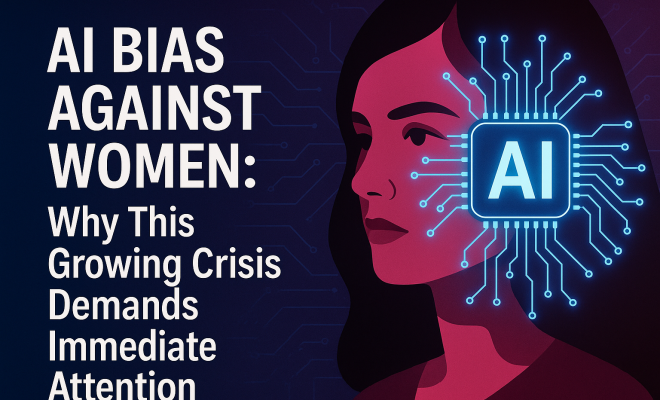
AI Bias Against Women: A Growing Crisis Demanding Action
“`html
The rapid advancement of artificial intelligence (AI) promises transformative benefits across various sectors, from healthcare to education. However, a disturbing pattern has emerged: AI is getting women wrong, and the costs of this bias are escalating alarmingly. UN Women has raised an urgent call for the integration of gender equality and the rights of women and girls at every stage of the AI lifecycle—from its development to deployment and governance. In a world increasingly shaped by AI, the implications of its biases against women cannot be overstated.
The Alarming Rise of AI Bias Against Women
As generative AI systems become more ubiquitous, they are often found to misrepresent women, perpetuating harmful stereotypes. This issue is now spiking in Google Trends, leading to widespread social media sharing and discussions among activists, policymakers, and the general public. But what exactly does AI bias against women look like, and why is it becoming a critical concern?
AI systems learn from the data they are trained on. If that data contains biases—conscious or unconscious—it can lead to skewed algorithms that misrepresent or exclude women. For example, studies have shown that voice recognition systems may perform poorly for women, while facial recognition technologies often misidentify women of color. These inaccuracies are not merely technical oversights; they can lead to real-world consequences, impacting job opportunities, access to services, and even safety.
The Unstereotype Alliance: A Step Toward Change
In June 2026, the Unstereotype Alliance launched a playbook designed to help marketers identify and eradicate biases before AI applications go live. This initiative serves as a critical tool in the fight against AI bias against women, ensuring that generative AI does not exacerbate existing stereotypes. As marketers and developers become more aware of these issues, the hope is that they will take proactive steps to foster gender equality in their AI solutions.
The playbook outlines best practices for evaluating AI systems, encouraging a more inclusive approach that takes into account the diverse experiences and perspectives of women. This framework aims to challenge and change the narrative around gender representation in AI, ultimately fostering a culture that values diversity and equity.
Understanding the Costs of AI Bias
The costs associated with AI bias against women extend beyond mere representation. They can have profound economic implications, affecting women’s participation in the workforce and limiting their access to opportunities. When AI systems perpetuate stereotypes, they can hinder advancements in gender equality, leading to an overall decline in societal progress.
Studies suggest that AI systems that misinterpret women’s roles can reinforce traditional gender norms, leading to a cyclical impact on both social and economic realms. As these biases persist, they may stifle innovations that could benefit women, ultimately reducing their visibility and contributions in tech-driven sectors.
The Role of Activists and Policymakers
This growing concern around AI bias against women has sparked intense attention from activists and policymakers alike. Many are now actively searching for solutions to counteract the troubling findings indicating that advanced technologies reinforce gender inequality. As the conversation around gender bias in AI gains traction, it’s essential to understand the roles that different stakeholders play in addressing this crisis.
- Activists are mobilizing the public and raising awareness about the implications of biased AI systems. They are advocating for greater transparency and accountability from tech companies.
- Policymakers are exploring regulatory frameworks that ensure ethical guidelines are in place for AI development and deployment. This includes initiatives that mandate gender audits of AI systems.
- Educators are working to equip the next generation of tech developers with the knowledge of biases and the importance of inclusivity in their work.
As these efforts converge, there is hope that a robust ecosystem will emerge to address AI bias against women effectively.
Real-World Examples of AI Bias Against Women
To fully grasp the implications of AI bias, it’s vital to look at concrete examples that illustrate how these biases manifest in real-world scenarios. From hiring algorithms that favor male candidates to social media platforms that amplify negative stereotypes about women, the repercussions are far-reaching.
One prominent case involved a major tech company that employed an AI system to screen job applications. The algorithm, trained predominantly on male resumes, learned to favor male candidates, leading to a significant underrepresentation of women in the hiring pool. This not only limited opportunities for talented women but also perpetuated the cycle of gender inequality in the tech industry.
Another example is the prevalence of biased chatbots. Some chatbots have been found to respond differently based on the gender of the user, reinforcing harmful stereotypes about women’s interests and capabilities. Such instances highlight the urgent need for developers to scrutinize their AI models for biases and implement corrective measures. (See: New York Times on AI bias.)
The Emotional Toll of AI Bias Against Women
The emotional impact of AI bias cannot be ignored. Women who encounter discriminatory practices exacerbated by biased algorithms often experience feelings of frustration, inadequacy, and disillusionment. The growing awareness of these biases has led to emotional responses from those affected, further fueling the demand for change.
Many women report feeling sidelined in a tech-driven world that should be inclusive and representative of diverse experiences. For instance, public outcry over biased facial recognition technologies has amplified discussions around privacy, safety, and representation, all of which contribute to a broader emotional landscape.
As the discourse evolves, it’s crucial that those developing AI technologies remain empathetic to the potential emotional ramifications their systems can have on women and other marginalized groups.
Strategies to Combat AI Bias Against Women
Addressing the issue of AI bias against women requires a multi-faceted approach, one that involves stakeholders at all levels of development and deployment. Here are several strategies that can help mitigate bias in AI systems:
- Inclusive Data Collection: Ensuring that data used to train AI systems includes diverse perspectives and experiences can help reduce bias. This means collecting data from women across various demographics to create a more comprehensive dataset.
- Bias Audits: Regular audits of AI systems for bias should become standard practice. These audits can identify potential areas of discrimination before systems are deployed.
- Training and Awareness: Developers and marketers should receive training on gender bias and its implications. This awareness can lead to more conscious design choices and better testing protocols.
- Stakeholder Collaboration: Collaboration between tech companies, advocacy groups, and researchers is vital. These partnerships can drive innovation while ensuring that bias is systematically addressed.
By implementing these strategies, the tech industry can work towards creating AI systems that are more equitable and fair.
The Future of AI and Gender Equality
The future of AI holds immense potential, but it is imperative that we strive towards systems that prioritize gender equality. The growing awareness of AI bias against women has created a fertile ground for change. With the right initiatives and policies in place, it’s possible to create a landscape where AI technology serves as a tool for empowerment rather than discrimination.
As we continue to develop an appetite for innovative solutions, let’s ensure that gender equality remains at the forefront of AI discussions. The ongoing dialogue among activists, educators, and tech developers is indicative of a collective effort to shape a future where technology represents all people fairly.
The Call to Action
In light of the pervasive AI bias against women, the call to action is clear: we must advocate for gender-sensitive approaches to AI development and deployment. From policymakers to tech developers, everyone has a role to play in addressing this urgent issue. The conversation must continue to expand, inviting more voices and perspectives to the table.
As consumers, we can also influence change by supporting companies that prioritize ethical practices in their AI systems. By demanding greater accountability and transparency, we can help steer the industry towards a more equitable future.
The rise of AI should not come at the expense of gender equality. It’s time to act decisively and ensure that technology reflects the diversity of the world it serves.
Statistics on AI Bias Against Women
To fully understand the scope of AI bias against women, it’s important to consider the statistics that underscore this troubling trend. Research from various organizations has revealed some striking data:
- A study by MIT Media Lab found that facial recognition systems had an error rate of 34.7% for dark-skinned women, compared to just 0.8% for light-skinned men.
- The Gender Shades project discovered that many commercial AI systems misidentified the gender of Black women up to 35% of the time due to biased training sets.
- According to a report by McKinsey & Company, women accounted for only 26% of the AI workforce in 2020, underscoring the gender disparity in the tech industry that contributes to biased AI development.
- Research from the AI Now Institute reported that women are often portrayed in stereotypical roles across various AI-generated content, reinforcing societal biases rather than challenging them.
Expert Perspectives on AI Bias Against Women
Insights from experts in the field of AI and gender studies offer valuable perspectives on the implications of bias against women in AI. Dr. Kate Crawford, a leading researcher at Microsoft Research, emphasizes that AI systems often reflect the hierarchies and inequalities of the data they are trained on. She states, “If we don’t actively work to dismantle these biases in the datasets, we’re effectively embedding them into the very fabric of our technology.”
Furthermore, Dr. Ruha Benjamin, a sociologist and author of “Race After Technology,” points out that technology should not merely serve existing power structures. “We must demand that our technologies serve as tools for equity, rather than perpetuating the biases that have long marginalized women and other disadvantaged groups,” she notes. (See: Scientific research on AI bias.)
These expert voices highlight the urgency of addressing AI bias and advocate for a comprehensive approach that includes not only technical solutions but also societal change.
Comparative Analysis: Gender Bias in AI vs. Other Biases
While AI bias against women is a pressing concern, it exists within a broader context of biases affecting various demographic groups. Here’s a comparative analysis of how gender bias in AI stands against other forms of bias:
- Racial Bias: Both gender and racial biases have significant implications in AI. For instance, facial recognition technologies have been shown to misidentify individuals from minority racial backgrounds at higher rates than those from majority backgrounds. The intersection of gender and racial biases can exacerbate the impacts, particularly for women of color.
- Ageism: Age bias in AI often manifests in hiring algorithms that favor younger candidates and overlook the skills and experiences of older individuals. This raises concerns similar to those surrounding gender bias, as it restricts opportunities for a significant segment of the workforce.
- Disability Bias: AI systems often lack accessibility features for individuals with disabilities, resulting in exclusion from technologies designed to enhance life quality. Similar to gender bias, this form of bias can significantly limit the autonomy and opportunities for affected individuals.
Understanding these parallels can help in formulating a holistic approach to combatting bias in AI, emphasizing the importance of intersectionality.
FAQs about AI Bias Against Women
What is AI bias against women?
AI bias against women refers to the systematic discrimination against women in artificial intelligence systems, often resulting in their misrepresentation or exclusion in various applications, from hiring algorithms to facial recognition technologies.
How does AI bias affect women’s opportunities?
AI bias can limit women’s access to job opportunities, unfairly represent them in media, and even impact their safety in public spaces due to misidentification or exclusion from services.
What measures are being taken to combat AI bias?
Various initiatives, including the Unstereotype Alliance and advocacy from NGOs, are focusing on raising awareness, implementing bias audits, and promoting inclusive data collection practices to combat AI bias against women.
Can AI bias be eliminated completely?
While complete elimination of bias may be challenging, ongoing efforts can significantly reduce its prevalence. This requires continuous monitoring, inclusive practices, and ethical guidelines for AI development.
How can individuals contribute to reducing AI bias?
Individuals can advocate for transparency and accountability in AI companies, support organizations working toward gender equality in tech, and educate themselves and others about the implications of AI bias.
Are there specific industries where AI bias against women is more prominent?
Yes, industries such as technology, healthcare, and finance often exhibit pronounced AI bias against women, particularly due to the male-dominated environment in tech development and biases in historical data.
What is the role of education in tackling AI bias?
Education plays a crucial role by equipping future tech developers and decision-makers with knowledge about biases, inclusivity, and ethical responsibility, fostering a generation that prioritizes equity in technology.
New Developments in AI Bias Research
As awareness of AI bias against women grows, academic institutions and research organizations are ramping up their efforts to study and address this phenomenon. Research initiatives are exploring the roots of bias in AI systems and the impact on various sectors. For instance, a recent study from Stanford University highlighted that AI algorithms that are not regularly updated can become increasingly out of touch with societal norms, exacerbating bias over time. This finding suggests that constant vigilance and recalibration of AI systems are necessary to maintain fairness.
Furthermore, interdisciplinary research teams are emerging, combining insights from sociology, computer science, gender studies, and ethics to tackle AI bias holistically. This collaborative approach fosters innovative solutions and encourages the development of AI technologies that reflect a broader range of human experiences.
The Role of Corporate Responsibility in AI
Corporations play a significant role in addressing AI bias against women. As developers of AI technologies, they hold the power to influence how these systems are created and deployed. Companies are increasingly recognizing the importance of diversity in their teams—research indicates that diverse teams are more likely to produce unbiased AI systems. For example, tech giants are implementing policies to ensure that hiring practices are fair and inclusive, allowing women and underrepresented groups to contribute to AI development actively.
Additionally, corporate social responsibility (CSR) initiatives focused on gender equality are gaining traction. Companies are investing in programs that provide training and mentorship for women in tech, which can help bridge the gender gap in AI development. By fostering an inclusive work environment and supporting initiatives that promote gender equity, corporations can play a pivotal role in combatting AI bias.
Community Engagement and Public Awareness
Raising public awareness about AI bias against women is essential for driving change. Grassroots campaigns and community engagement efforts are crucial in educating the public about the implications of biased AI systems. Local organizations and advocacy groups are organizing workshops, webinars, and public forums to discuss the impact of AI on women’s lives and the importance of equitable technology.
Social media campaigns are also effective in amplifying voices and experiences of those affected by AI bias. Using hashtags like #AIBiasAgainstWomen, advocates can create visibility around the issue and encourage public discourse. Additionally, partnerships with media outlets can help disseminate information, fostering a more informed public that can demand accountability from tech companies.
Future Directions for Research and Development
Looking ahead, research on AI bias against women should prioritize not only identifying biases but also developing robust methodologies for mitigating them. Future studies could explore the effectiveness of various interventions, such as algorithmic transparency and fairness tools, to ensure that AI systems operate equitably.
Moreover, researchers should investigate the long-term societal impacts of AI bias on women, examining how biased systems influence perceptions, opportunities, and behaviors. Understanding these effects can inform policy recommendations and lead to enhanced regulations that protect against discrimination in AI.
Ultimately, fostering collaboration between academia, industry, and advocacy groups will be vital for advancing the research agenda and ensuring that all voices are heard in the fight against AI bias.
“`
Trending Now
- the complete explanation
- “The Three Core Considerations of DAP: Age, Individual, and Cultural Appropriateness”
- this guide on “why neuroscientists say learning styles theory lacks scientific evidence”
- this guide on “how to teach to different learning preferences without limiting student growth”
- “How Childhood Attachment Patterns Affect Adult Relationships and Mental Health”
Frequently Asked Questions
What is AI bias against women?
AI bias against women refers to the systemic misrepresentation and discrimination that occurs in artificial intelligence systems, often due to biased training data. This can lead to skewed algorithms that perpetuate harmful stereotypes and inaccuracies, impacting women's opportunities and safety in various sectors.
How does AI bias affect women in the workplace?
AI bias can negatively impact women in the workplace by leading to skewed hiring algorithms that overlook female candidates, misrepresenting women's skills, and perpetuating stereotypes. This can result in reduced job opportunities and hinder women's career advancement.
What are the consequences of AI bias against women?
The consequences of AI bias against women include job discrimination, limited access to services, and safety risks. These biases can affect everyday decisions, leading to real-world implications that exacerbate existing inequalities.
What initiatives are being taken to combat AI bias against women?
Initiatives like the Unstereotype Alliance have launched resources to help marketers and developers identify and eliminate biases in AI applications. These efforts aim to ensure that generative AI promotes gender equality rather than reinforcing stereotypes.
Why is it important to address AI bias against women?
Addressing AI bias against women is crucial to ensure fair representation and equality in a technology-driven world. As AI increasingly shapes various sectors, it is vital to prevent the perpetuation of stereotypes and discrimination that can harm women's rights and opportunities.
What did we miss? Let us know in the comments and join the conversation.