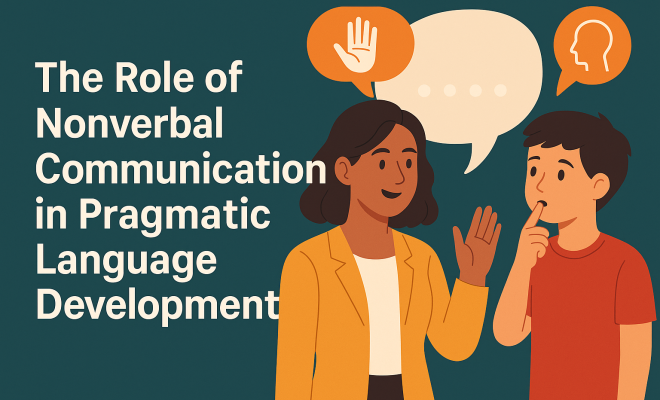
The Role of Nonverbal Communication in Pragmatic Language Development
“`html
Introduction
In the realm of education, a fascinating yet often overlooked aspect is the role of nonverbal communication in education. This form of communication encompasses a wide array of signals, including body language, facial expressions, gestures, and even eye contact. While verbal communication tends to hog the spotlight in language development discussions, nonverbal cues are critical for building pragmatic language skills. Pragmatic language refers to the social language skills we use in everyday interactions, and mastering it can significantly affect a student’s social and academic success.
The Basics of Nonverbal Communication
Nonverbal communication includes all forms of communication that do not involve spoken or written words. This broad category covers body language, facial expressions, gestures, posture, tone of voice, and even space between individuals during an interaction. In educational settings, these nonverbal cues can significantly influence how messages are conveyed and understood.
For example, a teacher’s enthusiastic gestures can enhance student engagement, while closed body language may create an atmosphere of discomfort. Children, particularly those with language delays or disorders, heavily rely on nonverbal cues to interpret social cues and navigate their interactions. Research suggests that around 55% of communication is nonverbal, highlighting its critical role in conveying intent and emotion.
The Importance of Pragmatic Language Skills
Pragmatic language skills are essential for effective communication. These skills include the ability to take turns in conversation, understand the context of discussions, interpret idioms, and adjust language based on the listener’s needs. For children, especially those on the autism spectrum or with speech delays, developing these skills can be particularly challenging. According to the American Speech-Language-Hearing Association (ASHA), pragmatic language skills are often the most affected in children with language disorders.
Research shows that children who master pragmatic language skills tend to form better relationships with peers, perform better academically, and navigate social situations more effectively. This underscores the need for educators and parents to focus on both verbal and nonverbal communication strategies to support students’ overall language development.
How Nonverbal Communication Influences Pragmatic Language Development
Nonverbal communication serves as a foundation for pragmatic language development in several ways. First, it helps children learn how to interpret emotions and intentions. For instance, a child may notice a classmate’s furrowed brow and understand that something is wrong, prompting them to offer help. This understanding goes beyond words, emphasizing the need for nonverbal signals in social interactions.
Secondly, nonverbal cues often provide context for verbal language. Children learn that a friendly tone and an open posture signal approval or encouragement, while crossed arms and a frown may indicate disapproval or discomfort. By observing these signals, children develop a deeper understanding of social norms and expectations, crucial for effective interaction.
Practical Strategies for Educators
Educators play a significant role in fostering nonverbal communication skills in students. Here are some practical strategies for integrating these skills into the classroom:
- Model Appropriate Nonverbal Communication: Teachers should consciously demonstrate positive nonverbal cues. Smiling, maintaining eye contact, and using open body language can create a welcoming environment.
- Encourage Peer Interaction: Group activities and collaborative projects provide opportunities for students to observe and practice nonverbal communication. Teachers can facilitate discussions about the nonverbal cues students notice in their peers.
- Use Role-Playing: Role-playing scenarios can help students practice responding to various nonverbal signals. For instance, they can act out situations that require them to interpret a classmate’s body language.
- Incorporate Technology: Video recordings can serve as a valuable tool. Students can watch themselves interacting and analyze their own nonverbal cues alongside their peers.
The Role of Nonverbal Communication in Diverse Classrooms
Diversity in the classroom can present unique challenges and opportunities for nonverbal communication. Students from different cultural backgrounds may have varying interpretations of nonverbal cues. For example, while direct eye contact is considered a sign of confidence in some cultures, it might be perceived as disrespectful in others. (See: importance of communication skills.)
Teachers can leverage this diversity by fostering an environment of open dialogue about cultural differences in communication styles. Understanding these nuances can enhance mutual respect and improve students’ ability to navigate social interactions across cultures. It also encourages empathy and broader perspectives that are essential in our increasingly globalized society.
Current Research and Trends
Recent studies underscore the significance of nonverbal communication in the education sector. A 2021 study published in the Journal of Educational Psychology found that children who received explicit instruction in nonverbal cues exhibited improved pragmatic language skills. This research indicates that teaching nonverbal communication is not merely an ancillary part of language education but a crucial component.
Moreover, educators are increasingly adopting strategies that include social-emotional learning (SEL) to incorporate nonverbal communication into their teaching methods. SEL emphasizes the importance of understanding one’s emotions and the emotions of others, which directly ties into interpreting nonverbal cues. Schools that implement SEL programs report improved classroom dynamics and student outcomes.
Challenges in Teaching Nonverbal Communication
Despite its importance, teaching nonverbal communication presents challenges. One of the most significant hurdles is that nonverbal cues can be subjective. A gesture that is friendly in one context might be deemed inappropriate in another. Teachers must navigate these complexities while providing clear frameworks for students.
Additionally, students with disabilities may struggle more with interpreting and using nonverbal cues. Tailoring lessons to accommodate these students is essential; educators should consider employing various teaching methods, such as visual aids or social stories, to illustrate nonverbal communication concepts clearly.
Real-World Applications of Nonverbal Communication
The ability to interpret and use nonverbal communication extends beyond the classroom into everyday life. Students equipped with these skills are better prepared to handle social situations, whether it’s making friends, participating in group projects, or even navigating job interviews later in life.
For instance, consider a high school student preparing for a college interview. Understanding how to read the interviewer’s body language could provide insights into their responses, informing the student when to elaborate or pivot to a different topic. These skills can make a substantial difference in a competitive environment.
Benefits of Nonverbal Communication in Education
Understanding nonverbal communication in education can yield numerous benefits, not only for students but also for teachers and the overall classroom environment. Here are a few key benefits:
- Enhanced Student Engagement: Nonverbal cues like enthusiasm and energy from a teacher can significantly boost student engagement. When teachers employ expressive gestures and facial expressions, it captures attention and fosters a more interactive classroom atmosphere.
- Improved Classroom Management: Nonverbal communication can assist in managing classroom behavior. Simple gestures or eye contact can effectively signal to students to pay attention or refocus without interrupting the flow of a lesson.
- Stronger Teacher-Student Relationships: When teachers are attuned to their students’ nonverbal cues, they can respond more effectively to their needs, leading to stronger rapport and a more supportive learning environment.
- Development of Empathy: Understanding nonverbal signals helps students develop empathy. By recognizing emotions in others through body language or facial expressions, they learn to respond appropriately, which is crucial for building social skills.
Case Studies: Successful Integration of Nonverbal Communication
Several schools have successfully integrated nonverbal communication strategies into their educational practices. Here are two notable case studies:
Case Study 1: The Impact of Nonverbal Communication Training
At Oakwood High School, teachers participated in a professional development program focused on nonverbal communication techniques. This training included workshops on body language, facial expressions, and cultural interpretations of nonverbal cues. Following the training, teachers reported an increase in student participation and a noticeable improvement in classroom behavior. Students felt more connected and engaged, leading to higher academic performance.
Case Study 2: A Multicultural Approach
In Green Valley Elementary, a diverse student body presented challenges in communication. The school implemented a program that encouraged students to share their cultural nonverbal communication styles. Through presentations and discussions, students learned about the varying meanings of gestures and expressions across cultures. This initiative not only improved understanding and respect among students but also created a more inclusive classroom environment where everyone felt valued. (See: early childhood communication development.)
Expert Perspectives on Nonverbal Communication in Education
Experts in the field of communication and education emphasize the significance of nonverbal communication. Dr. Susan H. Fiske, a professor of psychology, notes that “nonverbal communication is often more impactful than words. In education, it establishes trust and rapport, which are essential for effective teaching and learning.” Similarly, Dr. Richard E. Mayer, a renowned educational psychologist, asserts that “combining verbal and nonverbal communication strategies leads to deeper learning experiences for students.” Their insights highlight the need for a concerted effort to prioritize nonverbal communication in educational settings.
Frequently Asked Questions
What are some common types of nonverbal communication in education?
Common types include body language (posture, gestures), facial expressions, eye contact, proximity, and tone of voice. Each of these can convey emotions and attitudes that complement verbal interactions.
How can parents support their children’s nonverbal communication skills at home?
Parents can support nonverbal communication skills by modeling positive body language and encouraging their kids to express their feelings through gestures and facial expressions. Engaging in games that involve role-playing or charades can also be fun and helpful.
Can nonverbal communication skills be taught to children with special needs?
Absolutely. Tailored strategies such as visual aids, consistent routines, and social stories can effectively teach nonverbal skills to children with special needs. Individualized approaches that cater to each child’s unique challenges are crucial.
Are there specific nonverbal cues that are universally understood?
While many nonverbal cues can have varying interpretations across cultures, some signals, such as smiling, open gestures, and nodding, tend to have more universal meanings. However, it’s essential to consider cultural context to avoid misunderstandings.
How can teachers assess students’ nonverbal communication skills?
Teachers can assess nonverbal communication skills through observation during social interactions, role-playing activities, or group work. Additionally, educators might use self-assessment tools where students can reflect on their nonverbal interactions and understand areas for improvement.
Nonverbal Communication in Virtual Learning Environments
With the rise of technology in education, especially during the pandemic, understanding nonverbal communication in virtual settings has become increasingly important. In online classes, students may be less aware of their body language and facial expressions due to the screen barrier, which can impact communication dynamics. Teachers can help by providing guidance on how to present themselves effectively on camera.
For instance, encouraging students to maintain eye contact with the camera and to use appropriate gestures can enhance engagement. Additionally, teachers can utilize features like breakout rooms to foster small group discussions, allowing students to practice their nonverbal communication skills in a more intimate setting. Research has shown that video interactions can still convey nonverbal cues effectively, but the challenge remains in ensuring that students are aware of their own presence and the impact it has on the virtual classroom atmosphere.
Comparative Analysis: Nonverbal Communication Across Different Age Groups
Nonverbal communication evolves as individuals grow. For younger children, gestures and facial expressions are their primary means of expressing needs and emotions. They might use a frown to indicate unhappiness or jumping up and down to show excitement. As children enter adolescence, they begin to develop more complex nonverbal signals, such as the use of irony or sarcasm in their body language.
In high school, students often navigate the nuances of nonverbal communication in peer interactions, where the stakes of social acceptance are higher. They may adopt specific body language styles that align with peer groups, such as slouching to appear relaxed or using confident postures to assert dominance. Understanding these changes can help educators tailor their approaches to effectively address the nonverbal communication needs of different age groups, ensuring that lessons resonate across developmental stages.
Additional Strategies for Fostering Nonverbal Communication
Beyond the previously mentioned strategies, here are some additional approaches educators can utilize to enhance nonverbal communication skills in the classroom:
- Introduce Mindfulness Practices: Mindfulness exercises can help students become more aware of their own body language and emotional states. Simple practices like breathing exercises or guided imagery can enhance a student’s ability to interpret and convey nonverbal signals better.
- Utilize Creative Arts: Incorporating drama, dance, and visual arts into the curriculum allows students to express themselves nonverbally. These activities can provide a rich context for understanding how movement and expression can convey meaning.
- Conduct Nonverbal Communication Workshops: Organizing workshops that focus specifically on nonverbal communication can equip both teachers and students with the tools to understand and utilize nonverbal cues effectively. Guest speakers, such as actors or communication experts, can provide valuable insights.
The Future of Nonverbal Communication in Education
As education continues to evolve with technological advancements, the role of nonverbal communication will likely expand. With more schools adopting blended learning models, the need to teach students to adapt their nonverbal communication skills to various formats will be crucial. Educators will need to stay informed about best practices for fostering these skills in both face-to-face and online environments.
Furthermore, ongoing research into the intersection of nonverbal cues and emotional intelligence will likely shape future educational curricula. Understanding how to read emotional states through nonverbal communication not only enhances classroom dynamics but also prepares students for success beyond school, equipping them with skills essential for navigating personal and professional relationships in their future.
Conclusion: The Path Forward
The role of nonverbal communication in pragmatic language development cannot be overstated. As the educational landscape evolves, it becomes increasingly essential for educators, parents, and policymakers to recognize the pivotal role of nonverbal cues in fostering effective communication skills. Investing in nonverbal communication training can produce students who are not only linguistically proficient but also socially adept.
To truly harness the power of nonverbal communication in education, we must adopt a multi-faceted approach that includes modeling, practice, cultural awareness, and adaptability. In doing so, we prepare students for a world where communication is more than just words — it’s a complex interplay of signals that shapes our interactions and relationships every day.
“`
Trending Now
Frequently Asked Questions
What is nonverbal communication in education?
Nonverbal communication in education refers to the various signals that do not involve spoken or written words, such as body language, facial expressions, gestures, and eye contact. These cues play a crucial role in enhancing communication and understanding in educational settings, influencing student engagement and interaction.
Why are pragmatic language skills important for children?
Pragmatic language skills are vital for children as they facilitate effective communication in social interactions. These skills help children take turns in conversations, understand context, interpret idioms, and adjust their language based on the listener's needs, significantly impacting their social and academic success.
How does nonverbal communication affect learning?
Nonverbal communication affects learning by influencing how messages are conveyed and understood. For instance, a teacher's enthusiastic gestures can enhance student engagement, while negative body language may create discomfort, impacting the learning environment and student interactions.
What challenges do children face in developing pragmatic language skills?
Children, particularly those on the autism spectrum or with speech delays, often face challenges in developing pragmatic language skills. These challenges can include difficulty in taking turns during conversations, understanding social cues, and adjusting communication based on the context or listener.
How can teachers support nonverbal communication in the classroom?
Teachers can support nonverbal communication by being aware of their own body language and facial expressions, using gestures to enhance lessons, and creating a positive atmosphere where students feel comfortable expressing themselves nonverbally, thereby improving overall communication and engagement.
What’s your take on this? Share your thoughts in the comments below — we read every one.