Pope Leo XIV’s High Approval vs. Trump’s Criticism Among US Catholics in 2025
“`html
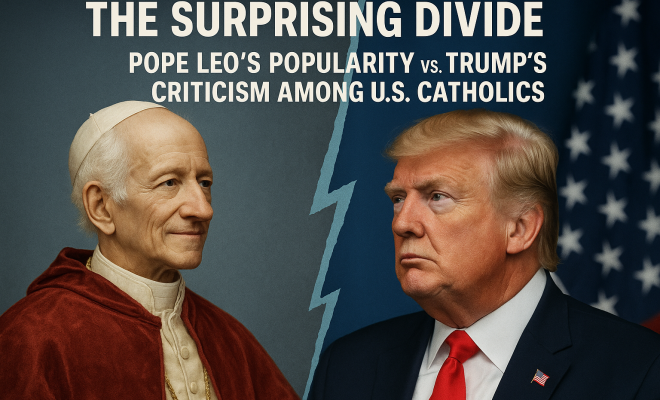
In a politically charged atmosphere where religion and politics often clash, recent findings from the Pew Research Center reveal a noteworthy sentiment among U.S. Catholics regarding Pope Leo XIV and former President Donald Trump. According to the survey, approximately 78% of U.S. Catholics view Pope Leo favorably, despite a notable decline from the 84% approval rating recorded in the summer of 2025. As tensions rise over various socio-political issues, opinions surrounding Pope Leo Trump criticism are more significant than ever, especially given the partisan divide that characterizes American politics.
1. Pope Leo XIV: A Beacon of Hope for Many
Pope Leo XIV has emerged as a significant figure in the religious landscape of the United States, particularly within the Catholic community. His messages around compassion, inclusivity, and social justice resonate with many, contributing to his favorable standing. Despite the slight dip in popularity, the pope’s favorability at 78% is a strong indicator of his ability to connect with American Catholics on pressing moral and ethical issues.
His stances on poverty, climate change, and immigration align with the values held by many in the U.S. Catholic community, which may explain why the pope’s popularity remains high even amid rising criticisms from political figures. This favorable view is essential, particularly when juxtaposed against the political landscape shaped by Trump’s vocal criticism, which has left many Catholic supporters feeling conflicted.
2. The Trump Factor: A Polarizing Figure
Former President Donald Trump is known for his unfiltered approach to politics, often leading to sharp criticisms of various figures, including religious leaders. His remarks about Pope Leo have not only raised eyebrows but also sparked a broader conversation about the intersection of faith and politics. For many Catholics, Trump’s criticisms seem disproportionate and misaligned with their beliefs about the role of the church in societal affairs.
The perception of Trump as too critical extends beyond mere opinion; it reflects a deeper concern among Catholics about the implications of mixing political rhetoric with religious authority. In a nation where allegiance to political parties often transcends faith, this conflict highlights the need for a more nuanced conversation about the role of spiritual leadership in contemporary politics.
3. Party Lines: A Divided Response
The poll results reveal a striking divide along party lines, with many Catholics feeling that Trump has been too harsh in his critiques of the pope. This ideological split is emblematic of broader social dynamics within American society. Democrats and independents tend to support Pope Leo more emphatically, while Republicans exhibit a mixed response to both the pope and Trump’s comments. This division not only reflects political affiliations but also highlights the varying interpretations of Catholic doctrine and its relevance to modern governance.
Such sharp contrasts in opinion underscore the complexities of identity politics today. The perception that Trump is out of touch with the values of U.S. Catholics may serve as a signal for future electoral trends, especially as the Republican Party grapples with its identity in a changing cultural landscape.
4. The Implications of Pope Leo Trump Criticism
Pope Leo Trump criticism has broader implications for both the Catholic community and American politics. As a figure representing moral authority, the pope’s relationship with political leaders can significantly impact the Catholic vote. The Pew survey indicates that many Catholics view Trump’s criticisms as a potential alienation from their faith, raising questions about loyalty to party versus doctrine.
Moreover, this evolving dynamic calls into question the future of the Catholic Church’s influence in American politics. As societal values shift, the church’s role may need to adapt to remain relevant, and how political figures, like Trump, engage with religious leaders could determine their success or failure in appealing to the Catholic electorate.
5. The Rise of Religious Identity Politics
The interplay between religion and political identity has become increasingly pronounced in recent years, with scenarios like the Pope Leo Trump criticism emerging as focal points for discussion. For many voters, religious affiliation shapes their political beliefs, offering a framework through which they view candidates and policies. The Pew survey showcases that a significant number of U.S. Catholics have a clear preference for leaders who align with their faith values. (See: CDC on religion and health.)
This growing trend of religious identity politics suggests that voters are seeking representation that reflects their moral and ethical beliefs. For Trump, this implies a need for recalibration in his approach to religious figures, as alienating a substantial portion of the electorate could backfire in future elections. Understanding the delicate balance between political rhetoric and religious values is crucial for any candidate wishing to garner support among Catholic voters.
6. Trump’s Criticism: A Challenge to Religious Authority?
Trump’s criticisms of Pope Leo XIV could be perceived as an affront to religious authority, especially within a community that holds the pope in high esteem. By openly challenging the pope’s positions, Trump risks alienating Catholics who see the church as a moral compass in a tumultuous world. This dissonance raises questions about the legitimacy of such criticisms and whether they serve any constructive purpose in public discourse.
In an age where authenticity and trust are paramount, Trump’s attacks on the pope may resonate negatively with those who value the church’s teachings. Aligning political strategies with genuine respect for religious leaders might prove crucial for Trump if he wishes to maintain or regain support from the Catholic electorate, which has shown a propensity toward favoring leaders who embody compassion and understanding.
7. Poll Findings: Insights into Catholic Sentiment
The Pew Research Center’s findings offer valuable insights into the Catholic electorate’s mindset, revealing that a significant portion of U.S. Catholics feels uneasy about Trump’s rhetoric. Approximately 60% of respondents believe that Trump’s criticisms are unwarranted, suggesting a disconnect between the former president’s views and the values of the Catholic community. This gap highlights the need for political leaders to engage meaningfully with faith communities, rather than utilizing them as mere tools for political gain.
These findings are pivotal; they indicate that the Catholic vote could significantly influence future elections if candidates pay attention to their perspectives. Understanding the nuances of Pope Leo Trump criticism could forge paths toward more inclusive and respectful political dialogue. Candidates who prioritize alignment with religious values may find themselves better positioned to resonate with Catholic voters.
8. Future Directions: A Call for Unity
The ongoing discourse around Pope Leo XIV and Trump signals an opportunity for deeper engagement between political figures and religious communities. For U.S. Catholics, the desire for unity amidst political division is palpable. Many within the community are calling for leaders who emphasize collaboration over conflict, particularly when addressing issues such as poverty and social justice.
For political leaders, especially those within the Republican Party, this could be a clarion call to re-evaluate their strategies. Rather than viewing religious communities as political pawns, a shift toward genuine dialogue and collaboration could foster a more harmonious relationship between faith and politics. Embracing the values espoused by Pope Leo could resonate positively with a broader audience.
9. Understanding the Historical Context
The relationship between the Catholic Church and American politics has a storied history, often marked by tensions and mutual dependence. From the papacy’s involvement in social reforms to its opposition to various political movements, understanding this background can provide context to the current Pope Leo Trump criticism. In the past, popes have engaged with political figures to address issues like social justice and human rights, often leading to fruitful partnerships that have benefited society at large.
This historical perspective reveals that the tensions we see today are not new. The Catholic Church has often found itself navigating the treacherous waters of political alliances, attempting to maintain its moral authority while engaging with worldly powers. Reflecting on these dynamics can help today’s leaders understand the weight of their words and the potential consequences of alienating a significant portion of the electorate.
10. Examining the Effects of Social Media
In an age dominated by social media, the rapid dissemination of Trump’s comments regarding Pope Leo XIV amplifies the impact of political rhetoric on religious sentiment. Tweets, posts, and viral videos can shape public perception almost instantaneously, leading to heightened emotions and reactions from the Catholic community. The immediacy of social media means that any criticism can spread quickly, often without the context necessary for thoughtful discourse. (See: New York Times on Pope Leo and Trump.)
Studies suggest that negative comments made by public figures can lead to increased polarization among their followers. In the case of Trump, his criticisms of the pope may rally his base but simultaneously alienate moderate and progressive Catholics who could find common ground on various issues. This dual effect raises questions about the responsibility of political leaders to consider the wider implications of their words in a hyper-connected world.
11. Expert Perspectives: Voices from the Faith Community
Many religious leaders and scholars have weighed in on the implications of Pope Leo Trump criticism. Father James Martin, a prominent Jesuit priest and author, emphasizes the importance of dialogue over divisiveness in his writings. He argues that the Catholic tradition calls for a respectful engagement with all leaders, including those who may disagree with church teachings. His insights suggest that constructive conversations could help bridge the gap between political rhetoric and religious authority.
Similarly, Dr. Stephen F. White, a fellow at the Ethics and Public Policy Center, posits that Trump’s criticisms could ultimately weaken his position among Catholics. He notes that many American Catholics prioritize the teachings of the church over partisan politics and may view harsh criticisms as an attack on their faith. These expert perspectives highlight the need for political leaders to recognize the delicate balance required when addressing religious figures and beliefs.
12. Frequently Asked Questions (FAQ)
What is the significance of Pope Leo XIV’s popularity among U.S. Catholics?
Pope Leo XIV’s popularity signifies an alignment with the values of compassion, social justice, and inclusivity that many U.S. Catholics hold dear. His ability to resonate with their beliefs reinforces his role as a moral leader in a politically divided landscape.
How does Trump’s criticism of Pope Leo XIV affect the Catholic vote?
Trump’s criticism may alienate a segment of the Catholic electorate who view the pope as a spiritual authority. This disconnection can influence their voting behavior, potentially leading them to support candidates who better align with their faith values.
What role does social media play in shaping perceptions of Pope Leo Trump criticism?
Social media amplifies political rhetoric and can influence public perception rapidly. Negative comments can create polarization and lead to intensified emotional reactions among followers, affecting how political figures are viewed within religious communities.
Are there historical precedents for tensions between political leaders and the Catholic Church?
Yes, the Catholic Church has a long history of navigating political tensions. Past popes have faced criticism from various political figures while simultaneously advocating for social reforms and maintaining their moral authority.
What steps can political leaders take to engage positively with religious communities?
Political leaders can focus on building genuine relationships with religious communities through dialogue and collaboration on shared values. A respectful approach that prioritizes the teachings of the church can foster better understanding and support.
13. The Broader Impact of Religious Leadership on Politics
The relationship between religious leaders and political figures can shape public policy and societal norms significantly. In the case of Pope Leo XIV, his advocacy for issues like climate change and social justice aligns with a broader movement within the church to engage more actively in public discourse. This engagement can serve as a powerful counterweight to partisan politics, offering a vision of unity and shared values that transcends party lines.
When religious leaders take bold stances on pressing issues, they often mobilize their congregations and influence public opinion. This mobilization can lead to increased voter turnout among those who feel their values are represented. Thus, the dynamics of Pope Leo Trump criticism are not just about personal attacks; they reflect the broader struggle between differing visions for society and the role that faith should play in our political landscape.
14. Analyzing the Cultural Shifts in Religious Affiliation
In recent years, the landscape of religious affiliation in America has witnessed notable changes. The rise of the “nones” – individuals who identify as atheist, agnostic, or religiously unaffiliated – has created a more complex interplay between faith and politics. For many younger voters, traditional religious alignments may not hold the same weight as they once did, leading to a re-evaluation of how religious leaders, including the pope, are perceived in the political arena.
This cultural shift poses a unique challenge for political figures like Trump. As younger generations become increasingly skeptical of organized religion, their political priorities may diverge from those of established religious authorities. Consequently, Trump’s criticisms of Pope Leo could alienate these voters, who may prioritize issues like social justice and inclusivity over traditional conservative platforms.
15. Future Implications for Catholic Engagement in Politics
The future of Catholic engagement in American politics is likely to evolve as the demographics of the electorate shift. Younger Catholics, who may hold more progressive views on social justice, climate policy, and immigration, could influence how the church navigates its relationship with political leaders. As the Catholic Church grapples with its relevance in a changing society, the pope’s ability to connect with these emerging voters will be paramount.
Moreover, the church’s response to the criticisms levied by Trump could set the tone for future interactions between the Vatican and political figures. The call for unity, compassion, and dialogue may resonate more strongly as the Catholic community seeks to bridge divides—not just within their own ranks, but also in the broader political sphere. This evolving relationship underscores the necessity for political leaders to engage thoughtfully with religious communities, acknowledging their concerns and aligning with their values.
16. Conclusion: Navigating the Path Forward
With the ongoing tension between Pope Leo XIV and Trump, the landscape of American politics continues to evolve. The Pew Research Center’s findings demonstrate the importance of understanding the sentiments of the Catholic community, as they navigate their allegiances between faith and party. As Trump faces criticism for his remarks, the broader implications of this discourse prompt a necessary re-examination of how political figures interact with religious authority.
Looking ahead, it is clear that for U.S. Catholics, the call for respect, understanding, and unity among leaders remains strong. Navigating the complex waters of Pope Leo Trump criticism will require a commitment to empathy and engagement from both religious and political spheres. Only then can we hope to forge a path toward a more inclusive and compassionate political environment.
“`
Trending Now
- our breakdown of how to differentiate instruction without relying on learning styles
- Why Developmentally Appropriate Practice Matters for Long-Term Success
- this guide on bloom’s taxonomy in elementary school: age-appropriate applications
- Socratic Seminar vs. Traditional Discussion: Key…
- Bloom’s Taxonomy Question Stems for Every Level
Frequently Asked Questions
What is the approval rating of Pope Leo XIV among U.S. Catholics?
As of recent findings, approximately 78% of U.S. Catholics view Pope Leo XIV favorably. This reflects a slight decline from the 84% approval rating recorded in the summer of 2025, indicating his continued connection with the Catholic community despite political tensions.
Why do U.S. Catholics support Pope Leo XIV?
U.S. Catholics support Pope Leo XIV due to his messages of compassion, inclusivity, and social justice. His stances on issues like poverty, climate change, and immigration resonate with many in the Catholic community, contributing to his favorable standing.
How has Donald Trump's criticism affected Catholics' views on Pope Leo XIV?
Donald Trump's criticisms of Pope Leo XIV have created a divide among U.S. Catholics. While many support the Pope, Trump's remarks have left some feeling conflicted about their political and religious beliefs, highlighting the intersection of faith and politics.
What issues do Pope Leo XIV and U.S. Catholics align on?
Pope Leo XIV and U.S. Catholics align on several pressing issues, including poverty alleviation, climate change, and immigration. His advocacy for social justice resonates deeply with the values held by many in the Catholic community.
Why is there a divide between Pope Leo XIV's popularity and Trump's criticism?
The divide arises from Pope Leo XIV's favorable messages that resonate with many Catholics, contrasting starkly with Donald Trump's polarizing criticisms. This discrepancy reflects the broader partisan divide within American politics, affecting how religious leaders are perceived.
Have you experienced this yourself? We’d love to hear your story in the comments.