Bloom’s Taxonomy & AP: College-Level Thinking Skills
“`html
As high school students strive to prepare for the rigors of college-level coursework, educators are increasingly turning to frameworks that guide teaching and learning. One such framework is Bloom’s Taxonomy, a classification system that outlines different levels of cognitive skills. When integrated into Advanced Placement (AP) courses, Bloom’s Taxonomy can significantly enhance the educational experience, equipping students with the tools they need for success in higher education.
The Origins of Bloom’s Taxonomy
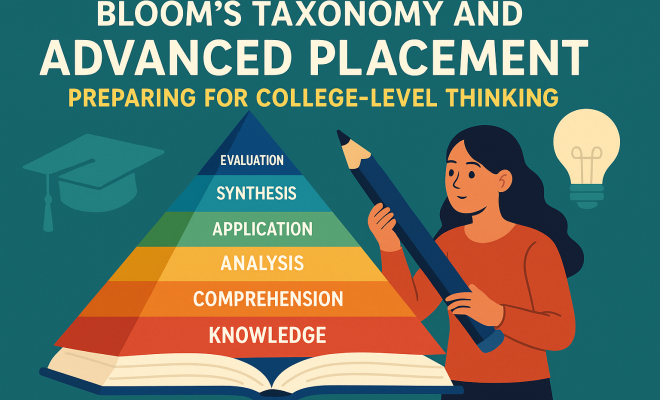
Developed in 1956 by a team of educational psychologists led by Benjamin Bloom, this taxonomy was meant to create a systematic approach to understanding and organizing learning objectives. The original framework consisted of six levels, ranging from basic knowledge acquisition to higher-order thinking skills. These levels are:
- Knowledge – Recalling facts and basic concepts.
- Comprehension – Understanding the meaning of material.
- Application – Using information in new situations.
- Analysis – Breaking information into parts to explore understandings and relationships.
- Synthesis – Compiling information in a different way by combining elements in a new pattern.
- Evaluation – Justifying a decision or course of action.
In 2001, a group of cognitive psychologists revised Bloom’s original taxonomy, updating the terminology and shifting the focus towards a more dynamic conception of classification. The terms were changed to verbs, leading to a new structure that includes remembering, understanding, applying, analyzing, evaluating, and creating. This updated version is particularly relevant in today’s educational environment, where critical thinking and creativity are paramount.
Understanding AP Courses
The Advanced Placement program, established by the College Board in 1955, allows high school students to take college-level courses and earn college credit while still in high school. AP courses are rigorous and often demanding, designed to challenge students and prepare them for the academic expectations they will encounter in college. Students who score well on AP exams may receive college credit or advanced placement, offering them a head start in their higher education journeys.
The Intersection of Bloom’s Taxonomy and AP Courses
Integrating Bloom’s Taxonomy into AP courses not only enriches the curriculum but also fosters a deeper understanding of subject matter. By aligning learning objectives with the taxonomy’s levels, educators can create a more structured learning environment that supports various cognitive skills.
For instance, a typical AP course might include assignments that require students to:
- Remember: Recall significant historical dates or scientific formulas.
- Understand: Explain the significance of a concept or theory.
- Apply: Use theories to solve real-world problems.
- Analyze: Break down a complex text or scenario to understand its components.
- Evaluate: Assess different viewpoints in an argument.
- Create: Develop a new solution to an existing problem.
This structured approach ensures that students are not just passively consuming information, but actively engaging with it, preparing them for the higher-level thinking required in college.
Practical Insights for Implementing Bloom’s Taxonomy in AP Classes
To effectively incorporate Bloom’s Taxonomy into AP courses, teachers can adopt several strategies:
- Define Clear Learning Objectives: Educators should start by establishing clear, measurable learning outcomes for each lesson. These objectives should reflect the various levels of the taxonomy, ensuring students progress from basic knowledge to higher-order thinking.
- Utilize Diverse Assessment Methods: Implement assessments that require students to demonstrate understanding at multiple levels. This could include traditional tests, project-based assessments, and oral presentations.
- Encourage Collaborative Learning: Foster an environment where students can discuss and critique each other’s work. Group projects and peer reviews can be excellent ways to promote analysis and evaluation skills.
- Use Technology Effectively: Incorporate educational technology tools that facilitate higher-order thinking. For instance, using online forums for discussions or multimedia projects can engage students more deeply.
By embedding these practices into the curriculum, educators can ensure that their AP courses not only cover the required content but also develop critical thinking and problem-solving skills. (See: Bloom's Taxonomy on Wikipedia.)
Current Relevance of Bloom’s Taxonomy in Education
As educational standards evolve, the relevance of Bloom’s Taxonomy remains steadfast. With increasing emphasis on critical thinking, creativity, and collaboration in learning, the taxonomy serves as a guiding framework for educators. It aligns perfectly with contemporary pedagogical approaches that prioritize student engagement and active learning.
Moreover, institutions of higher education are recognizing the importance of these skills. A study by the Association of American Colleges and Universities found that 93% of employers consider critical thinking and problem-solving skills essential for success in their employees. This reality underscores the necessity of preparing high school students for the demands of the workforce and higher education.
Challenges and Considerations
While the integration of Bloom’s Taxonomy into AP courses offers significant advantages, educators may face challenges. One common difficulty is the time constraints inherent in AP curriculum pacing. The need to cover extensive material before exams often pressures teachers to prioritize content over skills development.
Additionally, educators may require professional development to effectively implement the taxonomy in their teaching. It’s not just about understanding the levels; teachers must be equipped with strategies to foster higher-order thinking among students. Schools could benefit from workshops or collaborative planning sessions to share best practices.
Case Studies: Successful Implementation of Bloom’s Taxonomy in AP Courses
Several schools have seen success stories when implementing Bloom’s Taxonomy within their AP programs. For instance, at a high school in California, teachers revamped their AP US History course by designing projects that emphasized analysis and evaluation. Students were tasked with creating a documentary on a historical event, requiring them to research, analyze sources, and present their findings creatively.
Another example can be found in an AP Chemistry class in Texas, where the teacher used inquiry-based learning tied to Bloom’s levels. Students worked in groups to design experiments, analyze data, and evaluate their results. This hands-on approach not only kept students engaged but also developed their critical thinking skills.
These examples illustrate that when educators embrace Bloom’s Taxonomy, they create dynamic learning environments that prepare students for college and beyond.
Future Directions: Evolving Educational Practices
As educational paradigms continue to shift, the practices around Bloom’s Taxonomy will likely evolve. The rise of personalized learning and competency-based education could reshape how the taxonomy is applied in classrooms. The ability to tailor learning experiences to individual student needs aligns with the taxonomy’s focus on developing higher-order thinking skills.
Furthermore, the increasing integration of artificial intelligence and data analytics in education may provide new insights into student learning patterns. Educators can utilize this information to adapt their teaching strategies, ensuring that they meet students at their current level of understanding and push them toward higher cognitive skills.
Incorporating Real-World Applications
One of the most compelling aspects of Bloom’s Taxonomy is its adaptability to real-world applications. Educators can create assignments that connect theoretical knowledge to practical situations. For example, in AP Environmental Science, students could analyze the effects of climate change by researching local impacts and proposing solutions based on scientific theories. This not only reinforces their learning but also empowers students to engage with pressing global issues. (See: EDUCAUSE on Bloom's Taxonomy.)
Moreover, integrating service-learning projects can further enhance the application of Bloom’s Taxonomy. For instance, AP students could partner with local organizations to address community problems. By applying classroom knowledge to real-life contexts, students can evaluate their impact, synthesize new ideas, and create meaningful change.
Statistics and Research Supporting Bloom’s Taxonomy
Research consistently supports the effectiveness of Bloom’s Taxonomy in enhancing learning outcomes. A 2015 meta-analysis published in the journal Educational Psychology Review found that students who were taught using techniques aligned with Bloom’s levels demonstrated significantly higher achievement scores compared to those who experienced traditional teaching methods.
Additionally, the National Education Association reports that students engaged in higher-order thinking tasks are more likely to retain information and apply knowledge effectively. They also report that 85% of teachers who utilized Bloom’s Taxonomy in their lessons noted a positive shift in student engagement and understanding.
These statistics emphasize the importance of adopting a structured framework like Bloom’s Taxonomy in AP courses to bolster student success.
Expert Perspectives on Bloom’s Taxonomy in Education
Experts in the field of education often advocate for the use of Bloom’s Taxonomy as a vital tool for curriculum development. Dr. Patricia Harrel, an educational psychologist, notes that “Bloom’s Taxonomy not only helps teachers design better lessons but also fosters a deeper understanding of content in students. It encourages them to think critically and creatively, which are essential skills in today’s workforce.”
Similarly, Dr. Michael Shaughnessy, an education consultant, emphasizes the role of Bloom’s Taxonomy in AP classes, stating, “AP courses are the perfect environment for utilizing Bloom’s Taxonomy. The rigor of these courses naturally aligns with the need for higher-order thinking, allowing students to excel not just academically but also as innovative thinkers.”
FAQs about Bloom’s Taxonomy and AP Courses
What is the main purpose of Bloom’s Taxonomy in education?
The primary purpose of Bloom’s Taxonomy is to provide a structured framework for educators to design curricular goals and assessments that promote higher-order thinking skills in students. It helps in organizing learning objectives from simple recall to complex creation.
How can teachers assess students using Bloom’s Taxonomy?
Teachers can assess students by designing assessments that target different levels of the taxonomy. This can include quizzes for knowledge recall, essays for evaluation, or projects that require synthesis. By using diverse assessment methods, teachers can evaluate students’ understanding comprehensively.
Can Bloom’s Taxonomy be applied to subjects other than AP courses?
Absolutely! Bloom’s Taxonomy is a versatile framework that can be applied to any subject or grade level. It is effective in helping educators across disciplines develop lessons and assessments that promote critical thinking and engagement.
What are some common pitfalls when implementing Bloom’s Taxonomy?
Common pitfalls include focusing too heavily on lower levels of the taxonomy at the expense of higher-order thinking. Teachers may also struggle with aligning assessments with learning objectives. Continuous professional development and collaborative planning can help overcome these challenges.
How does Bloom’s Taxonomy prepare students for college?
Bloom’s Taxonomy prepares students for college by developing essential skills such as critical thinking, problem-solving, and effective communication. These skills are vital in higher education and are often emphasized by college faculty as necessary for academic success.
Additional Strategies for AP Course Success
In addition to utilizing Bloom’s Taxonomy, educators can adopt several strategies to support student success in AP courses. These include:
- Creating a Study Culture: Encourage students to form study groups and share resources. A collaborative environment often leads to deeper understanding as students explain concepts to one another.
- Offering Feedback: Timely and constructive feedback is crucial. This helps students understand their strengths and areas for improvement, allowing them to adjust their study approaches accordingly.
- Encouraging Metacognition: Teach students to think about their own learning processes. By understanding how they learn best, they can apply strategies that suit their individual needs.
- Integrating AP Exam Strategies: Familiarize students with the AP exam structure and scoring. Practice tests and review sessions can reduce anxiety and improve performance on test day.
The Role of Parental Involvement
Parental involvement can greatly impact a student’s success in AP courses. Parents can provide support by:
- Encouraging a Positive Attitude: Remind students that challenges are a part of learning. A supportive home environment can boost their confidence.
- Facilitating Resources: Help students find additional resources such as tutoring, online courses, or study guides that align with Bloom’s Taxonomy.
- Being Informed: Parents should familiarize themselves with the AP curriculum and exam expectations, providing a solid support system during stressful times.
Evaluating the Effectiveness of Bloom’s Taxonomy in AP Courses
To evaluate the effectiveness of Bloom’s Taxonomy within AP courses, educators can use several metrics:
- Student Performance Data: Analyze AP exam scores and overall class performance to assess how well students are meeting the learning objectives based on Bloom’s framework.
- Student Surveys: Gather feedback from students about their learning experiences and perceptions of the curriculum. Understanding how they engage with material can provide insights into the effectiveness of the taxonomy’s implementation.
- Longitudinal Studies: Track student success beyond AP courses, examining college retention rates, GPA, and engagement levels to determine the long-term impact of Bloom’s Taxonomy.
Conclusion: The Lasting Impact of Bloom’s Taxonomy on AP Education
In an increasingly complex and competitive world, the need for critical thinking and problem-solving skills has never been more pressing. Bloom’s Taxonomy, especially when applied to AP courses, plays a vital role in shaping students’ cognitive abilities, preparing them for the challenges of college and beyond. By focusing on developing higher-order thinking skills, educators equip students not just for exams, but for lifelong learning and success. As we look to the future, the principles of Bloom’s Taxonomy will continue to inform effective teaching practices, ensuring that the next generation of learners is ready to tackle the complexities ahead.
“`
Trending Now
Frequently Asked Questions
What is Bloom's Taxonomy in education?
Bloom's Taxonomy is a framework developed in 1956 that classifies different levels of cognitive skills in education. It ranges from basic knowledge acquisition to higher-order thinking skills, including knowledge, comprehension, application, analysis, synthesis, and evaluation, with an updated version focusing on remembering, understanding, applying, analyzing, evaluating, and creating.
How does Bloom's Taxonomy enhance AP courses?
Integrating Bloom's Taxonomy into Advanced Placement (AP) courses helps educators develop teaching strategies that promote critical thinking and creativity. It equips students with essential cognitive skills needed for college-level coursework, enhancing their overall educational experience and preparing them for higher education challenges.
What are the levels of Bloom's Taxonomy?
Bloom's Taxonomy originally included six levels: Knowledge, Comprehension, Application, Analysis, Synthesis, and Evaluation. The revised version uses verbs and includes remembering, understanding, applying, analyzing, evaluating, and creating, emphasizing a more dynamic approach to learning and skill development.
What is the purpose of Advanced Placement courses?
Advanced Placement (AP) courses allow high school students to take college-level classes and potentially earn college credit while still in high school. These courses are designed to prepare students for the rigor of college academics and help them develop critical thinking and analytical skills.
Why is critical thinking important in education?
Critical thinking is essential in education as it enables students to analyze information, solve problems, and make informed decisions. In today's fast-paced world, the ability to think critically and creatively is paramount for success in higher education and future careers.
What did we miss? Let us know in the comments and join the conversation.