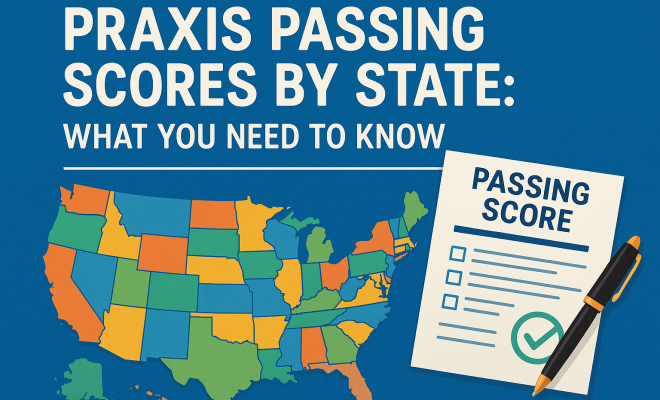
Praxis Passing Scores by State: What You Need to Know
“`html
The Praxis exams serve as a crucial benchmark for aspiring teachers in the United States. These assessments not only evaluate a candidate’s skills and knowledge but also play a significant role in state licensure requirements. If you’re preparing for the Praxis, understanding the praxis passing scores by state is essential for your success. This article delves into the nuances of these scores, the importance of the Praxis exams, and what you need to know to effectively plan for your testing journey.
What Are Praxis Exams?
The Praxis exams are a series of assessments administered by the Educational Testing Service (ETS) to measure the academic skills and subject-specific knowledge of candidates entering the teaching profession. These tests are widely recognized across many states, serving as a requirement for teacher certification or licensure. The Praxis series includes several different tests, such as the Praxis Core Academic Skills for Educators and the Praxis Subject Assessments, each tailored to evaluate different competencies.
The Praxis Core, for instance, tests reading, writing, and mathematics skills that are essential for successful teaching. On the other hand, Subject Assessments assess specific content knowledge for the subjects that prospective teachers intend to teach. The scores from these assessments can significantly impact your ability to secure a teaching position, making it critical to understand the passing scores relevant to your state.
Why Praxis Passing Scores Matter
Prax passing scores are not arbitrary; they reflect the minimum competency levels that states deem necessary for a teacher to be considered qualified. Each state sets its own passing score based on its educational standards, which means that what might be acceptable in one state could be inadequate in another.
Understanding these passing scores can inform your study approach, helping you to focus your preparation on the areas where you need improvement. For example, if you know the passing score in your state is significantly higher than the national average, you can adjust your study schedule accordingly to ensure you meet or exceed that threshold. Failing to meet the required score not only delays your certification but can also lead to increased stress and additional costs associated with retaking the exam.
Prax Passing Scores by State
Below is a comprehensive list of Praxis passing scores by state. Keep in mind that these scores can change, so always check your specific state’s education department for the most current information.
- California: 150 for the Core Academic Skills for Educators
- New York: 520 for the Principles of Learning and Teaching Test
- Texas: 240 for the Core Subjects EC-6
- Florida: 500 for the General Knowledge Test
- Illinois: 240 for the Test of Academic Proficiency
- Pennsylvania: 220 for the Praxis Subject Assessment
- Ohio: 220 for the Praxis Core Tests
- Georgia: 250 for the GACE Program Admissions assessment
- Washington: 240 for the Educational Leadership assessment
- North Carolina: 156 for the Foundations of Reading test
This list is just a snapshot; remember to verify with your state’s education department for the most accurate and updated passing scores.
How to Prepare for the Praxis Exams
Preparation is key to passing your Praxis exams. Here are several strategies that can help you get ready:
- Understand the Format: Familiarize yourself with the types of questions that will be asked on the exam. The Praxis website offers sample questions and practice tests that can help you get comfortable with the format.
- Create a Study Schedule: Develop a robust study plan that details what subjects you need to cover each week leading up to your exam date. Consistency is crucial.
- Use Study Guides: Invest in quality study guides specific to the Praxis exams. These guides often provide insights into the most frequently tested topics.
- Join Study Groups: Collaborating with peers can enhance your understanding of complex topics and provide moral support.
- Take Practice Tests: Regularly assess your knowledge by taking practice tests. This not only helps solidify your knowledge but also familiarizes you with time management during the exam.
Don’t neglect your mental health during this process—ensure you take breaks and engage in activities that help you relax and recharge.
Common Challenges in Passing Praxis Exams
Despite thorough preparation, many candidates face challenges when it comes to passing the Praxis exams. Understanding these common hurdles can help you devise strategies to overcome them. (See: U.S. Department of Education policies.)
One major issue is test anxiety. Many test-takers report feeling overwhelmed or stressed on the day of the exam, which can affect performance. Developing test-taking strategies, such as relaxation techniques or positive visualization, can help mitigate these feelings.
Another challenge is underestimating the amount of study required. Some candidates believe that they can pass simply by reviewing their notes or textbooks shortly before the exam. To achieve a competitive score, a more in-depth study plan is necessary.
Finally, lack of familiarity with the testing platform can be a significant hurdle. Many Praxis exams are now offered online, and candidates may struggle with the technology. Familiarizing yourself with the online testing format and taking preliminary practice exams can help ease these concerns.
Re-Test Policies: What You Need to Know
If you don’t achieve the required praxis passing scores by state, don’t panic. Most states allow candidates to retake the exam, but policies vary. Here’s what you generally need to know:
- Waiting Period: Many states require a waiting period of about 28 days before you can retake the exam. This gives you ample time to study and prepare.
- Score Reporting: Be aware that you’ll need to pay the testing fee each time you take the exam, and scores are typically sent to you and your designated institutions a few weeks after the test date.
- Preparation for Retakes: Use the feedback from your previous attempt to guide your studies for the next test. Focus on the areas where you scored the lowest.
It’s essential to keep these factors in mind as you plan your testing strategy. Retaking an exam isn’t the end of the world; with the right preparation, you can improve your scores significantly.
Alternatives to Praxis Exams
While the Praxis exams are widely recognized, some states offer alternative assessments or routes to certification that might be suitable for you. If you’re struggling with the Praxis or if it’s not the right fit for your situation, consider these alternatives:
- State-Specific Exams: Some states have developed their own exams that may be less rigorous than the Praxis.
- Portfolio Reviews: A few states allow candidates to submit a teaching portfolio that demonstrates their skills and knowledge in lieu of passing Praxis scores.
- National Board Certification: Achieving National Board Certification can sometimes substitute for state testing requirements.
Exploring these options can open doors for you, especially if standardized testing isn’t your strongest suit.
The Future of Praxis Exams
The landscape of teacher certification, including Praxis exams, is continually evolving. With the increasing emphasis on educational equity, many states are re-evaluating their testing requirements. Some educators and policymakers argue that high-stakes testing may not fully capture a teacher’s competencies, leading to discussions about alternative assessment methods.
Moreover, the COVID-19 pandemic has accelerated changes in educational assessment, pushing more states to consider remote testing options. This trend may continue as technology advances and the education sector becomes more adaptive to changes.
As you prepare for your Praxis exams, keeping an eye on these developments can offer insights into potential changes that may impact your certification process.
Understanding the Scoring System
The Praxis scoring system can be a source of confusion for many test-takers. Each exam has its own unique scoring scale, but generally, scores range from 100 to 200. It’s important to understand how your score is calculated, as this will help you interpret your results accurately. (See: National Institute of Child Health resources.)
For instance, the Praxis Core tests use a range of 150 to 190. The higher your score is above the passing threshold, the more confident you can be in your understanding of the material. If you score significantly above the passing score, it may indicate a strong grasp of the subject matter, which could be a positive point to highlight in your resume or interviews.
Additionally, some states may have different implications for scores above the minimum requirement. For example, higher scores may enable you to apply for advanced licensure or endorsements in specialized areas. Always check your state’s specific regulations to see how high-achieving scores can benefit your teaching career.
Statistics on Praxis Exam Performance
Statistics on Praxis exam performance can provide valuable insights into how candidates are faring across different states and subjects. For instance, recent reports suggest that the national average passing rate for the Praxis Core is approximately 73%. However, this figure varies significantly by state, with states like Arkansas showing a passing rate of around 90%, while others may hover around 60%.
Understanding these statistics can help set realistic expectations for your own preparation. If you are in a state where the average passing rate is lower, it can serve as motivation to dive deeper into your studies. Furthermore, reviewing subject-specific data can illuminate where other candidates are succeeding or struggling, which can be crucial in shaping your study priorities.
Expert Perspectives on Praxis Exams
Many educators and experts in the field of teacher preparation emphasize the importance of the Praxis exams as a measure of teacher readiness. According to Dr. Maria Gonzalez, a professor of Education at a prominent university, “The Praxis exams serve as a critical filter to ensure that only those who possess the necessary skills and knowledge enter the teaching profession. It’s not just about passing the test; it’s about ensuring that teachers are equipped to impact their students positively.”
Dr. Gonzalez also suggests that while the exams are essential, they should not be the sole determinant of a candidate’s capabilities. “We need to consider other factors, such as classroom performance and mentorship, along with test scores. This holistic approach can provide a more comprehensive view of a candidate’s potential.”
Frequently Asked Questions (FAQ)
What is the typical wait time to receive Praxis scores?
Typically, Praxis test-takers can expect to receive their scores within 10 to 15 business days for computer-based tests and about 4 weeks for paper-based tests. However, this timeframe can vary, so always check the ETS website for the most accurate information.
Can I send my Praxis scores to multiple institutions?
Yes, when you register for the Praxis exams, you’ll have the option to select multiple institutions to receive your scores. It’s advisable to check with each institution regarding their requirements and deadlines for score submission.
Are there accommodations for test-takers with disabilities?
Yes, ETS provides accommodations for test-takers with documented disabilities. You can request accommodations when you register for your exam, and it’s essential to submit the required documentation well in advance to ensure your needs are met on test day.
What happens if I don’t pass the Praxis exam?
If you don’t pass the Praxis exam, you can retake it after the required waiting period, which is usually about 28 days. Use the time wisely to review your practice test results and focus on the areas where you struggled.
Is there a limit to how many times I can take the Praxis exams?
There is no limit to the number of times you can take the Praxis exams. However, you will need to pay the testing fee each time you register for the exam, so be sure to weigh the costs against your preparation strategy.
How can I improve my Praxis scores?
Improving your Praxis scores often involves a multifaceted approach. Start by thoroughly reviewing the material covered in the exams and focusing on your weak areas. Regular practice with sample questions can also help, as well as studying in groups to gain new perspectives. Additionally, consider seeking help from a tutor who specializes in Praxis exam preparation if you’re struggling with specific subjects.
Can I appeal my Praxis score if I believe it’s incorrect?
Currently, ETS does not allow appeals for Praxis scores. However, if you suspect that there was a technical error that affected your score, you can contact ETS to request a review. It’s essential to keep all documentation and records related to your exam to provide context for your inquiry.
Current Trends in Praxis Exam Preparation
As education continues to evolve, so do the methods of preparation for the Praxis exams. Many test-takers are now turning to digital resources and online courses that offer flexible learning options. With mobile apps designed for on-the-go studying and YouTube channels dedicated to explaining complex concepts, the landscape of study materials has transformed significantly. Additionally, social media platforms have become hubs for sharing tips and strategies, allowing candidates to learn from one another’s experiences.
The rise of virtual study groups has also made it easier for candidates to connect and support each other. Platforms like Zoom or Google Meet allow individuals from different geographical locations to collaborate and study together, fostering a sense of community and shared goals.
Conclusion: Your Path to Certification
Understanding praxis passing scores by state is just one part of your journey toward becoming a certified educator. By familiarizing yourself with these scores, preparing effectively, and being aware of the challenges and alternatives, you can enhance your chances of success. Keep your end goal in sight, and remember that persistence and preparation will ultimately lead you to your teaching career.
“`
Trending Now
Frequently Asked Questions
What are the Praxis passing scores for each state?
Praxis passing scores vary by state, as each state sets its own standards for teacher certification. To find specific passing scores for your state, it's essential to check the official state education department website or the Educational Testing Service (ETS) resources.
How do I prepare for the Praxis exams?
To prepare for the Praxis exams, start by reviewing the test content outlines and practice materials provided by ETS. Focus on areas where you feel less confident, and consider enrolling in preparatory courses or study groups to enhance your understanding and skills.
What is the purpose of the Praxis exams?
The Praxis exams are designed to assess the academic skills and subject-specific knowledge of individuals entering the teaching profession. They serve as a requirement for teacher certification or licensure in many states, ensuring that candidates meet essential competency standards.
How often are Praxis exams administered?
Praxis exams are administered year-round at various testing centers across the United States. Candidates can register for specific test dates and locations through the Educational Testing Service (ETS) website, allowing flexibility in scheduling their exams.
What happens if I don’t pass the Praxis exam?
If you do not pass the Praxis exam, you can retake it after a waiting period. It's advisable to review your score report to identify areas for improvement and adjust your study plan accordingly, ensuring you are better prepared for the next attempt.
What’s your take on this? Share your thoughts in the comments below — we read every one.