Attachment Styles & Academic Performance: Secure vs. Insecure
“`html
Understanding the impact of attachment styles and academic performance is essential for educators, parents, and students alike. Attachment theory, originally developed by John Bowlby and Mary Ainsworth, proposes that the bonds formed in early childhood between a child and caregiver can significantly influence emotional and social development. This foundational relationship shapes not only personal interactions but also academic outcomes. In this article, we’ll explore the differences between secure and insecure attachment styles, their profound implications on academic achievement, and practical insights for fostering secure attachments in educational settings.
1. The Basics of Attachment Theory
Attachment theory posits that the relationships formed during the formative years of life play a critical role in shaping an individual’s future interactions and emotional health. Bowlby and Ainsworth identified four main attachment styles: secure, anxious, avoidant, and disorganized. Securely attached children typically feel safe and supported, whereas those with insecure attachment styles may struggle with anxiety, avoidance, or unpredictable behavior.
In a school context, these attachment styles can manifest in various ways. For instance, securely attached students are generally more resilient, engaged, and open to seeking help when needed. In contrast, students with insecure attachments may display behaviors such as withdrawal, avoidance of challenges, or difficulty in forming relationships with peers and teachers. Understanding these differences is vital for educators aiming to create supportive environments that foster academic success.
2. Secure Attachment: The Foundation of Academic Success
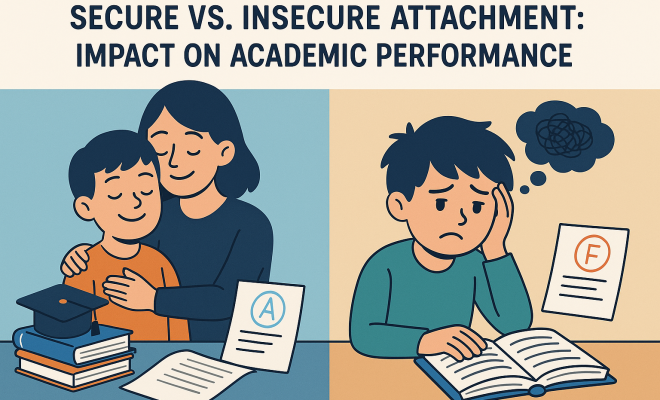
Secure attachment is characterized by a child’s confidence in their caregiver’s availability and support. Research has consistently shown that children who develop secure attachments tend to exhibit higher levels of motivation, self-esteem, and resilience, all of which are crucial for academic performance. They are more likely to participate in classroom discussions, collaborate with peers, and approach learning challenges with a positive mindset.
One study found that securely attached students performed better academically than their insecurely attached peers, primarily due to their ability to manage stress and adversity effectively. These students are more prepared to tackle difficult subjects, seek assistance, and utilize available resources, thereby enhancing their learning experiences. In a nurturing educational environment, securely attached students thrive, developing not only academically but also socially and emotionally.
3. The Challenges of Insecure Attachment Styles
In contrast to secure attachment, insecure attachment styles—namely anxious, avoidant, and disorganized—often lead to challenges in academic settings. Anxiously attached students may struggle with perfectionism and fear of failure, which can hinder their performance. They may frequently seek reassurance from teachers or peers but still feel inadequate despite their efforts.
Avoidant students, on the other hand, may distance themselves from academic challenges or social interactions altogether. Their tendency to suppress emotions can lead to disengagement from learning activities and difficulty in forming constructive relationships with educators and classmates. Disorganized attachment, characterized by inconsistent behaviors, can result in erratic academic performance and behavior problems, making it essential for educators to recognize and address these issues early on.
4. The Role of Educators in Supporting Attachment Styles
Educators play a critical role in fostering secure attachment styles among students. Creating a supportive classroom environment that encourages open communication, empathy, and trust is essential. Teachers can nurture secure attachments by being responsive to students’ needs, showing genuine interest in their well-being, and providing consistent feedback that promotes growth.
Training educators to recognize signs of insecure attachment can also make a considerable difference. When teachers understand attachment styles, they can implement targeted interventions to support students struggling with anxiety or avoidance. For example, offering opportunities for group work can help anxious students engage with peers while providing structure and support for avoidant students to participate in discussions and activities.
5. Impact on Peer Relationships and Group Dynamics
Attachment styles not only affect academic performance but also influence peer relationships. Securely attached students tend to form healthier, more positive relationships with their classmates, which can enhance collaborative learning experiences. These students are generally more comfortable with giving and receiving feedback, leading to enriched group dynamics in academic settings.
In contrast, insecurely attached students may face difficulties in peer interactions. Anxiously attached students may overreact to perceived slights, leading to conflicts or withdrawal. Avoidant students might struggle to collaborate effectively, impacting their ability to work on group projects or engage in discussions. Understanding these dynamics allows educators to facilitate more inclusive and supportive peer interactions, ultimately benefiting all students.
6. Parental Involvement and Its Influence
The role of parents in shaping attachment styles cannot be overstated. Parents who provide a secure base for their children tend to foster resilience and a sense of autonomy, essential for academic success. Parental involvement in education—such as attending school events, helping with homework, and communicating with teachers—creates a positive feedback loop that reinforces secure attachment. (See: Attachment theory overview.)
Studies indicate that children with involved parents are not only more likely to develop secure attachments but also perform better academically. Parents modeling positive behaviors, such as stress management and problem-solving, can equip their children with the tools necessary to navigate academic challenges effectively. Encouraging open communication about school experiences can further strengthen these bonds, allowing children to feel supported and understood.
7. Strategies for Developing Secure Attachments in School
To promote secure attachment styles in academic settings, schools can implement various strategies. First, training teachers and staff to recognize the signs of insecure attachment is crucial. This knowledge will empower educators to intervene appropriately and create tailored approaches that support each student’s needs.
Additionally, fostering a sense of community within the classroom can help students feel connected and valued. Activities that promote collaboration, such as group projects and peer mentoring, can enhance relationships and encourage secure attachments among students. Furthermore, schools can offer parenting workshops to educate families on the importance of secure attachment and provide strategies for fostering these bonds at home.
8. The Long-Term Implications of Attachment Styles
Attachment styles established in childhood can have lasting effects on individuals throughout their lives, influencing not just academic performance but also career success, emotional well-being, and relationship satisfaction. Securely attached individuals tend to navigate life challenges more effectively, maintain healthier relationships, and exhibit higher levels of life satisfaction.
Conversely, those with insecure attachment styles may face ongoing challenges in personal and professional domains. They may struggle with trust, intimacy, and self-esteem, affecting their ability to form meaningful connections and pursue career opportunities. Understanding these long-term implications underscores the importance of early interventions and support systems that foster secure attachments.
9. Comparative Studies on Attachment Styles and Academic Performance
Several studies have sought to quantitatively measure the impact of attachment styles on academic performance across different demographics and educational settings. For instance, a longitudinal study involving over 1,200 students tracked their attachment styles from early childhood through high school graduation. The results indicated that securely attached individuals had an average GPA that was 0.5 points higher than their insecurely attached counterparts.
Another interesting study looked at the impact of attachment styles across different ethnic groups. It found that while secure attachment was universally linked to better academic outcomes, the degree of influence varied by cultural context. In collectivist cultures, where community and family ties are emphasized, the disparity in academic performance between securely and insecurely attached students was found to be even more pronounced.
10. Expert Perspectives on Attachment and Education
Experts in the fields of psychology and education continue to stress the importance of understanding attachment styles within academic environments. Dr. Lisa E. Miller, a developmental psychologist at Columbia University, emphasizes that “by integrating attachment theory into educational practices, we can significantly enhance the emotional and social capabilities of our students.” She argues that curriculum development should account for the diverse emotional needs of students, promoting resilience and connection.
Moreover, educational psychologist Dr. David G. Myers points out that “schools should not only focus on academic achievement but also on the emotional health of students. When students feel secure, they’re more likely to take risks in their learning and engage deeply with the material.” His research supports the idea that emotional intelligence is just as crucial as cognitive intelligence in determining academic success.
11. Frequently Asked Questions About Attachment Styles and Academic Performance
What are the four main attachment styles?
The four main attachment styles identified by Bowlby and Ainsworth are secure, anxious, avoidant, and disorganized. Each of these styles affects how individuals relate to others and handle emotional situations.
How do attachment styles affect learning?
Attachment styles can significantly influence motivation, resilience, and the willingness to engage in academic challenges. Securely attached students are generally more motivated and open to seeking help, while insecurely attached students may struggle with anxiety and avoidance.
Can attachment styles change over time?
Yes, attachment styles can evolve due to new experiences or relationships. Positive interventions, such as supportive parenting or effective teaching strategies, can help shift an insecure attachment style to a more secure one.
What role do teachers play in shaping attachment styles?
Teachers can play a pivotal role in supporting secure attachments through responsive interactions, creating a nurturing classroom environment, and being aware of the emotional needs of their students. (See: CDC on attachment and mental health.)
How can parents support secure attachment styles at home?
Parents can foster secure attachments by being consistently responsive to their children’s needs, encouraging open communication, and modeling healthy emotional coping strategies.
Are there specific programs designed to address attachment styles in schools?
Yes, many schools have begun implementing Social-Emotional Learning (SEL) programs that incorporate attachment theory principles. These programs focus on emotional regulation, peer relationship building, and resilience training.
12. The Path Forward: Recommendations for Schools and Parents
To effectively address the issues surrounding attachment styles and academic performance, a collaborative approach between educators and parents is essential. Schools should consider integrating attachment-focused training into professional development for teachers, ensuring they have the tools they need to recognize and respond to students’ emotional needs.
Likewise, parents can benefit from workshops that provide insights into how their parenting styles may influence their child’s attachment. By fostering open lines of communication between home and school, both parties can work together to create an environment that promotes secure attachments.
Ultimately, a proactive approach to understanding and addressing attachment styles can lead to improved academic outcomes and well-rounded individuals who are equipped to handle the complexities of life beyond school.
13. The Importance of Self-Reflection
Encouraging students to engage in self-reflection about their own attachment styles can also be beneficial. By becoming aware of their emotional responses and how they relate to others, students can learn to manage their behaviors and foster healthier relationships. Schools can implement journaling, discussions, or therapeutic practices that allow students to explore their feelings and experiences in a safe environment.
This kind of self-awareness can empower students to seek support when needed, ultimately leading to better academic performance and emotional resilience. By embedding self-reflection into the curriculum, educators can help students not only understand their attachments but also develop strategies to improve their interactions with others.
14. Final Thoughts
Understanding the relationship between attachment styles and academic performance is not just an academic exercise; it’s a crucial component of fostering an environment where all students can succeed. By recognizing the emotional foundations that underpin learning, we can create educational spaces that are not only academically rigorous but also emotionally supportive. This dual focus on emotional and cognitive development can help prepare students for not just academic success but for a fulfilling life ahead.
15. The Intersection of Attachment Styles and Mental Health
Attachment styles can significantly intersect with mental health issues, which in turn can impact academic performance. Students with insecure attachment styles often experience higher levels of anxiety and depression, which can detract from their ability to focus and perform well academically. For example, a study published in the journal “Child Development” found that adolescents with insecure attachments were more likely to report symptoms of depression and anxiety, which correlated with lower academic performance.
In contrast, securely attached students tend to have better mental health outcomes, providing them with a more robust foundation for academic engagement. They are typically better at managing their emotions, seeking help when needed, and navigating stressors related to schoolwork. As such, prioritizing mental health support within educational settings can be an effective strategy for improving academic outcomes, particularly for those with insecure attachment styles.
16. Building Resilience Through Positive Relationships
Resilience is a crucial factor in academic achievement, and attachment styles play an integral role in developing this trait. Securely attached students are generally more resilient, as they have learned through their relationships with caregivers how to cope with challenges. They trust that support is available when they encounter difficulties, which encourages them to take risks and engage more fully in their learning experiences.
On the other hand, students with insecure attachment styles may lack this resilience, leading to a tendency to shy away from challenges or avoid seeking help. Schools can foster resilience by implementing mentorship programs where older students or teachers mentor younger ones, providing the guidance and support that can help shift insecure attachments towards more secure ones.
Additionally, creating a culture of peer support can enhance resilience. Encouraging students to work collaboratively on projects or within study groups can help them develop trust and support systems among their peers, further solidifying their ability to cope with academic challenges.
17. Case Studies: Success Stories
To truly grasp the impact of secure attachments on academic performance, case studies provide vivid illustrations. For example, a school in a low-income area implemented a program focused on attachment theory, training teachers to build strong relationships with their students. Over the course of three years, the cohort of students who participated in the program showed a remarkable improvement in academic performance, with a 20% increase in standardized test scores compared to previous years.
Another case involved a middle school that introduced a social-emotional learning curriculum that emphasized attachment and relationship building. Students reported feeling more connected to their teachers and peers and showed improved attendance rates, which correlated with higher course completion rates and overall academic performance. These examples underscore the potential of leveraging attachment theory to create positive academic and social outcomes.
18. The Role of Technology in Fostering Attachment
In an increasingly digital world, technology can play a dual role in fostering or hindering attachment styles. On one hand, technology can facilitate connections between students and educators through online support groups, forums, and resources that promote social-emotional learning. Schools that have embraced educational technologies often find that they can reach students in new ways, offering them additional support outside the traditional classroom setting.
However, excessive reliance on technology can also lead to superficial connections and social isolation, particularly for students with insecure attachment styles. It’s important for educators and parents to monitor technology use, promoting a balanced approach that encourages meaningful interactions rather than allowing screens to replace face-to-face connections. For instance, integrating technology in a way that supports collaborative projects can help build relationships while still leveraging digital tools.
19. Future Research Directions
As the understanding of attachment styles and their influence on academic performance continues to evolve, future research could explore several intriguing avenues. For instance, longitudinal studies that track the impact of interventions aimed at fostering secure attachments on academic performance could provide valuable insights. Additionally, research examining the intersections of culture, socioeconomic status, and attachment may reveal important nuances in how these factors interact.
Another promising area for research is the role of neurobiological factors in attachment styles and academic performance. Understanding how brain development correlates with attachment styles could lead to more targeted interventions that support not only emotional and social development but also cognitive growth.
20. Conclusion: A Holistic Approach to Education
Ultimately, the connection between attachment styles and academic performance highlights the need for a holistic approach to education. By recognizing that emotional and social factors are just as critical as intellectual ones, we can cultivate environments where students feel secure, supported, and motivated to learn. This comprehensive perspective not only enhances academic outcomes but also fosters the development of well-rounded individuals prepared for life’s challenges.
“`
Trending Now
Frequently Asked Questions
What is the difference between secure and insecure attachment?
Secure attachment is marked by confidence in a caregiver's support, leading to resilience and positive relationships. In contrast, insecure attachment can manifest as anxiety, avoidance, or unpredictable behavior, affecting emotional health and social interactions.
How does attachment style affect academic performance?
Attachment styles significantly influence academic outcomes. Securely attached students often demonstrate higher motivation, self-esteem, and engagement, while those with insecure attachments may struggle with withdrawal and difficulty forming relationships, negatively impacting their academic performance.
What are the types of attachment styles?
Attachment theory identifies four main styles: secure, anxious, avoidant, and disorganized. Secure attachment fosters positive development, while insecure styles can lead to challenges in emotional health and social interactions, impacting overall success.
Why is secure attachment important for students?
Secure attachment is crucial for students as it fosters resilience, motivation, and a willingness to seek help. These traits contribute to better academic performance and positive relationships with peers and educators.
How can educators foster secure attachment in students?
Educators can foster secure attachment by creating supportive environments, building trust, encouraging open communication, and being responsive to students' emotional needs, which can enhance their academic success and overall well-being.
Have you experienced this yourself? We’d love to hear your story in the comments.