Google’s $920M Monthly Nvidia Deal: Powering AI Until 2029
“`html
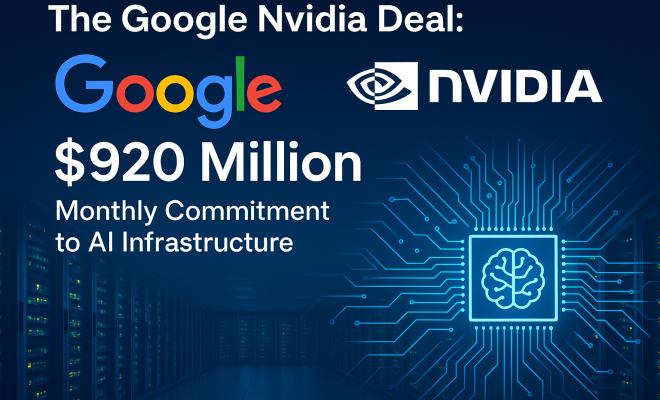
The tech landscape is buzzing with news about the Google Nvidia deal, which has raised eyebrows across the industry. Alphabet’s Google will commit a staggering $920 million per month starting in October 2026 until June 2029. This significant investment aims to secure access to approximately 110,000 Nvidia GPUs, along with CPUs, memory, and several related components. With the recent announcement disclosed in a regulatory filing and reported by major outlets like Bloomberg and CNBC, it’s clear that the stakes are high in the current AI infrastructure race.
The Context Behind the Google Nvidia Deal
As artificial intelligence continues to permeate various sectors, the demand for powerful computing resources has surged. Companies like Google, which are at the forefront of this technological revolution, need to ensure they have adequate resources to train and deploy AI models efficiently. The Google Nvidia deal illustrates a proactive approach to securing necessary hardware in a market characterized by intense competition.
This deal also sheds light on the growing urgency to address the GPU shortage that has significantly affected the tech industry. With AI’s reliance on vast computational power, organizations are scrambling to secure the hardware necessary for their operations. Nvidia, as a leading supplier of GPUs, plays a critical role in this equation, and Google’s commitment highlights the high costs associated with accessing these vital resources.
The Scale of the Investment
The $920 million monthly figure is mind-blowing, amounting to a total investment of around $33 billion over the three-year duration of the deal. This scale is unprecedented and highlights the critical need for high-performance computing in AI development. When you consider the financial implications, this deal signifies how serious tech giants are about their positions in the rapidly evolving AI landscape.
Such a large financial commitment essentially puts a dollar figure on the ongoing GPU shortage as well. Companies are increasingly realizing that training and serving advanced AI models come with exorbitant costs. The Google Nvidia deal encapsulates this reality, demonstrating that investing in AI infrastructure isn’t just a consideration—it’s a necessity.
Nvidia’s Role in the AI Race
Nvidia’s GPUs are renowned for their computational efficiency and performance, making them the go-to choice for AI training and inference. The company has become synonymous with AI capabilities, helping to propel advancements in machine learning and deep learning technologies. The growing demand for Nvidia’s products reflects the increasing reliance on AI across various industries, from tech to healthcare and beyond.
With companies like Google aggressively seeking Nvidia’s hardware, it’s clear that Nvidia is in a prime position to capitalize on this trend. The company’s innovations and market strategies will not only help it grow financially but will also shape the future landscape of AI technologies. The Google Nvidia deal amplifies this, establishing Nvidia as a key player in the AI infrastructure race.
Implications for AI Development
The Google Nvidia deal has profound implications for AI development as a whole. By securing access to Nvidia’s GPUs, Google will likely enhance its AI capabilities significantly. This could lead to faster and more efficient AI model training, which, in turn, may result in groundbreaking advancements in various applications, including natural language processing, computer vision, and robotics.
Furthermore, this deal may set a precedent for other companies looking to secure similar partnerships. As the competition heats up, we can expect more organizations to follow suit, striving to ensure they have the necessary resources to stay ahead in the AI race. Consequently, the impact of this deal could ripple throughout the entire tech ecosystem, influencing how AI technologies are developed and deployed.
The Competitive Landscape
In light of the Google Nvidia deal, it’s essential to consider the competitive landscape. Other tech giants, such as Microsoft, Amazon, and Meta, are also heavily investing in AI and its supporting infrastructure. Each of these companies is vying for dominance in the AI space, making strategic partnerships and acquisitions essential for future success. (See: Google and Nvidia AI partnership news.)
For instance, Microsoft has made significant investments in AI and cloud computing, collaborating with OpenAI to integrate advanced AI capabilities into its products. Meanwhile, Amazon Web Services (AWS) continues to expand its AI offerings. This competition underscores the urgency that drives deals like the Google Nvidia partnership, as companies recognize that failing to secure high-quality AI infrastructure could lead to a loss of market share.
The Significance of AI Infrastructure
The Google Nvidia deal highlights the significance of AI infrastructure in today’s technological landscape. AI is no longer just a buzzword; it’s a driving force behind innovation across sectors. Companies are recognizing that having the right infrastructure in place is essential for tapping into AI’s potential.
Investments in GPUs and related hardware are foundational to developing robust AI capabilities. These resources enable organizations to train complex models, process large datasets, and deploy AI solutions at scale. As the demand for AI-driven applications continues to rise, having a solid infrastructure will be a differentiator for businesses looking to thrive in a competitive market.
Addressing the GPU Shortage
The GPU shortage has been a pressing issue for many companies, and the Google Nvidia deal serves as a stark reminder of the challenges involved in securing the necessary hardware for AI development. The demand for GPUs surged dramatically during the pandemic, driven by an increase in remote work and the rise of AI applications.
This shortage has created a bottleneck in AI development, as many organizations struggle to acquire the hardware they need. The commitment from Google demonstrates a strategic move to mitigate this risk, ensuring that they have the resources required to remain at the forefront of AI innovation. By locking in access to Nvidia’s GPUs, Google is effectively hedging against further supply chain disruptions that could impede its AI development efforts. There’s a fuller look at Google's AI investment analysis.
Future Outlook for Google and Nvidia
Looking ahead, the Google Nvidia deal is likely to reshape the future of both companies. For Google, securing access to high-performance GPUs will enhance its AI capabilities significantly, allowing it to build and deploy more advanced models. This could lead to improved services and products across its platform, providing a competitive edge against rivals.
Nvidia, on the other hand, will benefit from the financial windfall generated by this deal. As AI continues to gain traction, Nvidia’s position as a leading supplier of GPUs will solidify. The company’s innovations will likely pave the way for even more advanced AI technologies, contributing to its growth in the coming years.
Potential Applications of Enhanced AI Capabilities
The implications of the Google Nvidia deal extend beyond just securing hardware. With access to 110,000 GPUs, Google could push forward with a range of applications that could redefine user experiences and business processes. For instance, advancements in natural language processing (NLP) could lead to more sophisticated chatbots and virtual assistants. Imagine a world where Google Assistant understands context better and can engage in more human-like conversations.
Moreover, in the realm of computer vision, enhanced capabilities could improve Google’s image recognition services, benefiting sectors like security and retail. AI could help in real-time inventory management or enhance security surveillance systems by accurately identifying suspicious activities. This could be a game changer in various industries, offering improved safety and operational efficiency.
Expert Opinions on the Google Nvidia Deal
Industry experts have weighed in on the significance of the Google Nvidia deal. According to Dr. Emily Chen, an AI researcher at a leading tech institute, “This partnership illustrates a clear understanding of the future of AI. Google is making a strategic move to not just participate in, but to lead the AI revolution.” Such insights indicate that the deal is rooted in long-term planning rather than short-term gains.
Dr. Alan Martinez, a market analyst, also emphasizes the competitive aspect of this deal. “It’s not just about resources; it’s about positioning. Companies that fail to secure the necessary infrastructure will find themselves at a significant disadvantage.” This perspective highlights the broader implications of the Google Nvidia deal on the competitive landscape. (See: Research on AI infrastructure demands.)
Challenges Ahead for Google and Nvidia
While the Google Nvidia deal promises numerous advantages, it’s also essential to consider the challenges that lie ahead. For Google, managing such a vast hardware resource can be daunting. Ensuring that the GPUs are utilized effectively to maximize returns on investment will require meticulous planning and resource allocation.
Nvidia, too, faces hurdles. The increased demand could strain their production capabilities, leading to potential delays or quality control issues. Balancing the production of GPUs for other clients while meeting Google’s massive demand will be crucial in maintaining client relationships and overall market reputation.
Comparative Analysis: Google vs. Competitors
In a head-to-head comparison, Google’s deal with Nvidia stands out but also invites scrutiny on how it stacks up against competitors like Amazon and Microsoft. Amazon’s AWS has been leading the cloud services industry for years and continues to innovate its AI capabilities. Microsoft, with its partnership with OpenAI, is rapidly advancing in AI technologies and services.
Both companies have made substantial investments in their infrastructure, but the scale and commitment of Google’s deal could give it a significant edge. However, this also means that Google is placing a massive bet on a single vendor. In contrast, AWS and Microsoft have diversified their partnerships, which may provide them with more flexibility in managing costs and resources.
Exploring the Economic Impact of the Google Nvidia Deal
The economic ramifications of the Google Nvidia deal extend beyond just the tech industry. With such a monumental financial commitment, there are potential job creation opportunities in both companies. Google may expand its workforce to handle increased demand for AI services, while Nvidia could boost its production teams to meet the heightened hardware needs. Studies have shown that investments in technology often lead to job growth, especially in sectors related to AI and hardware development.
Additionally, this deal could signal to other investors that the tech sector, particularly AI, remains a stable investment opportunity. With growing interest from venture capitalists in AI-related startups, a commitment of this magnitude could lead to a broader surge in AI investments, stimulating economic growth across various sectors.
FAQ about the Google Nvidia Deal
What is the Google Nvidia deal?
The Google Nvidia deal is a significant partnership in which Google commits to spending $920 million per month to access approximately 110,000 Nvidia GPUs from October 2026 until June 2029.
Why is this deal important?
This deal is important because it highlights the critical need for AI infrastructure, particularly in the context of a growing GPU shortage. It underscores how tech giants are positioning themselves in the AI race.
How will this deal affect Google’s AI capabilities?
By securing access to Nvidia’s powerful GPUs, Google can enhance its AI capabilities, allowing for faster model training and deployment of more sophisticated AI applications.
What are the implications of this deal for Nvidia?
Nvidia stands to gain significantly from this deal, both financially and strategically, as it reinforces its position as a leading supplier of AI infrastructure. (See: BBC coverage on AI technology trends.)
How does this deal compare to others in the industry?
Compared to other partnerships in the industry, Google’s investment is one of the largest and most significant, setting a precedent and possibly driving other companies to secure similar deals.
What challenges could arise from this deal?
Challenges include ensuring effective utilization of the GPUs on Google’s end and managing production capabilities on Nvidia’s end to meet the demands of such a large commitment.
How might the Google Nvidia deal influence future tech deals?
The magnitude of this deal could inspire other tech companies to seek similar partnerships or consolidate resources, potentially leading to a wave of new agreements aimed at securing essential technology for AI deployment.
What are the potential benefits for consumers?
As Google enhances its AI capabilities through this deal, consumers can expect more innovative products and services, including improved search algorithms, personalized recommendations, and more advanced AI-driven tools that enhance everyday tasks.
Will this deal affect GPU prices in the market?
Given the scale of Google’s commitment, there may be upward pressure on GPU prices if demand continues to outstrip supply. However, Nvidia may also ramp up production in response, which could stabilize prices over time.
Conclusion: A Turning Point in AI Infrastructure
The Google Nvidia deal is much more than just a financial transaction; it represents a turning point in how companies approach AI infrastructure. As the demand for advanced AI capabilities continues to grow, securing access to powerful hardware will be paramount for organizations looking to lead in this space. The implications of this deal will extend beyond Google and Nvidia, potentially influencing the broader tech landscape as companies vie for position in the AI race.
This monumental commitment underscores the urgency and importance of AI infrastructure investment, setting the stage for further developments in the industry. As we witness the unfolding of this new chapter, it will be fascinating to see how the competitive dynamics evolve and what innovations emerge as a result of this landmark deal.
“`
Trending Now
- the complete explanation
- Why Starting Resilience Education in Preschool Could Transform Future Generations
- our breakdown of how attachment theory shapes childhood resilience: unlocking key insights for parents and educators
- our breakdown of 10 effective strategies high school teachers use to build student resilience during exams
- this guide on 7 key strategies to build academic resilience in students after poor grades
Frequently Asked Questions
What is the Google Nvidia deal about?
The Google Nvidia deal involves a commitment of $920 million per month from Google to Nvidia, starting in October 2026 and lasting until June 2029. This investment aims to secure access to approximately 110,000 Nvidia GPUs and other computing components, highlighting the urgent need for AI infrastructure. This builds on trends in startup investment.
How much is Google investing in the Nvidia deal?
Google is committing $920 million per month, totaling around $33 billion over the three-year duration of the deal. This unprecedented investment reflects the tech giant's serious approach to securing necessary hardware for AI development.
Why is the Google Nvidia deal significant?
The deal is significant due to the intense competition in AI infrastructure and the growing demand for powerful computing resources. It also addresses the ongoing GPU shortage that has affected the tech industry, emphasizing the critical need for high-performance computing.
What does Google gain from the Nvidia deal?
Through the Nvidia deal, Google secures access to a vast number of GPUs and other essential components, ensuring they have the necessary resources to efficiently train and deploy AI models in a competitive market.
When does the Google Nvidia deal start?
The Google Nvidia deal is set to begin in October 2026 and will continue until June 2029, marking a significant long-term investment in AI infrastructure by Google.
Agree or disagree? Drop a comment and tell us what you think.