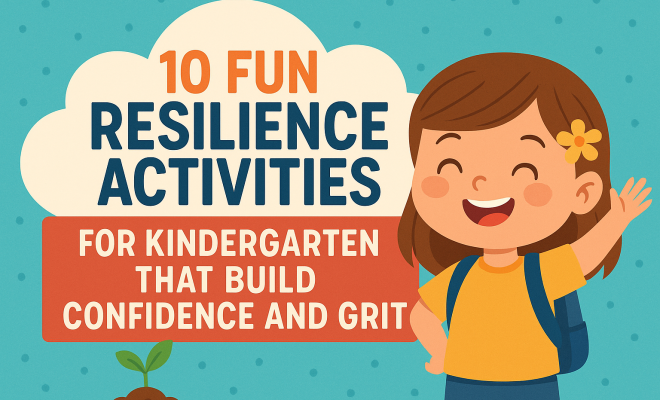
10 Fun Resilience Activities for Kindergarteners
“`html
Building resilience in young children, especially in kindergarteners, is a vital part of their emotional and social development. As they navigate this transformative stage in their lives, introducing resilience activities for kindergarten can empower them to handle challenges, build confidence, and develop coping strategies that will serve them well into adulthood. But what exactly are these activities, and how can educators and parents implement them effectively? Let’s explore.
The Importance of Resilience in Early Childhood
Resilience is the ability to bounce back from adversity, disappointment, or failure. For kindergarteners, who are just beginning to understand their emotions and social dynamics, developing resilience is crucial. It lays the groundwork for mental health and emotional well-being throughout their lives.
Research shows that resilient children tend to perform better academically and socially. They are more adaptable, cope with stress more effectively, and are less likely to experience anxiety or depression later on. By integrating resilience activities for kindergarten into the curriculum, educators can create a nurturing environment that fosters this critical skill.
Understanding Age-Appropriate Resilience Activities
When selecting resilience activities for young children, it’s essential to choose those that are age-appropriate. Kindergarteners are typically between five and six years old, and they learn best through play, exploration, and hands-on experiences. The activities should be simple, engaging, and allow for creativity and expression.
Here are some key characteristics to consider when designing resilience activities for this age group:
- Interactive: Activities should encourage participation and collaboration among peers.
- Fun: Engaging children through play helps make the learning process enjoyable.
- Flexible: Allowing for creativity and adaptation fosters problem-solving skills.
- Reflective: Incorporating moments for children to express feelings and thoughts enhances emotional intelligence.
Activity #1: Emotion Charades
One effective way to help kindergarteners identify and express their emotions is through a game of Emotion Charades. In this activity, children take turns acting out different emotions while others guess what they are. This not only promotes emotional awareness but also encourages empathy as children learn to understand how their peers feel.
To facilitate this activity:
- Prepare cards with different emotions written on them, such as happy, sad, angry, surprised, and scared.
- Have each child draw a card and act out the emotion without using words.
- Encourage their peers to guess the emotion, and then discuss a time when they felt that way.
Activity #2: The Resilience Tree
A great visual representation of resilience is the Resilience Tree. This activity allows children to express their ideas about what makes them strong. You’ll need a large piece of paper or a whiteboard for this activity.
Here’s how it works:
- Draw a tree trunk and branches on the paper.
- Ask the children to think of qualities that help them be resilient, such as family support, friends, or hobbies.
- Have them write or draw these qualities on leaves that you can attach to the branches.
This visual can serve as a constant reminder of their strengths and support systems.
Activity #3: Storytime with a Twist
Reading stories that feature characters overcoming obstacles is an excellent way to cultivate resilience. Choose books with themes of perseverance and problem-solving, like “The Little Engine That Could” or “Giraffes Can’t Dance.” (See: Adolescent mental health resources.)
After reading, engage the children in a discussion:
- Ask them what challenges the character faced.
- Discuss how the character showed resilience.
- Encourage them to share similar experiences they may have encountered.
Activity #4: Problem-Solving Scenarios
Encouraging critical thinking is essential for building resilience. Create simple problem-solving scenarios that are relevant to their daily lives, such as sharing toys or dealing with a disagreement with a friend.
To implement this activity:
- Present a scenario to the class.
- Encourage children to brainstorm solutions and discuss the outcomes of each option.
- Guide them toward understanding the importance of compromise and empathy in resolving conflicts.
Activity #5: Gratitude Journals
Teaching children to focus on the positive aspects of their lives can foster a resilient mindset. Starting a gratitude journal is a simple yet powerful activity. Provide each child with a small notebook to write or draw things they are grateful for.
Encourage regular journaling by:
- Setting aside time each week for them to share their entries with the class.
- Prompting discussions around why gratitude is important.
- Encouraging them to reflect on how gratitude can help them in tough situations.
Activity #6: Mindfulness Moments
Mindfulness practices can significantly aid in developing resilience in young children. Introducing simple mindfulness exercises, such as deep breathing or guided visualizations, can help kindergarteners manage their emotions and develop a sense of calm.
Incorporate mindfulness into your routine by:
- Setting aside a few minutes daily for mindful breathing exercises.
- Guiding them through visualizations, like imagining a warm, safe place.
- Encouraging them to express how they feel after these exercises.
Activity #7: Team Challenges
Group activities that promote teamwork can build resilience through collaboration. Try organizing team challenges that require children to work together to achieve a common goal, like building a tower with blocks or completing a scavenger hunt.
Use these challenges to teach valuable lessons:
- Highlight the importance of communication.
- Discuss how they can support each other.
- Encourage them to reflect on how teamwork helps them overcome challenges.
Activity #8: Crafting Resilience Shields
This creative arts and crafts activity allows children to express their personal strengths visually. Each child can create a “resilience shield” that represents their unique qualities and strengths.
To facilitate this activity:
- Provide materials like cardboard, markers, and stickers.
- Encourage children to draw symbols or words that represent their strengths, such as bravery, kindness, or creativity.
- Afterward, let them share their shields with the class and explain their choices.
Activity #9: Nature Exploration
Connecting with nature can foster resilience by allowing children to explore and take risks in a safe environment. Organizing outdoor activities such as nature walks or gardening can help children learn about resilience through observation and interaction.
During these explorations: (See: Building resilience in children.)
- Encourage them to notice how plants adapt to their environment.
- Discuss how different animals overcome challenges in nature.
- Promote a sense of wonder and curiosity about the world.
Activity #10: Celebrate Efforts, Not Just Outcomes
Finally, it’s crucial to emphasize the value of effort and the learning process rather than just the end results. Acknowledging children’s attempts and perseverance, even if they don’t succeed, helps build a growth mindset.
Incorporate this into your teaching by:
- Praising effort verbally.
- Creating a classroom culture that sees mistakes as opportunities for learning.
- Encouraging a supportive atmosphere where children cheer for each other’s efforts.
Additional Resilience Activities
While the activities mentioned above are effective, there are many more ways to enhance resilience in kindergarteners. Here are some additional activities that can easily be integrated into daily routines:
- Role-Playing Scenarios: Set up role-playing activities where children can act out various situations that might cause stress or conflict. This enables them to practice responses and develop coping strategies in a safe environment.
- Emotion Wheel: Create an emotion wheel where children can spin and land on a particular emotion. They can then share a time they felt that way, fostering dialogue about emotions and reinforcing their emotional vocabulary.
- Friendship Projects: Pair up children to work on a collaborative project, emphasizing the importance of teamwork and friendship. This reinforces social skills and helps them learn how to support one another.
- Visual Storytelling: Encourage children to tell their own stories using pictures or drawings. This can help them process experiences and express their feelings creatively.
- Weekly Reflection Circles: Set aside time each week for children to gather and share one thing they learned or an obstacle they faced. This promotes verbal expression and allows them to see they are not alone in facing challenges.
Statistics on Resilience in Children
Research indicates that resilience is a critical factor in a child’s overall development. According to a study published in the Journal of Child Psychology and Psychiatry, children who exhibit resilient traits are likely to have better academic performance and emotional stability. Some key statistics include:
- Children with high resilience scores are 50% more likely to excel academically than their peers with lower resilience levels.
- Early interventions focusing on resilience can reduce the likelihood of anxiety and depressive symptoms by 30% in children.
- Studies show that resilient children demonstrate 40% greater social competence, aiding them in forming stronger relationships with peers.
Expert Perspectives on Teaching Resilience
Experts in child psychology and education emphasize the importance of nurturing resilience from a young age. Dr. Linda Graham, a renowned psychologist, notes that “resilience is not just about bouncing back; it’s about how we build a sense of hope and perseverance in children.” She suggests that resilience should be integrated into daily interactions and the learning environment.
Additionally, educator and author Dr. Thomas Gordon emphasizes, “Children learn resilience through modeling. When adults demonstrate coping strategies and problem-solving skills, children are more likely to adopt these behaviors.” Positive reinforcement and real-life examples are crucial in teaching resilience.
Common Challenges in Building Resilience
While fostering resilience is essential, educators and parents may encounter challenges along the way. Some of the most common obstacles include:
- Overprotection: Parents might unintentionally shield their children from failure and challenges, which can hinder the development of coping skills.
- Lack of Support: Not all children have access to supportive environments at home or in school, impacting their ability to learn resilience.
- Difficulty in Expressing Emotions: Some children might struggle to articulate their feelings, making it harder for them to process experiences and develop resilience.
Addressing these challenges requires collaboration between parents, educators, and the community to create enriching environments where resilience can thrive.
Frequently Asked Questions about Resilience Activities for Kindergarten
What age group is most suitable for resilience activities?
While resilience activities can benefit children of all ages, kindergarteners (ages 5-6) are particularly receptive due to their developmental milestones in emotional and social skills. It’s an ideal time to introduce foundational resilience skills.
How can I assess if a child is developing resilience?
Look for signs such as an ability to cope with change, managing disappointment, asking for help when needed, and showing flexibility in problem-solving. Discussing their experiences with them can also provide insights into their resilience development.
Can resilience be taught, or is it innate?
Resilience is a combination of both innate traits and learned behaviors. While some children may naturally exhibit resilient qualities, many aspects can be taught through experiences, guidance, and supportive relationships.
How can I involve parents in resilience-building activities?
Engage parents by sharing activities they can do at home, such as gratitude practices or story discussions. Hosting workshops or informational sessions on the importance of resilience can also foster collaboration in this effort.
Are there specific books that promote resilience for kindergarteners?
Absolutely! Some excellent books include:
- “The Most Magnificent Thing” by Ashley Spires
- “Rosie Revere, Engineer” by Andrea Beaty
- “Brave Irene” by William Steig
- “The Name Jar” by Yangsook Choi
These stories feature themes of perseverance and creativity, making them perfect for resilience-building discussions.
Additional Resources for Educators and Parents
To further support the development of resilience in kindergarteners, educators and parents can leverage various resources. Here are some valuable tools and materials:
- Workshops and Training Programs: Many organizations offer workshops focusing on resilience-building strategies for educators and parents. These programs often provide hands-on experience and practical techniques to implement.
- Online Courses: Websites like Coursera and Udemy offer courses on child psychology and resilience. These can be beneficial for those looking to deepen their understanding and application of resilience concepts in everyday interactions.
- Books on Child Development: Reading literature on child psychology can offer insights. Books like “The Whole-Brain Child” by Daniel J. Siegel and Tina Payne Bryson provide strategies to nurture emotional intelligence and resilience.
- Community Support Groups: Joining local parent support groups or forums can create an opportunity to share experiences and strategies with others facing similar challenges.
- Educational Apps: There are various apps designed for children that promote emotional learning and resilience. Apps like “Breathe, Think, Do with Sesame” teach kids strategies to calm themselves and solve problems.
Innovative Ideas for Resilience Activities
In addition to the activities already discussed, here are some innovative ideas that can add variety and depth to your resilience-building efforts:
- Cooking Classes: Involve children in simple cooking activities. This teaches patience, teamwork, and the importance of following through on tasks. Plus, they get a tasty reward at the end!
- Art Therapy Sessions: Facilitate art sessions where children can express their feelings through creative outlets. This can range from painting to clay modeling, helping them articulate emotions non-verbally.
- Mindfulness Nature Walks: Take children outside for a mindfulness walk, encouraging them to notice their surroundings. Ask them to share what they see, smell, and hear, fostering a connection with nature and self-awareness.
- Resilience Role Models: Invite guest speakers who have overcome challenges in life to share their stories. Hearing real-life examples can inspire children and show them that resilience is attainable.
- Building a Resilience Curriculum: Consider creating a more structured resilience curriculum that spans several weeks. This could include weekly themes, activities, and reflections, leading to a comprehensive understanding of resilience.
Conclusion: A Lifelong Journey
Integrating resilience activities for kindergarten into early childhood education is essential. By fostering resilience, we equip children with the tools they need to navigate life’s challenges confidently. As they learn to face adversity, express emotions, and develop problem-solving skills, they become equipped for a brighter future.
Ultimately, the activities outlined above can serve as a foundation for resilience, allowing young learners to thrive both in and out of the classroom. The journey of building resilience is lifelong, and it begins with small, intentional steps in early childhood.
“`
Trending Now
Frequently Asked Questions
What are some resilience activities for kindergarteners?
Resilience activities for kindergarteners include collaborative games, storytelling, role-playing, and art projects that encourage problem-solving and emotional expression. These activities help children learn to cope with challenges, build confidence, and develop social skills in a fun and engaging way.
Why is resilience important for young children?
Resilience is crucial for young children as it helps them bounce back from adversity, manage stress, and develop coping strategies. Building resilience in kindergarteners lays the foundation for their emotional well-being and success in both academic and social settings as they grow.
How can teachers promote resilience in the classroom?
Teachers can promote resilience by integrating age-appropriate activities that encourage collaboration, creativity, and problem-solving. Creating a supportive classroom environment where children feel safe to express their emotions and learn from mistakes also fosters resilience.
What characteristics should resilience activities have?
Resilience activities for kindergarteners should be interactive, fun, flexible, and reflective. They should encourage participation, allow for creativity, and foster collaboration among peers, making the learning process enjoyable and effective.
How do resilience activities impact a child's development?
Resilience activities positively impact a child's development by enhancing their ability to cope with challenges, improving social skills, and increasing confidence. Engaging in these activities helps children develop essential life skills that support their emotional and academic growth.
Have you experienced this yourself? We’d love to hear your story in the comments.