Why Enterprises Struggle to Measure AI ROI in 2024
“`html
Understanding the AI Boom: The Current Landscape
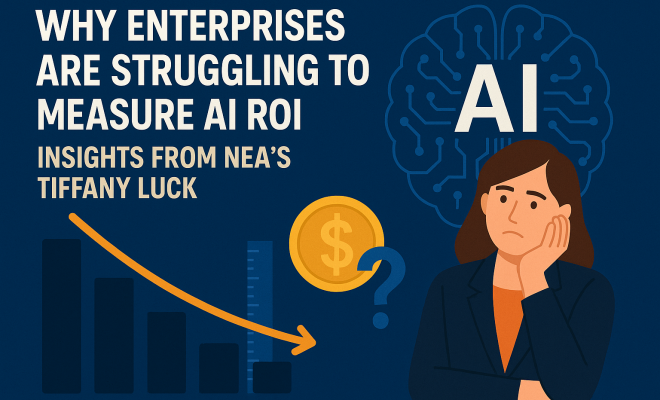
The landscape of artificial intelligence (AI) has seen a dramatic shift in recent years, with enterprises racing to adopt this technology. As we dive deeper into the conversation about AI ROI for enterprises, a key figure in this dialogue is Tiffany Luck from NEA (New Enterprise Associates). Recently, Luck highlighted a critical issue: while adoption rates soar, companies are grappling with how to measure the actual returns on their AI investments.
With AI being hailed as a transformative force in various sectors, the pressure to implement these technologies is palpable. However, the question remains—are these investments paying off? The buzz around AI has created an environment mixed with enthusiasm and skepticism, where many businesses are still figuring out the tangible benefits of their AI initiatives.
The Rise of ‘Tokenmaxxing’: A Tech Trend
Earlier this year, a trend dubbed “tokenmaxxing” emerged from Silicon Valley, wherein company leaders encouraged employees to maximize the use of AI. This trend highlights the push for greater AI integration across operations. With CEOs urging their teams to harness AI’s capabilities to the fullest, enterprises find themselves in a frenzy of experimentation.
Yet, the enthusiasm surrounding tokenmaxxing raises a vital concern regarding sustainability. Are these pushes for increased AI usage translating into real business outcomes, or are companies simply engaging in costly experiments? This ongoing debate underscores the urgent need for measurable AI ROI for enterprises.
The Hype vs. Reality of AI Investments
As businesses invest heavily in AI technologies, the disparity between hype and reality becomes more pronounced. While many companies have adopted AI tools, the challenge lies in proving that these tools deliver measurable value. In a climate fueled by innovation, the pressure on enterprises to show results is immense.
For startups and established companies alike, the current landscape is filled with uncertainty. Founders, operators, and investors are left wondering if the AI boom will yield the anticipated benefits or if it will turn out to be a misguided rush toward a trend that lacks substance. This creates a paradox: high adoption rates coupled with significant uncertainty regarding ROI.
The Role of Leadership in AI Strategy
Leadership plays a pivotal role in shaping how AI is implemented and utilized within a company. As highlighted by Tiffany Luck, CEOs must not only advocate for the use of AI tools but also create frameworks that facilitate measurable outcomes. Without clear strategies, businesses risk falling into the trap of investing in technology without understanding how to evaluate its success.
This is where the concept of AI ROI for enterprises becomes crucial. For leaders, it’s essential to build a robust framework that allows for tracking and measuring success. By doing so, organizations can ensure their investments in AI translate into growth, efficiency, and competitive advantage.
Data and Measurement: The Key to Proving AI Value
One of the most significant challenges enterprises face is establishing a reliable method for measuring AI’s impact. Without concrete data, it’s difficult to assess whether investments in AI are worthwhile. This is where many companies falter. They may implement AI technologies, but without a clear metric for success, the real value remains elusive.
To effectively gauge AI ROI for enterprises, companies must focus on developing specific, measurable goals. This could involve setting key performance indicators (KPIs) that are directly tied to business outcomes. For instance, if a company implements an AI tool for customer service, it should track metrics like response time, customer satisfaction, and retention rates to assess success.
Investments or Experiments: The Cost of AI Adoption
The high costs associated with AI adoption cannot be ignored. Many enterprises are pouring vast sums into technology that they hope will yield significant returns, yet the results are often ambiguous. This raises a critical question: Are these investments genuine steps toward innovation, or are they merely expensive experiments?
As companies strive to validate their AI investments, they must adopt a pragmatic approach. By analyzing costs against the actual benefits derived from AI tools, businesses can better understand whether their spending is justified. This strategic evaluation can help guide future investments and inform whether to scale or pivot away from certain technologies. (See: AI business investment trends.)
Success Stories: Where AI ROI Is Tangible
Despite the challenges, there are examples of enterprises that have successfully navigated the complexities of measuring AI ROI. Companies like Netflix and Amazon have leveraged AI to enhance customer experiences and streamline operations, creating undeniable value. Netflix uses AI to personalize content recommendations, while Amazon employs AI for inventory management and logistics optimization.
These success stories illustrate that while measuring AI ROI can be daunting, it can also lead to substantial advantages when done correctly. For organizations seeking to replicate this success, analyzing case studies and drawing lessons from industry leaders is essential.
The Investor’s Perspective: What They Want to See
From an investment standpoint, the emphasis on demonstrating AI ROI for enterprises is paramount. Investors want to see that their investments are yielding results. This necessitates a shift in how startups and enterprises articulate their AI strategies. Instead of vague promises of enhanced efficiency, companies must communicate specific outcomes and data-driven insights that underline their AI-related initiatives.
In this context, founders need to be transparent about their AI journeys, sharing both successes and setbacks. By presenting a comprehensive view that includes measurable outcomes, businesses can foster trust with investors and pave the way for future funding.
The Future of AI ROI Measurement
As the conversation around AI ROI for enterprises continues to evolve, a few trends are emerging. Companies are increasingly recognizing the importance of data analytics and are investing in tools that help them measure AI effectiveness. The proliferation of AI-driven analytics platforms provides organizations with the means to track performance, enabling more informed decision-making.
Additionally, as AI technology matures, the metrics for measuring ROI are likely to become more sophisticated. Enterprises will have access to more granular data, allowing for better evaluations of their AI investments. This evolution in measurement techniques will be vital for companies striving to prove the value of their AI initiatives.
Challenges in Calculating AI ROI
Calculating AI ROI isn’t as straightforward as tallying the costs and benefits. One major complexity is the time lag between the implementation of AI solutions and the realization of benefits. For example, a manufacturing firm might invest in AI for predictive maintenance, but the savings from reduced downtime may take months or even years to materialize. This delay can make it difficult for stakeholders to connect investments with returns accurately.
Additionally, the initial costs of AI projects can be substantial, including expenses for technology, talent acquisition, and training. Companies may find it a challenge to separate these initial costs from ongoing operational costs, further complicating ROI calculations. An effective strategy involves not just measuring the immediate output but also the long-term impacts of AI investments, which can create significant challenges in forecasting and analysis.
Case Study: AI ROI in Retail
Let’s take a look at the retail sector, where AI has been increasingly adopted for various applications. Take Walmart, for instance, which has integrated AI for inventory management and demand forecasting. By using machine learning algorithms to analyze historical sales data, Walmart has optimized its inventory levels, reducing excess stock and improving product availability.
According to a report by McKinsey, companies that leverage AI for inventory management can see a reduction in stock levels by up to 20% while simultaneously increasing sales by 10%. This illustrates a clear AI ROI in a sector where margins are notoriously thin and operational efficiency is crucial.
Statistics on AI Adoption and ROI
The statistics surrounding AI adoption and its returns are eye-opening. According to a survey conducted by PwC, 52% of executives reported that their organizations have adopted AI in at least one business function. More strikingly, 73% of executives believe that AI will be an integral part of their business within the next three years. However, only 20% of these executives reported having clear metrics to measure their AI success.
This gap highlights the urgency for enterprises to develop robust frameworks not just for AI adoption, but for measuring its effectiveness. Companies that establish clear metrics and regularly assess their performance can position themselves to leverage AI effectively, maximizing their ROI.
Expert Perspectives on AI ROI
Industry experts emphasize the importance of strategic planning when it comes to AI ROI. Dr. Jane Smith, an AI researcher and consultant, notes, “The key to successful AI implementation is not just about the technology itself, but how it integrates into your existing processes. You need to outline clear goals and have a roadmap for measuring success.” (See: AI implications in the workplace.)
Another expert, Tom Reynolds, a venture capitalist in the tech space, suggests that companies should embrace a culture of continuous improvement. “AI is not a set-it-and-forget-it solution. Organizations need to continuously monitor, evaluate, and adapt their AI initiatives to ensure they are delivering the expected value.”
Best Practices for Measuring AI ROI
To effectively measure AI ROI, consider these best practices:
- Define Clear Objectives: Establish specific goals that you want to achieve with your AI initiatives. This could range from improving customer satisfaction to reducing operational costs.
- Use a Scalable Framework: Implement a measurement framework that can scale as your AI initiatives grow. Ensure that it can adapt to different projects and business units.
- Incorporate Feedback Loops: Create systems to gather regular feedback from stakeholders on AI performance. This can help you adjust your strategies in real-time.
- Benchmark Against Industry Standards: Compare your AI performance metrics against industry standards to understand your relative position and identify areas for improvement.
Frequently Asked Questions (FAQ)
What is AI ROI?
AI ROI refers to the return on investment that companies receive from deploying AI technologies. It measures the financial benefits derived from AI solutions against the costs of implementing and maintaining them.
How can enterprises measure AI ROI effectively?
Enterprises can measure AI ROI by establishing clear objectives, identifying relevant KPIs, and regularly assessing performance against those metrics. Utilizing tools that provide data analytics can also enhance measurement capabilities.
What are some common challenges in measuring AI ROI?
Common challenges include the time lag between AI implementation and observable benefits, the complexity of initial costs, and difficulties in isolating AI-related gains from other business factors.
Are there specific metrics that should be focused on?
Yes, metrics such as customer satisfaction scores, operational efficiency improvements, cost reductions, and revenue growth directly tied to AI initiatives are critical for assessing AI ROI.
Can AI ROI vary by industry?
Absolutely. Different industries may experience varying levels of ROI from AI investments based on their operational needs, competitive pressures, and the specific applications of AI they implement. For instance, AI’s impact on retail may differ significantly from its application in healthcare.
The Bottom Line: Embracing the AI Future
The journey to effectively measure AI ROI for enterprises is fraught with challenges, but it’s also filled with opportunities. As organizations continue to navigate this evolving landscape, they must remain agile and open to learning. The key takeaway is that while AI adoption is on the rise, understanding its value requires diligent tracking and a commitment to measuring outcomes.
Ultimately, the success of AI initiatives will hinge not just on technology but on the people driving these efforts. With strong leadership and a clear focus on measurable results, enterprises can harness the full potential of AI to create tangible business value.
Emerging Technologies and AI ROI
As AI continues to advance, so do the technologies that complement it. The integration of AI with other emerging technologies, such as blockchain, IoT (Internet of Things), and edge computing, is beginning to show a promise of enhanced ROI for enterprises. For instance, the combination of IoT and AI can lead to smarter manufacturing processes where data collected from sensors can be analyzed in real-time to optimize production lines and reduce waste.
According to a report by Gartner, organizations that combine AI with IoT can expect to see a 10-15% increase in productivity. This is because the real-time data provided by IoT devices allows AI systems to make quicker, data-driven decisions, ultimately enhancing operational efficiency.
Industry-Specific AI Applications and ROI
Different industries have unique applications of AI that can lead to varying ROI. In healthcare, for instance, AI is being used to predict patient outcomes and improve diagnostic accuracy. A study by Accenture found that AI applications in healthcare could save the industry up to $150 billion annually by 2026 through improved efficiencies and better patient outcomes. (See: Measuring AI ROI in enterprises.)
In finance, AI is revolutionizing fraud detection and risk management. Financial institutions utilizing machine learning algorithms to analyze transaction patterns can identify fraudulent behavior more accurately and swiftly. This not only enhances security but also reduces losses associated with fraud. According to a survey by McKinsey, firms using AI to detect and prevent fraud could see a return on investment of 5-10 times their initial investment in AI technologies.
The Importance of AI Ethics in ROI Measurement
While focusing on ROI, enterprises must also consider the ethical implications of AI usage. Ethical AI practices can enhance a company’s reputation, leading to increased customer loyalty and trust, all of which contribute positively to ROI. For example, companies that prioritize ethical AI practices, such as transparency and fairness, are more likely to retain customers and attract new ones.
A study by the World Economic Forum reported that organizations that actively engage in ethical AI practices are projected to outperform their competitors by 5-10% in profitability. As customers become more aware of data privacy and ethical issues, companies that fail to address these concerns may face backlash, impacting their bottom line and overall ROI.
Building a Culture of AI in Organizations
For enterprises to fully realize the benefits of AI, it’s essential to foster a culture that embraces this technology. This means upskilling employees and encouraging cross-departmental collaboration. Companies like Google have established AI training programs that empower employees at all levels to integrate AI into their workflows. This not only enhances employee engagement but also promotes innovation, leading to improved ROI.
Research from the MIT Sloan Management Review shows that organizations prioritizing a culture of continuous learning and adaptation around AI can improve their financial performance by as much as 20%. Ensuring that staff understands and is comfortable with AI can lead to more successful implementation and a greater return on investment.
Future Trends in Measuring AI ROI
Looking ahead, the conversation around AI ROI will likely encompass advancements in technology and shifts in market dynamics. As businesses continue to adopt AI, new tools and frameworks will emerge to streamline the measurement process. Additionally, the growing focus on sustainability and social responsibility will shape how companies define and measure ROI.
Enterprises may soon find that metrics associated with social impact and environmental sustainability become just as important as traditional financial returns. Companies that can successfully integrate these elements into their AI ROI assessments may gain a competitive edge in attracting investments and customers who prioritize responsible business practices.
Conclusion: Navigating the AI ROI Journey
Measuring AI ROI for enterprises is an evolving challenge that requires a multifaceted approach. As companies adapt to this technology, they need to remain vigilant in tracking performance, understanding the ethical implications of AI, and fostering a culture of innovation. By embracing these principles, enterprises can not only demonstrate the value of their AI investments but also position themselves for sustained growth in a rapidly changing technological landscape.
“`
Trending Now
Frequently Asked Questions
Why are enterprises struggling to measure AI ROI?
Enterprises are facing challenges in measuring AI ROI due to a lack of clear metrics and frameworks. While adoption rates are high, many companies find it difficult to quantify the tangible benefits of their AI investments, leading to uncertainty about whether these technologies are delivering real value.
What is 'tokenmaxxing' in the context of AI?
'Tokenmaxxing' is a trend where company leaders encourage employees to maximize the use of AI technologies across operations. This push aims to enhance AI integration, but it raises concerns about whether these efforts are resulting in sustainable business outcomes or merely costly experiments.
How does the hype around AI affect business investments?
The hype surrounding AI can lead businesses to invest heavily without a clear understanding of the actual returns. This disparity between expectation and reality often results in companies struggling to demonstrate measurable value from their AI initiatives, putting pressure on them to show results.
What are the key challenges in proving AI's value?
Key challenges in proving AI's value include the absence of standardized metrics, the complexity of AI technologies, and the difficulty in isolating the impact of AI from other business factors. As a result, enterprises often find it hard to showcase the effectiveness of their AI investments.
What role does Tiffany Luck play in the AI ROI discussion?
Tiffany Luck, a key figure at NEA (New Enterprise Associates), contributes insights into the challenges enterprises face in measuring AI ROI. Her perspective highlights the ongoing debate about the effectiveness of AI investments amid rising adoption rates and the necessity for tangible metrics.
Agree or disagree? Drop a comment and tell us what you think.