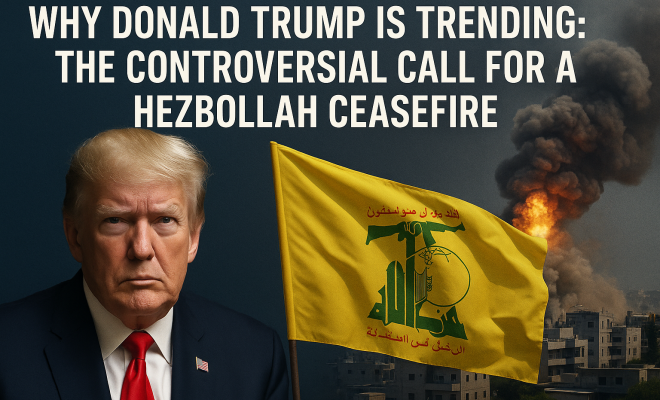
Why Donald Trump Is Trending: The Controversial Call for a Hezbollah Ceasefire
“`html
In the ever-turbulent world of politics, few figures manage to capture attention quite like Donald Trump. Recently, he has reignited discussions across social media platforms and news outlets, spiking in Google Trends following his statements regarding the ongoing conflict in Lebanon. The former President’s remarks about urging Israel to reach a ceasefire with Hezbollah have prompted a wave of debate that many are finding hard to ignore.
The Context of Trump’s Remarks
The backdrop to Trump’s comments is the escalating conflict in Lebanon, where violence has surged dramatically in recent months. The situation has not only humanitarian implications for those living in the region but also major geopolitical consequences that could affect global security. Amidst this chaos, Trump has stepped in, claiming he advised Israeli leaders to ‘use your head’ in an effort to avoid further escalation. The implications of such a statement are multi-faceted and touch on sensitive issues surrounding the long-standing Israeli-Palestinian conflict and regional power dynamics.
The Immediate Reaction
Trump’s assertion sparked immediate backlash from various quarters, highlighting the deep divisions that exist concerning U.S. foreign policy in the region. Pro-Israel groups criticized Trump for what they perceived as undermining Israel’s position against Hezbollah, a group categorized as a terrorist organization by many Western nations. On the other hand, pro-Lebanon advocates found fault with the former President for not sufficiently recognizing the grievances and circumstances surrounding Hezbollah’s existence.
As a result, social media platforms lit up with discussions. Users shared millions of posts across Twitter, Facebook, and Reddit, scrutinizing Trump’s comments from multiple angles. Some supporters hailed him as a voice of reason, while detractors lambasted him for being out of touch with the realities on the ground.
Why This Is More Than Just Politics
The debate over Trump’s comments is not strictly a political one; it taps into broader themes of national identity, cultural affiliations, and the ethics of international intervention. People are seeking clarity and understanding, as the ramifications of these conflicts impact lives daily.
For many, the stakes are personal. Families with roots in either Israel or Lebanon are finding themselves at the center of a debate that feels far removed from their lived experiences. The emotional charge surrounding this topic underscores why Donald Trump is trending; it’s not just about politics—it’s about people, and the choices that leaders make in times of crisis.
Trump’s Polarizing Reputation
One cannot discuss the trending topic of Donald Trump without acknowledging his polarizing reputation. His tenure as President was marked by controversial policies and statements that divided public opinion. Whether it was immigration, trade, or foreign policy, Trump often found himself in the crosshairs of both praise and criticism.
Now, his comments on the Israel-Hezbollah situation continue this trend. For supporters, Trump is a straight-talker who isn’t afraid to challenge the status quo; for opponents, he represents the worst excesses of a populist approach to governance that prioritizes headlines over diplomatic nuance.
Social Media: The New Arena for Political Discourse
In today’s interconnected world, social media serves as the battleground for political discussions. It’s where memes, hashtags, and trending topics shape narratives and public opinion. Trump’s remarks have taken on a life of their own online, with hashtags related to the conflict gaining traction as individuals share their perspectives.
Platforms like Twitter have seen a flurry of activity, with people sharing articles, personal opinions, and video clips of Trump’s statement. This rapid dissemination of ideas and emotions amplifies the urgency of the discourse, leading to a viral effect that keeps Donald Trump trending.
Implications for U.S. Foreign Policy
Trump’s call for Israel to consider a ceasefire with Hezbollah raises important questions about U.S. foreign policy. Traditionally, the U.S. has been a staunch ally of Israel, often prioritizing its security over potential dialogue with entities viewed as adversaries. Trump’s remarks challenge this established narrative.
Could this signify a shift in how U.S. leaders approach conflicts in the Middle East? While it’s unlikely that Trump’s comments will lead to immediate policy changes, they do provoke thought and discussion about the efficacy of long-standing strategies. (See: Hezbollah overview on Wikipedia.)
Public Sentiment and Opinion Polls
In the wake of Trump’s statements, various polling organizations have begun to gauge public sentiment surrounding the issue. Early results indicate that Americans are deeply divided on the matter, reflecting the polarized views that characterize much of contemporary political discourse.
Polling data reveals that a significant portion of Americans are supportive of Israel, viewing it as a strategic ally in a volatile region. However, there’s also growing concern about humanitarian issues and the impact of military actions on civilian populations. This duality in public opinion indicates that while Trump may resonate with a base that prioritizes defense and strength, there is a substantial portion of the population that desires a more nuanced approach.
Expert Opinions: Voices from the Field
To provide deeper context, it’s essential to include perspectives from experts in foreign policy and Middle Eastern studies. Many analysts have weighed in, noting the dangers of oversimplifying complex geopolitical issues. Dr. Rachel Stein, a Middle East policy expert, commented, “While I appreciate the urgency that Trump is bringing to the conversation, we must remember that ceasefires often need to be negotiated with intricate considerations of power dynamics and historical grievances.”
Experts caution against viewing Trump’s comments as a panacea for the ongoing conflict, emphasizing the importance of multilateral negotiations and long-term solutions. This perspective echoes a growing sentiment that merely calling for a ceasefire without a comprehensive strategy can lead to unintended consequences.
The Role of Traditional Media
Traditional media outlets are also playing a significant role in shaping the narrative around Trump’s remarks. From major newspapers to cable news networks, coverage has been extensive and varied. Some outlets echo the sentiments of Trump’s supporters, framing his remarks as a bold intervention in a complex situation. Conversely, others emphasize the potential repercussions of his statements, critiquing them as reckless or misinformed.
The juxtaposition of these narratives exemplifies how traditional media remains a crucial player in the political arena, influencing public perception and discourse while also responding to the viral conversations happening online.
Looking Ahead: What’s Next for Trump and the Region?
As the conflict in Lebanon continues to unfold, and with Trump remaining a central figure in the discussion, many are left wondering what lies ahead. Will his remarks lead to a new dialogue on U.S. foreign policy in the Middle East? Or are they simply another chapter in a long history of contentious interactions surrounding the region?
With Donald Trump trending, it’s likely that this conversation will evolve as new developments emerge. The international community will be watching closely to see how the situation unfolds, and what role, if any, Trump will play in influencing future decisions.
Final Thoughts
In a world where political climates shift rapidly, Donald Trump remains a constant source of controversy and fascination. His recent remarks regarding a potential ceasefire with Hezbollah have not only sparked heated debate but also brought attention to a critical international issue. As conversations around his statements continue to grow, it serves as a reminder of the intricate interplay between politics, media, and public sentiment in shaping our understanding of global conflicts.
In sum, whether one supports or opposes him, Donald Trump trending reflects a deep-seated need to engage with complex issues that affect our world today. Only time will tell how this latest chapter will unfold, but for now, the discussions are far from over.
The Impact of Trump’s Presidency on Middle Eastern Relations
To better understand the significance of Trump’s recent comments, it’s important to evaluate the broader context of his presidency and its impact on Middle Eastern relations. His time in office was marked by a series of bold actions that aimed to reshape U.S. involvement in the region. For instance, Trump’s decision to recognize Jerusalem as Israel’s capital in 2017 was met with international outcry and protests, yet it solidified his support among pro-Israel factions within the U.S.
This move signaled a departure from decades of U.S. policy aimed at balancing support for both Israel and the Palestinians. In many ways, Trump’s approach to the Middle East has set the stage for the current situation, where he now calls for a ceasefire with Hezbollah while maintaining a strong pro-Israel stance.
Trump’s Support Base and Its Influence
Understanding who supports Trump and why can provide further insights into why he remains a trending topic. His base largely consists of conservative voters, many of whom view him as a defender of American interests abroad. They appreciate his unfiltered communication style, often interpreting it as a refreshing change from typical political rhetoric. In discussions about foreign policy, this demographic often prioritizes security and military strength, which can put them at odds with those advocating for diplomatic solutions. (See: Ceasefires and public health implications.)
Polls suggest that a considerable segment of his supporters may resonate with his recent comments on the Israel-Hezbollah conflict, perceiving them as a necessary call for strategic thinking in U.S. foreign policy. This support can further amplify Trump’s influence, making him a key player in ongoing political discourse.
The Role of International Actors
When discussing the Israel-Hezbollah conflict, it’s critical to consider the roles of various international actors. Countries like Iran, Syria, and even Russia have vested interests in the region, complicating the landscape. For instance, Iran’s support for Hezbollah is a significant factor, as it seeks to expand its influence in Lebanon and the wider Middle East.
Trump’s remarks may not only impact U.S.-Israel relations but can also reverberate through these international alliances. Analysts suggest that if the U.S. appears to waver in its support for Israel, it could embolden adversaries like Iran, which could escalate tensions further. This dynamic leads to a complex interplay of power where one nation’s actions can trigger reactions across the globe.
Comparing Trump’s Approach to Previous Administrations
Trump’s approach to the Middle East can be contrasted with those of previous administrations. For example, President Barack Obama sought to engage diplomatically with Iran, culminating in the Iran nuclear deal, which aimed to limit Iran’s nuclear capabilities in exchange for lifting economic sanctions. Conversely, Trump scrapped this deal, opting for a more confrontational approach. This shift has had lasting impacts on the region and sets a precedent for how future U.S. administrations might navigate these relationships.
By urging Israel to consider a ceasefire, Trump’s recent remarks may represent an attempt to pivot away from isolationist tendencies toward a more engaged stance, albeit still rooted in a strong pro-Israel narrative. Observers are left questioning whether this marks a new phase in U.S. foreign policy or if it merely serves to reinforce Trump’s image as a controversial yet impactful figure in global politics.
FAQ
What did Trump say about the Israel-Hezbollah conflict?
Trump urged Israeli leaders to “use your head” and consider a ceasefire with Hezbollah, prompting significant debate and discussion across social media and news outlets.
Why is Trump trending now?
Trump is trending due to his controversial statements regarding the ongoing conflict in Lebanon, which reignited discussions about U.S. foreign policy and its implications for international relations.
How have people reacted to Trump’s comments?
Reactions have been deeply polarized, with some praising him for a pragmatic approach and others criticizing him for being out of touch with the complex realities of the conflict.
What are the potential consequences of Trump’s remarks?
His statements could influence U.S. foreign policy discussions and impact perceptions of the U.S.’s role in the Middle East, potentially reshaping alliances and encouraging dialogue or further conflict.
What are experts saying about Trump’s comments?
Experts emphasize the importance of nuanced discussions and caution against oversimplifying the complexities of the Israel-Hezbollah situation, highlighting the need for comprehensive strategies rather than quick fixes.
How does Trump’s past presidency influence his current stance?
Trump’s previous actions, such as recognizing Jerusalem as Israel’s capital, have laid the groundwork for his current comments, as they reflect a consistent alignment with pro-Israel policies while challenging the traditional diplomatic approach.
What role do international actors play in the conflict?
Countries like Iran and Syria have significant influence in the region, and their actions can complicate the dynamics of U.S. foreign policy decisions regarding Israel and Hezbollah. (See: BBC report on Lebanon conflict.)
The Long-Term Effects of Trump’s Remarks
Looking at the potential long-term effects of Trump’s remarks, it’s crucial to consider how they may alter the landscape of U.S.-Middle East relations moving forward. Many analysts believe that Trump’s outspoken nature may encourage other politicians to adopt similar stances, pushing the dialogue towards a more aggressive form of diplomacy that could further alienate key allies or escalate tensions with adversaries like Iran.
A shift towards a more confrontational approach could also impact international agreements, as nations may reconsider alliances based on the perceived reliability of U.S. commitments. The delicate balance of power in the Middle East—already fraught with tension—could be further destabilized if the U.S. appears to falter in its long-standing support of Israel, leading to potential repercussions that are hard to predict.
Understanding the Broader Geopolitical Landscape
To grasp the full implications of Trump’s statements, one must consider the broader geopolitical landscape. The Middle East is a complex web of relationships and conflicts, where historical grievances often play a significant role in shaping current events. For instance, the ongoing tensions between Israel and Hezbollah can be traced back to decades of animosity and territorial disputes, compounded by external influences from countries like Iran.
As U.S. foreign policy shifts, so too will the alliances and enmities that define this landscape. Trump’s recent push for a ceasefire might seem like a step towards de-escalation, but it can also be viewed as a reaction to pressures from various lobbying groups and the American electorate that are increasingly vocal about humanitarian issues in conflict zones.
What This Means for Future Elections
Trump’s influence on current events is set to shape the political landscape not only within the U.S. but also in the context of upcoming elections. His stance on the Israel-Hezbollah conflict may resonate with his base and influence the platforms of Republican candidates leading up to the next election cycle. Candidates may feel the pressure to adopt or oppose similar views, making foreign policy a significant talking point in the campaigns ahead.
Furthermore, Trump’s comments serve as a reminder of how quickly narratives can shift in the political arena. With the rapidly changing dynamics of public sentiment, politicians may find themselves in a position where they must reassess their own views on foreign policy to align with or differentiate from Trump’s approach.
Public Engagement and Activism
In an era where social media amplifies voices, public engagement and activism surrounding Trump’s remarks on the Israel-Hezbollah situation have surged. Advocacy groups, both pro-Israel and pro-Palestinian, are mobilizing supporters to take action, whether that’s through social media campaigns, protests, or lobbying efforts aimed at influencing policymakers. This heightened activism reflects a growing recognition of the impact of individual voices in shaping political dialogue.
The conversations around Trump’s comments are likely to inspire grassroots movements that push for more humanitarian considerations in U.S. foreign policy. In this way, Trump’s statements might inadvertently empower activists advocating for peace and understanding in a region that has seen too much division and conflict.
“`
Trending Now
- read the full story
- “Temperament and Sibling Conflict: Why Children from the Same Family Can Be So Different”
- “Why Phonological Awareness Predicts Reading Success…
- this guide on “the safe place in conscious discipline: creating calming spaces for emotional regulation”
Frequently Asked Questions
Why is Donald Trump trending now?
Donald Trump is trending due to his recent controversial remarks urging Israel to reach a ceasefire with Hezbollah amid the escalating conflict in Lebanon. His statements have sparked widespread debate on social media and news platforms, reigniting discussions about U.S. foreign policy in the region.
What did Trump say about Hezbollah?
Trump suggested that Israeli leaders should 'use your head' to avoid further escalation in the conflict with Hezbollah. His comments have prompted mixed reactions, with some viewing them as undermining Israel's position and others criticizing him for not acknowledging Hezbollah's grievances.
What is the context of Trump's remarks on Israel?
Trump's remarks come against the backdrop of a significant increase in violence in Lebanon, which has humanitarian and geopolitical implications. His call for a ceasefire reflects his engagement in a complex issue involving the Israeli-Palestinian conflict and regional power dynamics.
How did social media react to Trump's comments?
Social media reactions to Trump's comments were polarized, with millions of posts analyzing his statements. Supporters praised him as a voice of reason, while critics accused him of being disconnected from the realities on the ground in Lebanon and the broader implications of his advice.
What are the implications of Trump's call for a ceasefire?
Trump's call for a ceasefire has significant implications for U.S. foreign policy and the dynamics of the Middle East. It highlights the divisions in opinion regarding support for Israel versus the acknowledgment of Lebanon's circumstances, affecting both humanitarian and geopolitical discussions.
What’s your take on this? Share your thoughts in the comments below — we read every one.