Pragmatics in Language Development: A Parent’s Guide
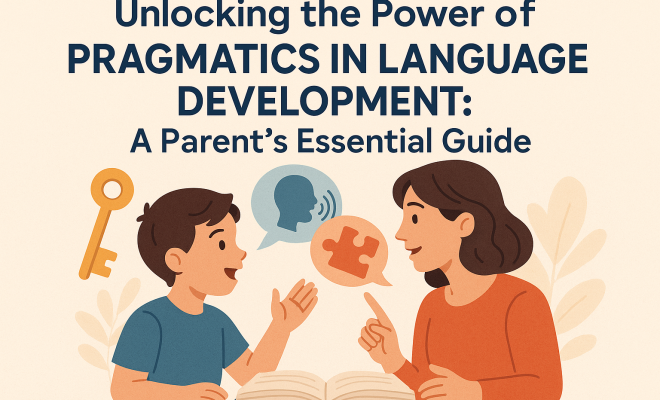
“`html
Understanding Pragmatics: The Social Side of Language
When we think about language, we often focus on grammar, vocabulary, and pronunciation. However, there’s a crucial component that plays an equally important role in communication: pragmatics. This aspect of language development refers to the rules and conventions that govern how we use language in social contexts. Essentially, pragmatics is the bridge that connects language to real-world social interactions.
For parents, understanding pragmatics in language development is vital. It can significantly influence how children interact with peers, adults, and their environment. This guide will delve into the importance of pragmatics, the stages of its development, and practical tips for nurturing these skills in your child.
The Foundation of Pragmatics
Pragmatics encompasses a variety of skills that go beyond mere words. It involves understanding the nuances of language, such as tone, context, and the emotional intentions behind what is said. For instance, when a child hears, “Can you pass the salt?” they should grasp that it is not just a question; it’s a polite request. This understanding is pivotal for effective communication.
Key components of pragmatics include:
- Contextual Understanding: Recognizing that language can change meaning based on context.
- Turn-Taking: Knowing when to speak and when to listen during conversations.
- Non-Verbal Cues: Interpreting gestures, body language, and facial expressions.
- Social Norms: Understanding the unwritten rules of conversation, such as politeness and respect.
Stages of Pragmatic Development
The journey of developing pragmatic skills begins early in childhood and continues through adolescence. Each stage builds on the last, creating a comprehensive skill set that children can use in varying social contexts.
1. Early Childhood (0-3 years): In the initial stages, children learn to communicate needs and desires through simple gestures and vocalizations. They begin to understand basic social cues, such as responding to their name or looking at their caregivers when something is said.
2. Preschool Age (3-5 years): As children enter preschool, they start to engage more with peers. They develop skills like taking turns in conversations and using language for different purposes, such as asking questions or making requests. This stage is critical for learning the basics of social interaction.
3. Early School Age (5-8 years): At this stage, children refine their pragmatic skills significantly. They begin to engage in more complex conversations, understand humor, and can adjust their language based on social context. For instance, they might use different tones when speaking to a teacher versus a friend.
4. Adolescence (9-18 years): As teenagers, individuals develop a sophisticated understanding of pragmatics, including sarcasm, irony, and nuanced social interactions. They learn to navigate complex social landscapes, utilizing their pragmatic skills in various scenarios, such as group projects or extracurricular activities.
Why Pragmatics Matter
Pragmatic skills are essential for a child’s overall development. Here are a few reasons why:
- Social Integration: Effective communication helps children build friendships and foster relationships. Pragmatic skills enable them to interpret social cues, making it easier to engage with peers.
- Academic Success: In school, students are often required to work collaboratively. Strong pragmatic abilities can enhance their ability to participate in discussions, present ideas, and understand instructions.
- Emotional Intelligence: Understanding the feelings and intentions of others is a critical part of emotional intelligence. Pragmatics supports children in recognizing non-verbal cues, allowing them to empathize with others.
Common Challenges in Pragmatic Development
While many children develop pragmatic skills naturally, some may encounter difficulties. These challenges can stem from various factors, including developmental disorders, limited social exposure, or even cultural differences. Here are a few common issues: (See: Pragmatics in Language Development.)
- Delayed Language Development: Children with speech or language delays may also struggle with pragmatic skills, affecting their ability to engage socially.
- Autism Spectrum Disorder (ASD): Children with ASD often exhibit challenges in social communication, including understanding social cues and maintaining conversations.
- Language Disorders: Specific language impairment can hinder a child’s ability to grasp pragmatic skills, complicating their interactions with peers.
If you suspect that your child is facing challenges with pragmatics, seeking guidance from a speech-language pathologist can be beneficial. These professionals can provide tailored strategies and interventions to support your child’s development.
Encouraging Pragmatic Skills at Home
As a parent, you play a crucial role in cultivating your child’s pragmatic skills. Here are some practical tips to enhance these abilities at home:
- Model Effective Communication: Children learn by observing. Regularly use varied language and demonstrate good conversational practices. Show how to take turns, ask questions, and respond to others’ feelings.
- Engage in Role-Playing: Use imaginative play to create scenarios where your child must navigate social interactions. Role-playing can be a fun way to practice pragmatics in a low-stress environment.
- Read Together: Reading books that involve dialogue can help your child understand character interactions and different perspectives. Encourage discussions about the characters’ feelings and intentions.
- Encourage Questions: Prompt your child to ask questions during conversations. This not only fosters their curiosity but also enhances their ability to engage with others.
Utilizing Technology for Language Development
In today’s digital age, technology can be a valuable tool for fostering pragmatic skills. There are numerous applications and online resources designed to support language development in children. Some noteworthy options include:
- Interactive Story Apps: These apps often incorporate decision-making elements that require children to choose how a story unfolds, emphasizing the consequences of different choices. This encourages them to think about characters’ motivations and feelings.
- Speech Therapy Apps: Many apps are specifically designed to assist with speech and language development. They often include games and activities focused on improving pragmatic skills.
- Online Communities and Forums: Engaging with other parents in forums can provide insight into common challenges and solutions in language development. Sharing experiences can be enlightening.
When to Seek Professional Help
While it’s normal for children to exhibit varying degrees of pragmatic skills, there are times when professional intervention may be necessary. Here are a few indicators that your child might benefit from additional support:
- Consistent Difficulty: If your child struggles with understanding social cues or maintaining conversations regularly, it may warrant a consultation.
- Isolation: If your child has trouble making friends or engaging with peers, it could be a sign of challenges in pragmatic development.
- Behavioral Issues: Children who experience frustration or anxiety during social interactions may benefit from targeted strategies to improve their pragmatic skills.
Ultimately, early intervention can make a significant difference. The sooner you seek help, the better your child will be equipped to navigate social interactions successfully.
Real-Life Applications of Pragmatic Skills
Understanding the relevance of pragmatics in everyday life can further underscore its importance in language development. Consider these scenarios where pragmatic skills come into play:
- Group Projects: Children learn to cooperate and communicate effectively with peers. They must navigate group dynamics, share responsibilities, and address conflicts.
- Playdates: During interactions with friends, children practice turn-taking, sharing, and negotiating. These experiences are critical for building social skills.
- Classroom Discussions: Engaging in classroom dialogues is essential for developing critical thinking and comprehension skills. Children learn to articulate their thoughts clearly and listen to others.
By recognizing these real-life contexts, parents can better appreciate the importance of nurturing pragmatic skills in their children.
Examples of Pragmatic Skills in Everyday Situations
To illustrate the importance of pragmatics in language development, let’s explore some specific examples of how these skills manifest in daily interactions.
Example 1: Classroom Interaction
During a history class, a teacher asks the students for their thoughts on a recent lesson. A child with strong pragmatic skills might raise their hand, wait for their turn, and share an insightful comment that reflects understanding of the topic. They may also respond appropriately to peers’ opinions, acknowledging their viewpoints before sharing their own, which fosters a collaborative learning environment.
Example 2: Family Dinner
At a family dinner, the conversation flows between different members. A child adept in pragmatics would pick up on non-verbal cues, such as a nod from a parent indicating it’s their turn to speak, or noticing that another family member seems upset and adjusting their tone to be more supportive. This ability to read the room and respond accordingly enhances family dynamics and strengthens relationships.
Example 3: Sports Team Interaction (See: Understanding Pragmatics in Communication.)
In a sports team setting, children must communicate strategies, give encouraging feedback, and resolve conflicts. Pragmatic skills enable them to express their ideas clearly, listen to teammates, and adapt their communication style to different situations, whether they are being friendly with a teammate or asserting authority when needed.
Statistics on Pragmatic Skills Development
Understanding the significance of pragmatic skills can become clearer when we look at some statistics regarding language development in children:
- Research from the American Speech-Language-Hearing Association (ASHA) indicates that around 7-10% of children experience some form of language delay, which often includes pragmatic language impairment.
- Studies have shown that children with strong pragmatic skills tend to perform better academically, with 80% of students demonstrating improved collaborative skills when engaging in group projects.
- According to a survey of parents, 60% reported that their children faced challenges in social interactions, which can often be traced back to difficulties in understanding pragmatics.
Expert Perspectives on Pragmatics
To gain deeper insight into the role of pragmatics in language development, let’s hear from some experts in the field:
Dr. Jane Smith, Speech-Language Pathologist: “Pragmatics is often the missing piece in language development discussions. While vocabulary and grammar are essential, it’s the subtleties of how we communicate that truly determine social success. Children who lack these skills may struggle in both friendships and academic settings.”
Professor Mark Johnson, Linguist: “Pragmatics includes understanding not just the words being said but the context in which they are said. It’s about interpreting intentions, emotions, and social norms, which are all crucial for effective communication. Teaching children these aspects from an early age will serve them well throughout their lives.”
FAQ About Pragmatics in Language Development
What is the difference between pragmatics and semantics?
Pragmatics refers to the use of language in social contexts, focusing on the social aspects of communication, while semantics deals with the meaning of words and phrases in isolation. In short, pragmatics is about how we use language, and semantics is about what language means.
At what age should children begin to develop pragmatic skills?
Children start developing pragmatic skills in early childhood, around the age of 1-3 years, when they begin to use gestures and vocalizations for communication. By preschool, they are actively engaging with peers and practicing more complex social interactions.
How can I tell if my child is struggling with pragmatics?
If your child frequently has trouble understanding social cues, maintaining conversations, or making friends, they may be struggling with pragmatic skills. Signs to look for include difficulties in taking turns during conversations, misunderstanding jokes or sarcasm, or showing frustration during social interactions.
Are there specific activities that can help improve pragmatic skills?
Yes! Activities such as role-playing, storytelling, and group games that require collaboration can significantly enhance pragmatic skills. Encouraging your child to participate in team sports or group activities also provides valuable opportunities for social interaction and pragmatic learning.
What role do caregivers play in fostering pragmatic skills?
Caregivers play a crucial role by modeling effective communication, providing opportunities for social interaction, and encouraging children to express themselves. Engaging in conversations, reading together, and discussing social situations can all help children develop their pragmatic skills.
Strategies for Promoting Pragmatics in Specific Settings
Different environments can influence how children develop their pragmatic skills. Here are some strategies tailored for various settings:
At Home
Creating a supportive environment at home can greatly enhance a child’s pragmatic development. Encourage family discussions during meals, where everyone has a chance to share their thoughts and experiences. This not only promotes turn-taking but also helps children learn how to listen and respond appropriately. Use games that require verbal communication and cooperation, such as charades or Pictionary, to foster both language and pragmatic skills in a fun way.
In the Classroom
Teachers can implement activities that promote collaborative learning. Group work projects can be structured to emphasize roles and responsibilities, helping students learn to communicate effectively with each other. Incorporating drama or role-play into the curriculum can also allow students to practice pragmatic skills by taking on different perspectives and understanding character motivations.
In Social Settings
Encouraging playdates and group activities allows children to practice pragmatics in real-life contexts. Parents can facilitate these interactions by providing guidance on how to initiate conversations, share toys, and resolve conflicts. Emphasizing the importance of empathy during these interactions can help children understand the emotional aspects of communication.
The Role of Culture in Pragmatic Development
Cultural background can significantly influence how children develop pragmatic skills. Understanding and adhering to social norms can vary widely across cultures. For example, in some cultures, direct eye contact is a sign of confidence, while in others, it may be considered disrespectful. Teaching children to navigate these differences is crucial, especially in diverse communities.
Parents can expose their children to different cultural contexts by participating in community events or attending cultural festivals. Discussing the various communication styles and customs they encounter helps children appreciate diversity and adapt their pragmatic skills accordingly.
The Long-Term Benefits of Strong Pragmatic Skills
Developing strong pragmatic skills does not just benefit children in their early years; it also lays the groundwork for their future. Adults with well-developed pragmatic abilities are often more successful in both personal and professional relationships. They are usually effective communicators, able to navigate workplace dynamics, and build meaningful connections with colleagues.
Moreover, strong pragmatic skills contribute to emotional intelligence, which is increasingly recognized as a key factor in leadership and teamwork. In a world that values collaboration and interpersonal relationships, fostering these skills early on can set children on a path to lifelong success.
Conclusion
Pragmatics in language development is a fundamental aspect that shapes how children communicate and interact with the world. By understanding its significance and actively promoting these skills, parents can provide their children with the tools they need to succeed socially and academically. From modeling good communication practices to utilizing technology, there are countless ways to support your child’s pragmatic growth. Remember, fostering these skills is not just about language; it’s about building connections that will last a lifetime.
“`
Trending Now
- 7 Scaffolding Strategies for Math Teachers…
- our breakdown of 10 proven strategies for scaffolding learning for students with ieps
- this guide on unlocking potential: effective scaffolding writing instruction for middle school students with learning disabilities
- 8 Essential Scaffolding Reading Strategies for Kindergarten Students That Work Wonders
- this guide on unlocking learning: how scaffolding and the zone of proximal development can transform education
Frequently Asked Questions
What is pragmatics in language development?
Pragmatics refers to the rules and conventions that govern how we use language in social contexts. It encompasses skills such as contextual understanding, turn-taking, non-verbal cues, and social norms, which are essential for effective communication.
Why is pragmatics important for children?
Understanding pragmatics is crucial for children as it influences their ability to interact with peers and adults. It helps them grasp the nuances of language and engage in meaningful conversations, fostering better social relationships.
What are the stages of pragmatic development?
Pragmatic development occurs in stages starting from early childhood and continuing through adolescence. Each stage builds on previous skills, enabling children to navigate various social contexts more effectively.
How can parents support their child's pragmatic development?
Parents can nurture pragmatic skills by engaging in conversations, modeling appropriate language use, encouraging turn-taking, and discussing the importance of non-verbal cues and social norms during interactions.
What are examples of pragmatic skills?
Examples of pragmatic skills include understanding context to interpret language meaning, knowing when to speak or listen in conversations, recognizing non-verbal communication, and adhering to social norms like politeness.
Have you experienced this yourself? We’d love to hear your story in the comments.