Elite Journeys’ Platinum Residency Sparks Global Outrage
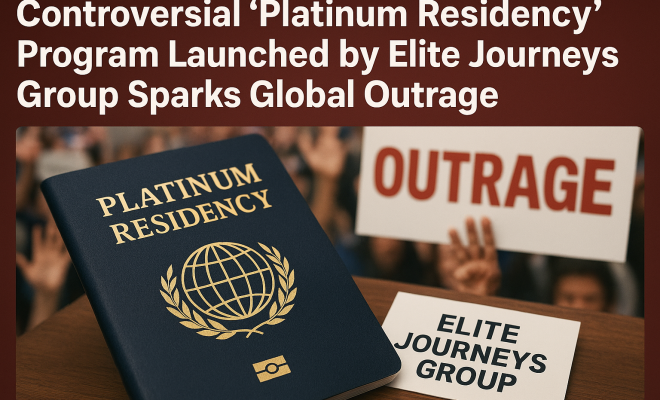
“`html
The world of luxury travel and exclusive citizenship has always danced on the edge of controversy, but a recent announcement has truly thrown gasoline on the fire. Elite Journeys Group, a name synonymous with high-end international travel, in an eyebrow-raising collaboration with the government of the picturesque Isle of Serenity, has just pulled back the curtain on its new Platinum Residency Program. This isn’t just another gilded gateway for the ultra-wealthy; it’s a fast-track, no-holds-barred offer of citizenship and expansive visa-free travel for a cool minimum investment of $5 million.
Yesterday’s unveiling of this ‘Platinum Residency-by-Investment’ initiative was less a quiet launch and more a cannonball splash that has sent ripples of condemnation across the globe. We’re talking about a program designed exclusively for high-net-worth individuals, promising them instant access to over 150 countries without the usual visa hurdles. But while Elite Journeys Group and the Isle of Serenity might see this as a stroke of economic genius, a significant portion of the international community, including human rights organizations and financial transparency advocates, views it as a dangerous precedent. The accusations are stark: a potential conduit for illicit financial flows, a mechanism that deepens global inequality, and a moral quandary that demands immediate attention. This isn’t just chatter; it’s a full-blown demand for international scrutiny, with whispers of potential sanctions already in the air. Meanwhile, the Isle of Serenity is digging in its heels, framing the program as a vital shot in the arm for its economy. It’s a truly emotionally charged topic, igniting social media and search engines alike, forcing us to confront the ethics of ‘buying’ citizenship and its far-reaching implications for global security and wealth distribution.
The Enticing Allure of the Platinum Residency Program
Let’s break down what makes this particular Platinum Residency Program so alluring, at least to its intended clientele. For starters, it’s the sheer speed. Traditional immigration processes, even for the wealthy, can be a labyrinth of paperwork, interviews, and waiting periods that stretch into years. This program, by contrast, promises an ultra-fast track. Imagine bypassing all that, securing a new passport and the freedom it entails in a fraction of the usual time. That’s a powerful draw for business magnates who need mobility, families seeking alternative residencies, or individuals simply desiring a ‘Plan B’ in an increasingly unpredictable world.
Then there’s the extraordinary reach of the visa-free travel. Over 150 countries. Think about that for a moment. It’s not just about avoiding the hassle of visa applications; it’s about unparalleled global access, opening doors for business opportunities, spontaneous travel, and an undeniable sense of freedom. For those who operate on a global scale, this kind of mobility isn’t merely a convenience; it’s a strategic asset. The $5 million investment, while substantial, is framed as the price of admission to a new echelon of global citizenship, a ‘golden ticket’ to a world without borders, or at least, fewer of them. Elite Journeys Group, with its reputation in luxury travel, isn’t just selling a passport; they’re selling an upgraded lifestyle, a premium status symbol, and a tangible asset that can be passed down through generations. This is a very carefully crafted offering, designed to appeal to the deepest desires of the ultra-rich for security, flexibility, and prestige.
The Isle of Serenity: A Small Nation’s Big Gamble
Why would a sovereign nation like the Isle of Serenity align itself with such a potentially contentious program? The answer, as articulated by the island nation’s government, boils down to economic stimulus. Like many smaller island economies, the Isle of Serenity is likely grappling with unique challenges – perhaps a dependence on tourism, vulnerability to external economic shocks, or a desire to diversify its revenue streams. A $5 million minimum investment, multiplied by what they hope will be a significant number of applicants, represents a substantial injection of capital into its coffers.
This isn’t an entirely new concept; many smaller nations have turned to ‘citizenship-by-investment’ (CBI) programs as a lifeline. Malta, Cyprus (though its program was suspended), and several Caribbean nations have long offered similar pathways, albeit often at lower price points. For the Isle of Serenity, the Platinum Residency Program is a calculated risk, an attempt to leverage its sovereignty and geographical appeal into direct foreign investment. The funds generated could be earmarked for critical infrastructure projects, healthcare improvements, educational advancements, or even bolstering their own tourism sector. They’re essentially betting that the economic benefits will outweigh the international criticism and potential reputational damage. It’s a bold move, and one that highlights the complex interplay between national sovereignty, economic necessity, and global ethical standards.
Human Rights Organizations Raise the Alarm
It didn’t take long for the backlash to begin, and leading the charge are human rights organizations. Their condemnation of the Platinum Residency Program is swift and unequivocal. For these groups, the issue isn’t merely economic; it’s fundamentally ethical. They argue that offering citizenship for such a high price creates a two-tiered system of global mobility, where wealth, rather than merit, need, or humanitarian considerations, becomes the primary determinant of access and freedom. This exacerbates global inequality in a deeply troubling way, creating an exclusive club for the ultra-rich while millions of genuine refugees and migrants face insurmountable barriers.
Beyond the moral argument, there’s a practical concern: the potential for abuse. These organizations often point to a troubling history of CBI programs being exploited by individuals seeking to evade sanctions, launder money, or escape legal scrutiny in their home countries. The ‘ultra-fast-track’ nature of the Platinum Residency Program, while attractive to legitimate investors, also raises red flags for those worried about insufficient due diligence. Are background checks truly robust enough to vet applicants thoroughly in such a compressed timeframe? These are critical questions that human rights groups are demanding answers to, emphasizing that national sovereignty shouldn’t come at the cost of global security and justice.
Financial Transparency Advocates Sound the Siren
Hand-in-hand with human rights concerns are the urgent warnings from financial transparency advocates. Groups like Transparency International and Global Witness have long highlighted the risks associated with opaque citizenship-by-investment schemes. Their primary fear with the Platinum Residency Program is that it could become a magnet for illicit financial flows. When citizenship can be purchased quickly and discreetly, it creates an attractive proposition for individuals looking to hide wealth, circumvent international sanctions, or facilitate corruption.
A $5 million investment is a significant sum, and for those with ill-gotten gains, it could be seen as a small price to pay for a new identity, a new jurisdiction, and access to a vast network of visa-free countries. The lack of detailed information about the vetting process for the Platinum Residency Program is particularly concerning. How will the Isle of Serenity ensure that the funds are clean? What level of scrutiny will be applied to the sources of wealth? Without rigorous, transparent due diligence and oversight, there’s a very real danger that the program could inadvertently (or even advertently) become a safe harbor for dirty money, undermining global efforts to combat financial crime. These advocates are not just asking questions; they are demanding a fundamental re-evaluation of the program’s structure to safeguard against these profound financial risks. (See: BBC on global citizenship programs.)
The Broader Implications for Global Security
The controversy surrounding the Platinum Residency Program extends far beyond economic ethics and financial transparency; it touches directly on matters of global security. The concern is multifaceted. Firstly, if individuals with dubious backgrounds or connections to organized crime, terrorism, or espionage can acquire a new passport through such a program, it poses a direct threat to the security of the 150+ countries offering visa-free access. A new identity and enhanced mobility could enable them to move more freely, establish new networks, and conduct illicit activities with greater ease. For more context, see business under attack.
Secondly, it creates a potential vulnerability for intelligence agencies. Tracking individuals of concern becomes significantly harder when they can simply ‘buy’ a new nationality. The ability to switch allegiances or obscure one’s true origins could severely compromise international security efforts. Thirdly, there’s the risk of reputational damage and diminished trust between nations. If countries perceive that the Isle of Serenity is not adequately vetting its new citizens, they might reconsider their visa-free agreements, potentially isolating the island nation and disrupting global travel norms. This isn’t theoretical; we’ve seen instances where CBI programs have led to countries being blacklisted or having their visa-free status revoked due to security concerns. The stakes are incredibly high, and the potential fallout from a lax Platinum Residency Program could ripple across international borders for years to come.
Social Media Erupts: The Public’s Verdict
In an age where public opinion can be shaped and amplified in an instant, it’s no surprise that the Platinum Residency Program has ignited a firestorm on social media. Twitter (now X), Instagram, and other platforms are buzzing with outrage, debate, and sometimes, even cynical humor. Hashtags like #CitizenshipForSale and #PlatinumResidency are trending, with users expressing everything from moral indignation to calls for international boycotts.
You see comments like, “So, the rich just get to buy their way out of everything now? What about the rest of us?” or “This isn’t economic stimulus; it’s a loophole for criminals!” There’s a palpable sense of injustice, a feeling that global elites are creating a separate rulebook for themselves. This public outcry isn’t just noise; it’s a powerful indicator of how deeply this issue resonates with ordinary people. It taps into anxieties about wealth inequality, fairness, and the erosion of traditional notions of citizenship. While social media discussions can sometimes be reductive, they undoubtedly pressure governments and international bodies to take notice and respond. The sheer volume of engagement around this topic underscores its controversial nature and the deep divisions it’s creating.
Demands for International Scrutiny and Sanctions
The outrage isn’t confined to social media; it’s translating into concrete demands for action from international bodies. Human rights organizations, financial watchdogs, and even some national governments are calling for immediate and thorough scrutiny of the Platinum Residency Program. The calls range from independent audits of the Isle of Serenity’s vetting processes to full-blown investigations by international organizations like the Financial Action Task Force (FATF) or the United Nations. The goal is to ascertain whether the program complies with international standards for anti-money laundering and counter-terrorism financing.
More forcefully, there are growing calls for potential sanctions. This could manifest in various ways: individual sanctions against officials involved, restrictions on financial transactions with the Isle of Serenity, or even the revocation of visa-free travel agreements by other countries. Such measures would be a severe blow to the island nation’s economy and international standing. The pressure is mounting on the Isle of Serenity to either significantly reform the Platinum Residency Program or face the very real consequences of international isolation. This isn’t just about criticism; it’s about a coordinated effort to compel adherence to global norms and prevent what many see as a dangerous precedent.
The Ethics of Citizenship-by-Investment: A Deep Dive
At the heart of this entire controversy lies a profound ethical debate: should citizenship, a fundamental aspect of identity and belonging, be a commodity available for purchase? Historically, citizenship has been acquired through birth (jus soli or jus sanguinis), naturalization based on residency and integration, or marriage. The concept of citizenship-by-investment, while not new, challenges these traditional pathways by placing a monetary value on what many consider an inalienable right or a earned privilege.
Proponents often argue that CBI programs are a legitimate tool for economic development, allowing small nations to attract much-needed foreign capital without increasing taxes or accumulating debt. They suggest that wealthy investors bring not just money, but also expertise, networks, and a vested interest in the host country’s prosperity. However, critics counter that this commodification of citizenship fundamentally undermines its value. It creates a system where a passport is treated as a luxury good, akin to a yacht or a private jet, rather than a civic bond. It raises uncomfortable questions about national identity, loyalty, and the very definition of belonging. When citizenship can be bought, does it devalue the struggles of those who earn it through years of hard work and integration? Does it create a perception that certain rights and privileges are only for the financially privileged? These are not easy questions, and the Platinum Residency Program has brought them roaring back into the global spotlight.
Economic Development vs. Ethical Dilemmas: A Balancing Act
The Isle of Serenity’s defense of the Platinum Residency Program hinges on its potential for economic uplift. It’s a classic example of a developing nation attempting to leverage its unique assets to secure foreign investment. In theory, the influx of $5 million per applicant could fund vital public services – modern hospitals, better schools, and infrastructure improvements like roads and communication networks. These are tangible benefits that could genuinely improve the lives of the island’s existing citizens. Many small island developing states (SIDS) struggle with limited natural resources, susceptibility to climate change, and reliance on volatile tourism sectors. CBI programs, they argue, offer a stable, alternative revenue stream.
However, the ethical dilemmas are undeniable. Is the potential economic gain worth the risk of facilitating illicit activities or exacerbating global inequality? Critics often point out that the benefits of such programs don’t always trickle down evenly. While government coffers might swell, the average citizen might not see a direct improvement in their daily lives if the funds aren’t managed transparently and equitably. There’s also the risk of distorting local economies, where the sudden wealth of a few ultra-rich residents could drive up prices for housing and goods, making life harder for long-term residents. The challenge for the Isle of Serenity, and any nation considering such a program, is to find a way to maximize economic benefits while rigorously upholding ethical standards and ensuring the welfare of all its citizens, not just the new ones. (See: Reuters report on immigration controversies.)
The Precedent Set: What Other Nations Are Doing
It’s important to remember that while the Platinum Residency Program is sparking outrage, it’s not operating in a vacuum. Other nations have experimented with similar ‘golden visa’ or CBI programs, some with more success and fewer controversies than others. Portugal’s Golden Visa program, for example, focused more on real estate investment and job creation, and while it faced scrutiny, it largely avoided the level of global condemnation seen here. The Caribbean nations, such as St. Kitts and Nevis, Dominica, and Grenada, have had CBI programs for decades, offering citizenship for investments typically ranging from $100,000 to $400,000. These programs have also faced calls for stricter vetting and transparency, but their lower price points and longer tenure in the market have perhaps made them less of a shock to the international system.
What makes the Platinum Residency Program stand out is the sheer price tag and the “ultra-fast track” promise. The $5 million entry point immediately sets it apart, targeting a truly elite segment of the global population. This high barrier to entry, combined with the perceived speed of the process, raises questions about the thoroughness of due diligence that might not be as prominent in lower-cost, longer-duration programs. The global community is increasingly demanding more from these programs, pushing for greater transparency in how funds are used, more robust background checks, and a clearer demonstration of genuine economic benefit that extends beyond a quick cash injection. For more context, see market crash signals.
Expert Perspectives: Legal Scholars and Economists Weigh In
The Platinum Residency Program has drawn sharp commentary from academics and experts across various fields. Legal scholars specializing in international law often highlight the tension between national sovereignty – a country’s right to determine its own citizenship laws – and the evolving international norms around anti-money laundering and human rights. They argue that while a nation has the right to grant citizenship, this right isn’t absolute and must be balanced against its obligations to the global community, especially when those actions could facilitate transnational crime or undermine international sanctions regimes. They might point to the principle of “abuse of right,” where a legal right is exercised in a way that causes harm to others.
Economists, particularly those focused on development and international finance, offer a more nuanced view. Some acknowledge the potential for capital injection into small economies, emphasizing the need for these funds to be invested strategically in productive sectors rather than merely sitting in government accounts. Others express skepticism, citing studies that suggest the long-term economic benefits of CBI programs are often overstated, while the risks of asset bubbles, inflation, and increased inequality can be significant. They often advocate for alternative development strategies that focus on sustainable growth, local enterprise, and human capital development, rather than relying on a transient stream of wealthy immigrants. The consensus among many experts is that while CBI programs can be a tool, they are fraught with risks and require exceptionally strong governance, transparency, and oversight to be ethically justifiable and genuinely beneficial.
Looking Ahead: The Future of ‘Golden Passports’
The controversy surrounding the Platinum Residency Program will undoubtedly have significant ramifications, not just for Elite Journeys Group and the Isle of Serenity, but for the entire ‘golden passport’ industry. We are likely to see increased scrutiny from international organizations and a push for more stringent regulations and transparency standards for all citizenship-by-investment programs globally. Countries that currently offer such programs, or are considering them, will be watching closely to see how the Isle of Serenity navigates this storm.
There might be a shift towards more robust due diligence requirements, independent oversight mechanisms, and perhaps even higher ethical benchmarks for what constitutes a legitimate investment versus a mere transaction for citizenship. It’s also possible that visa-free agreements could be re-evaluated, with countries becoming more cautious about extending such privileges to nations perceived as having lax CBI programs. The public outcry and demands for sanctions suggest a growing global intolerance for schemes that appear to prioritize wealth over security and equality. The future of ‘golden passports’ may very well hinge on whether programs like the Platinum Residency Program can evolve to address these profound ethical, financial, and security concerns, or whether they will ultimately be seen as a relic of an era when unchecked wealth could simply buy its way into any nation.
Frequently Asked Questions About the Platinum Residency Program
What exactly is the Platinum Residency Program?
It’s a new citizenship-by-investment initiative launched by Elite Journeys Group in collaboration with the Isle of Serenity government. For a minimum investment of $5 million, high-net-worth individuals can get fast-track citizenship and visa-free travel to over 150 countries.
Why is it causing so much controversy?
Critics, including human rights organizations and financial transparency advocates, are concerned it creates a two-tiered system of global mobility, potentially facilitates illicit financial flows and money laundering due to its “ultra-fast-track” nature, and deepens global inequality. There are also significant global security concerns.
What are the main benefits for applicants?
The primary benefits for applicants are speed – bypassing lengthy traditional immigration processes – and unparalleled global mobility, offering visa-free access to over 150 countries. It’s marketed as a way to secure a “Plan B” and an upgraded lifestyle. For more context, see oil surges and global trade. (See: NY Times article on citizenship by investment.)
How does the Isle of Serenity justify the program?
The Isle of Serenity’s government frames the program as a vital economic stimulus. They anticipate the $5 million minimum investment from each applicant will inject substantial capital into the nation’s economy, which can then be used for infrastructure, healthcare, education, and diversifying its revenue streams. There’s a fuller look at unforeseen cold rush.
What are the risks associated with such programs?
The risks include potential for abuse by individuals seeking to evade sanctions or launder money, exacerbation of global inequality, weakened international security through compromised vetting, and reputational damage for the host nation. There’s also the risk that economic benefits might not genuinely trickle down to all citizens.
Have other countries offered similar programs?
Yes, many smaller nations, particularly in the Caribbean (like St. Kitts and Nevis, Dominica) and Europe (like Malta, previously Cyprus), have offered citizenship-by-investment or “golden visa” programs. However, the Platinum Residency Program’s $5 million price point and “ultra-fast-track” promise make it particularly notable and controversial.
What are international organizations saying about it?
International bodies like the Financial Action Task Force (FATF) and the United Nations are being urged to scrutinize the program. Demands range from independent audits of vetting processes to potential sanctions against the Isle of Serenity, or the revocation of visa-free travel agreements by other countries, if the program is deemed non-compliant with international standards.
What does “due diligence” mean in this context?
“Due diligence” refers to the comprehensive background checks and financial investigations conducted on applicants to ensure their funds are legitimate and they don’t pose security risks. Critics worry the “ultra-fast-track” nature of the Platinum Residency Program might compromise the thoroughness of these essential checks.
Is buying citizenship an ethical practice?
This is the core of the ethical debate. Proponents argue it’s a legitimate economic tool for nations, while critics contend it commodifies citizenship, undermines its value, and creates a deeply unequal system where wealth dictates access to fundamental rights and global mobility.
What might be the long-term impact on the ‘golden passport’ industry?
The controversy is likely to lead to increased scrutiny, calls for more stringent regulations, greater transparency, and higher ethical benchmarks across the entire citizenship-by-investment industry. It could also prompt other nations to re-evaluate their visa-free agreements with countries offering such programs.
“`
Trending Now
Frequently Asked Questions
What is the Platinum Residency Program by Elite Journeys Group?
The Platinum Residency Program is a controversial initiative launched by Elite Journeys Group in collaboration with the Isle of Serenity, offering high-net-worth individuals the opportunity to obtain citizenship and visa-free access to over 150 countries for a minimum investment of $5 million.
Why is the Platinum Residency Program controversial?
The program has sparked global outrage due to concerns over its potential to facilitate illicit financial flows, exacerbate global inequality, and raise ethical questions about 'buying' citizenship, prompting demands for international scrutiny and potential sanctions.
How does the Platinum Residency Program impact global inequality?
Critics argue that the Platinum Residency Program deepens global inequality by allowing only the ultra-wealthy to gain citizenship and benefits, effectively creating a two-tier system where financial resources dictate access to rights and opportunities.
What are the benefits of the Platinum Residency Program?
Participants in the Platinum Residency Program gain instant access to over 150 countries without visa requirements, alongside the potential for economic benefits for the Isle of Serenity, which frames the initiative as essential for its economic growth.
What reactions have emerged regarding the Platinum Residency Program?
The launch of the Platinum Residency Program has led to widespread condemnation from human rights organizations and financial transparency advocates, sparking debates on social media and calls for accountability regarding the ethics of citizenship by investment.
Agree or disagree? Drop a comment and tell us what you think.