Boost Learning: Scaffolding & ZPD Transform Education
“`html
Understanding how students learn has long been a focal point in educational theory, with many experts advocating for approaches that can adapt to individual needs. Two pivotal concepts that have emerged from the work of Soviet psychologist Lev Vygotsky are scaffolding in education and the Zone of Proximal Development (ZPD). These ideas not only illuminate the nature of learning but also provide actionable insights for educators looking to enhance student engagement and achievement.
1. The Foundations of Vygotsky’s Theory
Lev Vygotsky, a revolutionary figure in the field of psychology, proposed that social interaction plays a fundamental role in cognitive development. His work in the early 20th century laid the groundwork for understanding how children learn through interaction with more knowledgeable others. Vygotsky emphasized that learning is a social process, with interaction leading to the development of higher mental functions.
One of the core tenets of Vygotsky’s theory is the concept of the Zone of Proximal Development (ZPD), which serves as a bridge between what a learner can do independently and what they can achieve with guidance. This framework not only highlights the importance of mentorship in education but also underscores the potential for learning within collaborative contexts.
2. Defining the Zone of Proximal Development
The Zone of Proximal Development is often described as the sweet spot for learning—it’s where a student’s current abilities meet their potential with appropriate support. Vygotsky articulated that the ZPD consists of tasks that a child cannot yet perform alone but can accomplish with help. This assistance usually comes from teachers, peers, or even advanced technology, making it a dynamic area for intervention.
To effectively utilize the ZPD, educators must assess each student’s competencies and challenges. For example, a child who can solve basic addition problems might struggle with subtraction. By identifying this gap, a teacher can provide tailored support that enables the student to progress to more complex tasks, ultimately fostering independence and confidence.
3. Understanding Scaffolding in Education
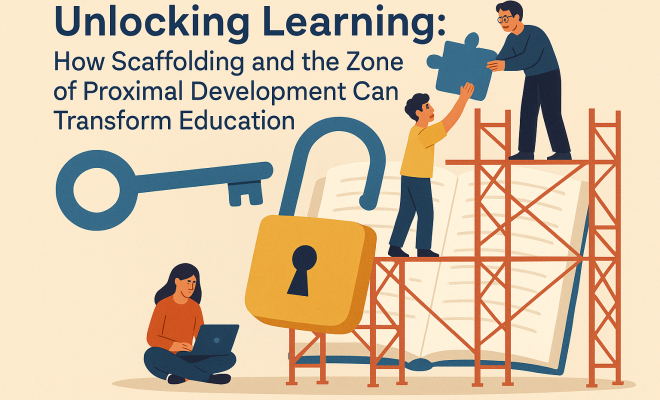
Scaffolding in education refers to the support provided to students as they learn new concepts and skills. This support is temporary and is gradually removed as the learner becomes more competent. The term was popularized in the 1970s by educational psychologist Wood, Bruner, and Ross, who likened it to the physical scaffolding used in construction—offering structure while allowing for gradual removal as proficiency increases.
In practical terms, scaffolding can take many forms, including hints, prompts, modeling, or providing structured frameworks. A teacher might demonstrate a math problem step-by-step before allowing students to attempt similar problems on their own. This approach not only aids understanding but also helps to build learners’ confidence and independence.
4. The Relationship Between Scaffolding and the ZPD
While scaffolding and the Zone of Proximal Development are distinct concepts, they are intricately linked. Scaffolding serves as the means through which learners can operate within their ZPD. By providing adequate support, educators can help students bridge the gap between their current skills and their potential capabilities.
For instance, consider a group of students tasked with writing an essay. A teacher might first provide a template or outline, which acts as scaffolding, enabling students to organize their thoughts. As students gain confidence and skills in structuring their essays, the teacher can gradually fade this support, allowing for more independent writing. This illustrates how effective scaffolding can facilitate movement within the ZPD.
5. Practical Strategies for Effective Scaffolding
Implementing scaffolding in education requires thoughtful planning and execution. Here are several strategies that educators can utilize:
- Modeling: Demonstrating a task before asking students to complete it can provide a clear example of expectations and methods.
- Chunking Information: Breaking complex information into manageable parts makes it easier for students to digest and understand, aligning with their ZPD.
- Guided Practice: Offering opportunities for students to practice new skills under supervision allows them to receive immediate feedback and assistance.
- Checklists and Graphic Organizers: Tools like these can help structure thinking and keep students focused on the task at hand.
- Encouraging Peer Support: Group work and peer tutoring can extend the learning process, as students may benefit from explanations by classmates.
Using these strategies, teachers can create a supportive learning environment that encourages exploration and mastery without overwhelming students. (See: Zone of Proximal Development on Wikipedia.)
6. Current Relevance of Vygotsky’s Theory in Modern Classrooms
In today’s educational landscape, Vygotsky’s concepts of scaffolding and the ZPD remain pertinent. As educators increasingly adopt differentiated instruction and inclusive practices, these frameworks provide valuable guidance in personalizing learning experiences. Educators can adapt their teaching methods to cater to the diverse needs of their students, ensuring that each learner can progress at their own pace.
Furthermore, the integration of technology in education has opened new avenues for scaffolding. Online platforms and learning management systems can offer tailored resources and supports that align with a student’s ZPD, making education more engaging and effective. For example, adaptive learning technologies can adjust the difficulty of tasks based on student performance, effectively scaffolding their learning journey.
7. Challenges in Implementing Scaffolding
Despite the clear benefits, implementing scaffolding in education is not without its challenges. One of the main obstacles is teachers’ ability to accurately assess students’ ZPD. This requires ongoing observation and assessment, which can be time-consuming in large classrooms.
Additionally, there is a risk of over-scaffolding, where teachers provide too much support, hindering students’ independence. It is crucial for educators to find the right balance—supporting students without doing the work for them. This demands a keen understanding of each student’s abilities and the development of strategies that encourage autonomy.
8. The Future of Scaffolding in Education
As the educational landscape continues to evolve, the principles of scaffolding and the ZPD will likely play a significant role in shaping future teaching practices. With a growing focus on student-centered learning, educators are increasingly recognizing the value of flexible, responsive approaches that meet diverse learner needs.
Innovation in educational technology will further enhance the possibilities for scaffolding. Tools like artificial intelligence and interactive learning environments can create personalized pathways for students, offering support tailored to their unique ZPDs. As we look ahead, it will be essential for educators to stay informed about these advancements and consider how they can integrate them into their teaching strategies to optimize student learning.
9. Final Thoughts: The Power of Scaffolding and ZPD
Scaffolding in education and the Zone of Proximal Development are powerful concepts rooted in Vygotsky’s vision of learning as a social and interactive process. By understanding and applying these principles, educators can create meaningful learning experiences that encourage growth, foster independence, and ultimately enhance student achievement. As we continue to adapt our teaching methods to meet the needs of diverse learners, these frameworks offer a timeless guide for effective education.
10. Comparative Analysis of Scaffolding Across Different Educational Systems
Scaffolding in education doesn’t look the same everywhere. Various educational systems around the world interpret and implement these principles in unique ways. For example, in Finland, a highly praised education system, there’s a strong emphasis on collaborative learning. Here, teachers often use scaffolding techniques to promote peer interactions, allowing students to learn from one another while the teacher acts as a facilitator rather than a traditional instructor.
In contrast, the United States educational system tends to focus more on individualized instruction. Teachers frequently differentiate tasks based on students’ ZPDs. Here, scaffolding is often more structured, with specific interventions tailored to meet individual student needs. Research indicates that this tailored approach can lead to significant learning gains, especially in diverse classrooms.
Interestingly, a 2021 study compared scaffolding techniques across these two systems. Researchers found that Finnish students engaged more in peer-led scaffolding, whereas American students received more direct teacher-led scaffolding. Both methods have proven effective, but the Finnish approach nurtures greater collaboration and social skills, while the American method often results in quicker academic gains. See also top tech tools for students.
11. Expert Perspectives on Scaffolding
Educational experts have weighed in on the significance of scaffolding in education. Dr. Barbara Rogoff, a prominent developmental psychologist, emphasizes that learning occurs through social interactions. She advocates for scaffolding as a way to connect students with their cultural backgrounds, thus making learning more relevant and impactful.
Dr. John Hattie, known for his research on visible learning, highlights the importance of feedback as a form of scaffolding. He argues that timely and constructive feedback can significantly enhance learning outcomes, encouraging students to reflect on their understanding and approach challenges with confidence. His meta-analyses suggest that the effect size of feedback is one of the most influential factors in student achievement. (See: Harvard University on educational theories.)
12. Statistics to Consider
Numerous studies underscore the impact of scaffolding on student learning. A comprehensive review published in the Journal of Educational Psychology found that scaffolding techniques can improve student performance by up to 30%. Additionally, research by the National Center for Education Statistics reports that students who experience effective scaffolding are 25% more likely to engage in deeper learning practices, such as critical thinking and problem-solving.
Another interesting statistic comes from a longitudinal study that tracked students for several years. It found that those who received consistent scaffolding support in early education scored, on average, 15% higher on standardized tests by the time they reached high school compared to their peers who did not receive such support.
13. Frequently Asked Questions About Scaffolding in Education
- What is scaffolding in education?
Scaffolding in education refers to the supportive framework provided by teachers to help students learn new concepts and skills. This support is temporary and is gradually removed as students gain independence.
- How does scaffolding relate to the Zone of Proximal Development?
Scaffolding is the method teachers use to help students work within their Zone of Proximal Development, bridging the gap between what students can do independently and what they can achieve with guidance.
- Can scaffolding be used in online learning?
Absolutely! Online learning platforms often incorporate scaffolding techniques, such as interactive exercises and guided tutorials, to support students’ learning journeys.
- What are some examples of scaffolding techniques?
Examples include modeling a task, using graphic organizers, providing checklists, or having students work in pairs or small groups to encourage peer learning.
- How can I assess a student’s ZPD?
Assessment can be done through observation, informal assessments, or diagnostic tests. It’s important to understand each student’s current abilities and identify where they need support to progress.
- What are the risks of over-scaffolding?
Over-scaffolding can limit students’ independence and confidence. It’s essential to gradually reduce support as students become more competent to foster their ability to learn independently.
- Is scaffolding suitable for all age groups?
Yes! Scaffolding can be adapted for any age group. It’s beneficial in early childhood education, as well as in middle and high school, depending on the learning tasks.
14. Real-Life Applications of Scaffolding
Scaffolding is not just a theoretical concept; it has practical applications across various subjects and age groups. For example, in a science class, a teacher might introduce the scientific method through scaffolded inquiry projects. Initially, students could work on a guided experiment where they develop a hypothesis with the teacher’s support. As they become more familiar with the process, they can plan their experiments autonomously, applying what they’ve learned without step-by-step guidance. (See: Scientific articles on ZPD.)
In language arts, educators can scaffold reading comprehension by first modeling how to identify themes and characters in a story. Group discussions can be facilitated where students can share their thoughts, and then they can move on to individual assignments where they analyze a text independently. This gradual shift allows students to build confidence in their analytical skills while still having the support they need at the beginning.
15. Scaffolding in Special Education
Scaffolding plays a crucial role in special education, where individualized approaches are essential for student success. Teachers often use scaffolding to provide differentiated support tailored to the needs of students with learning disabilities or other special needs. For instance, using visual aids, simplified instructions, and step-by-step prompts can help these students access the curriculum more effectively.
Case studies show that when teachers employed scaffolding strategies for students with dyslexia, those students saw a significant improvement in reading fluency and comprehension. Providing structured support not only helped them understand the material but also boosted their overall confidence in their abilities.
16. The Role of Parents and Community in Scaffolding Learning
While educators are pivotal in providing scaffolding, the role of parents and the community should not be underestimated. Parents can act as informal scaffolders at home by engaging their children in discussions about their schoolwork and encouraging them to express their thoughts and questions. This not only reinforces what is being taught in school but also helps students feel more supported in their learning journey.
Community organizations can also collaborate with schools to provide additional resources and support that align with students’ ZPDs. For instance, after-school programs can offer tutoring that utilizes scaffolding techniques, allowing students to get the help they need while building key skills in a supportive environment.
17. Future Research Directions on Scaffolding in Education
As the field of education continues to evolve, research on scaffolding is likely to expand in several promising directions. Investigating the impact of technology-enhanced scaffolding, for example, could reveal new ways to personalize learning experiences. Studies may explore how virtual reality (VR) and augmented reality (AR) can provide immersive scaffolding experiences that allow students to engage with content in innovative ways.
Moreover, further examination of the long-term effects of scaffolding on student autonomy and achievement will be valuable. Understanding how different scaffolding methods affect diverse populations will enable educators to refine their practices and ensure they meet the needs of all learners.
“` (using choice boards effectively)
Trending Now
- The Essential Guide to Teaching Kids Emotional Regulation: 7 Strategies for Resilience
- the complete explanation
- Unlocking Success: 10 Scaffolding Techniques for English Language Learners in Elementary Schools
- The Ultimate Guide to Scaffolding in Education: Practical Examples for Every Grade Level
Frequently Asked Questions
What is scaffolding in education?
Scaffolding in education refers to the support provided by teachers or peers to help students achieve tasks they cannot complete independently. It involves breaking down learning into manageable steps and offering guidance, thereby enabling learners to build their skills progressively within their Zone of Proximal Development.
How does the Zone of Proximal Development work?
The Zone of Proximal Development (ZPD) represents the gap between what a learner can do independently and what they can achieve with assistance. This concept highlights the importance of social interaction and mentorship in learning, as appropriate support can help students reach their full potential.
Why is Vygotsky's theory important for education?
Vygotsky's theory is crucial for education as it emphasizes the social nature of learning and the importance of interaction with knowledgeable others. His concepts of scaffolding and the ZPD provide practical strategies for educators to tailor their teaching methods to meet individual student needs and enhance learning outcomes.
What role does social interaction play in learning?
Social interaction plays a vital role in learning by facilitating cognitive development. According to Vygotsky, engaging with peers and mentors allows students to internalize knowledge and skills, thereby enhancing their learning experiences and promoting higher mental functions.
How can teachers assess a student's Zone of Proximal Development?
Teachers can assess a student's Zone of Proximal Development by evaluating their current competencies and identifying areas where they struggle. This can involve observing student performance, conducting assessments, and engaging in discussions to tailor support and scaffolding to each learner's specific needs.
What’s your take on this? Share your thoughts in the comments below — we read every one.