Shocking: This Gunslinging 10-Year-Old’s Viral Fame Sparks Fury and Family Feud
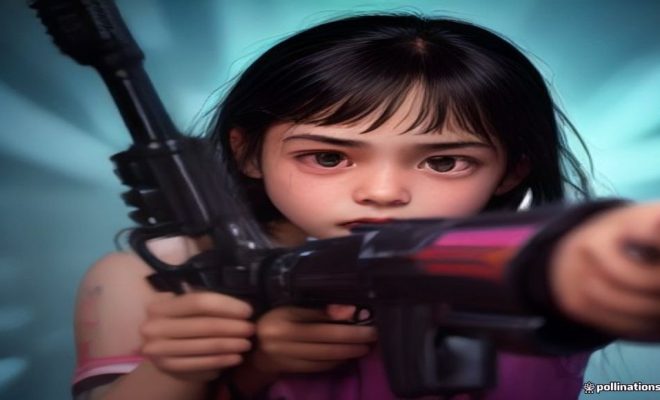
In the often-unpredictable landscape of social media, certain videos don’t just go viral; they explode, leaving a trail of controversy, debate, and often, outrage in their wake. Recently, a particular piece of content featuring a 10-year-old child, confidently handling firearms, has done just that. This isn’t just a fleeting trend; it’s a potent symbol of the complex, often contentious intersection of child internet fame, gun culture, and modern parenting. The video, which depicts the young ‘gunslinger’ in action, rapidly amassed nearly 3 million views within 48 hours on Dakota Meyers’ Facebook page alone, and spread like wildfire across other platforms, including Unclesamsmisguidedchildren on Instagram. What makes this particular incident so compelling, and frankly, alarming, is not just the sheer reach, but the explicit intent behind its creation and dissemination: to “dispel the myth that children and guns don’t mix.”
This provocative statement, directly challenging deeply ingrained societal norms around child safety and firearm handling, has ignited a firestorm. It forces us to confront uncomfortable questions about parental responsibility in the digital age, the ethics of exposing children to such content, and the broader implications of leveraging a child for viral content. The fact that platforms like Instagram and Facebook have reportedly been blocking their content only underscores its contentious nature, highlighting the fine line content creators walk when pushing boundaries. The conversation around this video isn’t just about a child and a gun; it’s about the very fabric of our values, the influence of online culture, and the evolving definition of what constitutes responsible parenting in the pursuit of child internet fame.
The Meteoric Rise of a Young ‘Gunslinger’ and the Quest for Child Internet Fame
The speed at which this video achieved viral status is a testament to the powerful, often polarizing, algorithms of social media. Millions of views in a couple of days isn’t accidental; it’s the result of content engineered to provoke a strong reaction, whether positive or negative. For many, the sight of a 10-year-old expertly wielding a firearm is deeply unsettling, immediately triggering concerns about safety, maturity, and the potential for accidents. For others, particularly those within specific subcultures, it might be seen as a demonstration of responsible gun ownership, a skill passed down through generations, or even a form of empowerment.
This duality of perception is precisely what fuels virality. The video taps into fundamental disagreements about child-rearing, gun control, and personal liberty. When parents intentionally create and share content with such a bold, confrontational message, they are not just documenting a moment; they are making a statement. They are actively participating in a cultural debate, using their child as the focal point. This deliberate strategy to generate buzz, to spark a conversation – or a fight – is a classic playbook for achieving rapid child internet fame, even if it comes at a significant cost to the child’s privacy and public image.
Challenging the ‘Myth’: Parental Intent and Public Reaction
The explicit goal articulated by the parents – to “dispel the myth that children and guns don’t mix” – is perhaps the most striking and controversial element of this entire saga. It’s not a subtle endorsement of gun safety education; it’s a direct challenge to the widely accepted notion that firearms and young children represent a dangerous combination. This statement immediately polarizes the audience. On one side, you have advocates for stricter gun control, child safety organizations, and many parents who find the idea of a 10-year-old handling weapons deeply irresponsible and frightening. They might point to statistics on accidental shootings involving children, or the psychological impact of early exposure to firearms in a non-military context.
On the other side, there are those who view gun ownership as a fundamental right, and believe that responsible, supervised training from a young age is not only safe but essential. For them, this video might represent a family teaching valuable life skills, promoting self-defense, or preserving a cultural tradition. The parents’ intent to explicitly counter a “myth” suggests a proactive stance, a desire to influence public opinion, and a willingness to court controversy to achieve their goal. This deliberate provocation ensures that the content isn’t just viewed, but fiercely debated, guaranteeing sustained engagement and further boosting the child’s internet fame.
The Algorithm’s Role: Fueling Virality Through Polarization
It’s no secret that social media algorithms are designed to maximize engagement. What keeps users scrolling, clicking, and sharing? Often, it’s content that elicits strong emotions – joy, anger, surprise, fear. Controversial content, particularly that which touches on deeply divisive topics like child safety and gun rights, is a goldmine for these algorithms. When a video sparks heated arguments in the comments section, when people feel compelled to share it to either condemn or support, the algorithm interprets this as high engagement and pushes the content to an even wider audience.
This creates a feedback loop: the more controversial the content, the more it’s shared and discussed, the more the algorithm promotes it, leading to even greater virality. The fact that platforms like Instagram and Facebook have been reportedly blocking or restricting the content further amplifies its mystique and appeal for some users. This perceived censorship can be seen as validation by those who feel their views are being suppressed, turning the content into a symbol of defiance. This dynamic, where platform moderation inadvertently fuels further sharing, is a fascinating and often frustrating aspect of the modern digital landscape and a key factor in how certain children achieve internet fame.
Child Safety vs. Parental Rights: A Contentious Divide
At the heart of this viral phenomenon lies a fundamental tension between child safety and parental rights. Where do we draw the line between a parent’s right to raise their child according to their values and society’s collective responsibility to protect children from potential harm? Critics of the video often cite the American Academy of Pediatrics, which strongly advises against children having access to firearms in the home due to the high risk of unintentional injury or death. They might argue that even with supervision, a 10-year-old lacks the full cognitive development and impulse control necessary to safely handle lethal weapons. (See: CDC on firearm safety and children.)
Conversely, proponents of early firearm education often emphasize the importance of training and discipline. They argue that teaching children how to safely operate a gun under strict supervision is far safer than leaving them ignorant and curious. They see it as an extension of teaching other potentially dangerous skills, like driving or using power tools, where proper instruction mitigates risk. This isn’t just a theoretical debate; it has real-world consequences, with each side genuinely believing they are acting in the best interest of children. The viral video serves as a stark illustration of this deeply felt divide, pushing the boundaries of what many consider acceptable in the pursuit of child internet fame.
The Ethics of Child Internet Fame: When Children Become Content
This incident also brings into sharp focus the broader ethical considerations surrounding child internet fame. When parents actively cultivate a child’s online presence, particularly around a controversial topic, they are essentially turning their child into content. This raises questions about consent, privacy, and the long-term well-being of the child. Does a 10-year-old truly understand the implications of being a viral sensation, particularly one associated with such a divisive issue? Can they genuinely consent to having their image and actions scrutinized, debated, and often criticized by millions of strangers?
The pursuit of views, likes, and shares can sometimes overshadow the child’s right to a normal, private childhood. What happens when the child grows up and wishes this content didn’t define their early life? What are the psychological impacts of being the subject of intense public scrutiny and debate at such a young age? These are not easy questions, and there are no simple answers, but they are crucial for any parent considering putting their child in the public eye. The line between sharing family moments and exploiting a child for online notoriety is increasingly blurred, and this video pushes that boundary further than many are comfortable with.
The Long-Term Impact on the Child: Beyond the Viral Moment
While the immediate goal of achieving viral status might be met, the long-term repercussions for the child involved are often overlooked. Being the subject of intense online scrutiny, particularly for something as controversial as this, can have lasting effects. Imagine this child growing up, with this video forever accessible online, defining a significant part of their public identity. They might face bullying, judgment, or even threats as a result of the content their parents created and shared. Future employers, educational institutions, or even romantic partners might stumble upon this video, forming opinions based on a snapshot from their childhood.
Moreover, the constant pressure to perform, to maintain an online persona, can be incredibly taxing for a developing child. The distinction between their authentic self and their online ‘character’ can become muddled. Psychologists often warn about the potential for anxiety, depression, and identity issues in children who are thrust into the spotlight without adequate support or understanding. The fleeting thrill of child internet fame often comes with a heavy, enduring price tag for the individual at its center.
The Broader Cultural Conversation: Guns, Children, and Social Media
This incident is not an isolated event; it’s a symptom of a larger cultural conversation happening globally about guns, children, and the pervasive influence of social media. In countries like the United States, where gun ownership is a constitutionally protected right, the debate is particularly fervent. This video, therefore, doesn’t just exist in a vacuum; it feeds into and amplifies existing societal divisions. It becomes a talking point for political pundits, a case study for academics, and a catalyst for countless online arguments.
Social media, with its ability to instantly disseminate information and opinions, acts as a powerful amplifier for these debates. It creates echo chambers where like-minded individuals reinforce each other’s views, but also battlegrounds where opposing viewpoints clash. The challenge for society is to navigate these complex issues with nuance and empathy, rather than succumbing to the simplistic, often aggressive, rhetoric that viral content frequently encourages. We have to ask ourselves, are these platforms truly facilitating meaningful dialogue, or are they merely magnifying our divisions in the pursuit of engagement and child internet fame?
Navigating the Digital Minefield: Advice for Parents
For parents observing this phenomenon, it serves as a stark warning and a critical learning opportunity. The allure of child internet fame can be strong, but the risks are profound. Before posting anything involving your children online, especially content that could be perceived as controversial, consider these points:
- Long-Term Impact: Think 5, 10, 20 years down the line. How might this content affect your child’s future opportunities, relationships, and self-esteem?
- Child’s Consent and Understanding: While a young child cannot give fully informed consent, involve them in the decision-making process where appropriate. Discuss the implications of online visibility. For sensitive topics, consider if they are truly old enough to grasp the permanent nature of online content.
- Privacy Boundaries: Establish clear boundaries for what is and isn’t shareable. Not every family moment needs to be public.
- Safety First: Prioritize your child’s physical and psychological safety above all else. Is the content putting them at any kind of risk, either directly or indirectly?
- Motivations: Honestly assess your own motivations for sharing. Are you doing it for your child’s benefit, or for views, likes, or personal validation?
- Digital Footprint: Remember that once something is online, it’s virtually impossible to fully remove. The internet has a long memory.
The digital world offers incredible opportunities for connection and creativity, but it’s also a minefield of potential pitfalls. Protecting children in this environment requires constant vigilance, critical thinking, and a deep commitment to their well-being over fleeting online popularity. The story of this young ‘gunslinger’ and their viral child internet fame is a powerful reminder that not all attention is good attention, and some battles are best fought away from the public gaze.
The Regulatory Landscape: Who Polices Child Content?
This whole situation also shines a light on the complex and often inadequate regulatory framework surrounding child content online. Unlike traditional media, where strict guidelines and age restrictions are common, social media operates in a much murkier territory. While platforms have community guidelines, their enforcement can be inconsistent, often reactive rather than proactive. The blocking or restriction of content, as seen with this video, typically happens after it has already gained significant traction, meaning the initial exposure and potential harm have already occurred.
There’s a global push for stronger protections for children online, with laws like COPPA (Children’s Online Privacy Protection Act) in the US and GDPR-K (General Data Protection Regulation – Kids) in Europe setting some standards. However, these often focus on data privacy rather than the content itself, especially when parents are the ones posting. The debate often boils down to balancing free speech with child protection, a tightrope walk for lawmakers and platform operators alike. Who decides what’s appropriate for a child to appear in online? And who enforces those decisions when the ‘content creator’ is the child’s parent? (See: AP News on child safety and media.)
Psychological Impact: The Burden of Public Scrutiny
Beyond the immediate safety concerns, let’s really think about the psychological toll on a child who becomes an internet sensation, particularly for something controversial. Imagine being 10 and having millions of strangers dissecting your actions, your parents’ choices, and your very image. This isn’t just about a comment section; it’s about potentially shaping a child’s self-perception and worldview. They might internalize the criticisms, feel pressure to live up to a public persona, or develop anxiety about their privacy and safety.
Developmental psychologists often talk about the crucial period of identity formation during childhood and adolescence. When a child’s identity is heavily influenced by external validation and public opinion at such a young age, it can disrupt this natural process. They might struggle with authenticity, feeling they constantly need to perform for an invisible audience. The immediate gratification of viral fame can mask deeper, long-lasting issues like body image concerns, depression, and a distorted sense of reality, where online metrics dictate self-worth.
The Evolution of ‘Influencer’ Culture and Child Internet Fame
This ‘gunslinger’ video is also a stark example of the broader evolution of influencer culture. What started with adults sharing their lives has now fully embraced children. Kids are starring in unboxing videos, family vlogs, and even educational content, often generating significant income for their families. While many child influencers have positive experiences, the line between empowering a child’s creativity and monetizing their childhood is increasingly blurry.
The rise of “sharenting” – parents extensively documenting and sharing their children’s lives online – has normalized the idea of children as public figures. But when does sharenting cross into exploitation? This particular video pushes that boundary hard, using the child to make a strong, divisive political statement. It highlights how the pursuit of child internet fame can sometimes prioritize views and engagement over the child’s right to privacy, safety, and an unburdened childhood. It forces us to question the true cost of making a child a brand ambassador or a viral sensation.
Comparing Approaches: Global Perspectives on Child Content
It’s interesting to look at how different cultures and countries approach the issue of children appearing in online content. While the US debate often centers on parental rights, some European nations, like France, have taken steps to grant child influencers employment protections similar to child actors, including regulations around working hours and earnings. This acknowledges that children in online content are essentially working, even if it’s for their parents, and deserve legal safeguards.
Other countries prioritize privacy and the “right to be forgotten” more strongly, making it easier for individuals (including those who were child influencers) to request the removal of past online content that might harm their adult lives. This global variation underscores the complexity of the issue and the lack of a universal consensus on how to best protect children in the digital age, especially when their parents are the ones putting them in the spotlight for child internet fame.
Expert Perspectives: What Psychologists and Child Advocates Say
Child psychologists and advocacy groups consistently voice concerns about children being thrust into the limelight. Dr. Mary Pipher, a clinical psychologist, speaks often about the pressures on children to perform and the impact of constant external validation. She’d likely emphasize the importance of allowing children to develop their intrinsic self-worth, away from public judgment.
Organizations like the National Center for Missing and Exploited Children (NCMEC) focus on the safety aspects, warning about the risks of predators who scour the internet for images and videos of children. While this particular video doesn’t inherently fall into that category, any content featuring children widely shared online opens up potential avenues for misuse and exploitation that parents might not foresee. Child advocates would also highlight the child’s “digital footprint” – the permanent record of their online presence – and how quickly content can be taken out of context or manipulated, impacting their future in unforeseen ways.
FAQ: Understanding Child Internet Fame
What exactly is “child internet fame”?
Child internet fame refers to a child gaining significant recognition, popularity, or notoriety through content shared on social media platforms or other online channels. This can range from becoming a viral meme to being a successful child influencer with a dedicated following. (See: New York Times on gun culture and children.)
Is all child internet fame bad?
Not necessarily. Some children genuinely enjoy creating content with their parents, and it can be a source of shared family experiences or even a launching pad for creative careers. However, it carries significant risks related to privacy, exploitation, psychological well-being, and the potential for long-term negative impacts.
What are the biggest risks for children who achieve internet fame?
The biggest risks include loss of privacy, cyberbullying, online exploitation, psychological pressure to perform, identity issues, anxiety, depression, and the creation of a permanent digital footprint that could affect their future relationships, education, and career prospects.
How can parents protect their children if they choose to share their lives online?
Parents should prioritize their child’s safety and well-being above all else. This means considering the long-term impact of content, establishing clear privacy boundaries, involving the child in decision-making (where appropriate), strictly monitoring comments and interactions, and never sharing content that could put the child at physical or psychological risk. Financial transparency and setting aside earnings for the child are also important ethical considerations.
What should I do if I see concerning content featuring a child online?
If you see content that you believe puts a child at risk, you should report it to the platform where it’s hosted. Most platforms have clear guidelines and reporting mechanisms for child safety concerns. If you suspect child abuse or exploitation, contact relevant law enforcement agencies or child protection services in your area.
Can a child remove their content from the internet once they are older?
It’s incredibly difficult. While some platforms may allow users to delete their own content, once something is shared widely online, it can be copied, re-uploaded, and stored in various archives, making complete removal almost impossible. This is why the concept of a “digital footprint” is so crucial – what goes online often stays online permanently.
Ultimately, the story of the 10-year-old ‘gunslinger’ is more than just a viral video; it’s a microcosm of our modern digital existence. It forces us to grapple with fundamental questions about parenting, safety, freedom, and the pervasive power of social media. As parents, as a society, we have a responsibility to look beyond the immediate shock and engagement, and truly consider the implications for the children caught in the crossfire of online debate. The quest for child internet fame often comes with unforeseen and potentially devastating consequences, a truth we must confront head-on.
Trending Now
Frequently Asked Questions
What sparked the controversy around the 10-year-old gunslinger video?
The controversy stems from a video featuring a 10-year-old confidently handling firearms, which challenges societal norms about child safety and gun culture. It has ignited debates on parental responsibility, the ethics of exposing children to such content, and the implications of seeking viral fame.
How did the gunslinger video go viral so quickly?
The video achieved viral status rapidly, amassing nearly 3 million views within 48 hours due to the powerful algorithms of social media platforms like Facebook and Instagram. Its provocative content and the ongoing debate surrounding child safety and firearms also contributed to its widespread sharing.
What are the implications of child internet fame highlighted in the article?
The article raises important questions about the ethics of leveraging children for viral content, parental responsibility, and the evolving definition of responsible parenting. It emphasizes the need to consider the potential dangers and societal impacts of exposing children to controversial and provocative material.
Why are social media platforms blocking content related to the gunslinger video?
Platforms like Instagram and Facebook have been reportedly blocking content related to the gunslinger video due to its contentious nature. This reflects the ongoing struggle content creators face when navigating the fine line between pushing boundaries and adhering to community standards on child safety.
What does the video reveal about modern parenting and gun culture?
The video highlights the complex intersection of modern parenting and gun culture, provoking discussions about the appropriateness of children handling firearms. It challenges traditional views on child safety and raises concerns about the influence of online culture on parenting choices and societal values.
Agree or disagree? Drop a comment and tell us what you think.