The Edvocate

Top Menu

Main Menu

  • Start Here
    • Our Brands
    • Governance
      • Lynch Education Consulting, LLC.
      • Dr. Lynch’s Personal Website
      • Careers
    • Write For Us
    • Books
    • The Tech Edvocate Product Guide
    • Contact Us
    • The Edvocate Podcast
    • Edupedia
    • Pedagogue
    • Terms and Conditions
    • Privacy Policy
  • PreK-12
    • Assessment
    • Assistive Technology
    • Best PreK-12 Schools in America
    • Child Development
    • Classroom Management
    • Early Childhood
    • EdTech & Innovation
    • Education Leadership
    • Equity
    • First Year Teachers
    • Gifted and Talented Education
    • Special Education
    • Parental Involvement
    • Policy & Reform
    • Teachers
  • Higher Ed
    • Best Colleges and Universities
    • Best College and University Programs
    • HBCU’s
    • Diversity
    • Higher Education EdTech
    • Higher Education
    • International Education
  • Advertise
  • The Tech Edvocate Awards
    • The Awards Process
    • Finalists and Winners of The 2026 Tech Edvocate Awards
    • Finalists and Winners of The 2025 Tech Edvocate Awards
    • Finalists and Winners of The 2024 Tech Edvocate Awards
    • Finalists and Winners of The 2023 Tech Edvocate Awards
    • Finalists and Winners of The 2021 Tech Edvocate Awards
    • Finalists and Winners of The 2022 Tech Edvocate Awards
    • Finalists and Winners of The 2020 Tech Edvocate Awards
    • Finalists and Winners of The 2019 Tech Edvocate Awards
    • Finalists and Winners of The 2018 Tech Edvocate Awards
    • Finalists and Winners of The 2017 Tech Edvocate Awards
    • Award Seals
  • Apps
    • GPA Calculator for College
    • GPA Calculator for High School
    • Cumulative GPA Calculator
    • Grade Calculator
    • Weighted Grade Calculator
    • Final Grade Calculator
  • The Tech Edvocate
  • Post a Job
  • AI Powered Personal Tutor

logo

The Edvocate

  • Start Here
    • Our Brands
    • Governance
      • Lynch Education Consulting, LLC.
      • Dr. Lynch’s Personal Website
        • My Speaking Page
      • Careers
    • Write For Us
    • Books
    • The Tech Edvocate Product Guide
    • Contact Us
    • The Edvocate Podcast
    • Edupedia
    • Pedagogue
    • Terms and Conditions
    • Privacy Policy
  • PreK-12
    • Assessment
    • Assistive Technology
    • Best PreK-12 Schools in America
    • Child Development
    • Classroom Management
    • Early Childhood
    • EdTech & Innovation
    • Education Leadership
    • Equity
    • First Year Teachers
    • Gifted and Talented Education
    • Special Education
    • Parental Involvement
    • Policy & Reform
    • Teachers
  • Higher Ed
    • Best Colleges and Universities
    • Best College and University Programs
    • HBCU’s
    • Diversity
    • Higher Education EdTech
    • Higher Education
    • International Education
  • Advertise
  • The Tech Edvocate Awards
    • The Awards Process
    • Finalists and Winners of The 2026 Tech Edvocate Awards
    • Finalists and Winners of The 2025 Tech Edvocate Awards
    • Finalists and Winners of The 2024 Tech Edvocate Awards
    • Finalists and Winners of The 2023 Tech Edvocate Awards
    • Finalists and Winners of The 2021 Tech Edvocate Awards
    • Finalists and Winners of The 2022 Tech Edvocate Awards
    • Finalists and Winners of The 2020 Tech Edvocate Awards
    • Finalists and Winners of The 2019 Tech Edvocate Awards
    • Finalists and Winners of The 2018 Tech Edvocate Awards
    • Finalists and Winners of The 2017 Tech Edvocate Awards
    • Award Seals
  • Apps
    • GPA Calculator for College
    • GPA Calculator for High School
    • Cumulative GPA Calculator
    • Grade Calculator
    • Weighted Grade Calculator
    • Final Grade Calculator
  • The Tech Edvocate
  • Post a Job
  • AI Powered Personal Tutor
  • Unbelievable: The True Cost of Raising a Child Will Absolutely Devour Your Savings

  • Shocking: Young Children Are Flooding ERs in Mental Health Crisis — Here’s Why

  • Jaw-Dropping: AI’s Quiet Takeover of Law School — Are You Ready?

  • Outrageous: Chatbots Cleared for ‘Steamy Talks’ with 8-Year-Olds — What You MUST Know

  • 9 Ways to Keep Students With Disabilities Safe From Bullying

  • Baffling: 72% of Gen Z Still Financially Dependent on Parents — Here’s Why It’s a Crisis

  • The Staggering $172 Billion Crisis: Why Your Child Care Costs Are Exploding

  • This Unbelievable AI Minor Program Is Quietly Reshaping Every Student’s Future

  • Millions Face Repayment Chaos: Your Student Loan Plan Is Disappearing — Here’s What You MUST Do Now

  • Why I Believe Special Ed Teachers Have Superpowers

Digital & Mobile TechnologyEarly Childhood & K-12 EdTechHigher Education EdTechUncategorized
Home›Digital & Mobile Technology›The Brains of K-12 Students Come Prewired for EdTech

The Brains of K-12 Students Come Prewired for EdTech

By Matthew Lynch
December 25, 2016
0
Spread the love

Forget the books. Save your paper and pencils for Art Projects.

Generation Z students, born in the late 1990s to the present, have grown up with Laptops, iPads, and smartphones. Their brains have evolved to process more information at faster speeds than previous generations of learners. Getting and keeping their attention presents a challenge, yet we tend to ignore what triggers their motivation. We talk at them and hand them a thick textbook full of words.

What differentiates the human brain is its neocortex, the frontal lobe which can absorb and store more bits of information than the brains of any other species. An effective teacher will motivate their students to absorb what is taught into their cortex.

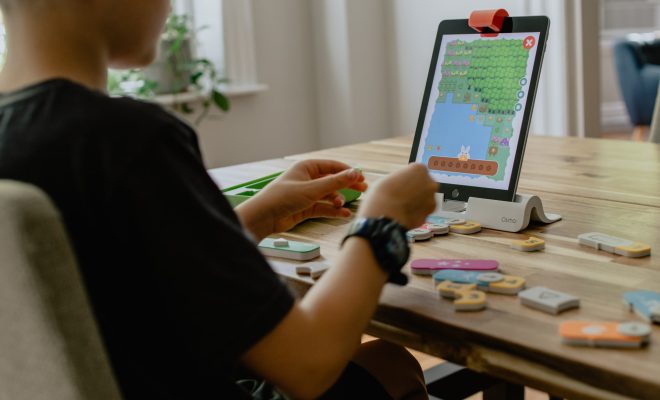
The technology used in education (EdTech) provides a powerful means by which to do this. When used appropriately, EdTech engages Gen Z students because it feeds directly into what their brains enjoy doing — learning.

Recently, there has been lots of interest in brain-based instruction. Supported by current research, neuroscience emphasizes how the human brain learns naturally and how it functions at varying developmental stages. For example, a beginning reader learns by connecting letters and letter strings to sounds. Graphogame is a technology-based game that attempts to address this basic first step in learning to read. It combines neuroscience with education. In Graphogame, a child’s efforts are analyzed by online algorithms and lessons are modified to match the learner’s ability. Studies have shown that practice with the type of game can initiate print-sensitive activation in regions that later become critical for mature reading.

There are other such neuroscience-based EdTech applications. One of these is Earobics, a computer-assisted training program which aims to improve reading skills by improving children’s sound perception, memory, and phonological awareness. Another, still in development by Lifestyle Learning, is called “Career Readiness Application.” This interactive program engages the neocortex by taking advantage of the fascination Generation Z has with playing online with avatars and tying motivation and course selection to career aspiration.

Another characteristic of human beings is that we are a social species. It has been shown that social learning experiences, as well as independent ones, can be informed by neuroscience. A study by Judy Willis in 2011 found that students who worked on a project in groups experienced a surge in dopamine, the chemical that is released during pleasurable situations and stimulates students to remember information better. So how can we combine what neuroscience tells us about collaboration among Gen Z students with learning through technology?

Jon S., an elementary teacher in California, did it this way. He provided a virtual workbench and blog format that enabled his students to create online portfolios.  As Jon describes it, “The kids anonymously publish their writing and art and share it online with an authentic audience. … As soon as the student publishes a new article, I get an instant email on my mobile device, enabling me to review and moderate the work. The parents can also get this instant email. Other readers (including other students in my class) comment too, but they won’t show up on the blog or be seen by the author until the comment has been deemed appropriate.” You can contact Jon for more detail.

ePals is commercial program for online communities of writers, that promotes teamwork and student collaboration and provides a collaborative writing space for kids to use during class. These products operate like Jon’s creation but do so on a global level. Students from around the world can send each other email (via a secure system that teachers can monitor), and where they can work together on projects that engage them in real-time video chats.

Such interactions involve Generation Z students partly because the part of the brain that is responsible for visual ability is more developed in generation Z than in other generations. Their brains of are physically different from earlier generations. Some researchers contend that because of these differences, the preferred use of technology for communication can be an indicator of a particular generation’s identity. For instance, baby boomers prefer communicating face-to-face. Generation X folks are fine with talking on the phone or using email. Millennials hang out in social media networks.

Generation Z would rather communicate in ways that don’t leave a paper trail. They prefer apps where communications are sent, and then users move on to the next stream of conversation. As a result, most Generation Z students prefer visual learning over kinesthetic or auditory.

Bottom line: rather than fighting the prewired preferences of Gen Z students, teachers can incorporate the findings of neuroscience into EdTech decisions and provide students with technology that sets their dopamine flowing and kicks up their motivation to learn.

Oh, and as for forgetting books, paper, and pencils – of course not. They are earlier EdTech implements, and the Gen Z brain can still appropriately and creatively use them.




TagsEdtechedtechchatelearningSTEAMSTEM
Previous Article

Music training speeds up brain development in ...

Next Article

STEM to STEAM: More Than Just a ...

Matthew Lynch

Related articles More from author

  • Uncategorized

    Burnet CISD Sees Student Engagement Soar with New Classrooms (2017)

    July 10, 2017
    By Matthew Lynch
  • Digital & Mobile TechnologyEarly Childhood & K-12 EdTechTrending Topics

    4 Edtech Companies That Are Closing the Achievement Gap

    July 7, 2017
    By Matthew Lynch
  • EdTech & InnovationTrending Topics

    Are Teachers Ready for Virtual Reality in the Classroom?

    December 29, 2017
    By Matthew Lynch
  • Teachers

    Tips to Help Students Cultivate Music Appreciation

    March 30, 2016
    By Matthew Lynch
  • EdTech & InnovationMatthew LynchTeachers

    7 Ways Technology Is Impacting Modern Education

    September 21, 2016
    By Matthew Lynch
  • The Tech Edvocate

    Can Gamification Help Struggling Students?

    January 26, 2017
    By Matthew Lynch

Search

Registration and Login

  • Log in
  • Entries feed
  • Comments feed
  • WordPress.org

Newsletter

Signup for The Edvocate Newsletter and have the latest in P-20 education news and opinion delivered to your email address!

RSS feed: Matthew on Education Week Matthew on Education Week

  • Au Revoir from Education Futures November 20, 2018 Matthew Lynch
  • 6 Steps to Data-Driven Literacy Instruction October 17, 2018 Matthew Lynch
  • Four Keys to a Modern IT Approach in K-12 Schools October 2, 2018 Matthew Lynch
  • What's the Difference Between Burnout and Demoralization, and What Can Teachers Do About It? September 27, 2018 Matthew Lynch
  • Revisiting Using Edtech for Bullying and Suicide Prevention September 10, 2018 Matthew Lynch

About Us

The Edvocate was created in 2014 to argue for shifts in education policy and organization in order to enhance the quality of education and the opportunities for learning afforded to P-20 students in America. What we envisage may not be the most straightforward or the most conventional ideas. We call for a relatively radical and certainly quite comprehensive reorganization of America’s P-20 system.

That reorganization, though, and the underlying effort, will have much to do with reviving the American education system, and reviving a national love of learning.  The Edvocate plans to be one of key architects of this revival, as it continues to advocate for education reform, equity, and innovation.

Newsletter

Signup for The Edvocate Newsletter and have the latest in P-20 education news and opinion delivered to your email address!

Contact

The Edvocate
910 Goddin Street
Richmond, VA 23230
(601) 630-5238
[email protected]
  • situs togel online
  • dentoto
  • situs toto 4d
  • situs toto slot
  • toto slot 4d
Copyright (c) 2026 Matthew Lynch. All rights reserved.