S&P 500 Fund Scores Perfect 10 as Crypto & Meme Stocks Plummet
“`html
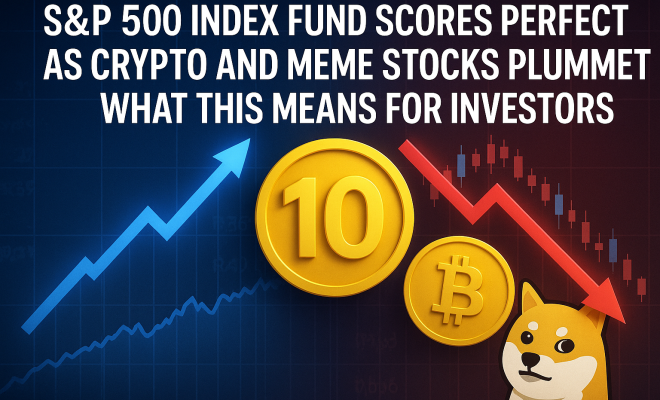
In a surprising turn of events that has reverberated throughout the financial community, a recent viral Instagram poll has crowned the S&P 500 index fund with a stunning 10 out of 10 rating for investment strategies. Meanwhile, cryptocurrencies and meme stocks received disheartening scores of 3 and 0, respectively. This development challenges conventional ideas of wealth creation and underlines the growing importance of stable investment choices amidst a backdrop of market volatility.
Understanding the Poll: A Snapshot of Current Investment Sentiment
The Instagram poll, which garnered a great deal of attention and social media shares, illustrated a significant shift in investor sentiment. While the hype around cryptocurrencies and meme stocks had previously captivated the imaginations of many, the poll results suggest that a return to traditional investment strategies is being favored. This outcome reflects not just the preferences of casual investors but also a broader commentary on the state of the market.
Over the past year, the allure of quick gains from day trading and speculative assets has led many to believe that they could bypass traditional investing methods. However, the Instagram results seem to indicate a growing caution among investors who are reconsidering their strategies in light of recent market conditions.
Why the S&P 500 Index Fund Stands Out
The S&P 500 index fund has long been regarded as a benchmark for American equity performance. Comprising 500 of the largest publicly traded companies in the U.S., it provides a diverse portfolio that mitigates risk while aiming for steady returns. A perfect score of 10 in the poll speaks volumes about investor confidence in its ability to navigate turbulent market conditions.
One of the key benefits of investing in an S&P 500 index fund is its historical performance. Over the last several decades, it has consistently outperformed most actively managed funds, primarily due to its passive investment strategy and low management fees. This makes it an attractive option for both novice and seasoned investors looking for a reliable means to grow their wealth.
The Dismal Performance of Crypto and Meme Stocks
In stark contrast to the S&P 500 index fund, cryptocurrencies and meme stocks have been struggling to maintain investor interest. The poll reflected this sentiment, with cryptocurrencies scoring a mere 3 out of 10 and meme stocks falling to a disheartening 0. This crash reflects not only recent market declines but also a broader awareness of the inherent risks associated with these volatile assets.
Cryptocurrencies, which once promised unprecedented returns, have faced sharp declines as regulatory scrutiny increases and market manipulation becomes more evident. Similarly, meme stocks—often fueled by social media hype rather than intrinsic value—have shown that they can be highly unpredictable and subject to rapid downturns.
The Broader Implications for Investors
The results of this poll are more than just numbers; they serve as a wake-up call for many investors who may have overexposed themselves to speculative assets. With the fear of missing out (FOMO) driving many into high-risk investments, this poll is a reminder that sound, traditional investment strategies can often yield better long-term results.
The urgency of this message cannot be overstated. In a climate where factors like inflation, interest rates, and global economic conditions can change rapidly, reassessing one’s investment strategy is crucial. Investors should ask themselves whether their portfolio reflects long-term growth potential rather than short-term speculation.
Individual Stocks: A Middle Ground
Interestingly, individual stocks scored a respectable 7 out of 10 in the poll, indicating that many investors still see value in selecting specific companies for their portfolios. This suggests that while the S&P 500 index fund is viewed as a safer, more reliable option, there remains a segment of the investment community willing to engage in stock picking.
However, investing in individual stocks requires due diligence and a strong understanding of market dynamics. Unlike the S&P 500 index fund, where your investment risk is spread across hundreds of companies, individual stock investments can lead to more significant losses if a chosen company underperforms. (See: market volatility and investment strategies.)
The Risks of High-Frequency Trading
While the poll results shed light on traditional investing, they also highlight the perils of high-frequency trading strategies such as day trading and options trading, which received dismal scores of 2 out of 10. These methods often promise quick returns but come with a significant risk of loss. Many casual investors who have attempted day trading quickly find that the market’s volatility can wipe out their investments just as swiftly as profits can be made.
Moreover, the psychological toll of high-frequency trading can be substantial. The constant need to monitor stock prices, trends, and news can lead to stress and anxiety, especially when markets fluctuate wildly. For many, this approach to investing is not sustainable, and the poll results underscore a growing preference for strategies that offer less emotional strain.
Educational Resources for Savvy Investing
As the landscape of investing continues to evolve, it’s vital for investors—new and experienced alike—to leverage available resources to make informed decisions. Numerous platforms offer educational materials focused on understanding the S&P 500 index fund and other traditional investment strategies.
- Online courses from reputable financial institutions that cover the fundamentals of investing.
- Financial news platforms that provide analysis and insights into market trends.
- Investment simulators that allow individuals to practice trading without risking real money.
By equipping oneself with knowledge, investors can make more informed choices, potentially leading to better outcomes in their investment journeys.
Reassessing Your Portfolio: Practical Steps
Considering the poll results, you might be wondering how to reassess your own portfolio. Here are some practical steps you can take:
- Analyze Your Current Holdings: Review your investments and check whether they align with your long-term financial goals.
- Consider Diversifying: If you’re heavily invested in cryptocurrencies or meme stocks, it may be wise to diversify into more stable options like the S&P 500 index fund.
- Set Clear Investment Goals: Define what you want to achieve with your investments. Whether it’s saving for retirement or a major purchase, having clear goals can guide your decisions.
- Consult a Financial Advisor: If you’re unsure about your investment strategy, seeking advice from a professional can provide valuable insights.
Final Thoughts: The Future of Investing
The viral poll has not only shocked the financial community but also ignited a much-needed conversation about investing strategies in today’s world. As uncertainty looms, the S&P 500 index fund emerges as a safe harbor for many, offering a blend of risk mitigation and potential for growth.
Investors are urged to reflect on their strategies and reconsider where their money is going. As the landscape shifts and the allure of quick gains from crypto and meme stocks fades, traditional investments like the S&P 500 index fund will likely continue to hold their ground as reliable options for building wealth.
Frequently Asked Questions About S&P 500 Index Funds
What is an S&P 500 index fund?
An S&P 500 index fund is a type of mutual fund or exchange-traded fund (ETF) that aims to replicate the performance of the S&P 500 index. This index comprises 500 of the largest publicly traded companies in the United States, making it a widely recognized benchmark for the overall performance of the U.S. stock market.
How do S&P 500 index funds work?
S&P 500 index funds invest automatically in the stocks of the companies included in the S&P 500 index. By doing so, they provide investors with a diversified portfolio that reflects the index’s performance. These funds are typically passively managed, meaning they don’t require a manager to actively pick stocks, which helps keep costs low.
What are the benefits of investing in an S&P 500 index fund?
Investing in an S&P 500 index fund offers several advantages:
- Diversification: With exposure to 500 different companies, the risk is spread out compared to investing in individual stocks.
- Lower Costs: Index funds typically have lower management fees than actively managed funds.
- Historical Performance: Historically, the S&P 500 has provided strong long-term returns, making it a reliable choice for investors.
- Ease of Investment: Index funds are straightforward to buy and sell, making them accessible for all types of investors.
What are the risks associated with S&P 500 index funds?
While S&P 500 index funds are generally considered safer than individual stocks or speculative investments, they still carry risks:
- Market Risk: If the overall stock market declines, the value of the index fund will also decrease.
- Limited Upside: Since these funds aim to match the market, they won’t outperform it during bull markets.
- Sector Concentration: The fund may be heavily weighted in certain sectors, leading to risk if those sectors underperform.
How can I start investing in an S&P 500 index fund?
You can start investing in an S&P 500 index fund by following these steps:
- Choose a Brokerage: Select a brokerage platform that offers S&P 500 index funds.
- Open an Account: Set up a brokerage account, which may include providing personal information and verifying your identity.
- Fund Your Account: Deposit money into your brokerage account.
- Select Your Fund: Research and select an S&P 500 index fund that fits your investment goals.
- Place Your Order: Execute a buy order for the fund, and you’re on your way to investing in the S&P 500!
Comparative Analysis: S&P 500 Index Fund vs. Actively Managed Funds
When determining the best investment strategy, many investors find themselves at a crossroads between choosing an S&P 500 index fund and actively managed funds. Both have their merits, but there are key differences that can influence your decision.
Performance
Historically, studies have shown that actively managed funds often underperform the S&P 500 index over the long term. For instance, a 2022 report from S&P Dow Jones Indices found that over a 15-year period, more than 80% of actively managed funds failed to beat the index. This trend raises a critical question: if so many funds can’t keep up with the benchmark, why not invest directly in the benchmark itself?
Management Fees
One of the most significant differences between S&P 500 index funds and actively managed funds is the cost. Actively managed funds tend to have higher management fees, which can eat into profits. A typical actively managed fund might charge 1% to 2% in fees, while S&P 500 index funds often charge about 0.1% to 0.5%. Over time, these lower fees can significantly enhance your investment returns.
Risk and Volatility
Investors concerned about risk might lean towards S&P 500 index funds due to their inherent diversification. By spreading investments across 500 large companies, the index fund mitigates the impact of any single stock’s poor performance. Actively managed funds, on the other hand, might concentrate on fewer stocks, which can lead to higher volatility.
Investment Strategy and Time Horizon
Your investment strategy and time horizon should also guide your decision. If you’re looking for a long-term investment and prefer a hands-off approach, the S&P 500 index fund is likely the way to go. Conversely, if you enjoy researching individual companies and believe you can pick winning stocks, actively managed funds may be a better fit.
How to Stay Informed About the S&P 500 Index Fund
Staying updated on market trends and changes in the S&P 500 index is crucial for any investor interested in this space. Here are some methods to keep informed:
- Financial News Websites: Websites like CNBC, Bloomberg, and Reuters provide up-to-date financial news, including changes to the S&P 500.
- Social Media Channels: Follow financial experts and institutions on platforms like Twitter for real-time updates and insights.
- Investment Podcasts: Many finance-focused podcasts discuss the state of the market and the S&P 500, offering expert analysis.
- Newsletters: Subscribing to investment newsletters can provide curated news and insights directly to your inbox.
By staying informed, you can make strategic decisions that align with your investment goals and the current market landscape.
Preparing for Market Downturns: Strategies for Resilience
Market downturns are inevitable, but having a solid plan can help you navigate these turbulent times. Here are some strategies to bolster your investment resilience:
- Maintain an Emergency Fund: Having savings set aside can prevent you from having to liquidate investments during downturns.
- Rebalance Your Portfolio: Periodically review and adjust your investments to maintain your desired allocation across asset types.
- Focus on Quality: During market downturns, prioritize investments in high-quality companies with solid fundamentals that are more likely to weather the storm.
- Stay the Course: Resist the urge to sell during panic; history shows that markets typically recover over time.
With these strategies in mind, you can feel more secure in your investment journey, even amidst market volatility.
Common Misconceptions About S&P 500 Index Funds
Despite their popularity, the S&P 500 index fund is often misunderstood. Let’s address some common misconceptions that may deter investors from considering this valuable investment option.
Myth 1: Index Funds are Only for Passive Investors
While it’s true that S&P 500 index funds are primarily designed for passive investing, they can also fit into the strategies of active investors. Many savvy investors use index funds to create a core position in their portfolios, while they allocate a smaller percentage to more aggressive, high-risk investments. This balanced approach allows for both stability and growth.
Myth 2: Index Funds Don’t Offer Enough Growth Potential
Some critics argue that index funds are not suited for aggressive growth. However, the historical performance of the S&P 500 has shown impressive returns over the long term, often averaging around 10% annually. This growth potential makes them a suitable choice for a wide range of investors, including those looking for growth.
Myth 3: Index Funds are a One-Size-Fits-All Solution
While S&P 500 index funds provide excellent diversification and a good historical track record, they may not be the ideal investment for everyone. Factors like age, risk tolerance, financial goals, and market conditions should all be taken into account when creating a personalized investment strategy. It’s essential to tailor your portfolio to meet your individual needs.
Future Trends in Index Fund Investing
The investment landscape is evolving, and several trends are emerging in the world of index funds that could shape the future of investing. Here are a few noteworthy trends to watch:
Environmental, Social, and Governance (ESG) Index Funds
As investors become increasingly concerned about sustainability and social responsibility, ESG index funds have gained popularity. These funds track companies that meet specific environmental, social, and governance criteria, allowing investors to align their portfolios with their values while still enjoying the benefits of diversification.
Growth of Thematic Investing
Thematic investing focuses on trends that transcend traditional sector boundaries, such as technology, healthcare innovation, or renewable energy. The emergence of thematic index funds allows investors to access these growing sectors while maintaining the benefits of passive investing.
Technological Advancements in Fund Management
With advancements in technology, index funds are becoming more accessible and efficient. Robo-advisors are increasingly incorporating index funds into their investment strategies, allowing for automated, personalized portfolio management that can save time and reduce fees for investors.
Conclusion: The Enduring Appeal of S&P 500 Index Funds
As the recent Instagram poll indicates, the S&P 500 index fund holds a special place in the hearts of investors seeking reliability in an unpredictable market. By understanding the benefits, risks, and common misconceptions surrounding this investment vehicle, you can make informed decisions that align with your financial goals.
In a world where the allure of quick gains often overshadows the importance of stability, S&P 500 index funds continue to shine as a cornerstone of sound investment strategy. It’s a testament to the idea that prudent investing, grounded in historical performance and risk management, remains a powerful way to build wealth over time.
“`
Trending Now
Frequently Asked Questions
Why is the S&P 500 index fund rated highly?
The S&P 500 index fund received a perfect score of 10 in a recent Instagram poll due to its historical performance, risk mitigation, and ability to provide steady returns. It comprises 500 large U.S. companies, making it a preferred choice for investors seeking stability in volatile markets.
What does a perfect score for the S&P 500 index fund indicate?
A perfect score indicates strong investor confidence in the S&P 500 index fund as a reliable investment strategy. It reflects a shift towards traditional investments amid declining interest in cryptocurrencies and meme stocks, highlighting a preference for stability and long-term growth.
How do cryptocurrencies and meme stocks compare to the S&P 500?
In the recent Instagram poll, cryptocurrencies scored 3 and meme stocks received a score of 0, contrasting sharply with the S&P 500's perfect score. This suggests that investors are increasingly wary of the volatility associated with these speculative assets and are favoring more stable investment options.
What are the advantages of investing in an S&P 500 index fund?
Investing in an S&P 500 index fund offers diversification, lower risk, and historically strong returns compared to actively managed funds. It allows investors to gain exposure to a broad range of large U.S. companies, making it a solid choice for long-term wealth accumulation.
What does the decline of cryptocurrencies mean for investors?
The decline of cryptocurrencies signals a shift in investor sentiment towards more traditional investment strategies like the S&P 500 index fund. As speculative assets lose appeal, investors may prioritize stability and consistent growth, reflecting a more cautious approach in current market conditions.
What did we miss? Let us know in the comments and join the conversation.