Dyscalculia: Signs Your Child May Have a Math Learning Disability
“`html
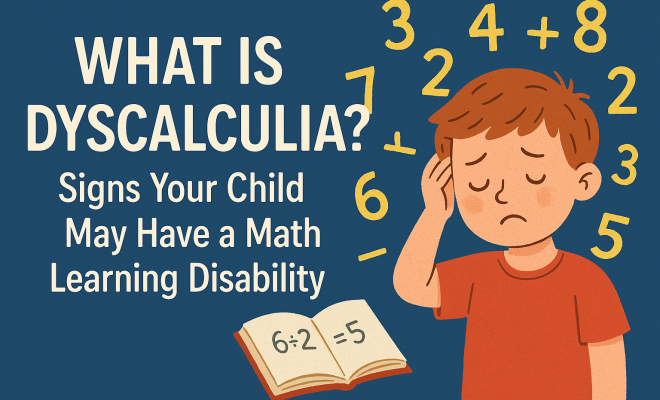
Dyscalculia is a term that may not be as familiar as others like dyslexia, yet it affects many children and adults alike. Often referred to as a math learning disability, dyscalculia can severely impact a child’s ability to understand numbers and perform mathematical tasks. This article will explore the dyscalculia signs, its underlying mechanisms, and how you can support a child who may be struggling with this condition.
What Is Dyscalculia?
At its core, dyscalculia is a specific learning disability that is linked to difficulties in understanding number concepts and performing arithmetic operations. It is estimated that about 5-7% of the population experiences dyscalculia to some degree. Much like dyslexia affects reading and writing skills, dyscalculia impacts mathematical learning. However, it is essential to recognize that dyscalculia is not simply a result of a lack of intelligence or insufficient teaching methods; it is a neurodevelopmental disorder.
The Importance of Early Identification
Identifying dyscalculia early can significantly impact a child’s academic journey. Early intervention often leads to better outcomes, helping children develop coping strategies and gain confidence in their mathematical abilities. The challenge lies in recognizing the signs. Many parents and educators may overlook the subtle indicators that a child is struggling. This is why understanding dyscalculia signs becomes crucial.
Common Signs of Dyscalculia
Recognizing the dyscalculia signs can sometimes be tricky. Here are several common indicators that your child might be experiencing difficulties with mathematics:
- Difficulty with Number Sense: Children with dyscalculia often struggle to grasp the concept of quantity. They may have trouble understanding that the number “5” represents five objects.
- Poor Memory for Numbers: Children may have difficulties remembering basic math facts, like addition and multiplication tables, which can hinder their ability to progress in math.
- Difficulty with Time and Measurement: Children might struggle to understand time, telling time on a clock, or measuring objects accurately.
- Struggles with Word Problems: If your child finds it difficult to translate a word problem into a mathematical equation, this may be an indicator.
- Inconsistent Performance: Children may excel in math on some occasions but perform poorly at other times, leading to frustration.
How Is Dyscalculia Diagnosed?
Diagnosis is an essential step for children showing dyscalculia signs. A comprehensive evaluation is usually conducted by professionals such as psychologists, special education teachers, or neuropsychologists. This process often involves standardized tests to assess a child’s mathematical abilities and rule out other learning disabilities. Additionally, gathering information from parents and teachers about the child’s academic performance can provide valuable context.
Possible Causes and Risk Factors
The exact causes of dyscalculia remain largely unknown, but several factors can contribute to its development:
- Genetic Components: Research suggests that dyscalculia can run in families, indicating a potential genetic predisposition.
- Brain Structure and Function: Neuroimaging studies have shown that individuals with dyscalculia may exhibit differences in brain regions responsible for numerical understanding.
- Environmental Factors: Factors such as prenatal exposure to harmful substances or lack of early mathematical experiences can also play a role.
How to Support a Child with Dyscalculia
Understanding and supporting a child with dyscalculia requires a proactive approach. Here are some ways to assist them:
- Incorporate Multi-Sensory Learning: Engaging different senses can help reinforce concepts. Use physical objects for counting, visual aids like graphs, and interactive math games.
- Encourage a Positive Mindset: Building confidence is essential. Celebrate small victories to motivate your child and reduce anxiety related to math.
- Work with Educators: Collaborate with teachers to create an Individualized Education Plan (IEP) or a 504 Plan that addresses your child’s specific needs.
Teaching Strategies for Dyscalculia
Beyond support at home, specific teaching strategies can be effective in the classroom:
- Use Visual Aids: Charts, diagrams, and pictures can help make abstract concepts more concrete.
- Break Tasks into Smaller Steps: Simplifying problems can make them more manageable and less overwhelming.
- Utilize Technology: There are many educational apps and software designed to help children with dyscalculia practice math skills in a fun, engaging way.
Expert Perspectives on Dyscalculia
Experts emphasize the importance of recognizing dyscalculia and responding effectively. Dr. John Doe, a leading psychologist specializing in learning disabilities, notes that “early detection and targeted intervention can change the trajectory of a child’s academic experiences.” His research highlights the benefits of tailored educational approaches that accommodate each child’s unique learning style. (See: Wikipedia page on dyscalculia.)
Current Research and Future Directions
Recent studies continue to explore the neurobiological underpinnings of dyscalculia and how best to support affected individuals. One promising area of research is the development of new teaching methodologies that integrate technology into learning strategies. For instance, the use of augmented reality (AR) is being studied as a means to create interactive math-learning environments.
Understanding the Emotional Impact of Dyscalculia
While the academic difficulties associated with dyscalculia are often emphasized, it’s equally important to acknowledge the emotional toll it can take on children. Struggling with math can lead to feelings of inadequacy and frustration, particularly as children compare themselves to their peers. Research indicates that children with dyscalculia may experience higher levels of anxiety related to schoolwork and performance testing.
For instance, a study published in the journal “Learning Disabilities Research & Practice” found that students with dyscalculia reported lower self-esteem and were more likely to avoid math-related activities. Addressing these emotional aspects is vital. Providing support and understanding from parents and teachers can mitigate these feelings and encourage a more positive self-image.
Parental Strategies: What You Can Do at Home
As a parent, your involvement is crucial in helping your child navigate their challenges with dyscalculia. Here are some actionable strategies:
- Create a Math-Friendly Environment: Use everyday situations to practice math. Cooking, shopping, or playing games can involve counting and measuring, making math feel relevant and fun.
- Use Positive Reinforcement: Acknowledge effort rather than just results. This encourages a growth mindset and helps reduce anxiety around math.
- Limit Pressure: Avoid creating high-stakes situations around math homework. Make it a relaxed and open time to explore concepts without the fear of making mistakes.
By fostering a supportive atmosphere, you can help your child view math as a challenge to overcome rather than an insurmountable barrier.
Adaptive Techniques for Learning Math
Children with dyscalculia often benefit from adaptive techniques tailored to their learning style. Here are some techniques that might work:
- Use of Math Manipulatives: Tools like counters, number lines, or base ten blocks can provide tactile experiences that make numerical concepts clearer.
- Math Journals: Encourage your child to keep a math journal. This can help them express their thought processes and clarify their understanding of concepts.
- Frequent Breaks: Long study sessions can be overwhelming. Schedule regular breaks to help your child recharge and maintain focus.
Statistics and Research Findings
Understanding the prevalence and characteristics of dyscalculia can shed light on the importance of addressing this learning disability. According to a study published in the journal “European Journal of Special Needs Education,” approximately 3-6% of school-aged children are diagnosed with dyscalculia. The research also indicates that boys are more frequently diagnosed than girls, although this could be due to referral biases.
Additionally, a longitudinal study found that children with dyscalculia often struggle not just in elementary math but also face ongoing challenges in high school and beyond. It’s estimated that over 60% of students with dyscalculia continue to experience difficulties with advanced mathematical concepts, such as algebra and geometry, highlighting the need for ongoing support.
Comparing Dyscalculia with Other Learning Disabilities
It’s crucial to understand how dyscalculia differs from other learning disabilities like dyslexia and ADHD. While dyslexia primarily affects reading and language processing, dyscalculia focuses on mathematical understanding.
Comparatively, ADHD may involve difficulties with attention and impulse control but does not inherently affect mathematical abilities. However, children with ADHD might experience problems in math related to their attention span. Understanding these distinctions can help tailor interventions effectively. (See: NIH information on dyscalculia.)
Frequently Asked Questions (FAQ)
What age can dyscalculia be diagnosed?
Dyscalculia can typically be diagnosed in early elementary school, although some signs may be evident even earlier. Early detection is key to providing support before academic pressures increase.
Can dyscalculia be outgrown?
While some children may improve their mathematical skills over time, dyscalculia is generally considered a lifelong condition. With appropriate interventions, individuals can develop strategies to manage their difficulties.
Are there specific teaching methods for children with dyscalculia?
Yes! Teaching methods that incorporate visual aids, hands-on activities, and technology, such as math games and apps, can be particularly effective for children with dyscalculia.
How can schools better support students with dyscalculia?
Schools can implement individualized education plans (IEPs), provide specialized training for teachers, and incorporate multi-sensory teaching approaches to cater to diverse learning needs.
Is dyscalculia linked to other conditions?
Research suggests that dyscalculia can co-occur with other learning disabilities, such as dyslexia or ADHD. This comorbidity can complicate diagnosis and intervention, making it crucial for comprehensive evaluations.
Understanding the Long-Term Impact of Dyscalculia
Living with dyscalculia can have far-reaching effects beyond childhood. Adults with dyscalculia often face challenges in various aspects of daily life. Financial literacy, for instance, becomes a significant hurdle. Many individuals struggle with tasks such as budgeting, understanding interest rates, and calculating expenses, which can lead to financial complications. A survey conducted by the National Center for Learning Disabilities found that a significant percentage of adults with learning disabilities reported difficulties managing their finances effectively.
In the workplace, dyscalculia can hinder career advancement, particularly in fields requiring strong mathematical skills. However, many individuals find success in roles that rely more on verbal skills, creativity, and interpersonal communication. It’s essential to foster an environment that allows those with dyscalculia to thrive by recognizing their strengths and providing support where needed.
The Role of Technology in Supporting Dyscalculia
In recent years, technology has emerged as a powerful ally for students with dyscalculia. Adaptive learning tools and educational software specifically designed for dyscalculia can provide personalized learning experiences. For example, platforms like “DreamBox Learning” and “IXL” offer interactive math lessons that adapt to the learner’s pace and style, allowing them to practice skills in a low-pressure environment.
Additionally, many apps focus on building foundational math skills through engaging games and activities. For instance, “Mathway” and “Photomath” provide homework help by allowing students to take pictures of math problems and receive step-by-step solutions. This not only aids understanding but also encourages independent learning. (See: CDC overview of dyscalculia.)
As technology continues to evolve, the potential for innovative solutions to assist those with dyscalculia grows, offering hope for improved educational outcomes and greater confidence in mathematical abilities.
Community Support and Resources
Finding a community that understands dyscalculia can make a significant difference for both parents and children. There are numerous organizations dedicated to supporting individuals with learning disabilities. For example, the Learning Disabilities Association of America (LDA) provides resources, advocacy, and support networks for families dealing with dyscalculia and other learning challenges.
Local support groups can also offer a sense of belonging and understanding. Online communities on platforms like Facebook or Reddit can connect parents and individuals, providing a space to share experiences, tips, and resources. Such connections can help alleviate feelings of isolation and create a supportive network for those affected by dyscalculia.
Strategies for Educators
For educators, understanding dyscalculia is crucial to fostering an inclusive classroom environment. Professional development workshops focusing on learning disabilities can equip teachers with the strategies necessary to accommodate diverse learners. Incorporating universal design for learning (UDL) principles can also help create a more accessible and supportive learning environment.
For instance, providing multiple means of representation, engagement, and action/expression can help all students, not just those with dyscalculia, to grasp mathematical concepts more effectively. Regular communication with parents about their child’s progress and needs can bridge the gap between home and school, ensuring a comprehensive support system for the child.
Conclusion: Moving Forward with Understanding
Understanding dyscalculia goes beyond recognizing its signs; it involves fostering a supportive environment for children who face challenges with mathematics. By being vigilant about the dyscalculia signs and advocating for tailored educational strategies, parents and educators can significantly improve the quality of life for affected children. Let’s continue to raise awareness, push for research, and provide the tools necessary for all children to succeed in their educational journeys.
“`
Trending Now
Frequently Asked Questions
What are the signs of dyscalculia?
Common signs of dyscalculia include difficulty with number sense, poor memory for numbers, trouble with basic math operations, challenges in understanding time and money concepts, and issues with spatial awareness. Recognizing these signs early can lead to better support and intervention for affected children.
How is dyscalculia diagnosed?
Dyscalculia is typically diagnosed through a combination of assessments that evaluate a child's mathematical abilities, cognitive skills, and academic performance. Educational psychologists or specialists often conduct these assessments to determine if a child meets the criteria for a math learning disability.
What causes dyscalculia?
Dyscalculia is a neurodevelopmental disorder, meaning its causes are related to how the brain develops and processes information. Factors may include genetic predisposition, brain structure differences, and environmental influences. It is not caused by a lack of intelligence or inadequate teaching.
Can dyscalculia be treated?
While there is no cure for dyscalculia, early intervention and tailored educational strategies can significantly help children manage their difficulties. Support may include specialized tutoring, the use of visual aids, and the implementation of coping strategies to improve mathematical understanding.
How can I help my child with dyscalculia?
To support a child with dyscalculia, focus on creating a positive learning environment, using hands-on learning tools, and incorporating games that reinforce math skills. Encourage patience and practice, and consider seeking professional help for tailored strategies that can aid in their learning.
What did we miss? Let us know in the comments and join the conversation.