Moon Crash Exposes Critical Hole in Lunar Land Laws
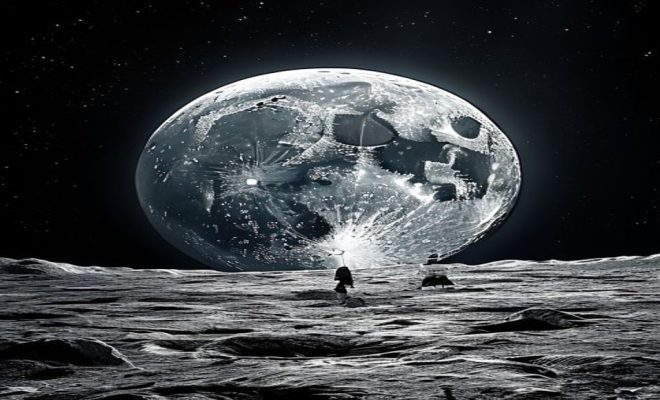
Imagine a forgotten piece of human technology, hurtling through the vacuum of space, on an irreversible collision course with our nearest celestial neighbor. No, this isn’t a plot from a sci-fi blockbuster; it’s a very real scenario that’s set to unfold on August 5, 2026. A spent upper stage of a SpaceX Falcon 9 rocket, abandoned after its mission, is projected to slam into the Moon at a blistering 8,700 kilometers per hour. This isn’t just a dramatic cosmic event; it’s a stark, unavoidable spotlight on a gaping void in international space governance: the almost complete absence of clear, enforceable lunar land laws. While scientists are understandably excited about the research opportunities a fresh impact crater might offer, the incident throws into sharp relief the urgent need for a robust legal framework to manage humanity’s increasingly ambitious, and sometimes messy, forays beyond Earth.
The impending impact serves as a potent reminder that our activities in space, whether intentional or accidental, have tangible consequences for other celestial bodies. For decades, space exploration was primarily the domain of a few national governments, operating under a gentlemen’s agreement of sorts, guided by treaties that were, frankly, conceived in a vastly different era of spaceflight. Now, with a burgeoning private sector, a new space race driven by commercial interests, and an ever-increasing amount of hardware being launched into orbit and beyond, the old rules simply aren’t enough. We’re hurtling towards a future where humanity’s footprint on the Moon, Mars, and perhaps even asteroids, could become substantial. Without proper lunar land laws, who’s accountable when something goes wrong? Who decides what’s permissible and what’s not? These aren’t abstract philosophical questions; they’re pressing legal and ethical dilemmas demanding immediate attention.
The Impending Impact: A Scientific Opportunity or a Wake-Up Call?
Let’s talk about that SpaceX rocket stage. It’s a relic from a 2015 mission, left in a chaotic, uncontrolled trajectory after deploying NASA’s Deep Space Climate Observatory (DSCOVR). For years, it’s been an inert piece of space junk, silently orbiting, until gravitational perturbations nudged it onto its current, fateful path. When it finally meets the lunar surface, it’s expected to create a fresh crater, kicking up a plume of dust and ejecta. For planetary scientists, this is a rare, almost unprecedented event. They’ll be able to study the composition of the lunar subsurface exposed by the impact, analyze the dynamics of the dust cloud, and gain insights into the Moon’s geological processes. Telescopes and lunar orbiters will undoubtedly be trained on the impact site, eagerly awaiting the spectacle and the data it promises.
However, while the scientific community will undoubtedly glean valuable knowledge, the broader implications of this uncontrolled impact cannot be ignored. It’s a powerful symbol of our current state of affairs in space: a frontier bustling with activity, yet lacking fundamental rules of engagement. If a private company’s discarded hardware can simply crash into the Moon without any clear international oversight or consequence, what does that say about our collective responsibility for the celestial commons? It’s a question that cuts to the heart of how we envision humanity’s long-term relationship with space, and it underscores the critical need for comprehensive lunar land laws.
The Patchwork of Existing Space Law: A Relic of the Cold War
To understand the current legal vacuum, we need to look back at the foundational documents of space law. The most significant is the 1967 Outer Space Treaty (OST), formally known as the Treaty on Principles Governing the Activities of States in the Exploration and Use of Outer Space, including the Moon and Other Celestial Bodies. This treaty, a product of the Cold War era, established some crucial tenets: space is free for exploration and use by all states, no nation can claim sovereignty over celestial bodies, and states are responsible for their national activities in space, whether carried out by governmental or non-governmental entities.
While groundbreaking for its time, the OST is fundamentally a high-level framework. It prohibits the placement of weapons of mass destruction in space, emphasizes peaceful uses, and mandates that astronauts be regarded as envoys of mankind. But it’s largely silent on the specifics of property rights, resource extraction, environmental protection, or liability for accidental impacts like the one we’re discussing. It’s a broad declaration of principles, not a detailed regulatory code. The treaty’s framers simply couldn’t have envisioned the complexity and scale of commercial space activity we see today, let alone the urgent need for concrete lunar land laws.
The Moon Agreement: A Treaty Largely Ignored
There was an attempt to address some of these gaps with the 1979 Moon Agreement, or the Agreement Governing the Activities of States on the Moon and Other Celestial Bodies. This treaty aimed to declare the Moon and its resources the ‘common heritage of mankind,’ suggesting that any resource extraction should be carried out under an international regime. It also explicitly stated that activities on the Moon should not disrupt its existing environment. However, the Moon Agreement has been ratified by only a handful of nations, none of which are major spacefaring powers like the United States, Russia, China, or most European nations. Its lack of widespread acceptance renders it largely ineffective, leaving the core issues of lunar governance, including the practical application of lunar land laws, in a state of limbo.
Who Owns the Moon? The Sovereignty Conundrum
One of the most persistent questions in space law, and one directly relevant to our discussion of lunar land laws, is: who owns the Moon? The Outer Space Treaty unequivocally states that ‘Outer space, including the Moon and other celestial bodies, is not subject to national appropriation by claim of sovereignty, by means of use or occupation, or by any other means.’ This means no country can plant a flag and declare a section of the Moon as its territory, nor can they claim ownership based on being the first to land there. It’s a global commons, accessible to all. (See: Lunar law overview.)
However, this prohibition on national appropriation doesn’t fully resolve the question of property rights for private entities. If a company mines lunar regolith for water ice, do they own that ice once it’s extracted? If they build a permanent base, do they have exclusive rights to the land beneath it? The OST is ambiguous here. Some argue that if nations cannot claim territory, then neither can their private citizens or companies, as nations are responsible for their non-governmental entities’ actions in space. Others interpret the treaty more loosely, suggesting that while sovereignty is forbidden, commercial claims and resource extraction rights might be permissible under a framework that doesn’t amount to territorial annexation. This legal gray area is precisely why robust lunar land laws are so urgently needed.
The Rise of Commercial Space and the Need for New Lunar Land Laws
The space landscape has undergone a radical transformation in the last decade. What was once the exclusive domain of government agencies like NASA, Roscosmos, and ESA, is now heavily populated by private players. Companies like SpaceX, Blue Origin, Astrobotic, and Intuitive Machines are not just building rockets; they’re developing lunar landers, planning asteroid mining missions, and envisioning permanent human settlements on the Moon and Mars. This commercialization brings incredible innovation and drives down costs, but it also introduces new complexities that the existing legal framework simply wasn’t designed to handle.
When a government agency lands a probe on the Moon, its actions are generally considered to be in the national interest and subject to existing international agreements, however vague. But what about a private company? If a company’s lander fails and creates a debris field, or if a discarded rocket stage like the SpaceX one impacts the surface, who is liable for the damage? More fundamentally, who grants permission for these activities? Who arbitrates disputes over access to prime landing sites or valuable resource deposits? Without clear lunar land laws, we’re essentially operating under a ‘wild west’ scenario, relying on goodwill and informal norms, which is a recipe for future conflict and environmental degradation.
The Artemis Accords: A Step Towards Order?
In an attempt to address some of these emerging issues, the United States, through NASA, initiated the Artemis Accords in 2020. These are a set of bilateral agreements between the US and signatory nations, designed to establish a common set of principles for cooperation in lunar exploration and utilization. The Accords affirm key principles of the Outer Space Treaty, such as the peaceful use of space and non-appropriation. Crucially, they also include provisions for ‘safety zones’ around lunar bases or operational areas, promoting transparency, and deconflicting activities. While not a multilateral treaty, the Artemis Accords represent a significant effort to develop norms and practical guidelines for lunar activities, which could eventually inform more comprehensive lunar land laws. However, not all spacefaring nations have signed on, and some view them as an attempt by the US to unilaterally shape future space governance, creating potential geopolitical divides.
Liability and Responsibility: Who Pays for a Moon Crash?
The SpaceX Moon crash brings the issue of liability squarely into focus. According to the Outer Space Treaty, the ‘launching State’ is internationally liable for damage caused by its space objects. In the case of SpaceX, the United States would technically be the launching state. But what constitutes ‘damage’ on a celestial body? Is a crater ‘damage’? What if that crater happens to destroy a future scientific instrument or a historical landing site? These are profound questions with no easy answers under current lunar land laws.
Furthermore, the chain of responsibility can get complex. SpaceX is a private company, but it operates under US authorization and supervision. If the US is liable, can it then seek recourse from SpaceX? The legal and insurance implications are significant. This isn’t just about a one-off impact; it sets a precedent. As more private entities launch missions, and more space debris accumulates, the likelihood of such incidents only increases. We need clear guidelines on indemnification, insurance requirements, and dispute resolution mechanisms for incidents occurring on celestial bodies. Without them, the financial and reputational risks for both nations and private companies become immense, hindering rather than fostering future exploration.
The Booming Space Insurance Market: A Stress Test
It’s no surprise that the space insurance market is experiencing robust growth. Projections indicate it will reach an astounding $4.43 billion by 2026. This isn’t just about covering rocket launches; it’s a reflection of the increasing complexity and risk inherent in modern space activities. Insurers are facing a significant ‘stress test’ as they adapt to the surge in mega-constellations – thousands of satellites launched by companies like Starlink and OneWeb – and the need for comprehensive in-orbit risk coverage.
The demand for mission risk coverage and third-party liability is skyrocketing. Every launch carries risks: launch failure, satellite malfunction, collision with orbital debris, and now, even accidental impacts on celestial bodies. Insurers are developing specialized debris-related liability insurance, but the unique challenges of lunar impacts present an entirely new frontier. How do you quantify the ‘damage’ of a crater on the Moon? What’s the value of a pristine lunar surface? These are questions that traditional terrestrial insurance models simply aren’t equipped to answer. The absence of clear lunar land laws makes the job of insurers incredibly difficult, as they operate in a legal void, trying to assess risks without a definitive framework for liability or property.
Orbital Debris and Lunar Contamination: A Growing Concern
The SpaceX incident isn’t an isolated event; it’s part of a larger, troubling trend of increasing human activity and its byproducts in space. Orbital debris, colloquially known as space junk, is already a major problem in Earth orbit, posing a significant threat to operational satellites and future missions. The Moon, while currently less cluttered, is starting to see its own share of human detritus. Old landers, spent rocket stages, discarded equipment, and now, potentially, impact craters from uncontrolled objects. This raises critical questions about environmental stewardship beyond Earth. (See: NASA's perspective on lunar laws.)
Should we be concerned about ‘lunar pollution’? While the Moon doesn’t have a biosphere in the way Earth does, its unique scientific and cultural value could be compromised by uncontrolled contamination or widespread physical alteration. Imagine a future where historical landing sites are obliterated by accidental impacts, or valuable scientific regions are rendered unusable by debris. The Outer Space Treaty vaguely calls for avoiding ‘harmful contamination’ of celestial bodies, but this is open to wide interpretation. What constitutes ‘harmful’? And who decides? Without clear, internationally agreed-upon lunar land laws, defining and preventing such contamination becomes an almost impossible task, leaving the Moon vulnerable to our increasingly untidy presence.
The Path Forward: Crafting Comprehensive Lunar Land Laws
So, what’s the solution? The impending SpaceX Moon crash serves as an urgent catalyst for action. We need to move beyond the Cold War-era treaties and develop a robust, modern framework of lunar land laws that addresses the realities of 21st-century space exploration. This will undoubtedly be a complex and challenging endeavor, requiring unprecedented international cooperation and compromise.
Here are some key areas that future lunar land laws must address:
- Clear Definitions of Property Rights: While national sovereignty is out, specific rules for commercial resource extraction and the establishment of permanent infrastructure need to be defined. This could involve licensing regimes, concession agreements, or a ‘common heritage’ model that ensures equitable benefit sharing.
- Environmental Protection: Concrete guidelines are needed to prevent harmful contamination, preserve sites of historical or scientific importance, and manage debris on the lunar surface. This might include ‘end-of-life’ requirements for lunar missions, similar to those being developed for Earth orbit.
- Liability and Indemnification: A clear system for assigning responsibility and financial liability for incidents like accidental impacts, equipment failures, or environmental damage is essential. This would provide predictability for both governments and private companies, and inform the burgeoning space insurance market.
- Dispute Resolution Mechanisms: As more actors venture to the Moon, disputes over access, resources, or operational interference are inevitable. An international arbitration or judicial body dedicated to space law could provide a vital forum for resolving these conflicts peacefully.
- Traffic Management and Deconfliction: Just as we have air traffic control for Earth’s skies, we’ll eventually need a system for managing lunar traffic, including landing sites, orbital paths, and surface operations, to prevent collisions and ensure safe operations.
The process of negotiating and ratifying such comprehensive lunar land laws will be arduous. It will involve balancing national interests with the common good, encouraging innovation while ensuring responsible stewardship, and finding consensus among diverse geopolitical actors. But the alternative – a chaotic, unregulated free-for-all on the Moon – is far more undesirable. The SpaceX Moon crash, while a scientific curiosity, is a potent symbol of our current legal inadequacy. It’s a loud, clear signal that the time for decisive action on lunar governance is now, before our ambitions outpace our ability to manage their consequences.
Beyond the Moon: Precedent for Planetary Governance
While the focus here is on lunar land laws, it’s crucial to recognize that the legal precedents we set for the Moon will inevitably influence how we govern activities on other celestial bodies, like Mars or even asteroids. If we establish clear frameworks for resource extraction, environmental protection, and liability on the Moon, these could serve as templates for future Martian settlements or asteroid mining operations. Conversely, if we allow the Moon to become a free-for-all, we risk exporting that same unregulated chaos to other parts of our solar system. The challenges presented by lunar exploration are, in many ways, a dress rehearsal for humanity’s broader expansion into space. Getting it right on the Moon is not just about the Moon; it’s about shaping a sustainable and peaceful future for all of space exploration.
Think about the sheer scale of future plans: permanent human outposts on Mars, robotic missions to the icy moons of Jupiter and Saturn, and commercial ventures to extract valuable minerals from near-Earth asteroids. Each of these endeavors carries unique legal and ethical considerations. The Moon is the closest and most accessible proving ground for developing the international cooperation and legal instruments needed to manage these increasingly complex activities. Without a robust and adaptable framework of lunar land laws, our grand visions for space exploration could quickly descend into geopolitical squabbles, environmental damage, and unforeseen liabilities. The SpaceX incident, therefore, is a timely reminder that the time for proactive, comprehensive space governance is now, not when conflicts are already entrenched.
Expert Perspectives: Diverse Views on Lunar Land Laws
The legal community isn’t monolithic on how to approach lunar land laws. There’s a spectrum of views, ranging from those advocating for a strong, centralized international authority to those who believe market-driven solutions and national regulations, perhaps coordinated through agreements like the Artemis Accords, are sufficient. Some international law scholars argue that the “common heritage of mankind” principle, though largely ignored in the Moon Agreement, still holds moral weight and should guide resource allocation to ensure benefits for all nations, not just spacefaring ones. They might propose a UN-mandated body to oversee resource extraction and distribute royalties.
On the other hand, proponents of a more commercial-friendly approach often point to the success of existing national space laws, such as the US Commercial Space Launch Competitiveness Act of 2015, which explicitly grants US citizens rights to extracted space resources. They argue that clarity for private enterprise, even if initially national in scope, is essential to incentivize investment and innovation. The challenge lies in finding a pragmatic middle ground that respects the common heritage principle while also fostering the economic viability of commercial space activities. This is where the debate around lunar land laws gets incredibly nuanced, requiring collaboration between legal experts, policymakers, scientists, and industry leaders to forge consensus on a truly global framework. (See: Scientific analysis of space governance.)
Frequently Asked Questions About Lunar Land Laws
Q1: Can I buy land on the Moon?
No, not legally. The 1967 Outer Space Treaty, which is widely ratified, explicitly states that no nation can claim sovereignty over celestial bodies, including the Moon. This principle extends to individuals and private companies within those nations. While some private entities have attempted to “sell” lunar plots, these transactions have no legal standing and aren’t recognized by any government or international body. Any claims you might see online are purely symbolic and don’t grant actual ownership.
Q2: What is the main problem with current space law regarding the Moon?
The primary issue is that existing space law, particularly the 1967 Outer Space Treaty, is a high-level framework conceived during the early days of space exploration. It’s largely silent on the specifics of commercial activities, property rights for extracted resources, environmental protection, or detailed liability for incidents on the lunar surface. It doesn’t provide clear lunar land laws for the complex, multi-actor environment we’re seeing today, leading to significant legal ambiguity and potential for conflict.
Q3: What are the Artemis Accords, and how do they relate to lunar land laws?
The Artemis Accords are a set of non-binding bilateral agreements, led by the United States, that establish principles for cooperation in lunar exploration and utilization. They aim to build on the Outer Space Treaty by providing practical guidelines for things like safety zones, resource utilization (affirming the right to extract and use resources), deconfliction of activities, and transparency. While not a multilateral treaty, they represent an effort to develop norms that could eventually inform more comprehensive lunar land laws, though not all spacefaring nations are signatories.
Q4: If a private company crashes on the Moon, who is responsible?
Under the Outer Space Treaty, the “launching State” (the nation that launches or procures the launch of a space object, or from whose territory or facility a space object is launched) is internationally liable for damage caused by its space objects. So, if a US-authorized private company’s rocket crashes, the US would technically be the liable state. The question of what constitutes “damage” on the Moon and how that liability is then passed on to the private company through national laws is a complex area that current lunar land laws don’t fully address. (SpaceX collision details)
Q5: Why is it so difficult to create new lunar land laws?
Crafting new lunar land laws is challenging because it requires international consensus among diverse nations with varying geopolitical interests, economic priorities, and interpretations of existing treaties. Balancing the desire to encourage commercial innovation with the need for responsible stewardship, environmental protection, and equitable benefit-sharing for all humanity is incredibly complex. Furthermore, the pace of technological advancement often outstrips the speed of international legal negotiation, creating a constant catch-up scenario for lawmakers.
Trending Now
Frequently Asked Questions
What will happen to the SpaceX Falcon 9 rocket on August 5, 2026?
The spent upper stage of a SpaceX Falcon 9 rocket is projected to crash into the Moon at approximately 8,700 kilometers per hour. This event highlights the urgent need for clear lunar land laws as it raises concerns about accountability and governance in space exploration.
Why are lunar land laws important?
Lunar land laws are crucial because they establish a legal framework for managing human activities on the Moon. With increasing private sector involvement in space exploration, clear regulations are needed to address accountability and ethical dilemmas arising from potential accidents or unauthorized actions.
How does the SpaceX rocket impact relate to space governance?
The impending collision of the SpaceX rocket with the Moon underscores significant gaps in international space governance. It emphasizes the need for enforceable lunar land laws to manage humanity's growing activities in space and ensure responsible exploration.
What are the consequences of human activities in space?
Human activities in space, whether planned or accidental, can have significant consequences for celestial bodies. The crash of the Falcon 9 rocket into the Moon serves as a reminder that our actions can create lasting impacts, necessitating a framework for responsible space management.
What should be done about the lack of lunar land laws?
Addressing the lack of lunar land laws requires immediate international collaboration to establish clear, enforceable regulations governing space activities. This will help manage the growing footprint of humanity on the Moon and ensure accountability for actions taken beyond Earth.
Agree or disagree? Drop a comment and tell us what you think.