Kash Patel FBI Director: Under the Influence Allegations Spark Debate
“`html
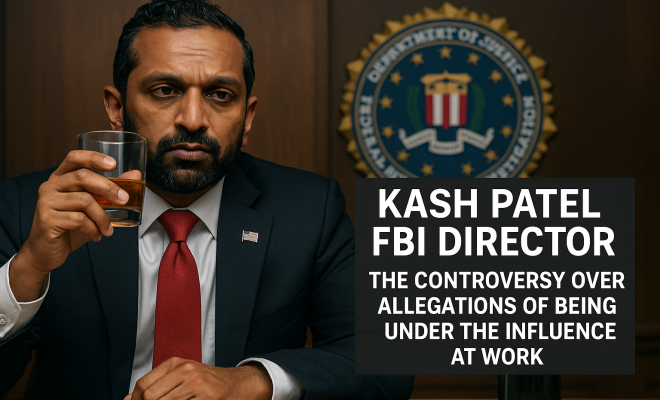
The FBI has been under the microscope lately, and the latest controversy centers around its director, Kash Patel. Recently, Patel made headlines after publicly refuting claims that he was ever “under the influence at work.” This assertion has sparked significant debate across social media platforms, igniting discussions about the integrity of government officials and the public’s trust in national security agencies. In an era where accountability and transparency are paramount, these allegations could not have come at a more critical time.
1. Understanding the Allegations Against Kash Patel
The allegations against Kash Patel have been characterized as serious, given the high-profile nature of his position within the FBI. Reports suggest that some individuals have claimed he was sometimes unavailable for his duties, raising questions about his effectiveness and judgment as the leader of one of America’s premier investigative agencies. The vague nature of these claims—”under the influence”—has led to rampant speculation about what that might entail.
These allegations took on a life of their own, leading to a surge in public interest as citizens sought more information. With the FBI’s role heavily intertwined with national security, any doubts about its leadership can evoke fears about the agency’s capability to function effectively. As soon as the news broke, social media lit up with commentary, memes, and a flood of opinions.
2. Patel’s Response: Refuting the Claims
In an official statement, Kash Patel vehemently denied any claims of misconduct or being under the influence during his time at work. He described these allegations as utterly false and damaging, not just to him personally, but also to the integrity of the FBI. For Patel, it’s not only a matter of personal reputation; it’s about maintaining public trust in an agency that plays a vital role in protecting national security.
Patel’s denial reflects a broader commitment to transparency and accountability within the FBI, but it also underscores the necessity for high-ranking officials to maintain clear communication regarding their conduct. His insistence on the veracity of his claims may seek to quell public fear about potential hidden influences in high-level positions, which has been a consistent concern among citizens.
3. The Public’s Reaction: Social Media Buzz
The reaction on social media has been intense and multifaceted. Many users have expressed disbelief, demanding evidence to support or refute the claims. Others have rushed to defend Patel, emphasizing the importance of separating fact from conjecture. Hashtags related to Patel’s name and the allegations quickly gained traction, driving conversations that oscillate between support and skepticism.
This phenomenon indicates a growing trend where individuals are not just passive consumers of news; they are active participants in shaping the narrative. Social media platforms have become battlegrounds for public opinion, and this case is no exception. With people searching for more information, the controversy has triggered a wave of engagement that reflects broader societal concerns regarding accountability in government.
4. Navigating the Media Landscape: Misinformation vs. Truth
As the allegations against Kash Patel spread, the role of media in disseminating information becomes increasingly crucial. In the digital age, the lines between fact and fiction can blur, leading to a proliferation of misinformation. This is particularly significant in cases involving public figures like Patel, where narratives can be manipulated for various agendas.
The challenge lies in discerning credible sources from those that merely stoke sensationalism. For instance, while some news outlets have reported responsibly on the allegations and Patel’s response, others have sensationalized the claims, fueling public distrust. Journalists and media organizations have a responsibility to verify facts before dissemination, especially in a climate where misinformation can lead to unjust reputational harm.
5. Broader Implications: Trust in Government Institutions
The allegations against Patel tap into a larger conversation about trust in government institutions. With scandals and controversies involving officials becoming more frequent, public trust wanes. The FBI, tasked with upholding laws and safeguarding national interests, must navigate this landscape with care. When allegations surface against its leadership, it’s not just the individual who is scrutinized, but the entire institution.
This situation amplifies a crucial question: how well can citizens trust their government to act in their best interests? Patel’s case illustrates that even high-ranking officials are not immune to scrutiny and skepticism from the public. This dynamic can create a vicious cycle, where distrust breeds further allegations, leading to a breakdown in the essential relationship between government and citizens.
6. The Role of Accountability in Leadership
Accountability stands at the forefront when discussing leadership, especially within government agencies. For Kash Patel, facing allegations of being “under the influence” at work is a crucial test of his leadership capabilities. How he navigates this scrutiny will likely define his tenure as FBI Director—not just in terms of personal reputation, but also regarding the public’s perception of the agency.
Leadership, particularly in high-stakes environments like the FBI, requires unwavering integrity and transparency. Patel’s public denial of the allegations may be an attempt to reinforce his commitment to these principles, seeking to reassure the public that the FBI is comprised of trustworthy individuals dedicated to their mission.
7. Legal Ramifications: What’s Next for Patel?
As the controversy unfolds, questions arise regarding the potential legal ramifications for Kash Patel. While he has denied the allegations, the implications of such claims can have serious consequences for his career and the agency he represents. If further evidence surfaces that corroborates the claims, Patel could face disciplinary actions or even an inquiry into his conduct.
Moreover, the FBI, as a premier law enforcement agency, operates under a strict code of conduct. The internal mechanisms for handling such allegations are designed to ensure accountability and uphold the agency’s integrity. As such, Patel’s future may depend on how the agency decides to address these claims in the wake of his public denial. (See: FBI Leadership Structure.)
8. The Future of Kash Patel and the FBI
Looking ahead, the future of Kash Patel as FBI Director hangs in the balance. While he has firmly denied the allegations against him, the climate of suspicion surrounding government officials may not dissipate quickly. The FBI, amidst its ongoing mission to protect national security, must also commit to addressing these kinds of allegations transparently to restore public trust.
For Patel, it’s about more than just a personal battle; it’s about how this incident will shape the narrative of his leadership and how the FBI is viewed by the public. Countering allegations with transparency and accountability will be essential for Patel as he navigates these turbulent waters.
9. Conclusion: The Importance of Integrity in High Office
As the controversy surrounding Kash Patel unfolds, it serves as a reminder of the critical importance of integrity in high office. Allegations, whether substantiated or not, can have profound implications for public perception and trust in government institutions. For Patel and the FBI, the challenge will be to maintain transparency and accountability while navigating the complexities of public scrutiny.
Ultimately, this situation underscores a broader societal need for government officials to uphold the highest standards of conduct. As citizens demand accountability, leaders must rise to the occasion, ensuring that trust in institutions is not just a relic of the past, but a living, breathing reality.
10. Comparative Analysis: FBI Directors Through History
To understand the gravity of Kash Patel’s situation, it’s helpful to look at the history of FBI directors and the controversies they’ve faced. For instance, J. Edgar Hoover, the first director of the FBI, served from 1935 to 1972 and was known for his controversial methods, including surveillance of civil rights leaders. His legacy is complex; while he’s credited with modernizing the FBI, his tactics often raised ethical questions that resonate today.
In a more recent context, former FBI Director James Comey faced significant backlash after his handling of the investigation into Hillary Clinton’s emails during the 2016 presidential election. Comey’s decisions were scrutinized and led to a political firestorm, highlighting how a director’s actions can have far-reaching implications on public trust and institutional integrity.
Patel’s circumstances seem to echo these historical incidents, showcasing the ongoing challenges that FBI directors face in balancing public trust and the agency’s accountability. As controversies arise, the way leaders respond can significantly impact their legacy and the institution’s credibility.
11. Statistics on Public Trust in Law Enforcement
Public trust in law enforcement has become a pivotal topic over the years, especially amid various controversies. A recent survey conducted by Gallup revealed that only 53% of Americans trust the police, a significant decline from previous years. This statistic highlights a growing disconnect between law enforcement agencies and the communities they serve.
Moreover, according to the Pew Research Center, the perception of law enforcement varies significantly across demographic lines, with racial and ethnic minorities often reporting lower levels of trust. In this context, Patel’s situation could exacerbate an already tenuous relationship between the FBI and the public, especially if transparency is not prioritized in addressing allegations.
Understanding these statistics provides a backdrop for the challenges Patel faces and emphasizes the importance of fostering trust and accountability in high office.
12. Expert Perspectives: Voices on the Allegations
Experts in government ethics and public trust have weighed in on the allegations against Kash Patel and their implications for the FBI. Dr. Lisa Kinsey, a prominent political analyst, argues that “the integrity of leadership is paramount in maintaining the public’s faith in institutions like the FBI. Allegations such as these can create a cascading effect, causing people to question not just the individual, but the entire agency.”
Similarly, former federal prosecutor Mike Anderson emphasizes the importance of transparency: “Kash Patel needs to handle this with utmost seriousness. The FBI is built on a foundation of trust, and any breach—real or perceived—can tarnish its reputation for years to come.”
These insights from experts underscore the critical need for accountability and transparency in leadership roles, especially within agencies tasked with safeguarding national security.
13. FAQ: Common Questions About Kash Patel and the FBI
What are the specific allegations against Kash Patel?
The allegations suggest that Kash Patel may have been “under the influence” while at work, which raises questions about his conduct and effectiveness as the FBI Director.
How has Kash Patel responded to these allegations?
Kash Patel has publicly denied the allegations, calling them false and damaging. He emphasized the importance of preserving the integrity of the FBI and maintaining public trust.
What impact do these allegations have on the FBI?
The allegations can undermine public confidence in the FBI and its leadership, potentially affecting the agency’s ability to operate effectively and maintain its credibility. (See: Youth Risk Behavior Surveillance.)
Are there historical precedents for FBI directors facing controversies?
Yes, previous directors like J. Edgar Hoover and James Comey faced significant controversies that impacted public trust and the agency’s reputation. These historical contexts provide insight into the challenges that current leaders like Kash Patel face.
What can the FBI do to restore public trust in light of these allegations?
The FBI can focus on transparency, accountability, and open communication with the public. Addressing allegations head-on and demonstrating a commitment to integrity is crucial in rebuilding trust.
How does public trust in law enforcement impact Kash Patel’s situation?
Public trust in law enforcement is already fragile, and allegations against high-ranking officials like Patel can exacerbate existing issues, leading to further erosion of trust and confidence in the agency.
What role does the media play in shaping public perception of the allegations?
The media plays a significant role in shaping public perception by either responsibly reporting facts or sensationalizing claims. This can influence how the public views both Patel and the FBI.
14. The Narrative Moving Forward
As the situation surrounding Kash Patel evolves, the narrative will undoubtedly continue to shift. The FBI’s leadership will have to navigate the storm of public opinion, media scrutiny, and potential internal investigations. How Patel chooses to communicate and engage with the public will be essential in crafting a narrative that remains focused on integrity and accountability.
This case serves as a crucial reminder of the delicate balance between high office and public perception. In an age where information spreads rapidly, the need for transparent leadership is more critical than ever.
Ultimately, the stakes are high. The outcome of this controversy could set a precedent not only for Kash Patel but for how the FBI and other government agencies handle crises in the future, emphasizing the crucial need for maintaining trust in public institutions.
15. The Intersection of Politics and Leadership
Kash Patel’s situation also highlights the intricate relationship between politics and leadership in government. As director of the FBI, Patel is expected to operate above the political fray, yet he is inevitably drawn into the political arena due to the nature of his role. This intersection can complicate both his leadership and public perception.
For instance, political affiliations and actions of government officials can lead to divided public opinion. When controversies arise, as in Patel’s case, partisanship can amplify the discourse. Supporters may defend him as a victim of political sabotage, while critics may use the allegations as ammunition for broader critiques of the FBI’s leadership structure. This reflects a larger trend, where the political landscape often shapes narratives around public officials.
Understanding this dynamic can help contextualize the public reaction to Patel and the allegations against him. Citizens may view the controversy not purely through the lens of integrity but as part of a larger political struggle.
16. The Role of Internal Investigations
In light of the allegations against Kash Patel, it is essential to consider the role of internal investigations within the FBI. The agency has established protocols for handling allegations against its officials, which aim to uphold accountability and transparency. Internal investigations can serve as a critical mechanism for assessing the validity of claims and ensuring that leadership maintains a standard of conduct that aligns with the FBI’s mission.
These investigations are typically thorough and involve collecting evidence, interviewing witnesses, and reviewing relevant records. The outcome can lead to various consequences, ranging from exoneration to disciplinary actions, depending on the findings. The integrity of these investigations is paramount, as they not only impact the individual involved but also the perception of the FBI as a whole.
For Kash Patel, an internal investigation, if initiated, could either reinforce his position as a capable leader or further complicate his role as director. The agency’s commitment to transparency throughout this process will be crucial in shaping public perception.
17. Lessons from Previous Leaders
Leaders before Kash Patel have faced similar controversies, providing valuable lessons for navigating such turbulent waters. For example, former FBI Director Robert Mueller faced scrutiny during his tenure for the agency’s handling of the 9/11 attacks. While he was ultimately praised for his leadership during a crisis, his early missteps illuminated the importance of accountability and responsiveness in high office. (See: New York Times on Kash Patel.)
Similarly, the fallout from James Comey’s decisions during the 2016 election highlighted the need for transparency and clear communication. Comey’s controversial public statements and subsequent investigations showed how critical it is for leaders to maintain an open dialogue with the public during crises.
Patel can draw from these examples by prioritizing communication, ensuring that any claims are addressed swiftly and transparently. Learning from past leaders’ experiences can guide him in restoring trust and navigating the complexities of modern leadership.
18. Community Engagement: Building Bridges
To mitigate the fallout from the allegations, community engagement will be vital for Kash Patel and the FBI. Building bridges with the communities they serve can help restore trust and emphasize the agency’s commitment to accountability. Initiatives such as town hall meetings, public forums, and outreach programs can facilitate open communication between the FBI and the public, allowing citizens to voice concerns and ask questions directly.
Engaging with local organizations, particularly those advocating for accountability and reform, can also provide valuable insights into community needs and expectations. By fostering these relationships, Patel can help reinforce the message that the FBI is an ally in the pursuit of justice and public safety, rather than a distant authority.
Ultimately, community engagement can serve as a proactive measure to counteract skepticism and rebuild faith in the agency’s leadership, particularly in light of the current controversy.
19. The Importance of Media Literacy
In the age of information, media literacy becomes crucial for the public to navigate complex narratives surrounding allegations like those against Kash Patel. Understanding how to critically evaluate sources, discern biases, and identify misinformation can empower citizens to form informed opinions based on facts rather than sensationalism.
Educational initiatives aimed at enhancing media literacy can equip individuals with the tools they need to engage meaningfully in discussions about government and leadership. By promoting critical thinking skills, the public can become better consumers of information and less susceptible to the influence of distorted narratives.
This emphasis on media literacy not only benefits the public discourse surrounding Patel’s situation but also fosters a more engaged citizenry that demands accountability from its leaders.
20. Final Thoughts: The Path Ahead for Kash Patel
The road ahead for Kash Patel as FBI Director is fraught with challenges. As he confronts allegations that threaten to tarnish his reputation and the agency’s credibility, Patel must navigate a complex landscape of public opinion, political pressures, and institutional expectations. His ability to respond with integrity, transparency, and accountability will be pivotal in shaping the future narrative of his leadership.
In a world where public trust in government institutions is dwindling, how Patel handles this moment could serve as a benchmark for future leaders. The FBI’s commitment to maintaining high ethical standards will be essential not just for overcoming this controversy but also for securing its legacy as a trusted institution in safeguarding national security.
The ongoing dialogue about the importance of integrity, accountability, and community engagement in leadership will resonate well beyond the immediate circumstances surrounding Kash Patel, influencing future generations of leaders across all sectors.
“`
Trending Now
- Free Guide to Using Wild Symphony…
- “Social Learning Theory vs. Behaviorism: Understanding…
- “Understanding Nonverbal Communication in Children: Reading Body Language and Facial Expressions”
- this guide on “executive function skills in children: a complete guide for parents and teachers”
Frequently Asked Questions
What are the allegations against Kash Patel?
The allegations against Kash Patel suggest he was sometimes unavailable for duties, leading to speculation about him being 'under the influence' at work. These claims have raised serious questions regarding his effectiveness and judgment as the FBI director, particularly amid the agency's crucial role in national security.
How did Kash Patel respond to the allegations?
Kash Patel publicly refuted the allegations of misconduct, stating they are utterly false and damaging. He emphasized that these claims threaten not just his personal reputation but also the integrity and public trust in the FBI, which is essential for national security.
Why is the controversy surrounding Kash Patel significant?
The controversy is significant because it raises concerns about the integrity and effectiveness of the FBI, especially in a time when accountability and transparency are paramount. Any doubts about the leadership of such a critical agency can evoke fears about its ability to protect national security.
What impact have the allegations had on public perception of the FBI?
The allegations against Kash Patel have sparked widespread debate on social media, leading to increased public scrutiny of the FBI. As citizens express their opinions and concerns, the situation highlights the importance of trust in government officials and national security agencies.
What role does Kash Patel hold in the FBI?
Kash Patel is the director of the FBI, a high-profile position that places him at the forefront of national security and law enforcement. His leadership is crucial for the agency's effectiveness, making any allegations against him particularly impactful on public perception and agency credibility.
What did we miss? Let us know in the comments and join the conversation.