Shocking Discovery: A Supermassive Black Hole is Roaming Free and Devouring Stars
The Age of the Wandering Supermassive Black Hole
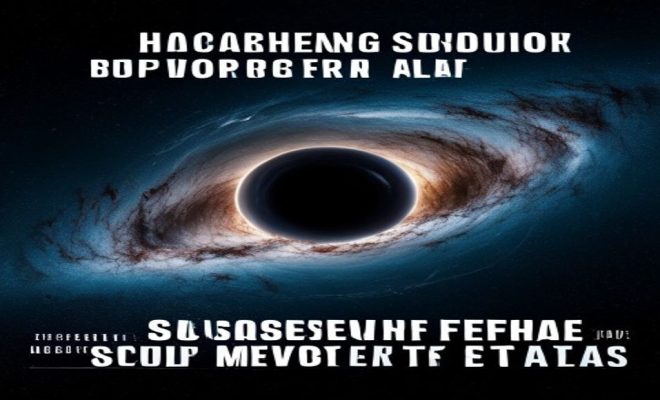
Astrophysics has taken a wild turn with the recent discovery of a supermassive black hole that appears to be wandering through space, far from its galactic center. This unprecedented event marks a significant shift in our understanding of cosmic phenomena, challenging the long-accepted notion that these massive entities remain anchored at the cores of their galaxies. Imagine a colossal black hole roaming the universe, consuming stars in its path — it’s both thrilling and terrifying.
A New Perspective on Black Holes
Traditionally, supermassive black holes have been regarded as stable fixtures, placed firmly at the heart of galaxies. This latest finding disrupts that perspective and encourages us to rethink how black holes interact with their surroundings. The wandering supermassive black hole, captured in the act of devouring a star, is not just a cosmic curiosity; it’s a glimpse into the chaotic dynamics that can occur in the universe.
The Discovery: How It All Unfolded
This revelation emerged from detailed observations and research efforts led by astrophysicists, who utilized advanced telescopes and cutting-edge technology to detect this elusive black hole. Through extensive data collection, they uncovered this wandering giant approximately 30,000 light-years from the galactic center of its host galaxy.
These observations revealed that the black hole was not only moving freely through space but was also actively consuming a star, an event referred to as a tidal disruption event (TDE). During a TDE, the immense gravitational pull of the black hole stretches and ultimately tears apart a star, resulting in a spectacular display of cosmic drama.
The Implications of a Rogue Black Hole
The implications of confirming a supermassive black hole in such a dynamic state are profound. For decades, scientists have theorized about the behaviors and characteristics of black holes, but this discovery challenges existing models and introduces a new layer of complexity. It raises questions about how many more such wandering black holes exist and what role they play in the broader context of galactic evolution.
Furthermore, this finding suggests that interactions between stars and wandering black holes could be more frequent than previously thought. This could lead to an increase in gamma-ray bursts and other energetic phenomena associated with black hole activity, further enriching our understanding of cosmic events.
What Makes This Discovery Unique?
This particular instance isn’t just another case of a black hole doing what black holes do. The uniqueness lies in its confirmed status as a rogue entity. Whereas scientists had speculated about the existence of wandering black holes, this is the first time one has been definitively observed in the act of disrupting a star.
Additionally, the imagery and emotional weight of a supermassive black hole consuming a star have captivated the public’s imagination. The vivid visualization of such a cosmic event — the idea of a black hole lurking in the shadows, ready to snatch a star from existence — has sent ripples through social media, driving engagement and sparking lively discussions among space enthusiasts.
Cosmic Dynamics at Play
So, how does a supermassive black hole end up wandering its galactic surroundings? Several theories have emerged in light of this discovery. One possibility involves gravitational interactions with other celestial bodies, such as stars or even other black holes, that could impart enough momentum to propel the black hole away from its original position.
Another scenario suggests that in a densely populated region of the galaxy, collisions or close encounters with other massive objects could expel a supermassive black hole from its center. The dynamics of galaxies are complex, and this finding highlights how little we may still know about the gravitational dance of cosmic objects.
The Role of Technology in Astronomical Discoveries
This groundbreaking discovery was made possible due to advancements in astronomical technology and data analysis. The combination of high-resolution telescopes and sophisticated algorithms allows scientists to analyze vast amounts of data, leading to insights that were once thought impossible.
With instruments like the Hubble Space Telescope and the upcoming James Webb Space Telescope, the potential for unveiling further cosmic mysteries is immense. The ability to detect and study phenomena like wandering supermassive black holes will undoubtedly refine our understanding of the universe and its workings. (See: Supermassive black hole overview.)
The Public Reaction: Awe and Curiosity
The emotional impact of this discovery cannot be understated. As news spread about a rogue supermassive black hole feasting on a star, it ignited a wave of curiosity and fear. Social media was abuzz with discussions, memes, and sharing of the astonishing imagery associated with this cosmic event.
For many, the idea of such a powerful entity moving through space challenges our perceptions of safety within our own galaxy. It raises questions about the potential threats posed by wandering black holes and encourages a deeper inquiry into the stability of our cosmic neighborhood.
Future Research Directions
The discovery of a wandering supermassive black hole opens a new chapter in astrophysical research. Scientists are eager to investigate whether other black holes may be following similar paths and what this could mean for the evolution of galaxies. Future studies will likely focus on identifying more instances of tidal disruption events and investigating the mechanisms that allow black holes to roam freely.
Moreover, researchers will explore the potential link between wandering black holes and the formation of new stars. Understanding the interactions between these black holes and their surroundings could lead to a more comprehensive narrative of cosmic history.
The Bigger Picture: Cosmic Evolution
Ultimately, the presence of wandering supermassive black holes adds a layer of complexity to our understanding of cosmic evolution. These entities may play pivotal roles in shaping galaxies, influencing star formation, and affecting the dynamics of cosmic structures. With this new knowledge, scientists will continue to piece together the history of our universe.
As we venture further into the cosmos, the mysteries of black holes and their impact on the universe remain at the forefront of astronomical inquiry. The journey of discovery is ongoing, and each revelation brings us closer to understanding the magnificent tapestry of the universe.
A Call to Explore the Cosmos
As the universe continues to unfold its secrets, the story of the wandering supermassive black hole stands as a testament to human curiosity and the relentless pursuit of knowledge. It invites you, the reader, to engage with the cosmos, to ponder the vastness of space, and to appreciate the wonders that lie beyond our planet.
In a world filled with uncertainties, the exploration of our universe provides a sense of belonging and connection to something greater than ourselves. So, keep looking up — the next cosmic event could be just around the corner, and who knows what we’ll discover next?
Understanding Supermassive Black Holes
Supermassive black holes are some of the most enigmatic objects in the universe, with masses ranging from hundreds of thousands to billions of solar masses. They are typically found at the centers of galaxies, where their immense gravitational pull influences the orbits of stars and gas clouds surrounding them. The exact mechanisms that lead to their formation remain a subject of intense study, with theories suggesting that they could have formed from the merging of smaller black holes or from the direct collapse of massive gas clouds in the early universe.
The Formation and Growth of Supermassive Black Holes
The formation of supermassive black holes is believed to stem from the gradual accumulation of mass. As smaller black holes and stars coalesce over time, they can form a supermassive black hole at the center of a galaxy. This process is not instantaneous; it can take billions of years, and it’s influenced by the environment of the galaxy, including the density of star clusters and the availability of gas and dust for feeding the black hole.
A fascinating aspect of supermassive black holes is their growth rates. Some black holes grow rapidly by consuming gas and dust from their surroundings, while others grow more gradually. The feeding frenzy that occurs during a tidal disruption event can temporarily increase a black hole’s mass significantly. Observations indicate that black holes can gain mass at a rate that allows them to become supermassive within a relatively short cosmic timescale, although the specific growth rates can vary dramatically between galaxies.
Wandering Black Holes: What We Know
Wandering black holes, or rogue black holes, can be ejected from their host galaxies due to gravitational interactions, especially during galactic mergers. The study of wandering supermassive black holes is still in its infancy. Current research suggests they may be more common than previously thought, possibly leading to new understandings of galaxy formation and evolution.
One significant factor contributing to the ejection of a wandering black hole is the gravitational slingshot effect, where interactions with other massive objects provide enough velocity to escape a galaxy’s gravitational grip. This can lead to wandering black holes becoming isolated in intergalactic space, where they may continue to affect the dynamics of other nearby celestial bodies, including stars and gas clouds. (See: NASA's black hole research.)
Observations and Evidence
Detecting wandering black holes is a challenging task, given their elusive nature. Astronomers often rely on indirect evidence, such as the gravitational influence on nearby stars or gas clouds, and the detection of X-ray emissions as they consume matter. The discovery of a wandering supermassive black hole is often aided by groundbreaking observational campaigns that utilize a combination of telescopes and advanced simulations to capture the dynamics of these phenomena.
For example, researchers have detected gravitational waves from the mergers of smaller black holes. Such observations can help confirm the existence of wandering black holes and provide insight into their behavior. As technology advances, astronomers are hopeful that more instances of wandering black holes can be identified and studied, offering a clearer picture of their role in the cosmos.
Comparative Analysis with Other Cosmic Phenomena
Wandering supermassive black holes can be compared to other astronomical phenomena, such as neutron stars and stellar black holes. While stellar black holes typically form from the collapse of massive stars, supermassive black holes represent a different evolutionary path. Neutron stars, on the other hand, are remnants of supernova explosions and serve as a contrasting example of how massive stars can evolve into compact objects without becoming supermassive.
The study of these different types of black holes enhances our understanding of the universe’s life cycle. Each type of black hole offers unique insights into the processes that govern stellar evolution, galaxy formation, and the dynamics of the cosmos. By examining the similarities and differences between these phenomena, scientists can develop a more integrated model of how cosmic structures evolve over time.
FAQs about Supermassive Black Holes
What is a supermassive black hole?
A supermassive black hole is a type of black hole with a mass ranging from hundreds of thousands to billions of times that of our Sun. They are typically located at the centers of galaxies and exert a powerful gravitational influence on their surroundings.
How are supermassive black holes formed?
Supermassive black holes are believed to form through the merging of smaller black holes or from the direct collapse of massive gas clouds in the early universe. Their growth can also accelerate through the accumulation of matter from their surroundings.
What is a wandering black hole?
A wandering black hole is a black hole that has been ejected from its host galaxy and is moving through intergalactic space. They can be formed due to gravitational interactions with other massive objects during events like galactic mergers.
How do scientists detect wandering supermassive black holes?
Wandering supermassive black holes are typically detected through indirect evidence, such as their gravitational influence on nearby stars or gas clouds, and by observing X-ray emissions when they consume matter.
What are the implications of finding a wandering supermassive black hole?
The discovery of a wandering supermassive black hole challenges our understanding of black holes and their behaviors. It raises questions about the frequency of these entities and their potential role in cosmic evolution, including the dynamics of galaxies and star formation.
Are wandering black holes dangerous?
While wandering black holes can consume stars and gas in their vicinity, the vastness of space makes encounters extremely rare. However, their existence does prompt scientific inquiry into the stability and dynamics of galaxies.
A Glimpse into the Future of Black Hole Research
The study of supermassive black holes, especially wandering ones, offers a rich field for future research. As we develop more advanced observational technologies and techniques, our understanding of these cosmic giants will continue to evolve. New telescopes capable of detecting faint signals from distant black holes will enhance our ability to study their properties and behaviors.
In addition to observational advancements, theoretical models will also play a critical role in shaping our understanding. Researchers will continue to refine their simulations of galaxy dynamics and black hole interactions, providing insights into how these mysterious entities influence the cosmos. (See: Research on supermassive black holes.)
The journey into the intricate world of black holes is just beginning. Each discovery brings with it new questions and avenues for exploration, reminding us of the vastness of our universe and the mysteries it holds.
The Role of Supermassive Black Holes in Galaxy Formation
Supermassive black holes are not just passive entities residing at the center of galaxies; they play an active role in their formation and evolution. The relationship between a supermassive black hole and its host galaxy is often described using the term “co-evolution.” Research indicates that the growth of a supermassive black hole can influence star formation rates in its galaxy. For instance, the energy output from a black hole can regulate the amount of gas available for star formation, leading to either bursts of star formation or a quiescent galactic state.
Studies have shown that galaxies hosting supermassive black holes that actively consume matter often exhibit a corresponding decrease in star formation activity. This has led astronomers to theorize that the energy expelled during the accretion of matter can blow away the surrounding gas, stunting potential star formation. This complex feedback loop between black holes and galaxies is a key area of research, highlighting the reciprocal relationship that shapes cosmic structures.
The Search for More Wandering Supermassive Black Holes
With the revelation of this wandering supermassive black hole, astronomers are now on a quest to identify more of these elusive entities. The search involves combining several observational strategies, including surveys designed to monitor changes in the brightness of stars and gas clouds. As more data becomes available, researchers can refine their models to predict where wandering black holes are most likely to be found.
Additionally, simulations that model galactic dynamics will play a crucial role. By understanding how and why wandering black holes are ejected from their host galaxies, scientists can enhance their search strategies and expand the criteria for identifying these rogue entities. As we discover more about wandering supermassive black holes, we may uncover new giants that play critical roles in the cosmic landscape.
The Broader Cosmic Implications of Rogue Black Holes
The existence of wandering supermassive black holes carries significant implications for our understanding of dark matter and the overall structure of the universe. If these black holes are more common than previously believed, they could be key players in the way galaxies form and evolve. Their gravitational influence may help shape the distribution of dark matter and impact the formation of cosmic structures like galaxy clusters.
Future research may even explore the idea that wandering black holes could contribute to the formation of gravitational waves, further linking them to the dynamics of the universe. As scientists piece together these cosmic puzzles, the interconnectedness between different phenomena continues to become clearer, revealing the complexity of our universe.
Ultimately, the narrative of wandering supermassive black holes is a captivating one. It intertwines with fundamental questions about the nature of black holes, the formation and evolution of galaxies, and the grand scale of the cosmos. As scientists, astronomers, and enthusiasts alike continue to explore these themes, we can only anticipate what astonishing revelations await us in the depths of space.
Trending Now
Frequently Asked Questions
What is a wandering supermassive black hole?
A wandering supermassive black hole is a massive black hole that moves through space, away from its galactic center. This discovery challenges the traditional belief that these black holes remain stationary at the cores of galaxies, showcasing their potential to roam the universe and consume stars.
How do supermassive black holes devour stars?
Supermassive black holes devour stars through a process called a tidal disruption event (TDE). Their immense gravitational pull stretches and tears apart a star that ventures too close, resulting in a dramatic cosmic event where the black hole consumes the remnants of the star.
What are the implications of a rogue black hole?
The discovery of a rogue supermassive black hole has significant implications for astrophysics. It challenges existing theories about black hole behavior and suggests that these entities can interact with their environment in more dynamic ways than previously understood, reshaping our knowledge of cosmic phenomena.
How was the wandering black hole discovered?
Astrophysicists discovered the wandering black hole through detailed observations using advanced telescopes and technology. They conducted extensive data collection, identifying the black hole approximately 30,000 light-years from its galactic center, and observed it actively consuming a star.
What is a tidal disruption event (TDE)?
A tidal disruption event (TDE) occurs when a star approaches a supermassive black hole and is torn apart by its gravitational forces. This process results in a spectacular display of cosmic activity as the black hole consumes the star's remnants, providing valuable insights into black hole dynamics.
Have you experienced this yourself? We’d love to hear your story in the comments.