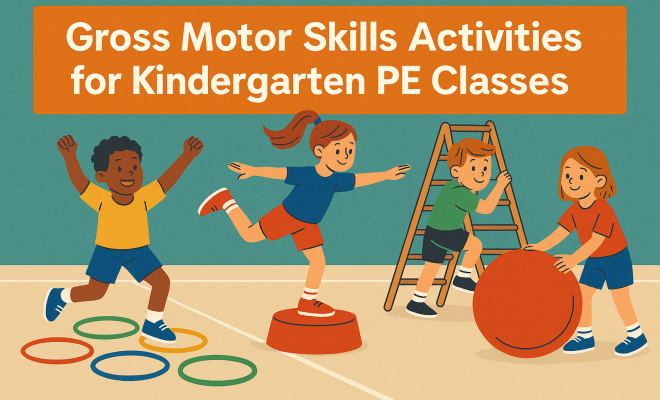
Gross Motor Skills Activities for Kindergarten PE Classes
“`html
In preschool and kindergarten, children are like sponges, soaking up everything around them, especially when it comes to movement. Gross motor skills activities play a crucial role in this developmental stage, helping kids build strength, coordination, and confidence. These skills are the foundation for more complex motor tasks they’ll encounter later in life, like sports or dance. Let’s explore some engaging activities that make Physical Education (PE) classes not only educational but also fun for kindergarteners.
Understanding Gross Motor Skills
Before diving into specific activities, it’s essential to understand what gross motor skills are. These skills involve the large muscles of the body and are responsible for movements such as running, jumping, throwing, and climbing. They are critical for kids, impacting everything from their ability to participate in sports to their everyday life activities. Developing gross motor skills enhances spatial awareness, balance, and physical fitness, which contribute to overall well-being.
The Importance of Gross Motor Skills in Early Childhood
Research has shown that the early years of a child’s life are vital for motor development. During this time, children are more likely to engage in play that fosters the development of gross motor skills. For example, studies have indicated that children with better gross motor skills tend to perform better academically later on. This correlation emphasizes why gross motor skills activities should be a priority in kindergarten PE classes.
Additionally, developing these skills supports social interactions. When children can participate in group games and activities, they learn teamwork and communication, fostering social skills that extend beyond the playground.
Key Components of Effective Gross Motor Skills Activities
When designing gross motor skills activities for kindergarteners, there are a few key components to keep in mind:
- Engagement: Activities should be fun to keep children motivated.
- Variety: A range of activities helps cater to different interests and abilities.
- Safety: Ensure that all activities are safe and appropriate for the children’s developmental levels.
- Progression: Activities should build upon one another, gradually increasing in complexity as children improve their skills.
1. Obstacle Courses
Obstacle courses are a fantastic way to promote gross motor skills in a fun, engaging context. You can design a simple course using cones, hoops, and soft mats. Children can crawl under tables, jump over small hurdles, and balance on beams. This type of activity encourages various movements and can be modified for different skill levels.
To make the course more challenging, add elements like throwing a beanbag into a hoop or hopping on one foot. This versatility keeps kids engaged and allows them to practice different gross motor skills, such as jumping, throwing, and balancing.
2. Parachute Games
Parachute games are perfect for group activities and can accommodate multiple children at once. They help develop coordination, teamwork, and upper body strength. You can have kids lift the parachute high and then run underneath, or create waves by shaking it up and down.
Incorporating different movements, like running in a circle while holding onto the parachute, adds variety and keeps the activity exciting. Parachute games also promote listening skills as children follow instructions for various movements.
3. Animal Walks
Animal walks are a fun and creative way to get kids moving while also improving their strength and coordination. Have them mimic different animal movements, such as crawling like a bear, hopping like a frog, or waddling like a duck. Each movement engages different muscle groups and helps develop balance and coordination.
Animal walks can be turned into a fun game by giving children a specific distance to travel or creating a relay race. This not only develops physical skills but also encourages imaginative play. (See: CDC on child development milestones.)
4. Ball Skills
Incorporating balls into PE class is a great way to enhance gross motor skills activities. Simple tasks such as rolling, throwing, and catching can significantly improve hand-eye coordination. Start with larger, softer balls that are easier to grasp and throw, and gradually introduce smaller ones as children gain confidence.
Set up stations where kids can practice different skills, like throwing a ball into a target, bouncing it, or kicking it into a net. You can also create games like “hot potato” to make it more engaging.
5. Jumping Activities
Jumping is a fundamental gross motor skill that children can easily practice in a PE class. Simple jumping exercises can be integrated into various games. For instance, use hula hoops placed on the ground for kids to jump in and out of, or create a jumping sequence where they follow your lead.
In addition to vertical jumping, you can incorporate long jumps that encourage children to leap forward. This helps develop strength in their legs and improves overall coordination.
6. Dance and Movement
Dance is an excellent way to develop gross motor skills while fostering creativity. Incorporating music into PE classes allows children to express themselves through movement. Simple dance routines can enhance coordination and rhythm while being incredibly fun.
Encourage children to create their own dance moves and share them with the class. This not only fosters physical development but also promotes confidence and self-expression.
7. Relay Races
Relay races are a classic PE activity that combines fun, teamwork, and gross motor skills development. They can be tailored to focus on specific skills, such as running, jumping, or balancing. Set up different stations where children must complete various tasks before passing the baton (or another object) to their teammate.
For instance, you can include activities like hopping on one foot, crawling, or tossing a ball to a teammate. This not only builds motor skills but also encourages collaboration and communication among peers, essential skills for social development.
8. Nature Walks
Taking kids outside for nature walks is a great way to combine gross motor skills activities with exploration. Nature walks allow children to navigate different terrains, which helps improve balance and coordination. They can run, jump, and climb on natural obstacles like logs or rocks.
Incorporate games such as scavenger hunts, where children look for specific items in nature, enhancing their observational skills. This approach also promotes appreciation for the outdoors and encourages physical activity in a natural setting.
9. Sports Introduction
Introducing children to basic sports skills can significantly enhance their gross motor skills. Activities like soccer, basketball, or T-ball allow children to practice running, throwing, catching, and kicking in a structured environment. Start with simple drills that focus on one skill at a time, ensuring children feel successful before progressing to more complex tasks.
Organize mini-games that emphasize teamwork and cooperation rather than competition. This way, children can learn the rules and mechanics of the sport in a fun, supportive environment. (See: NIH on physical development in children.)
10. Importance of Parental Involvement
Engaging parents in gross motor skills activities can extend the benefits beyond the classroom. Encourage parents to participate in physical activities with their children at home, like biking, walking, or playing catch. You can also provide a list of games and activities to reinforce the skills learned in PE class.
When parents are involved, it creates a supportive environment that fosters physical development and encourages children to maintain active lifestyles. Forming partnerships with families can lead to more opportunities for kids to practice gross motor skills in various settings.
11. Creating a Safe Environment for Play
Safety is paramount when it comes to gross motor skills activities. Ensuring that the physical environment is secure can help prevent injuries and allow children to explore movement freely. Always inspect play areas before activities to remove any hazards, such as sharp objects or slippery surfaces. Soft surfaces like grass or mats should be prevalent to cushion falls. Additionally, using age-appropriate equipment can significantly reduce the chances of accidents. For instance, balls should be lightweight and designed for small hands, while climbing structures should be low to the ground and have safety features to protect young climbers.
12. Assessing Gross Motor Skills Development
To measure the progress of gross motor skills, educators can implement various assessment methods. Simple observational assessments can help identify each child’s ability in different activities. For example, you can observe how well a child can throw a ball or balance on one foot compared to peers. More structured assessments, like skill checklists, can provide insights into specific areas where a child may need improvement. This information can help tailor future activities to better meet the needs of individual children, ensuring that no one is left behind as they develop these essential skills.
13. Adapting Activities for Different Abilities
Each child develops at their own pace, and it’s crucial to adapt gross motor skills activities to accommodate varying abilities. For instance, if a child struggles with jumping, modify the activity to include lower obstacles or provide assistance. Similarly, some children may excel in certain areas while needing support in others. Encouraging peer collaboration can also be beneficial; pairing stronger and weaker children together can foster a sense of community and help all children progress. By being flexible and inclusive, you create an environment where every child can thrive.
14. Seasonal Gross Motor Skills Activities
Changing seasons offer unique opportunities to incorporate gross motor skills activities into PE classes. In the spring and summer, outdoor activities like running through water sprinklers, playing tag, or engaging in nature scavenger hunts can be exciting for kids. In the fall, activities can include leaf pile jumping or using large leaves in games. Winter offers opportunities for snow-related activities, like building snowmen or engaging in snowball throwing contests. Adjusting activities to fit the seasons keeps things fresh and exciting while encouraging children to embrace physical activity year-round.
15. Fun Facts About Gross Motor Skills
- Did you know that toddlers can participate in gross motor activities as early as 10-12 months? They start with crawling and can soon progress to walking and running!
- According to research, children who engage in regular physical activity have improved concentration and focus in the classroom, impacting their overall academic performance.
- Studies suggest that gross motor skills activities can also improve mood and reduce anxiety levels in children, contributing to better mental health.
- Children who practice gross motor skills tend to develop better fine motor skills later, illustrating the interconnectedness of physical development.
16. Frequently Asked Questions (FAQ)
What are gross motor skills?
Gross motor skills involve the use of large muscle groups for movements such as walking, running, jumping, and climbing. They are essential for physical development and everyday activities.
Why are gross motor skills important for children?
Gross motor skills are crucial for a child’s overall development, impacting their ability to engage in sports, socialize with peers, and participate in daily activities. They also contribute to physical fitness and health.
How can I encourage gross motor skills development at home?
You can encourage gross motor skills development at home by engaging in activities like playing catch, riding bikes, dancing, or even going for nature walks. Making physical activities fun can motivate children to participate more.
At what age should children start participating in gross motor skills activities?
Children can start participating in gross motor skills activities as early as 10-12 months old. Activities should be appropriate for their developmental stage, gradually increasing in complexity as they grow.
What are some examples of gross motor skills activities for toddlers?
Examples of gross motor skills activities for toddlers include crawling through tunnels, balance beam walking, playing with large balls, and engaging in simple dance routines. Activities should be safe and fun to keep toddlers engaged.
How can teachers incorporate gross motor skills activities into the curriculum?
Teachers can incorporate gross motor skills activities into the curriculum by creating a structured PE program that includes a variety of activities focusing on different skills. Integrating movement into other subjects, such as incorporating dance into music lessons, can also enhance learning.
What are some signs of developmental delays in gross motor skills?
Signs of developmental delays in gross motor skills can include difficulty sitting up, crawling, or walking compared to peers. Children may also struggle with activities that involve running, jumping, or throwing. If you notice these signs, it’s a good idea to consult a pediatrician or child development specialist for guidance.
Can gross motor skills activities be adapted for children with special needs?
Absolutely! Many gross motor skills activities can be adapted to suit children with special needs. Modify tasks by providing additional support, specialized equipment, or adjusting the activity to fit their individual capabilities. The key is to create an inclusive environment where all children can participate and thrive.
What role does play have in developing gross motor skills?
Play is fundamental in developing gross motor skills. It naturally encourages movement and exploration, allowing children to practice skills in a low-pressure environment. Through play, children learn about their physical capabilities, develop confidence, and discover how their bodies move in space.
Conclusion: The Path Forward
As educators and caregivers, prioritizing gross motor skills activities in kindergarten PE classes is essential for children’s overall development. Through engaging and varied activities, children can improve their physical abilities while having fun. By creating an environment that fosters exploration, teamwork, and creativity, we can set the stage for a lifetime of healthy habits and a love for physical activity.
So, the next time you’re planning a PE class, remember the importance of gross motor skills activities. They’re not just about moving; they’re about building the foundation for a healthy, active future.
“`
Trending Now
- our breakdown of are women teachers treated worse? these reddit teachers are weighing in
- Fine Motor Skills Milestones: What to Expect at Each Age
- our breakdown of how to develop the pincer grasp in toddlers and preschoolers
- Fine Motor Skills Activities for Preschool:…
- this guide on dyspraxia and proprioception: understanding the sensory connection
Frequently Asked Questions
What are gross motor skills activities for kindergarten?
Gross motor skills activities for kindergarten involve exercises that engage large muscle groups, helping children develop strength, coordination, and balance. Examples include running, jumping, throwing, and climbing, which are essential for physical fitness and overall well-being.
Why are gross motor skills important in early childhood?
Gross motor skills are crucial in early childhood as they support physical development, spatial awareness, and balance. They also enhance children's ability to engage in sports and social activities, promoting teamwork and communication skills.
How can I help my child develop gross motor skills?
To help your child develop gross motor skills, encourage play that involves running, jumping, and climbing. Organize group games or activities that require movement, as these foster physical development and social interaction among peers.
What activities can improve gross motor skills in preschoolers?
Activities like obstacle courses, relay races, and ball games can significantly improve gross motor skills in preschoolers. These fun, engaging exercises promote coordination, strength, and confidence in young children.
How do gross motor skills affect academic performance?
Research indicates a positive correlation between gross motor skills and academic performance. Children with well-developed gross motor skills are often better at focusing and participating in classroom activities, which can enhance their learning outcomes.
What’s your take on this? Share your thoughts in the comments below — we read every one.